Twenty-second Sunday in Ordinary Time (Cycle A)

In today’s second reading St. Paul warns us not to conform to this world but be transformed by the renewal of our mind so we might discern what the will of God is, what is good, pleasing and perfect.

It is easy to conform to the world. It is easy to just go along with what everyone is doing without even considering how our actions are devastating our spiritual life. Our spiritual radar should go up when we hear someone say, “It’s a new world now. Things have changed. Everyone is doing this or that.” We need to ask ourselves, “Am I willing to sacrifice my spiritual life to join what people say everyone is doing?” That is what sin is, isn’t it? Sin is pushing God aside for the sake of conforming to the world. In Jesus’ prayer to His Father, he says, «They are not of the world, even as I am not of the world.”[1] When we conform to that which is not the Christian way of life, we are going against our very being, our spiritual essence. Sin leaves us disjointed, at war with ourselves. It steals our identity from us. So, we do not have to conform. We can be transformed by the renewal of our mind, our soul. Our evangelical protestant brothers and sisters will often talk about being born again. We Catholics do not believe in a second baptism. We believe that our lives are a progression of coming to a fuller understanding of whom we are as sons and daughters of God. This understanding gives us a new determination to live the Christian life in its fullness. For us conversion is a process that begins with baptism and concludes with our final breath. C.S. Lewis wrote, “If you live for the next world, you will get this one in the deal. But if you live only for this one, you will lose them both.” Great idea!

Commitment to the Lord carries the cost of rejecting those elements of the world where He is not present. Like Jeremiah, we want God in our lives, but we will not fully understand the cost of Christianity until that cost becomes personal. Yet, like Jeremiah, we live for the fire burning within our bones, the fire of God’s love. We allow ourselves to be duped. We want God. «The problem with you is that you are thinking like the world does, not like God does,» Jesus told that disciple he had just called his rock. Peter wanted to prevent Jesus from dying. Jesus said that the devil would want to prevent God’s plan from taking place. We cannot allow this to happen. A world that is in darkness needs us to be its light. People are looking for hope. People are searching for a reason for living. As Christians, as Catholics we can give them that hope. We can give them that reason for life. We can be the Light of Christ for others. We do not have to conform to a world of darkness. We can be transformed by God. Then we will experience all that is good and pleasing and perfect • AE

[1] in John 17:16


‘The Water Has Been Agitated’
Francis in conversation with Jesuits in Portugal
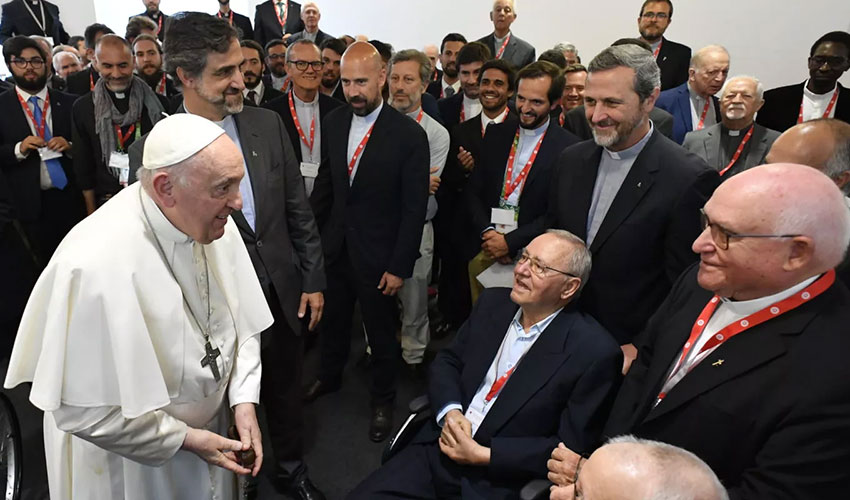
You can read the conversation here: https://www.laciviltacattolica.com/the-water-has-been-agitated/


Twenty-Second Sunday in Ordinary Time

St. Dominic Catholic Church

Saturday September 2, 2023.

3.00 p.m. Sacrament of Reconciliation (Confessional) Fr. Agustin

5. 00 p.m. Holy Mass – Fr. Agustin

Sunday September 3, 2023

7.30 a.m. Mass Fr. Agustin

10.00 a.m. Mass Fr. Agustin

12.30 p.m. Mass Fr. Jaime

3.00 p.m. Misa en Español Fr. Jaime


XXII Domingo del Tiempo Ordinario (Ciclo A)

El Bosco, Cristo con la Cruz a cuestas (1498), Monasterio de San Lorenzo de El Escorial (España)

Jesús pasó algún tiempo recorriendo las aldeas de Galilea. Allí vivió los mejores momentos de su vida. La gente sencilla se conmovía ante su mensaje de un Dios bueno y perdonador. Los pobres se sentían acogidos. Los enfermos y desvalidos agradecían a Dios su poder de curar y aliviar su sufrimiento. Y Jesús seguía su camino. En algún momento explicó a sus discípulos su decisión de subir  a Jerusalén; era necesario anunciar la Buena Noticia de Dios en el centro mismo de la religión judía. Era peligroso. Sabía que allí iba a padecer a manos de los dirigentes religiosos y las autoridades del templo. Y desde luego Pedro se rebela ante lo que está oyendo. Le horroriza imaginar a Jesús clavado en una cruz. Pedro piensa en un Mesías triunfante. A Jesús todo le tiene que salir bien. Por eso, lo toma aparte para tratar de convencerlo de evitar aquel mal trago. Jesús reacciona con una dureza inesperada. Este Pedro le resulta desconocido y extraño. No es el que poco antes lo ha reconocido como «Hijo del Dios vivo». Es muy peligroso lo que está insinuando. Por eso lo rechaza con toda su energía: «Apártate de mí Satanás». El texto dice literalmente: «Ponte detrás de mí». Ocupa tu lugar de discípulo y aprende a seguirme. No te pongas delante de mí desviándonos a todos de la voluntad del Padre. Jesús quiere dejar las cosas muy claras. Ya no llama a Pedro piedra sobre la que edificará su Iglesia; ahora lo llama piedra que me hace tropezar y me obstaculiza el camino. Ya no le dice que habla así porque el Padre se lo ha revelado; le hace ver que su planteamiento viene de Satanás. La gran tentación de los cristianos es siempre imitar a Pedro: confesar solemnemente a Jesús como Hijo del Dios vivo pero luego querer seguirle sin cargar con la cruz. Vivir el Evangelio sin renuncia ni coste alguno. Colaborar en el proyecto del reino de Dios y su justicia sin sentir el rechazo o la persecución. Queremos seguir a Jesús sin que nos pase lo que a él le pasó. No es posible. Seguir los pasos de Jesús siempre es peligroso. Quien se decide a ir detrás de él, termina casi siempre envuelto en tensiones y conflictos. Será difícil que conozca la tranquilidad. Sin haberlo buscado, se encontrará cargando con su cruz. Pero se encontrará también con su paz y su amor inconfundible. Los cristianos no podemos ir delante de Jesús sino detrás de él • AE


+ (más) lEcTurAS pArA el vERanO

Twenty-first Sunday of Ordinary Time (Cycle A)

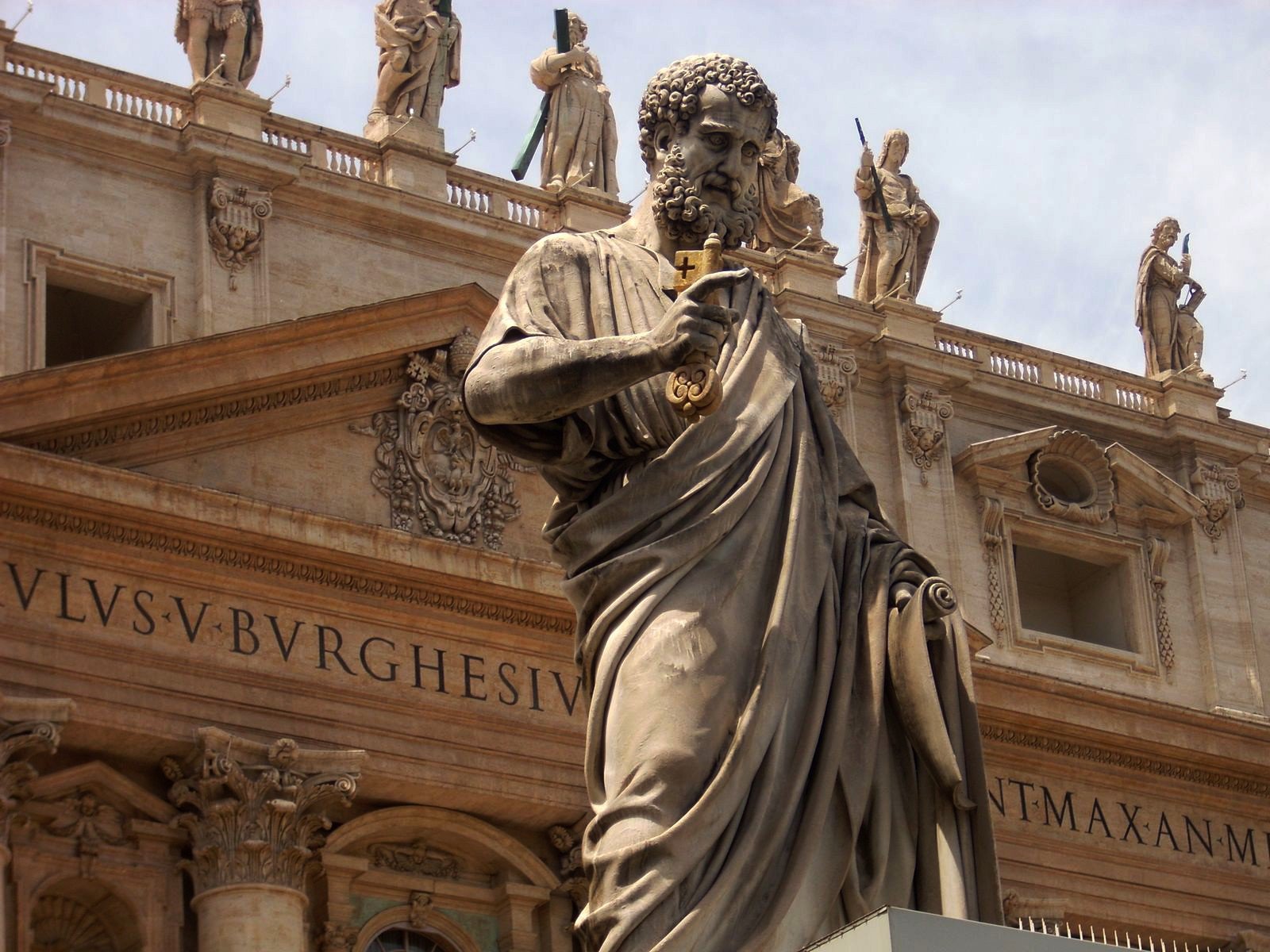
This Sunday we are presented with two figures who are given keys. The first is Eliakim. Eliakim was the secretary to Shebna the Master of King Hezekiah’s palace back in the 8th century before Christ. The Gospel reading presents Peter as receiving the keys of the Kingdom of God. Like Eliakim, he would determine who has access to the King. Peter is usually pictured as having carrying large keys, representing the authority given to him by the Lord. In the third chapter of the Book of Revelation, we read about the faithful people of the ancient city of Philadelphia in what is now Turkey. Because these people were devoted to Christ, they are told that the One who holds the keys of David has left the door open for them to pass through and enter into God’s Kingdom. So who holds the Keys of the Kingdom now? Jesus Christ is the judge of the Living and the Dead. He is the one who determines who will enter into God’s presence after their death. But who holds the Keys to the Kingdom here on earth? The answer is easy: since these Keys were entrusted to Peter, and since Peter was the head of the Church in Rome, Peter’s successor, the Bishop of Rome, holds the keys to the Kingdom. Right now, Pope Francis is that person. But the keys had been held by many before him. They will be held by all who will come after him. Pope Francis has captured the heart of the world, Catholic and Non-Catholic. His determination to allow the Church to be “poor and messy,” as he would say, has resulted in millions applauding his reaching out to the marginalized of our society. His firm and decisive actions to remove those from ministry whose lives do not reflect the following of Christ has been a refreshing change from the old “close and eye and/or handle this quietly” that seemed to be the modus operandi of many for many years. When he travels, people flock the streets to get a glimpse of this dynamic pope.

But who is Pope Francis? He is Jorge Mario Bergoglio, an Argentine with a wonderful smile and a huge heart. But people do not line the streets to see Jorge Mario Bergoglio. No, they come to see Pope Francis. Why? Why are they so determined to see Pope Francis? Because he is the Pope. He is the successor of Peter. He is the one who is entrusted with the keys to the kingdom. The people who line the streets during Papal visits all know that it is not just the man they are honoring; it is the office that the man holds they deeply respect. One time St. John Bosco came upon his boys calling out, “Viva Pio Nono,” “Long live, Pope Pius IX–actually more Hooray for Pope Pius IX.” St. John Bosco corrected them. He said, it is “Viva Il Papa.” Hooray for the pope, whoever that pope may be.” We have a concrete authority who guides us. He is rock-solid, to use the pun on the name Peter. Because of the Pope and the teaching authority of the Church, we know who we are when we say we are Catholic. We know the fundamental beliefs of our faith and the basic dictates of our morals. We are so firm in our faith, that even if those in authority should give us a poor example of living the faith, we still maintain our Christianity. When leaders are so caught up in their humanity that they don’t recognize the result of their actions, we all hurt. Yet, the Church still flourishes. Why? Because the Church is far more than individuals. It is the Body of Christ. The Borgia popes and others from the past certainly gave us poor examples of living the faith, at least by twenty-first century standards, but God still used them to guide His Church. Perhaps the most notorious of the popes was Julius II. One would be hard pressed to justify most of his life. Yet, he was the pope that gave the Church the Angelus.

So Today’s readings remind us why we honor the Vicar of Christ, the Pope. We do not honor him for the individual he is. We are not concerned with demagoguery. We do not honor Jorge Mario Bergoglio. We honor Pope Francis, a man who has been entrusted with the Keys of the Kingdom. In the recent centuries we have been blessed with popes who were certainly holy men. Blessed Pius IX, St. Pius X, St. John XXIII, St. Paul VI, and St. John Paul II all gave us examples of how to live our Christianity. These men were intensely spiritual throughout their lives, not just as popes. They were canonized for the way they lived their Christianity, not for the way they exercised their authority. Other popes may not be candidates for canonization, but they all were holy fathers, entrusted with the keys to the Kingdom. We pray today for our Holy Father, and for the one who hopefully a long time from now will succeed him, one, whom God has already picked. And we thank God for devising a way to lead us on earth through the ministry of the man we call pope • AE

Summer (2023) Readings


Twenty-Frist Sunday in Ordinary Time

St. Dominic Catholic Church

Saturday August 26, 2023.

3.00 p.m. Sacrament of Reconciliation (Confessional) Fr. Jaime

5. 00 p.m. Holy Mass – Fr. Jaime

Sunday August 27, 2023

7.30 a.m. Mass Fr. Jaime

10.00 a.m. Mass Fr. Jaime

12.30 p.m. Mass Fr. Agustin

3.00 p.m. Misa en Español Fr. Agustin


XXI Domingo del Tiempo Ordinario (Ciclo A)

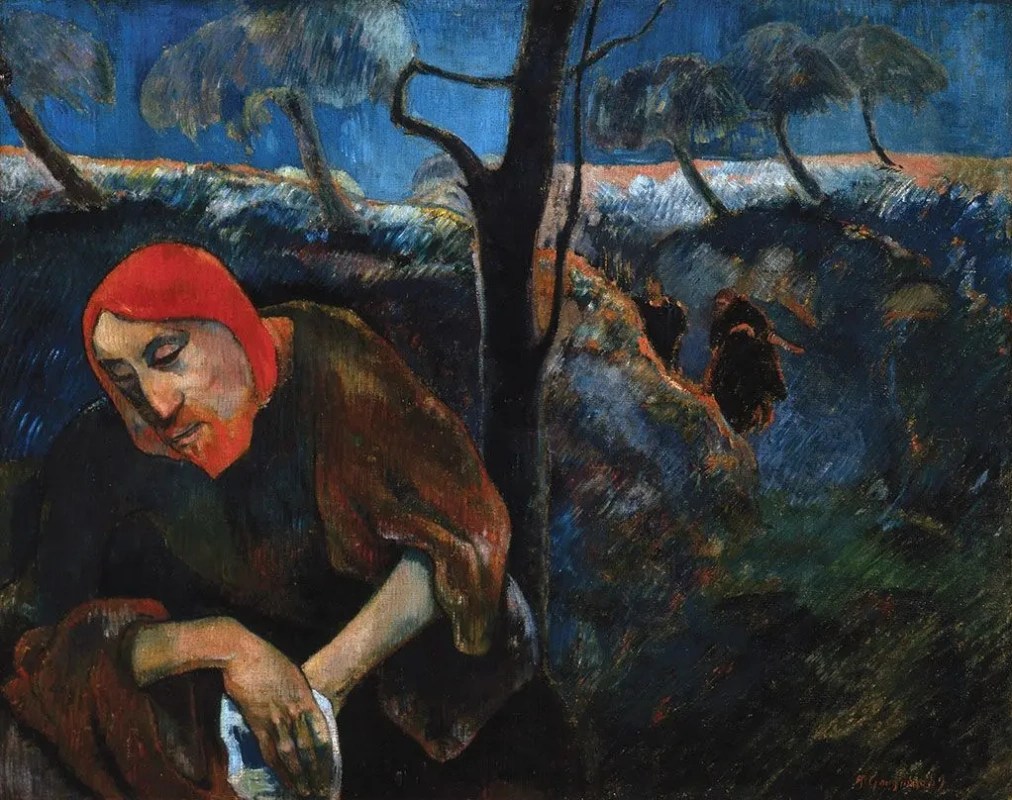
P. Gauguin, Cristo en el jardín de Getsemaní (1889), Norton Simon Museum (Pasadena, California)

«Y ustedes, ¿quién dicen que soy yo?». Esta es la gran pregunta que cada uno deberíamos saber responder. No basta seguir repitiendo fórmulas sobre Jesús. Es necesario un esfuerzo personal por intuir cada vez mejor qué misterio se encierra en este hombre en el que los creyentes descubrimos como en ninguna otra parte el rostro vivo de Dios. Jesús fue un profeta que comunicó a las gentes una experiencia única y original de Dios, pero sin desfigurarla con los miedos, ambiciones y fantasmas que las religiones suelen proyectar de ordinario sobre la divinidad. Para Jesús, Dios es amor compasivo. La compasión es la manera de ser de Dios, su primera reacción ante el ser humano y ante la creación entera. El nombre de Dios es Misericordia, nos dijo el Papa Francisco. Por eso, Jesús habla, actúa, vive y muere movido por la compasión. Jesús sólo vivió para implantar en el mundo lo que él llamaba «el reino de Dios». Fue la pasión que alentó su vida entera. Quería ver realizado entre los hombres el proyecto de Dios: una vida más digna y dichosa para todos, ahora y para siempre. Jesús no se dedicó a organizar una religión más perfecta desarrollando una teología más precisa sobre Dios o una liturgia más digna. Lo que verdaderamente le ocupaba fue la felicidad de la gente. Por eso se entregó a eliminar el sufrimiento y la enfermedad, a luchar contra todo lo que hace daño o permite la humillación de las personas. Jesús amó a los más pobres e indefensos de la sociedad. Otros muchos lo han hecho también antes y después de él. Lo más sorprendente es que, por encima de los pobres, nada ha amado más Jesús que a ellos, ni siquiera la religión, la ley o las tradiciones más venerables. Por tanto, ¿Quién es este hombre que, además de vivir sólo para la felicidad de los demás dio que su Padre quiere y busca una vida más digna y dichosa para todos? ¿Qué misterio se encierra en él? Para intuirlo, nada mejor que seguir sus pasos, hablando con él en la oración y en el silencio del sagrario • AE


Y yo te digo a ti que tú eres Pedro y sobre esta piedra edificaré mi Iglesia. Los poderes del infierno no prevalecerán sobre ella. Yo te daré las llaves del Reino de los cielos; todo lo que ates en la tierra, quedará atado en el cielo, y todo lo que desates en la tierra, quedará desatado en el cielo (Mt 16, 18)


Twentieth Sunday in Ordinary Time (Cycle A)

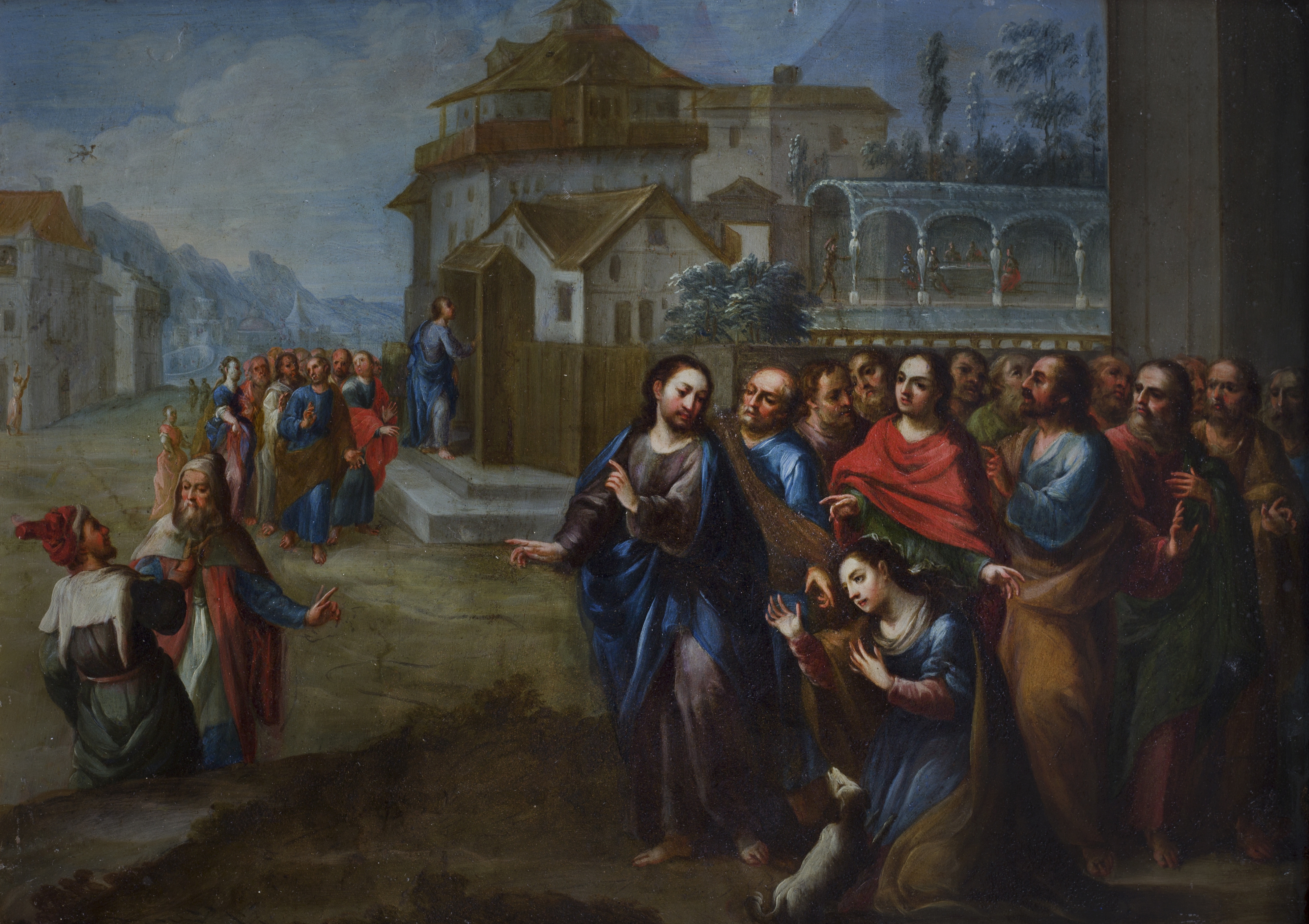
Mexican School, Jesus and the Canaanite woman (18th Century), Oil on copper, particular collection.

Faith is a raging fire. It spreads from person to person. When we are exposed to a person of faith, our faith grows. As our faith grows, we ignite others with the fire of God’s love. As others grow in faith, our faith increases. The Fire is the Fire of the Holy Spirit. Nothing can stop the flame. Nothing can stop the Spirit. One example of this. Most people are led to faith by their parents. They, in turn, lead their children to faith. Then something happens where they experience their children’s faith. Maybe it is something a child says during bedtime prayers. Perhaps a child becomes very sick and says that he knows God is taking care of him. Experiencing the faith of their children, parents grow in faith. When it comes to the Fire of Faith, the Love of God, the Holy Spirit, we have got to allow God to be God and experience His Presence however and whenever He calls out to us. We cannot do this if we put Him into some sort of box that we have created, describing how God can and cannot act. Nor can we tell others that we have the inner knowledge of whether God is in their lives or not. Everything that we do. Everything of value that happens here in Church and in our lives is about the Love of God whom we have been graced to know as Jesus the Christ.

The Mercy of God is infinitely greater than people’s concept of his mercy. God is infinitely greater than human beings. Human beings put others in hell if they do not fit into their nifty box that they label this or that religion. In today’s Gospel, human beings decided that since the Jews were the chosen people, Jesus should not bother with that Canaanite woman. “Send her away,” the disciples said. In the early days of the Church, St. Paul and others had to confront the fallacy that gentiles could not become better Christians than those Christians who had been fervent Jews. If we were to shut others out of our lives due to our own pride, we would deprive ourselves of being inflamed by the fire of God they have been given by the Holy and Merciful One. Billy Graham’s daughter sat in the third row from the front at the funeral of Pope St. John Paul II. Why? Why was she given this place of honor? She was there because the Vatican recognized and respected the Power of God present in the Billy Graham ministries.

Jesus sees all that is good within the human heart. He saw the faith of the Canaanite woman. He sees your faith and my faith. He knows how we are trying our best to serve Him. How wonderful is that? He knows us better than we know ourselves. He Loves us more than we love ourselves. This is what we have been called to do. We are called to throw the fire of God’s love upon the world. To do this we have to allow ourselves to be exposed to the fire of God’s love in others. Faith leads to faith. May we have the humility to experience God’s love in others and the grace to lead others to faith • AE


Twentieth Sunday in Ordinary Time

St Dominic Catholic Church

Saturday August 19, 2023.

10.00 a.m. Memorial Mass for Mr. Edward Baldwin Self III (+)

3.00 p.m. Sacrament of Reconciliation (Confessional) Fr. Agustin

5. 00 p.m. Holy Mass – Fr. Agustin

Sunday August 20, 2023

7.30 a.m. Mass Fr. Agustin

10.00 a.m. Mass Fr. Agustin

12.30 p.m. Mass Fr. Jaime

3.00 p.m. Misa en Español Fr. Jaime


XX Domingo del Tiempo Ordinario (Ciclo A)

Pintura japonesa interpretando la llegada de los jesuitas a Japón

El Señor nunca fue una especie de «conquistador religioso». Él mismo decía que su misión comenzaba con el pueblo de Israel, que había sido llamado para ser luz de los pueblos paganos, algo que ya había profetizado Isaías. Dentro de Israel, había sido esepecialmente enviado a las ovejas perdidas: los más pobres y olvidados, los más despreciados, los maltratados por la vida y la sociedad. Sin embargo, en un momento en la región de Tiro y Sidón, Jesús se encuentra con una mujer pagana que viene hacia él con un sufrimiento grande. Algo inquietante y siniestro se ha apoderado de ella; no puede comunicarse con su hija y asi la vida se le ha convertido en un infierno. De aquella madre pagana sólo nace un grito hacia Jesús: “¡Ten compasión de mí!”. La reacción de Jesús es extraña. Le conmueve la pena de aquella mujer luchando con fe por su hija. El sufrimiento humano no tiene fronteras ni conoce los límites de las religiones. Por eso, tampoco la compasión y la misericordia han de quedar encerrados en la propia religión. Jesús sabe bien que Dios no quiere ver sufrir a nadie. No pocas veces, la relación del cristianismo con otras religiones ha sido una relación de dominio, violencia y destrucción. Consciente de su poder, en algún momento de su historia, la Iglesia Católica se esforzó por imponer la doctrina cristiana e implantar su sistema religioso, contribuyendo a destruir culturas y desarraigar poblaciones enteras de sus propias raíces. Esto es una realidad. Una realidad que nacía sin duda de un deseo sincero de hacer cristianos a todos los pueblos, pero no era la manera más evangélica de hacer presente el Espíritu de Cristo en tierras paganas. Hoy las cosas han cambiado. Los cristianos hemos aprendido a acercamos al sufrimiento humano para tratar de aliviarlo. El trabajo de los misioneros y misioneras ha conocido una profunda transformación. Su misión no es conquistar pueblos para la fe, sino servir abnegadamente para liberar a las gentes del hambre, la miseria o la enfermedad. Asi es que son los misioneros los mejores testigos de Cristo sobre la Tierra, aquellos que tienen verdadera credibilidad. En un mundo en el que encontramos todos los días tanto dolor y tanta pobreza ¿Hacemos algo para parecemos un poco a ellos?  • AE


+ lEctURaS pArA el vEranO


Solemnity of the Assumption of the Blessed Virgin Mary (2023)

Anonymous, icon with the Koimesis (Dormition of the Virgin), 17th Century, British Museum (London)

The Assumption is the oldest and most solemn feast of Our Lady, the Blessed Virgin Mary. It is not mentioned in the New Testament, but it has been celebrated for at least sixteen hundred years. The Council of Chalcedon in 451 referred to it. The Eastern Orthodox churches, in a beautiful way, call it the “Falling Asleep of the All-Holy Mother of God” and celebrate it with even greater solemnity than we do. The Assumption means that God who planned the very first moment of Mary’s life with such extraordinary care also planned her very last moment just as carefully. At the first moment of her life, by a very special privilege of God, Mary was preserved free from the stain of sin. At the last moment, by another very special privilege she was preserved free from the corruption of the grave. At the end of her life Mary was assumed body and soul into heaven. In the Immaculate Conception the emphasis is on the soul. In the Assumption the emphasis is on the body. Both are important. They were made for each other. At death, there is only a temporary separation. Body and soul will be reunited in the Resurrection. The Assumption means that the body that participated in the battle of life will also participate in the victory. Today we are very aware of the importance of our body. We diet and we exercise. We watch the level of cholesterol and blood pressure. We realize that the body is the vehicle of life. We live as long and as well as the body supports the soul. We must be aware that our body is also the instrument of knowledge. All the knowledge we have come in originally from one of the five senses. The body is also the instrument of the communication of knowledge. No one can read our mind. We express our thoughts through the body, with language and signs. The body is also the instrument of grace. We receive the sacraments, the channels of grace, through the body. The body is also the instrument of worship. True worship is in spirit and truth. But it is expressed through the body in words, gestures, genuflections etc. The Liturgy is not only expressive of worship, but also creative of it, so what a magnificent creation is the body! The beautiful lesson of today’s solemnity is that the whole person, body and soul, participates in the battle of life and the whole person, body and soul, will participate in the victory. Today let us ask our blessed Mother, Assumed into heaven, to obtain for us the grace to respect deeply our body so that one day we may join her body and soul in heaven and to be people always in defense of life, from conception until natural death •


Solemnity of the Assumption of the Blessed Virgin Mary

Holiday of Obligation

Vigil Mass

Monday August 14, 2023, 6.00 p.m.

Mass during the Day

Tuesday August 15, 8.30 a.m. & 6.00 p.m. (bilingual Mass) 


Solemnidad de la Asunción de la Santísima Virgen María (2023)

J. Bradley, La Asunción de la Santísima Virgen Maria, fresco de la Parroquia de Santa Isabel de Portugal (Londres)

La fiesta de la Asunción de la Santísima Virgen María es un grito de fe en que es posible la salvación y la felicidad: que es verdad el programa salvador de Dios. Es una respuesta a los pesimistas que todo lo ven negro. Es una respuesta al hombre materialista, que no ve más que los factores económicos o sensuales. La Asunción de la Virgen es la prueba de que el destino del hombre no es la muerte, sino la vida. Y, además, que es toda la persona humana, alma y cuerpo, es la que está destinada a la vida total. En María Santísima ya ha sucedido. En nosotros no sabemos cómo y cuándo sucederá, pero tenemos confianza en Dios pues lo que ha hecho en ella quiere hacerlo también en nosotros. Cada vez que participamos en la Eucaristía, elevamos a Dios nuestro canto de alabanza, exactamente como hizo la Santísima Virgen en el Magníficat. La plegaria eucarística es de hecho como un Magníficat prolongado por la historia de amor y salvación que va construyendo Dios. Cada vez que participamos en la Eucaristía recibimos como alimento el Cuerpo y la Sangre del Señor Resucitado. La Eucaristía es como la semilla y la garantía de la vida inmortal para los seguidores de Jesús. Por tanto, de alguna manera, también nosotros estamos recorriendo el camino hacia la gloria, como la que ya conseguido María, la Madre. Así, cada Eucaristía nos acerca al misterio de la Asunción. Si la celebramos bien, con amor, devoción y reverencia vamos pues por buen camino •


Nineteenth Sunday in Ordinary Time (Cycle A)

Sometimes we look for the Lord with pre-conceived notions of how He should appear. We expect to find God in a powerful manifestation of His presence. Sometimes we are so concerned with finding Him in a mighty display of natural events that we miss His presence in the tiny whispering voice of faith. We seek the Lord in powerful miracles, and we miss hearing His voice in our children, our family or our church community. We have to stop determining how God should be and simply be open to His presence wherever He is, in others and even in ourselves. We have to let God be God: mysterious, loving, present in more ways than we could ever understand. We have all heard people say, «I come to Church, but I get nothing out of it.» Maybe we have all said that at times, or at least felt that way. Well, if we have received the Eucharist, then we have received infinitely more than we could know or appreciate. But people might say, “I know that, but I still often leave Mass feeling an emptiness.” The problem is that we are deciding how God should be present during the Mass instead of opening ourselves to the many ways that He is manifesting Himself. Maybe we are looking for feelings of spiritual satisfaction. But, perhaps, today God might not be in the fire–or in warm fuzzies. Maybe we are seeking an answer to one of our problems. But, perhaps, today the Lord might not be in the earthquake–or in instant solutions to our difficulties. Maybe we are looking for a new insight into our lives, but perhaps today the Lord may not be in the wind–He might not be breaking the boulders of our self-perception. But the Lord is still there. He is always with us. We might not know where, but He is there. For there is a small voice that says He is the reason for everything around us in Church and in our world, from the crucifix over the altar, to the Word of God proclaimed, to the Eucharist we share, to the blessing we ask for over our food, to the morning prayers and evening prayers we say and the bedtime prayers with the children, to the wonders of every person God has ever created, to the beauty of his babies, to the marvels of nature. Everything radiates the Presence of God. He is within each of us, loving us as individuals and uniting us into the community of love. If we come to Mass and claim we are not getting anything out of it, if we go through life claiming that we cannot find God, it is because we are looking for God where we expect Him to be, not where He is. How is it that Elijah heard the tiny whispering sound in the middle of the roar of the wind, the crashing of rocks, the earthquake, the fire? He settled himself down; he suppressed his own expectations, and he let God speak to Him as God chose to speak to Him. There is noise around us. We are so accustomed to it that we don’t even notice it. We may be living near a busy road, but we tend to tune out the traffic, but we don’t make as much of an effort to tune out the internal noise. We let our thoughts ramble in prayer. We let our minds fly attempting to solve a problem. We need to quiet ourselves down. We need to free ourselves for quiet time. We need to make a prayer space in our homes or in our rooms, a space where we can just focus in on God. This is more than freedom from external noise. We need to allow ourselves to experience the internal quiet and peace that comes from being in the Presence of God. That is the simple message of today’s first reading. God is present for each of us. He speaks to each of us. We just need to do a better job listening to Him • AE


St. Dominic Catholic Church

Nineteenth Sunday in Ordinary Time

Saturday August 12, 2023.

3.00 p.m. Sacrament of Reconciliation (Confessional) Fr. Agustin

5. 00 p.m. Installation Mass for Fr. Jaime Paniagua presided by

Archbisop Gustavo Garcia-Siller, M.Sp.S.

Sunday August 13, 2023

7.30 a.m. Mass Fr. Jaime

10.00 a.m. Mass Fr. Jaime

12.30 p.m. Mass Fr. Agustin

3.00 p.m. Misa en Español Fr. Agustin


XIX Domingo del Tiempo Ordinario (Ciclo A)

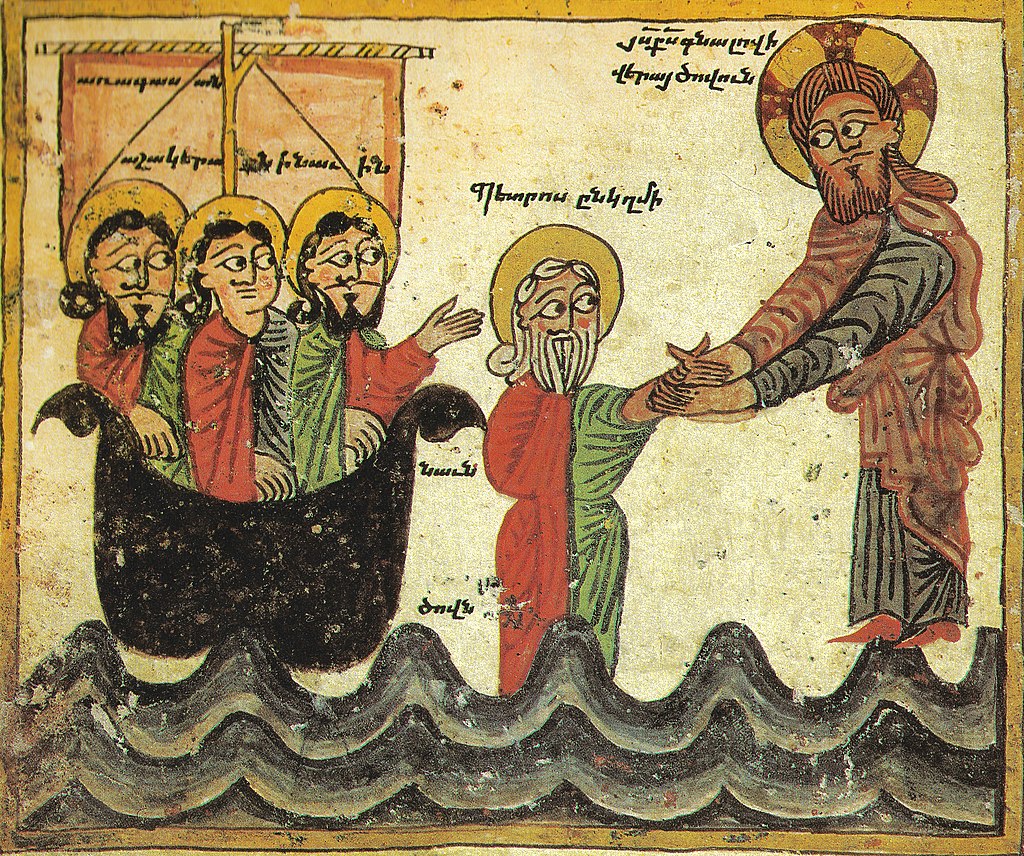
Artista anónimo, Jesús y Pedro caminando sobre el agua (1433), manuscrito armenio.

Son muchos los creyentes que estos últimos años se han sentido a la intemperie y como desamparados en medio de una crisis y confusión general. Los pilares en los que tradicionalmente se apoyaba su fe se han visto sacudidos violentamente desde sus raíces. La autoridad de la Iglesia, la infalibilidad del Papa, el magisterio de los Obispos, ya no pueden sostenerlos en sus convicciones religiosas. Un lenguaje nuevo y desconcertante ha llegado hasta sus oídos creando un malestar y una confusión antes desconocidos. La falta de unidad en los mismos sacerdotes y hasta en los Obispos les ha sumido en el desconcierto. Con mayor o menor sinceridad muchos se preguntan a quién deben creer, a quién escuchar, qué moral hay que seguir. Y muchos son los que al no poder responder a estas preguntas con la certeza de otros tiempos, tienen la sensación de estar perdiendo la fe. Es importante no confundir nunca la fe con la mera afirmación teórica de unas verdades o principios. Ciertamente, la fe implica una visión de la vida y una peculiar concepción del hombre, su tarea y su destino último. Pero ser creyente es algo mucho más profundo, y más radical. Y consiste, antes que nada, en una apertura confiada a Jesucristo como sentido último de toda nuestra vida, criterio definitivo de nuestro amor a los hermanos, y esperanza última de nuestro futuro. Por eso, se puede ser verdadero creyente y no ser capaz de formular con certeza determinados aspectos de la concepción cristiana de la vida. Y se puede también afirmar con seguridad absoluta los diversos dogmas cristianos y no vivir entregados a Dios en actitud de fe. San Mateo nos ha descrito la verdadera fe al presentar a Pedro que caminaba sobre el agua acercándose a Jesús. Eso es creer. Caminar sobre el agua y no sobre tierra firme. Apoyar nuestra existencia en Dios y no en nuestras propias razones, argumentos y definiciones. Vivir sostenidos no por nuestra seguridad, sino por nuestra confianza en Él • AE


+ lEcTurAs pArA eL vEranO