
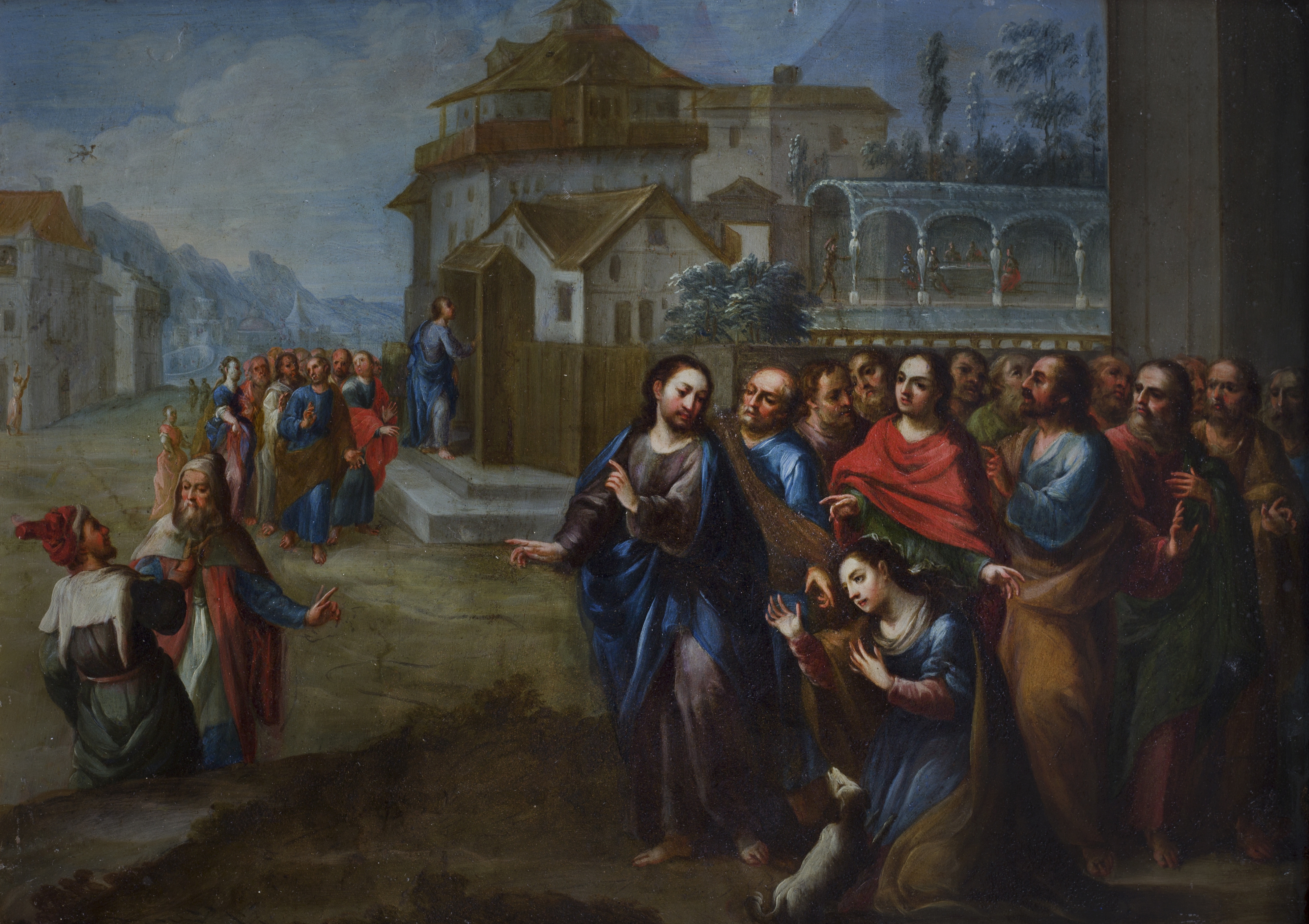
Mexican School, Jesus and the Canaanite woman (18th Century), Oil on copper, particular collection.
Faith is a raging fire. It spreads from person to person. When we are exposed to a person of faith, our faith grows. As our faith grows, we ignite others with the fire of God’s love. As others grow in faith, our faith increases. The Fire is the Fire of the Holy Spirit. Nothing can stop the flame. Nothing can stop the Spirit. One example of this. Most people are led to faith by their parents. They, in turn, lead their children to faith. Then something happens where they experience their children’s faith. Maybe it is something a child says during bedtime prayers. Perhaps a child becomes very sick and says that he knows God is taking care of him. Experiencing the faith of their children, parents grow in faith. When it comes to the Fire of Faith, the Love of God, the Holy Spirit, we have got to allow God to be God and experience His Presence however and whenever He calls out to us. We cannot do this if we put Him into some sort of box that we have created, describing how God can and cannot act. Nor can we tell others that we have the inner knowledge of whether God is in their lives or not. Everything that we do. Everything of value that happens here in Church and in our lives is about the Love of God whom we have been graced to know as Jesus the Christ.
The Mercy of God is infinitely greater than people’s concept of his mercy. God is infinitely greater than human beings. Human beings put others in hell if they do not fit into their nifty box that they label this or that religion. In today’s Gospel, human beings decided that since the Jews were the chosen people, Jesus should not bother with that Canaanite woman. “Send her away,” the disciples said. In the early days of the Church, St. Paul and others had to confront the fallacy that gentiles could not become better Christians than those Christians who had been fervent Jews. If we were to shut others out of our lives due to our own pride, we would deprive ourselves of being inflamed by the fire of God they have been given by the Holy and Merciful One. Billy Graham’s daughter sat in the third row from the front at the funeral of Pope St. John Paul II. Why? Why was she given this place of honor? She was there because the Vatican recognized and respected the Power of God present in the Billy Graham ministries.
Jesus sees all that is good within the human heart. He saw the faith of the Canaanite woman. He sees your faith and my faith. He knows how we are trying our best to serve Him. How wonderful is that? He knows us better than we know ourselves. He Loves us more than we love ourselves. This is what we have been called to do. We are called to throw the fire of God’s love upon the world. To do this we have to allow ourselves to be exposed to the fire of God’s love in others. Faith leads to faith. May we have the humility to experience God’s love in others and the grace to lead others to faith • AE

Twentieth Sunday in Ordinary Time
St Dominic Catholic Church

Saturday August 19, 2023.
10.00 a.m. Memorial Mass for Mr. Edward Baldwin Self III (+)
3.00 p.m. Sacrament of Reconciliation (Confessional) Fr. Agustin
5. 00 p.m. Holy Mass – Fr. Agustin
Sunday August 20, 2023
7.30 a.m. Mass Fr. Agustin
10.00 a.m. Mass Fr. Agustin
12.30 p.m. Mass Fr. Jaime
3.00 p.m. Misa en Español Fr. Jaime
XX Domingo del Tiempo Ordinario (Ciclo A)

Pintura japonesa interpretando la llegada de los jesuitas a Japón
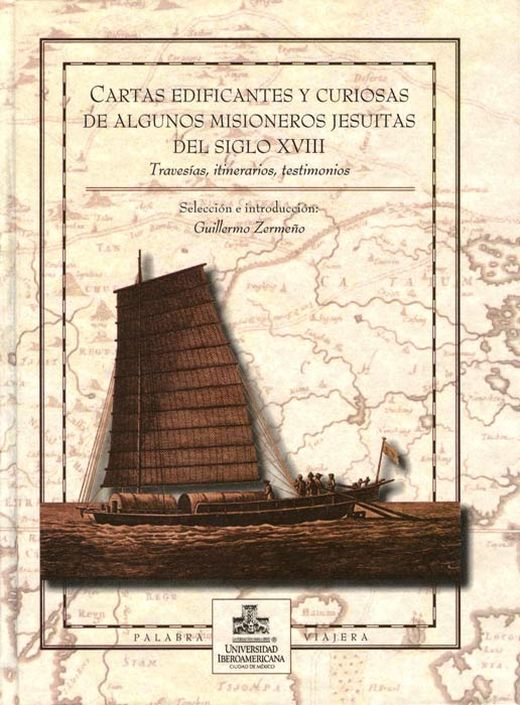
El Señor nunca fue una especie de «conquistador religioso». Él mismo decía que su misión comenzaba con el pueblo de Israel, que había sido llamado para ser luz de los pueblos paganos, algo que ya había profetizado Isaías. Dentro de Israel, había sido esepecialmente enviado a las ovejas perdidas: los más pobres y olvidados, los más despreciados, los maltratados por la vida y la sociedad. Sin embargo, en un momento en la región de Tiro y Sidón, Jesús se encuentra con una mujer pagana que viene hacia él con un sufrimiento grande. Algo inquietante y siniestro se ha apoderado de ella; no puede comunicarse con su hija y asi la vida se le ha convertido en un infierno. De aquella madre pagana sólo nace un grito hacia Jesús: “¡Ten compasión de mí!”. La reacción de Jesús es extraña. Le conmueve la pena de aquella mujer luchando con fe por su hija. El sufrimiento humano no tiene fronteras ni conoce los límites de las religiones. Por eso, tampoco la compasión y la misericordia han de quedar encerrados en la propia religión. Jesús sabe bien que Dios no quiere ver sufrir a nadie. No pocas veces, la relación del cristianismo con otras religiones ha sido una relación de dominio, violencia y destrucción. Consciente de su poder, en algún momento de su historia, la Iglesia Católica se esforzó por imponer la doctrina cristiana e implantar su sistema religioso, contribuyendo a destruir culturas y desarraigar poblaciones enteras de sus propias raíces. Esto es una realidad. Una realidad que nacía sin duda de un deseo sincero de hacer cristianos a todos los pueblos, pero no era la manera más evangélica de hacer presente el Espíritu de Cristo en tierras paganas. Hoy las cosas han cambiado. Los cristianos hemos aprendido a acercamos al sufrimiento humano para tratar de aliviarlo. El trabajo de los misioneros y misioneras ha conocido una profunda transformación. Su misión no es conquistar pueblos para la fe, sino servir abnegadamente para liberar a las gentes del hambre, la miseria o la enfermedad. Asi es que son los misioneros los mejores testigos de Cristo sobre la Tierra, aquellos que tienen verdadera credibilidad. En un mundo en el que encontramos todos los días tanto dolor y tanta pobreza ¿Hacemos algo para parecemos un poco a ellos? • AE

+ lEctURaS pArA el vEranO
 LA MEDITACION DE LA ESPOSA