
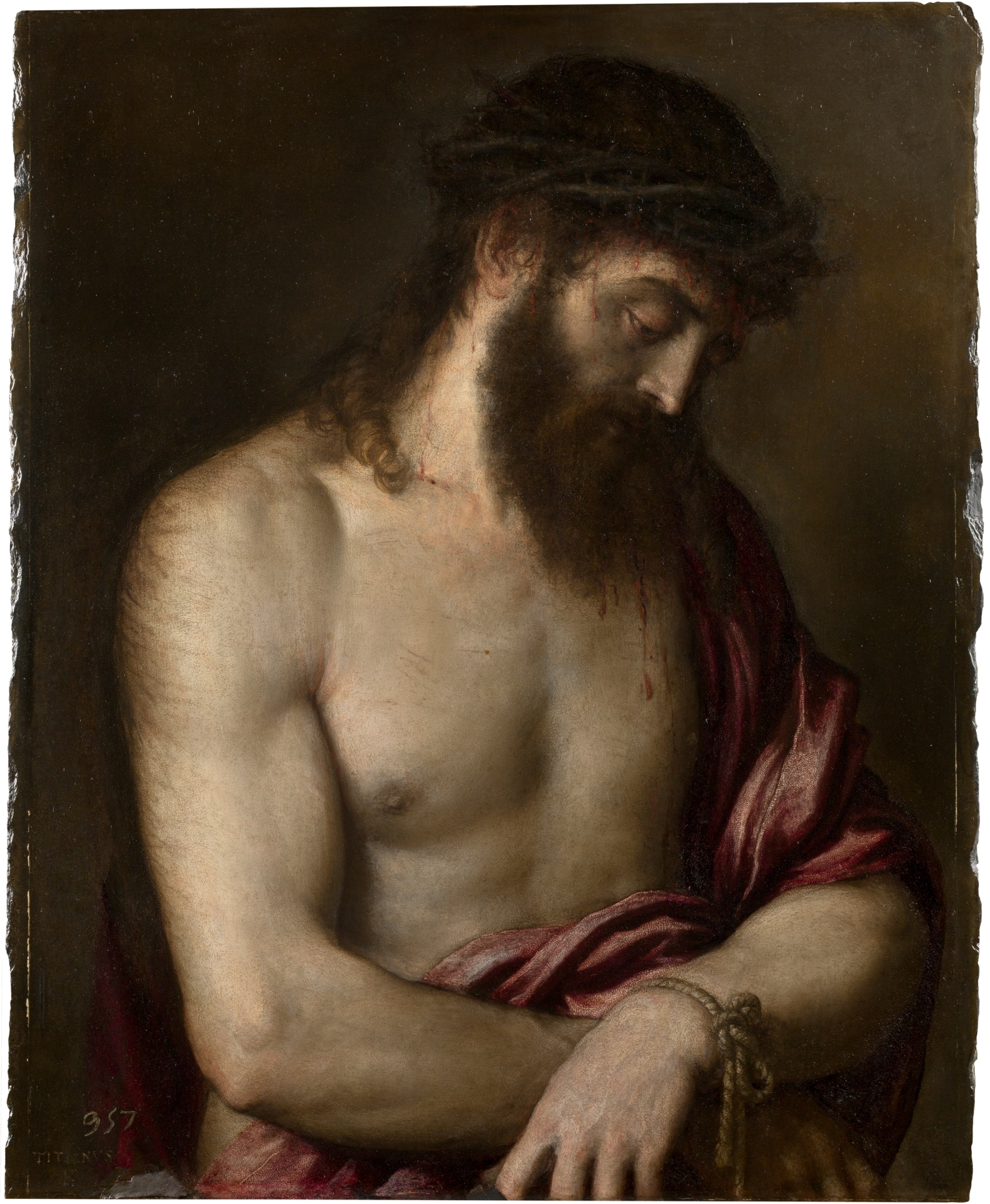
Tiziano, Ecce Homo (1546) oil on canvas, Museo Nacional del Prado (Madrid)
Here we have two rough questions from Sirach’s book this morning: Could anyone nourish anger against another and expect healing from the LORD? Could anyone refuse mercy to another like himself, can he seek pardon for his own sins? Two questions for our moment of prayer, to do our time of silence and dialogue with Jesus. Two questions and one good reason to start our path of forgiveness. That’s the invitation for today, to begin that process of inner healing. And the first step is to keep in mind that forgiveness is not a feeling, or a sensation; forgiveness is not something that comes spontaneously like compassion, or sympathy, or even friendship. Forgiveness is actually a decision. A very personal decision. To begin to forgive, we need to do an act of will; I personally need to say: «I would like, today, to start this process». Forgiveness is a path that is better to start earlier than later, because life is short, and the path can be long, long and difficult, but not impossible: We are capable of forgiving for various reasons. The first one is that we are not alone on the road: We have the help of the Lord, His mercy and love, in addition to His forgiveness. This is what the Gospel of today is about: we are invited, (invited, not forced!) to imitate the generosity and magnanimity of the master of the servant. Certainly, the Lord sets the bar very high: He is not asking to forgive superficially but completely and forever: with all our hearts: a superficial forgiveness ends up getting infected again. So, is it possible to forgive well, completely and forever? Yes: it is possible. It takes effort, but it is possible. And more questions pop up: from where do I get the strength for such an action? Well, strength comes from the Lord. The big problem with us Christians is that we do not imitate him, that we pay little attention to his life. Jesus is patient and forgiving, especially during His passion and death. When the time comes to begin the path of forgiveness, the best map we can follow is the map of the Passion of the Lord; we have that map in the four gospels. Each one tells moments that can be adjusted to our circumstances. From serious meditation we can draw strength and inspiration to begin to forgive. Observing Jesus meek and humble can be a great source of inspiration, so why not try? There is a moment in the life of the Lord that has always caught my attention. After being resurrected, he has encounters with different people: the apostles, Mary Magdalene, the disciples of Emmaus, but Jesus never appears to Pontius Pilate to settle accounts with him. Nor does He appear to the soldiers who spit on Him. And with the apostles He has no words of scolding, or anger, or revenge for having abandoned Him and boy did they deserve it. Jesus forgave immediately and forever, and He continues to do so with our sins whenever we go to Confession. So, when he makes an invitation to forgive and to love our enemies it’s because he’s done it before, and he’s going to do it to the end.
Perhaps this evening before going to sleep we can go back one more time to read the first reading of today´s liturgy and meditate a bit on those two rough questions: Could anyone nourish anger against another and expect healing from the LORD? Could anyone refuse mercy to another like himself, can he seek pardon for his own sins? And perhaps we could ask the Lord for the gift of clarity and wisdom on our minds and hearts to understand why resentment grows so fast inside us, why don’t we forgive easily, and why do we have enemies. This last point is important: if we call ourselves Christians and if we want to be like Christ …we must feel an authentic love for everyone, (and love means forgiveness) Including those who have inflicted any damage on us; those who do not think, those who do not feel like us; those who are not our friends. The starting point for an authentic and profound forgiveness is Jesus who loved us to the point of dying for all, also for those who did not believe, or do not believe, in Him • AE

St. Dominic Catholic Church
Week-End Schedule

Saturday September 16, 2023.
2.30 p.m. Sacrament of Matrimony for Jose de Jesus & Krystal
3.45 p.m. Sacrament of Reconciliation (Confessional) Fr. Agustin
5. 00 p.m. Holy Mass – Fr. Agustin
Sunday September 17, 2023
7.30 a.m. Mass Fr. Jaime
10.00 a.m. Mass Fr. Jaime
12.30 p.m. Mass Fr. Agustin
3.00 p.m. Misa en Español Fr. Agustin
Domingo XXIV del Tiempo Ordinario (Ciclo B)

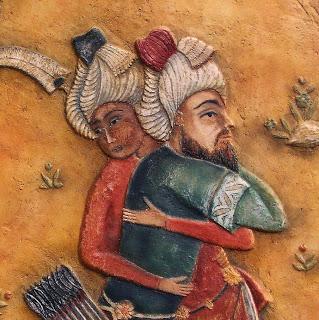
Detalle en relieve de una pintura islámica, siglo XVII.
Vivimos todavía los creyentes de hoy una experiencia honda del perdón de Dios, o no necesitamos ya sentirnos perdonados por nadie? Se nos ha hablado tanto del riesgo a vivir con una conciencia morbosa de pecado que ya no nos atrevemos a insistir en nuestra propia culpabilidad para no generar en nosotros sentimientos de angustia o frustración. Preferimos vivir de manera más irresponsable, atribuyendo todos nuestros males a las deficiencias de una sociedad mal organizada o a las actuaciones injustas que, naturalmente, siempre provienen de los demás. Pero, ¿no es ésta la mejor manera de vivir engañados, separados de nuestra propia verdad, sumergidos en una secreta tristeza de la que sólo logramos escapar huyendo hacia la inconsciencia o el cinismo? ¿No necesitamos en lo más hondo de nuestro ser, confesar nuestro propio pecado, sentirnos comprendidos por Alguien, sabernos aceptados con nuestros errores y miserias, ser acogidos y restituidos de nuevo a nuestro ser más auténtico? La experiencia del perdón es una experiencia humana tan fundamental que el individuo que no conoce el gozo de ser perdonado, corre el riesgo de no crecer como hombre. La parábola de Jesús de este domingo nos recuerda esto una vez más. Quien no se ha sentido nunca comprendido por Dios, no sabe comprender a los demás. Quien no ha gustado su perdón entrañable, corre el riesgo de vivir sin entrañas, como el siervo de la parábola, endureciendo cada vez más sus exigencias y reivindicaciones y negando a todos la ternura y el perdón. Hemos creído que todo se podía lograr endureciendo las luchas, despertando la agresividad social y potenciando el resentimiento de las gentes. Hemos expulsado de entre nosotros el perdón y la mutua comprensión como algo inútil, propio de personas débiles y resignadas. Nos estamos acostumbrado a una espiral de represalias, revanchas y venganzas. Ya hemos logrado vivir estrangulándonos unos a otros y gritándonos todos mutuamente “Págame lo que me debes”. Sólo que no está claro que este camino haya de llevarnos a una convivencia más justa y a unas relaciones más cálidas y más humanas. Sin dosis constantes del perdón divino y del perdón humano, vamos caminando hacia un desfiladero • AE

 LA MEDITACION DE LA ESPOSA