
Thirtieth Sunday in Ordinary Time (Cycle A)

The heart of Christian morality is the desire to love God fully, completely, and to love others as unique reflections of God’s love. We can see an analogy in the love we must have in the love that good parents have for their children. Parents do not try to find the minimal amount of love they must have to be good parents. Parents continually give their love because they know their children need their love. Parents do not love their children because they are afraid that if they do not love their children God will punish them. Parents love their children because they are their children. Parents love their children for whom they are, expressions of love, loving them back. Parents do not love their children due to their looks, talents, or intelligence. They love them because they are their children. God loves us because we are His children!

In today’s gospel the Lord is not calling us to be minimalists. He is calling us to love God and neighbor completely, without counting the cost. God wants us to love him with our whole mind, our whole heart, and our whole soul. So, we are invited (invited, never forced) to consider that the only love that is real is the love that gives. This is the love where He is present. This is the love that God wants us to have for each other. Loving God with our whole heart is really loving our neighbors as ourselves because it is loving as God loves. God wants our whole soul. God wants all those qualities that distinguish us from animals. He wants our ability to love and to think, but also our ability to imagine, our ability to choose, our ability to express ourselves as individuals, our ability to be who we are, created in his image and likeness.

So, if we want to have meaning in our lives, if we want to die knowing that we have been faithful to the whole reason we have been created, then we have to give all we have back to God. In his encyclical on love, Deus Caritas Est, God is Love, Pope Benedict XVI noted the three words for love used by the ancient Greeks: eros, philia, and agape. Eros refers to physical love without any spiritual qualities. Philia refers to the love of friendship. This is the love people have for each other. Agape refers to love that is the heart of the relationship with God. Agape is the love that wants others to join us in a relationship with God. Christian love should be shared with everyone, regardless of our feelings. It is the kind of love which Jesus commanded that we show even to those who continue to hurt us. It means following the one who on the cross forgave his executioners, “Father, forgive them for they do not know what they are doing.” • AE


St. Dominic Catholic Church

Weekend Schedule

Saturday October 28, 2023

8.00 a.m. -5.00 p.m. Rise Up Women´s Day Retreat– Fr. Agustin E.

11.30 a.m. Sacrament of Baptism for Elias Robinson

3.00 p.m. Sacrament of Reconciliation (Confessional) – Fr. Agustin E.

5.00 p.m. Holy Mass – Fr. Jaime P.

Sunday October 29, 2023

7.30 a.m. Holy Mass – Fr. Jaime P.

10.00 a.m. Holy Mass – Fr. Jaime P.

12.30 p.m. Holy Mass – Fr. Agustin E.

3.00 p.m. Santa Misa – Fr. Agustin E.


XXX Domingo del Tiempo Ordinario (Ciclo A)
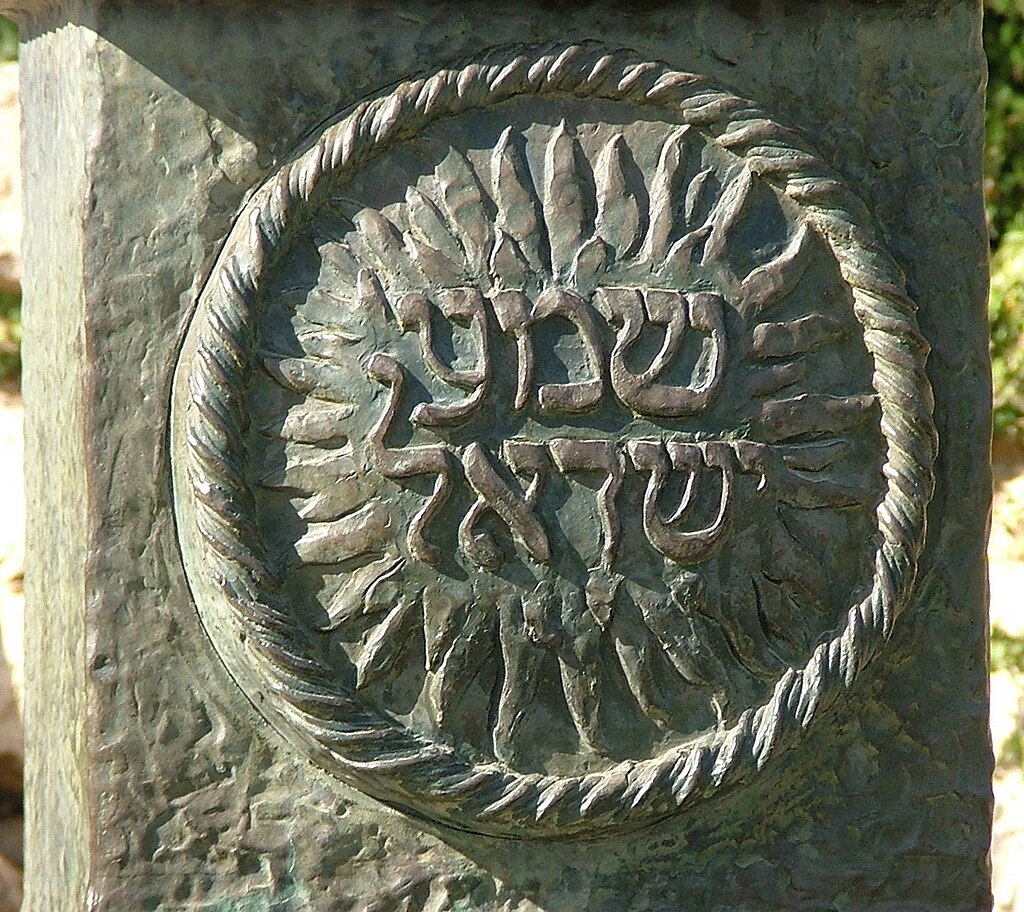
Shema Israel en la Menorá de la Knesset, en Jerusalén

La escena del evangelio de este domingo tiene como trasfondo una atmósfera religiosa en la que maestros de la ley y gente que conocía bien la Escritura clasifican cientos de mandatos de la Ley en fáciles y difíciles, graves y leves, pequeños y grandes, al final ¡Qué difícil moverse con un corazón sano en una red así!

Cuando olvidamos lo esencial, fácilmente caemos en mediocridad piadosa o en una casuística moral insoportable, que no sólo nos incapacitan para una relación sana con Dios, sino que podrían desfigurar y hasta destruir la vida espiritual.

La pregunta que plantean a Jesús busca recuperar lo esencial, descubrir el espíritu perdido: ¿Cuál es el mandato principal?, ¿Qué es lo esencial?, ¿Dónde está el núcleo de todo? La respuesta de Jesús, como la de Hillel y otros maestros judíos, recoge la fe básica de Israel: «Amarás al Señor, tu Dios, con todo tu corazón, con toda tu alma, con todo tu ser». Que nadie piense que se está hablando aquí de emociones o sentimientos hacia un Ser Imaginario, ni de invitaciones a rezos y devociones. «Amar a Dios con todo el corazón» es reconocer humildemente el Misterio último de la vida; orientar confiadamente la existencia de acuerdo con su voluntad: amar a Dios como fuerza creadora y salvadora, que es buena y nos quiere bien. Todo esto marca decisivamente la vida, pues significa alabar la existencia desde su raíz; tomar parte en la vida con gratitud; optar siempre por lo bueno y lo bello; vivir con corazón de carne y no de piedra; resistirnos a todo lo que traiciona la voluntad de Dios negando la vida y la dignidad de sus hijos e hijas. Por eso el amor a Dios es inseparable del amor a los hermanos. Así lo recuerda Jesús: «Amarás a tu prójimo como a ti mismo». No es posible el amor real a Dios sin descubrir el sufrimiento de sus hijos e hijas. ¿Qué religión sería aquella en la que el hambre de los desnutridos o el exceso de los satisfechos no planteara pregunta ni inquietud alguna a los creyentes? No cabe duda: el cristianismo es pasión por Dios y compasión por la humanidad • AE


pAra lEer en oToño

Twenty-ninth Sunday in Ordinary Time (Cycle A)


Close Up An American One Dollar Bill Featuring The Saying «In God We Trust».

In today’s gospel Jesus was not going to let the Herodians declare that he was an enemy to Caesar by refusing to pay taxes, nor was he going to let the Pharisees declare that he was an enemy to the Hebrew people by paying taxes. The phrase “Render to Caesar what is Caesar’s and to God what is God’s,” has deeper implications, particularly to us here in the United States.

First of all, “render to Caesar what is Caesar’s.” We have a responsibility to be good citizens of our country. That means participating in protecting our country from those who would destroy it by joining the military and by supporting those in the military. If we, as Catholics, want the laws of our country to be based on principals of Catholic morality and social justice, we have to take part in the government, not be bystanders. Yes, we need to vote, but more than vote, we need to be actively engaged in the working of our government. This is how we can lead our country to develop and expand our democracy. Of course, the least we can do is vote, not just in presidential elections but in every election. Our voice needs to be heard. Finally, we need to support our government by each of us paying our fair share in taxes. No one likes taxes, but all of us want to know that our country is going to protect us and, when we are sick and or elderly, care for us. We need to pay our soldiers and sailors and fund our department of defense. We need to be sure that our towns, cities, counties and states have the resources they need to govern us correctly. We need to pay our first responders, police and fire, and all who work in our school system, water department, motor vehicle system, etc. etc. All of us who pay taxes, from local to federal, are invested in our government, and are proud of our government.

Infinitely more important is the second dictate of the Lord, “Render to God what is God’s.” Our citizenship is in heaven. The main goal of each of our lives must be to spread the Kingdom of God. We must spread the Good News, the Gospel, that Jesus Christ has reunited us to our Heavenly Father. When we live his life in our own lives, he gives beauty and purpose and meaning to our lives. We were not created for the material world. We were created for love. To serve Him. God is greater than us. He created us and sustains us in being. In serving Him, we serve ourselves as well, in the sense that each of us becomes that unique person that God wishes us to be. We are meant to live for God. That is service. And to be Happy with Him forever.

When God made me and you and everyone else, He intended for us to be drawn into the very life of the Trinity and to enjoy eternal happiness. But He gave us the freedom to make that choice. This is what love is. Love is a choice. We choose to be with Him forever. We choose to reject all that is not Him. We fight against sin. Our reward is union with God. We can have a glimpse of this union in our life while we are in the physical world. There are times, sometimes just fleeting moments, when we feel completely at peace with ourselves and with God. How wonderful life will be when we are completely united to God. That is heaven. Render unto God what is God’s. What is God’s? “The world is the Lord’s and its fullness thereof,” we hear in Psalm 24. Other people are the Lord’s. We are the Lord’s. He has given Himself to us so that we can live for Him. We belong to Him. When we care for others, particularly those who reach out to us in their need, we care for his Presence within them. So can an American be a good Catholic? Can a good Catholic be an American? Of course, on both counts. A good Catholic cares for his country because he loves God and wants his country to continue to reflect the love of God in every aspect of national life. By serving his country properly, as a committed Catholic, he will be serving God. Our prayer today is for God to help us render unto Caesar what is Caesar’s and unto God what is God’s • AE


St. Dominic Catholic Church

Weekend Schedule

Saturday October 21, 2023

7.00 a.m. Mass for ACTS Retreat (Cordi Marian Retreat Center) – Fr. Agustin E.

2.30 p.m. Sacrament of Matrimony for Ezequiel & Mayra – Fr. Agustin E.

3.30 p.m. Sacrament of Reconciliation (Confessional) – Fr. Agustin E.

5.00 p.m. Holy Mass – Fr. Agustin E.

Sunday October 22, 2023

7.30 a.m. Holy Mass – Fr. Agustin E

10.00 a.m. Holy Mass – Fr. Agustin E.

12.30 p.m. Holy Mass – Fr. Jaime P.

3.00 p.m. Santa Misa – Fr. Jaime P.


XIX Domingo del Tiempo Ordinario (Ciclo A)

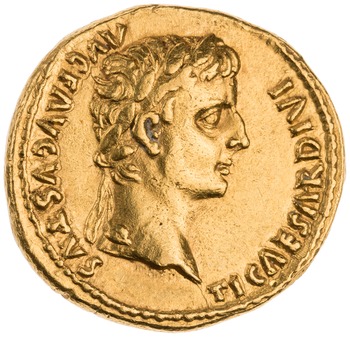
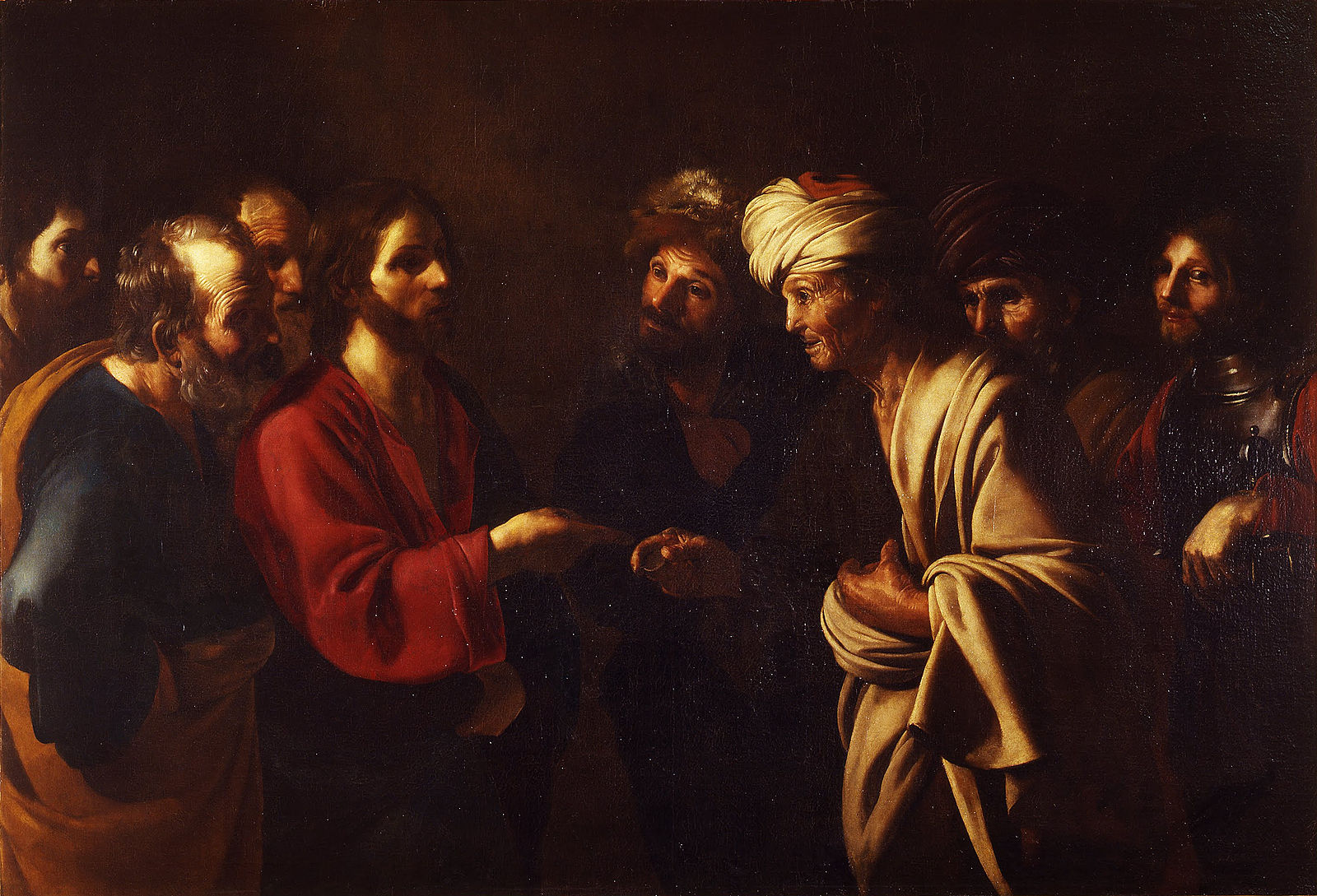
La trampa que tienden al Señor está bien pensada: «¿Es lícito pagar tributos al César o no?». Si responde negativamente, lo podrán acusar de rebelión contra Roma. Si acepta la tributación, quedará desacreditado delante de quienes viven en la miseria, exprimidos por los impuestos; esos a los que él tanto quiere y defiende. Jesús les pide que le enseñen una moneda. Él no la tiene, vive como un vagabundo itinerante, sin tierras ni trabajo fijo; hace tiempo que no tiene problemas con los recaudadores. Después les pregunta por la imagen que aparece en aquel denario de plata. Representa a Tiberio y la leyenda decía: «Tiberius Caesar, Divi Augusti Filius Augustus». En el reverso se podía leer: «Pontifex Maximus». El gesto de Jesús es ya clarificador. Sus adversarios viven esclavos de un sistema pues al utilizar aquella moneda acuñada con símbolos políticos y religiosos, están reconociendo la soberanía del emperador. No es el caso de Jesús, que vive de manera pobre pero libre, dedicado a los pobres y excluidos del imperio. Jesús añade entonces algo que nadie le ha planteado. Le preguntan por los derechos del César, y él responde recordando los derechos de Dios: «Den al César lo que es del César, y a Dios lo que es de Dios». La moneda lleva la imagen del emperador, pero el ser humano, como lo recuerda el libro del Génesis, es imagen de Dios. Por eso, nunca ha de ser sometido a ningún emperador. Jesús lo había recordado muchas veces. Los pobres son de Dios. Los pequeños son sus hijos predilectos. El reino de Dios les pertenece. Nadie ha de abusar de ellos. Jesús no dice que una mitad de la vida, la material y económica, pertenece a la esfera del César, y la otra mitad, la espiritual y religiosa, a la esfera de Dios. Su mensaje es otro y es muy concreto: si entramos en el reino, no hemos de consentir que ningún César sacrifique lo que sólo le pertenece a Dios: los hambrientos del mundo, los abandonados, los inmigrantes. Que ningún César cuente con nosotros • AE


A propósito del Evangelio

B. Manfredi, El Tributo a César (1610), óleo sobre tela, Galería de los Uffizi (Florencia)

Bartolomeo Manfredi (Ostiano, 1582-Roma, 1622) fue un pintor italiano y alumno de Cristoforo Roncalli ­Pomarancio que debió de llegar a Roma en los primeros años del siglo XVII, y pudo encontrarse en 1603 al lado de Ca­ravaggio. Fue uno de los más cercanos seguidores del pintor lombardo, poblando sus obras de personajes populares que se mueven en escenarios interiores de fondos oscuros, incidiendo en el estudio de los fuertes contrastes lumínicos que aplica a las figuras y objetos. Su estilo obtuvo un gran éxito y fue muy imitado, llegando a ser denominado, un tanto frívolamente, «Manfrediana ­Methodus», como si se tratase de una divulgación un poco superficial del primer Caravaggio romano, y que utilizaron numerosos artistas, tales como Tournier, Regnier o Valentin.


Twenty-eighth Sunday in Ordinary Time (Cycle A)

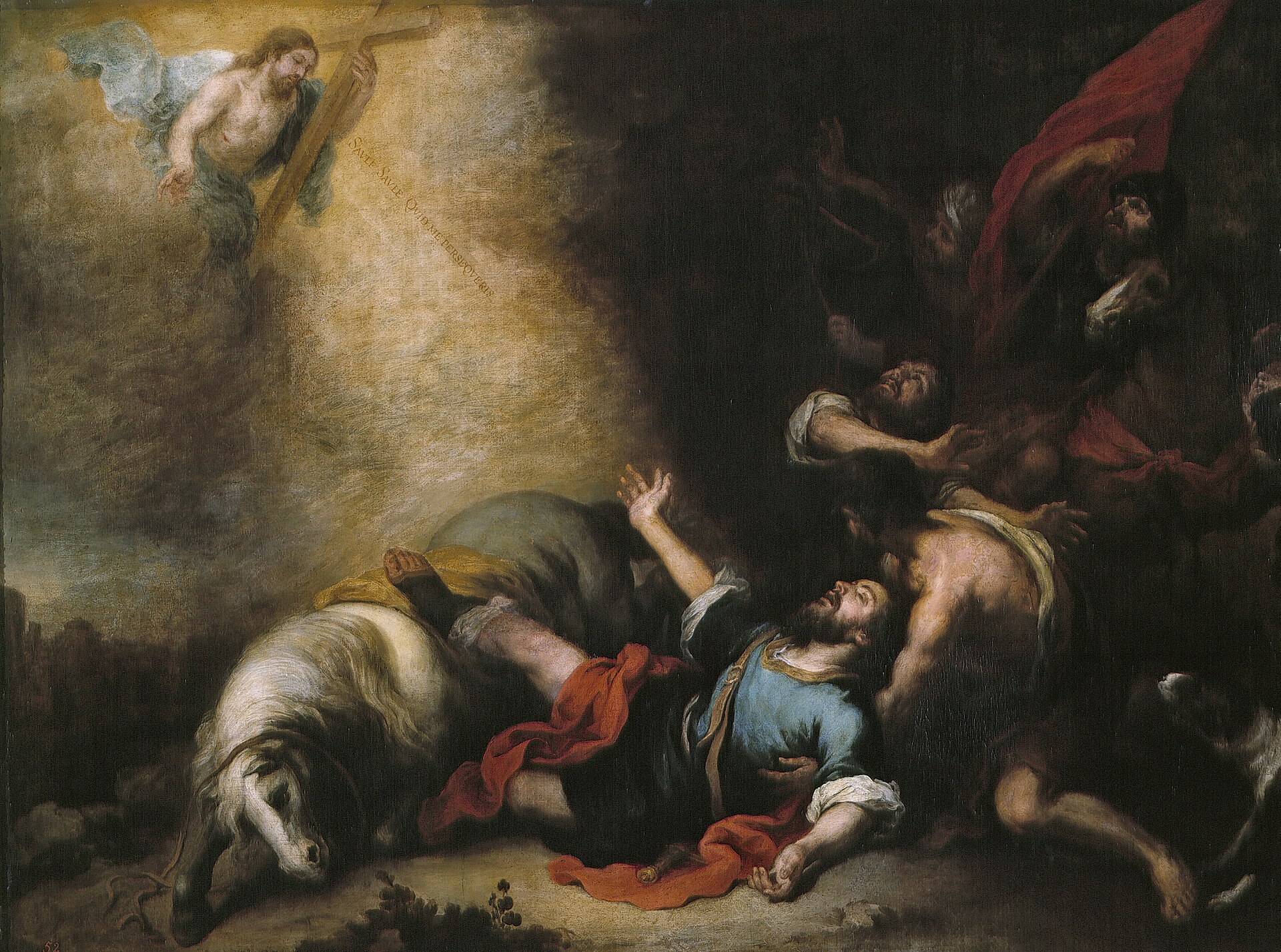
B. E. Murillo, Conversion of Paul the Apostle (1682), oil on canvas, Museo Nacional del Prado (Madrid)

In today’s second reading Paul is addressing his beloved Philippians. He is elated that they are concerned about his welfare, but he tells them not to worry about him. He knows how to live in poverty and how to enjoy abundance. He knows joy. He knows suffering. He also knows that he is not alone. He tells them that he can do all things in Him who strengthens him. And so can we. Our lives have a great deal in common with Paul’s life. There are times that we have joined with what the mob says is right. We have stood with Saul of Tarsus as St. Stephen was stoned. We kept quiet as people at work, or school, or in the neighborhood, perhaps even family members verbally attacked our Catholic Faith. In that way we participated in the stoning of Christianity. Or, perhaps, we let ourselves go, chose immorality, and then mocked those who were trying to live a decent life. Still, God does not give up on us. Ever. Sometimes he allows life to knock us to the ground, but then He calls us out of blindness into His Light. Maybe we suddenly realized that the main problem of our lives was within us, not around us. We call upon the Lord to heal us and guide us. Then we trust in Him, we trust Him to such a degree that we proclaim with Paul, «I can do all things in Him who strengthens me.» So, what exactly are we really called to do in life? What are our lives really about? The challenges of life, tension in our family, or your marriages, difficulties in school, or work, or lack of work, difficulties with friends and those who do not want our friendship, all those things that really irritate us; none of these are what life is about. Life is about Jesus Christ. Life is about proclaiming His Presence to a world that longs for Him. I can do this. We can do this. No matter what difficulties we might have, no matter what challenges we may need to overcome; we can do this. Here is what matters: Jesus Christ is what matters, or, more correctly, He is the One who matters.

We can live His Life and thereby have purpose in our lives. We can do this because He gives us His Life. We can do all things in Him who strengthens us. Jesus took a man named Saul, a man who murdered Jesus’ first followers, and transformed Saul into Paul, the great apostle of the early Church. The Lord transforms each of us. He takes each of us, with all our humanity, with all our weakness, and He uses us to make Him present for others. There is nothing that matters that we cannot do with Him. I, we, can do all things in Him who strengthens us • AE


More books and Autumn


St. Dominic Catholic Church

Weekend Schedule

Saturday October 14, 2023

3.00 p.m. Sacrament of Reconciliation – Fr. Jaime P.

5.00 p.m. Holy Mass – Fr. Jaime P.

Sunday October 15, 2023

7.30 a.m. Holy Mass – Fr. Jaime P.

10.00 a.m. Holy Mass – Fr. Jaime P.

12,30 p.m. Holy Mass – Fr. Lambert Billy

3.00 p.m. Santa Misa – P. Isidro García


XXVIII Domingo del Tiempo Ordinario (Ciclo A)

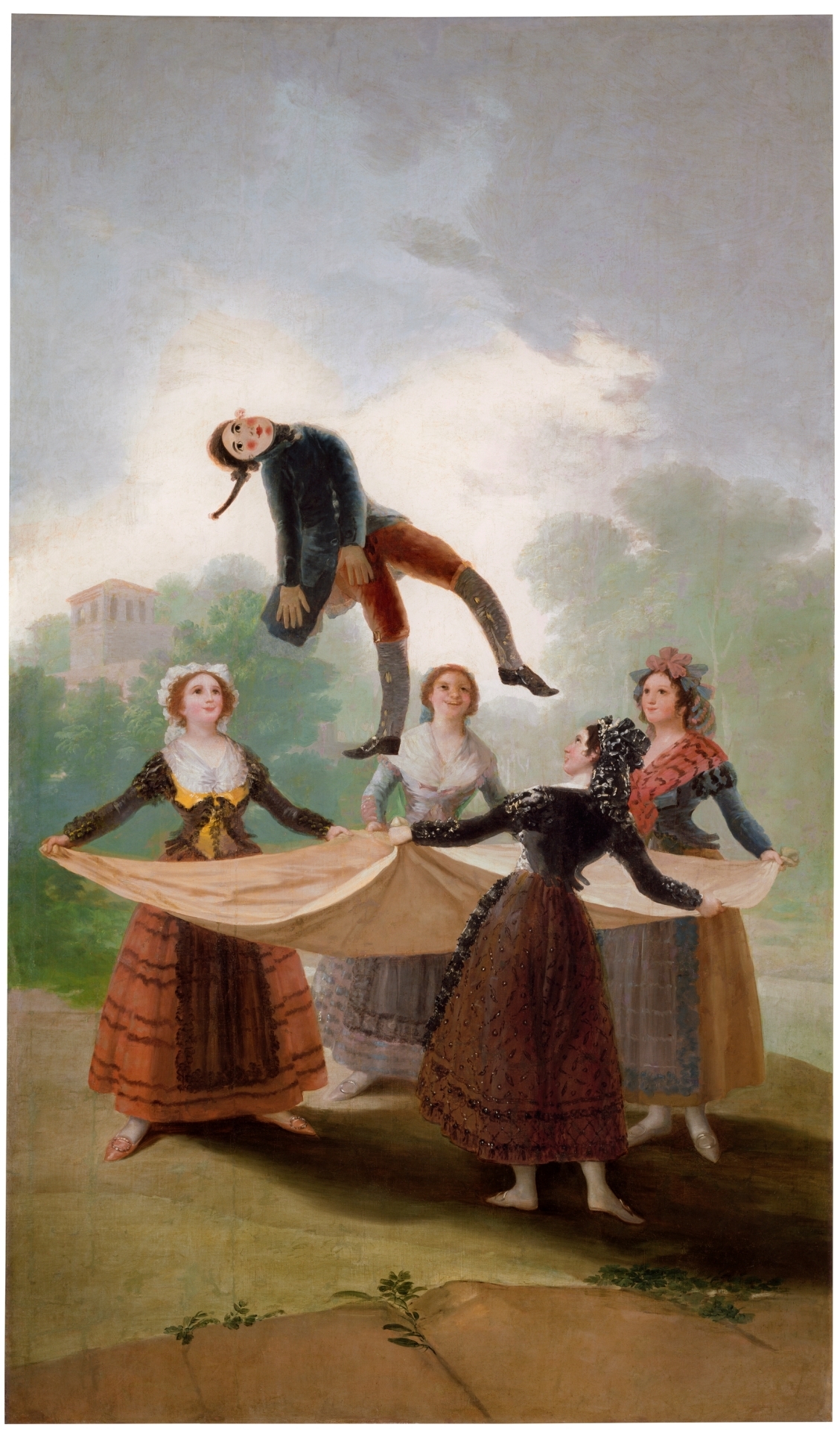
Francisco de Goya y Lucientes, El Pelele (1791), cartón para tapiz, Museo Nacional del Prado (Madrid)

La parábola de Jesús es de una gran actualidad. La invitación -Su invitación- sigue abierta, pero los convidados no hacen caso. Están ocupados en sus tierras, sus negocios… sus cosas. ¿Dónde buscan los hombres de hoy la felicidad? ¿A qué puertas llaman buscando salvación? Para la gran mayoría la felicidad está en tener más, comprar más, poseer más cosas y más seguridad. Otros buscan el goce inmediato e individualista. Es preciso huir del dolor, refugiarse en el placer del presente. Hay quienes se entregan al cuidado del cuerpo para mantenerse en forma, hay toda una ansiedad por ser eternamente joven; no envejecer nunca. Son, en fin, muchas las ofertas de salvación en nuestra sociedad. Pero son ofertas parciales, reductoras, que no proporcionan todo lo que el hombre anda buscando. El hombre sigue insatisfecho. Y la invitación de Dios sigue resonando. Su invitación la hemos de percibir no al margen, sino en medio de las insatisfacciones, gozos, luchas e incertidumbres de nuestra vida.

Es bueno que el hombre busque un bienestar mayor para todos, pero, ¿qué plenitud puede haber tras ese afán de poseer televisores cada vez más perfectos, coches más veloces, electrodomésticos más sofisticados y teléfonos más inteligentes? ¿No hay personas que poseen ya demasiadas cosas para ser felices? Porque, después de caminar a la búsqueda de tantas cosas, no son pocos los que pierden su libertad, su capacidad de amar, su ternura, el disfrute sencillo de la vida. Es normal que las nuevas generaciones busquen con afán otro tipo de salvación. Pero, ¿qué plenitud se puede encontrar cuando se han estrujado todas las posibilidades del sexo, se ha vuelto del viaje de las drogas o se ha hundido uno en el aislamiento de un consumismo total? Los hombres seguirán siendo unos eternos buscadores de orientación, felicidad, plenitud, verdad, amor. Los hombres seguirán buscando, de alguna manera, el Absoluto. Por eso, en medio de nuestra vida, a veces tan alocada y superficial, en medio de nuestra búsqueda vana de felicidad total, debemos estar alertas y detenernos un momento, no vayamos a estar ignorando la invitación del señor, invitación que otros hombres y mujeres, sencillos y pobres, están escuchando con gozo en los cruces de los caminos de este mundo nuestro tan paradójico y tan consumista. En estos momentos en que necesitamos más que nunca lugares de silencio, recogimiento y oración, los creyentes hemos abandonado nuestras iglesias, y sólo acudimos a ellos a la eucaristía del domingo, y no siempre. Se nos ha olvidado lo que es detenernos, interrumpir por unos minutos nuestras prisas, liberarnos por unos momentos de nuestras tensiones y dejarnos penetrar por el silencio y la calma de un lugar sagrado. Muchos hombres y mujeres se sorprenderían al descubrir que, con frecuencia, basta pararse y estar en silencio un cierto tiempo, para aquietar el espíritu y recuperar la lucidez y la paz. Cuánto necesitamos hoy ese silencio que nos ayude a entrar en contacto con nosotros mismos para recuperar nuestra libertad y rescatar de nuevo toda nuestra energía interior. Acostumbrados al ruido y a las palabras, no sospechamos el bienestar del silencio y la soledad. Ávidos de noticias, imágenes e impresiones, se nos ha olvidado que sólo alimenta y enriquece de verdad al hombre aquello que es capaz de escuchar en lo más hondo de su ser. Sin ese silencio interior, no se puede escuchar a Dios, reconocer su presencia en nuestra vida y crecer desde dentro como hombres y como creyentes. La parábola de Jesús es una grave advertencia. Dios no cesa de llamarnos, pero, lo mismo que los invitados del relato, seguimos cada uno ¡ay! ocupados en nuestras cosas, sin escuchar su voz con atención y con amor • AE


Música para leer


Twenty-seventh Sunday in Ordinary Time (Cycle A)

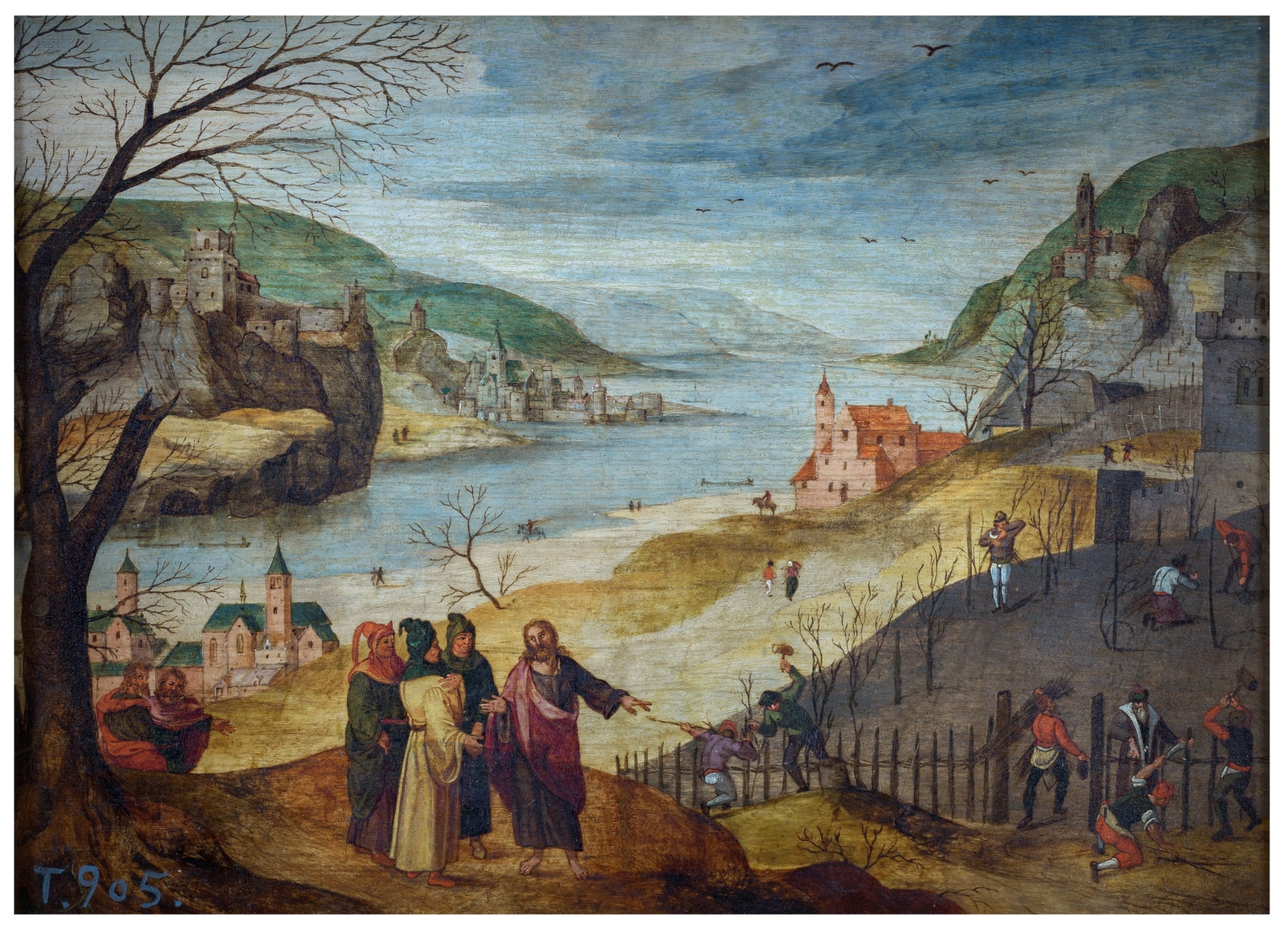
A. Grimmer, Parable of the bad tenants (1606), oil on wood, Museo Nacional del Prado (Madrid)

The parable of today’s gospel answers the question of the ancient world: if this Jesus is really the Messiah, the Christ, the Chosen One of the Hebrew people, then why is it that non-Jews, Gentiles, have flocked to him, while the Jewish people have not? The answer is that the leaders of the people had become mean spirited and even corrupt. This should be no surprise, the Lord states. Their fathers killed the prophets, and their sons would kill the Holy One. The parable gets so specific that it prophesies that the Son would be taken out of the vineyard and killed. Golgotha, where Jesus was crucified, was outside the city gates of Jerusalem.

So, throughout this parable Jesus makes a direct attack on the chief priests and leaders of the people. They are not concerned with caring for God’s people. They are concerned with themselves. The pharisees treated everyday people like dirt. Everyday people could never be holy enough for the Pharisees. At the same time they wanted everyone to realize how holy they, the Pharisees, were. They used their position in Jewish society to build themselves up in other peoples’ eyes. They were certain they were so much better than Jesus who associated with common people. The pharisees were concerned with themselves not the vineyard. The chief priests were leaders who used their position for temporal gain. They were not spiritual. They often walked the borderline between Jewish and pagan practices. And they were excellent at milking their position for every cent they could get.

That’s the background. Historical reflection on scripture is always interesting. Recognizing how this particular passage applies also to us is frightening. We have been brought into the Kingdom, the vineyard, to produce fruit for the world. We have been called to do the work of the Father. It is a great honor. It is also a deep responsibility. We are responsible to God to carry out the work of the Kingdom. We are responsible to feed the world the fruit of the Father’s Love. Evangelization, the promoting of our faith, is a responsibility we all must embrace. I am absolutely edified by so many people I ave met do their best to bring the faith to others. We have to be very careful that we don’t continue the mistakes of the chief priests. The chief priests were only concerned about monetary gain. We have seen this repeated in history, including in our modern times. Religion is big business and a great seller. Many people use their faith for business gains. Some professional people see membership in a Church as an important aspect in building up credibility in their profession. Of course, we have also come upon TV evangelists who have milked their people out of every cent they could so they could live in luxury.

We have been called to bring Christ to others. We have no right to put ourselves above others. We have been given the mercy and grace of God to serve His people. Without this mercy and Grace, we are nothing. That is the definition of a sinful life, nothingness. There are many resources available for us to strengthen our spirituality. These various spiritual experiences are given to us to help us to grow. But if we think that we are better than others because we are in this or that movement, then we are looking down on others and acting no differently than the pharisees. People who are full of themselves and their own spirituality are not all that different than the pharisees in the parable. That is why so many of the unchurched will say, «I don’t go to Church because it is full of hypocrites.»

I can remember reading C.S. Lewis’ The Screwtape Letters ages ago before joining the seminary. In this fantasy, a devil, Uncle Screwtape, was educating his nephew, Wormwood, in the art of destroying a Christian Church. Wormwood had tried scaring people with diabolic visions, possession, and all sorts of other devious devices. To his surprise, Uncle Screwtape told him to forget about those things. He told him to concentrate on tempting people to think that they are better than others. That would be far more effective in destroying a Church than anything else. So, we have been entrusted with the vineyard to bear fruit for others. This is a great honor. It is also a great responsibility. We need God’s help to fight against the devastation occasioned by seeking material gains or human glory. May God protect us from killing the presence of the Son in his own Father’s vineyard • AE


Autumn (finally in South Texas!) and some books


St. Dominic Catholic Church

Weekend Schedule

Saturday October 7, 2023

2.00 p.m. Sacrament of Marriage for Diana & Marcos (main church) – Fr. Agustin

3.30 p.m. Sacrament of Reconciliation (Confessional) – Fr. Agustin

5.00 p.m. Holy Mass – Fr. Agustin

Sunday October 8, 2023

7.30 a.m. Holy Mass – Fr. Agustin

10.00 a.m. Holy Mass – Fr. Agustin

12.30 p.m. Holy Mass – Fr. Jaime

3.00 p.m. Santa Misa – Fr. Jaime


XXVII Domingo del Tiempo Ordinario (Ciclo A)

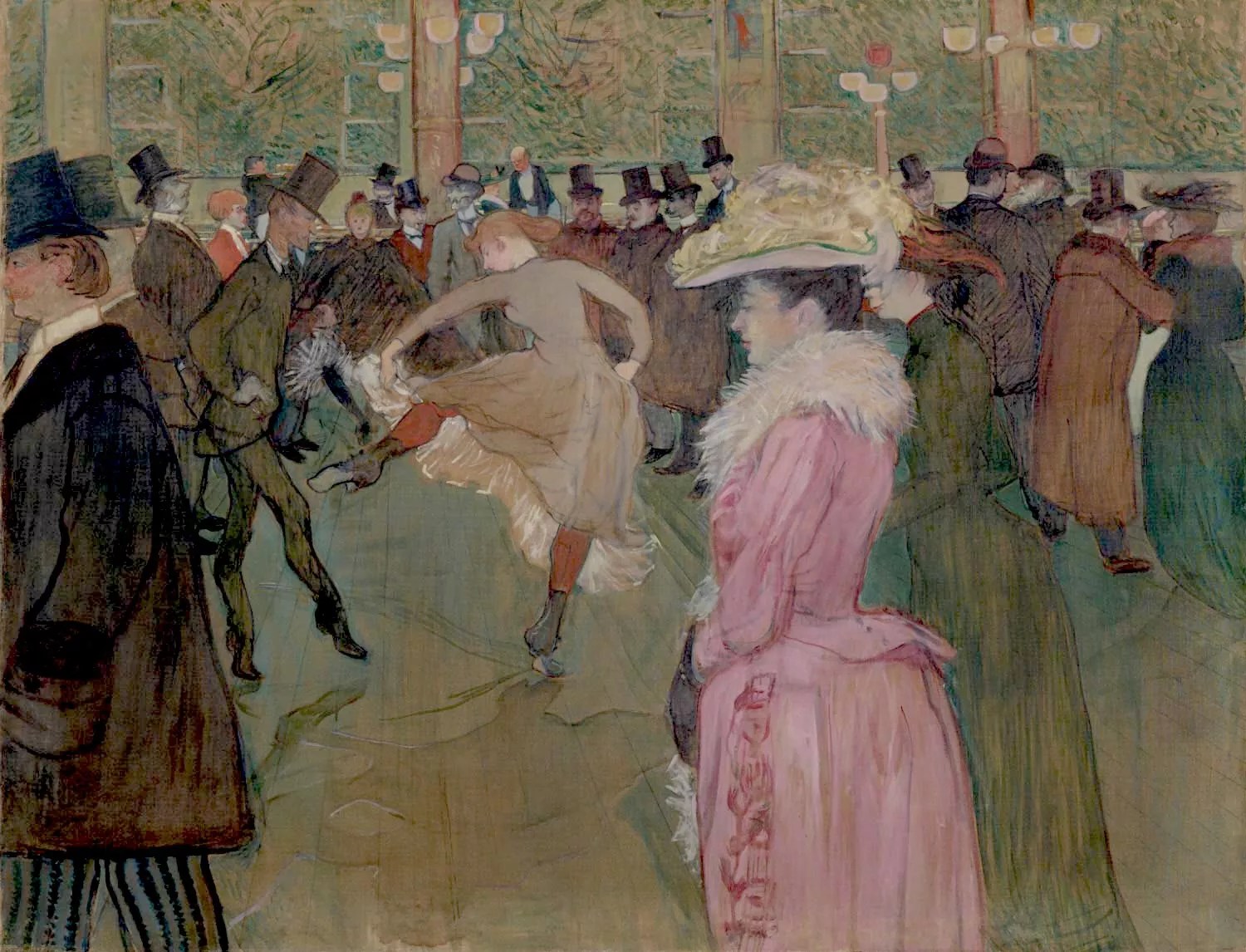
H. Tolouse-Lautrec, El baile de la Glotona y el Deshuesado, una noche muy normal en el Moulin Rouge (1890), óleo sobre tela, Museo de Arte de Filadelfia (EE.UU)

La parábola de los «viñadores homicidas» es tan dura que a los cristianos nos cuesta pensar que esta advertencia profética que el Señor dirige a los dirigentes religiosos de su tiempo tenga algo que ver con nosotros. El relato habla de unos labradores encargados por un señor para trabajar su viña. Llegado el tiempo de la vendimia, sucede algo sorprendente e inesperado. Los labradores se niegan a entregar la cosecha. El señor no recogerá los frutos que tanto espera. Su osadía es increíble. Uno tras otro, van matando a los criados que el señor les envía para recoger los frutos. Más aún. Cuando les envía a su propio hijo, lo echan «fuera de la viña» y lo matan para quedarse como únicos dueños de todo. ¿Qué puede hacer ese señor de la viña con esos labradores? Los dirigentes religiosos, que escuchan nerviosos la parábola, sacan una conclusión terrible: los hará morir y traspasará la viña a otros labradores que le entreguen los frutos a su tiempo. Ellos mismos se están condenando. Jesús se lo dice a la cara: «Por eso, os digo que se os quitará a vosotros el reino de Dios y se dará a un pueblo que produzca sus frutos». En la viña de Dios no hay sitio para quienes no aportan frutos. En el proyecto del reino de Dios, que Jesús anuncia y promueve, no pueden seguir ocupando un lugar labradores» indignos que no reconozcan el señorío de su Hijo, porque se sienten propietarios, señores y amos del pueblo de Dios. Han de ser sustituidos por un pueblo que produzca frutos. A veces pensamos que esta parábola tan amenazadora vale para antes de Cristo, para el pueblo del Antiguo Testamento, pero no para nosotros que somos el pueblo de la Nueva Alianza y tenemos ya la garantía de que Cristo estará siempre con nosotros. Esto es un gran error. La parábola está hablando también de nosotros. ¿Dios tendría que bendecir un cristianismo estéril del que no recibe los frutos que espera? ¡Esta es la gran pregunta! Dios no tiene por qué identificarse con nuestras incoherencias, desviaciones y poca fidelidad. También ahora Dios quiere que los trabajadores indignos de su viña sean sustituidos por un pueblo que produzca frutos dignos del reino de Dios. ¿No vivimos demasiado distraídos, enfiestados y llenos de vacío? ¿Nos llevará ésta parábola éste domingo a meditar aunque sea por un momento y empezar a caminar el camino de la conversión? • AE


¿Sínodo sobre la sinodalidad? ¿Qué es eso?