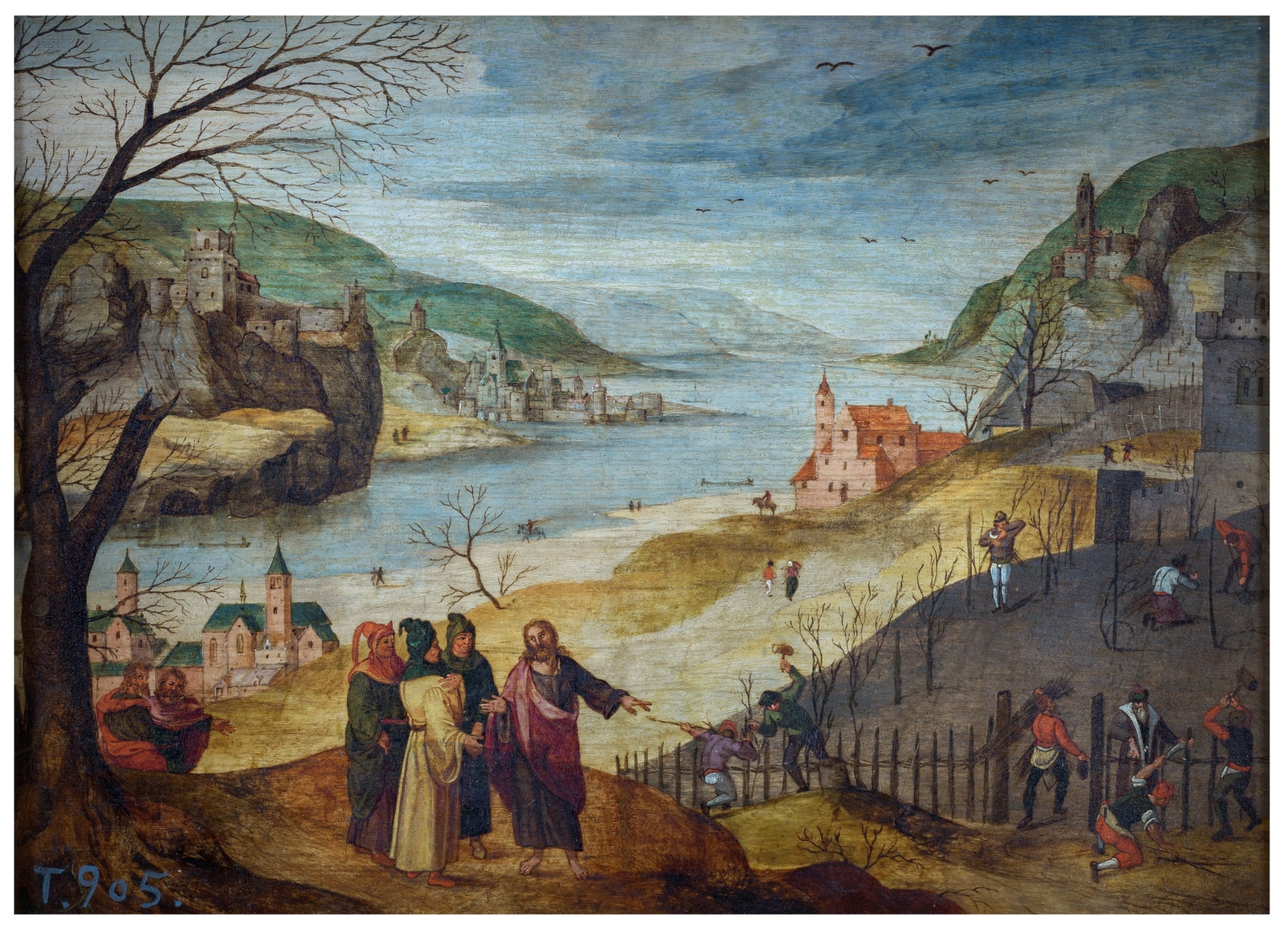
A. Grimmer, Parable of the bad tenants (1606), oil on wood, Museo Nacional del Prado (Madrid)
The parable of today’s gospel answers the question of the ancient world: if this Jesus is really the Messiah, the Christ, the Chosen One of the Hebrew people, then why is it that non-Jews, Gentiles, have flocked to him, while the Jewish people have not? The answer is that the leaders of the people had become mean spirited and even corrupt. This should be no surprise, the Lord states. Their fathers killed the prophets, and their sons would kill the Holy One. The parable gets so specific that it prophesies that the Son would be taken out of the vineyard and killed. Golgotha, where Jesus was crucified, was outside the city gates of Jerusalem.
So, throughout this parable Jesus makes a direct attack on the chief priests and leaders of the people. They are not concerned with caring for God’s people. They are concerned with themselves. The pharisees treated everyday people like dirt. Everyday people could never be holy enough for the Pharisees. At the same time they wanted everyone to realize how holy they, the Pharisees, were. They used their position in Jewish society to build themselves up in other peoples’ eyes. They were certain they were so much better than Jesus who associated with common people. The pharisees were concerned with themselves not the vineyard. The chief priests were leaders who used their position for temporal gain. They were not spiritual. They often walked the borderline between Jewish and pagan practices. And they were excellent at milking their position for every cent they could get.
That’s the background. Historical reflection on scripture is always interesting. Recognizing how this particular passage applies also to us is frightening. We have been brought into the Kingdom, the vineyard, to produce fruit for the world. We have been called to do the work of the Father. It is a great honor. It is also a deep responsibility. We are responsible to God to carry out the work of the Kingdom. We are responsible to feed the world the fruit of the Father’s Love. Evangelization, the promoting of our faith, is a responsibility we all must embrace. I am absolutely edified by so many people I ave met do their best to bring the faith to others. We have to be very careful that we don’t continue the mistakes of the chief priests. The chief priests were only concerned about monetary gain. We have seen this repeated in history, including in our modern times. Religion is big business and a great seller. Many people use their faith for business gains. Some professional people see membership in a Church as an important aspect in building up credibility in their profession. Of course, we have also come upon TV evangelists who have milked their people out of every cent they could so they could live in luxury.
We have been called to bring Christ to others. We have no right to put ourselves above others. We have been given the mercy and grace of God to serve His people. Without this mercy and Grace, we are nothing. That is the definition of a sinful life, nothingness. There are many resources available for us to strengthen our spirituality. These various spiritual experiences are given to us to help us to grow. But if we think that we are better than others because we are in this or that movement, then we are looking down on others and acting no differently than the pharisees. People who are full of themselves and their own spirituality are not all that different than the pharisees in the parable. That is why so many of the unchurched will say, «I don’t go to Church because it is full of hypocrites.»
I can remember reading C.S. Lewis’ The Screwtape Letters ages ago before joining the seminary. In this fantasy, a devil, Uncle Screwtape, was educating his nephew, Wormwood, in the art of destroying a Christian Church. Wormwood had tried scaring people with diabolic visions, possession, and all sorts of other devious devices. To his surprise, Uncle Screwtape told him to forget about those things. He told him to concentrate on tempting people to think that they are better than others. That would be far more effective in destroying a Church than anything else. So, we have been entrusted with the vineyard to bear fruit for others. This is a great honor. It is also a great responsibility. We need God’s help to fight against the devastation occasioned by seeking material gains or human glory. May God protect us from killing the presence of the Son in his own Father’s vineyard • AE

Autumn (finally in South Texas!) and some books

St. Dominic Catholic Church
Weekend Schedule

Saturday October 7, 2023
2.00 p.m. Sacrament of Marriage for Diana & Marcos (main church) – Fr. Agustin
3.30 p.m. Sacrament of Reconciliation (Confessional) – Fr. Agustin
5.00 p.m. Holy Mass – Fr. Agustin
Sunday October 8, 2023
7.30 a.m. Holy Mass – Fr. Agustin
10.00 a.m. Holy Mass – Fr. Agustin
12.30 p.m. Holy Mass – Fr. Jaime
3.00 p.m. Santa Misa – Fr. Jaime
XXVII Domingo del Tiempo Ordinario (Ciclo A)
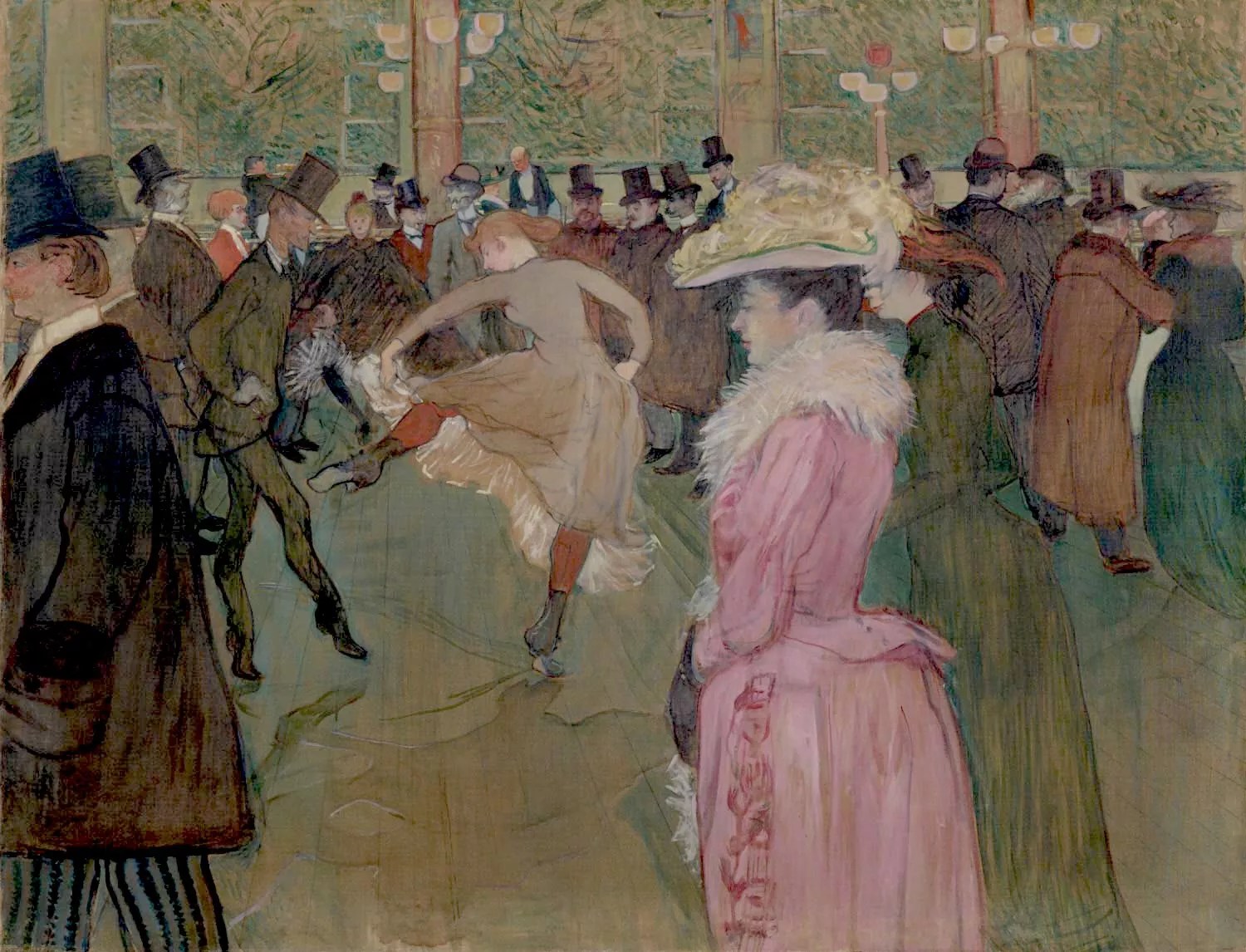
H. Tolouse-Lautrec, El baile de la Glotona y el Deshuesado, una noche muy normal en el Moulin Rouge (1890), óleo sobre tela, Museo de Arte de Filadelfia (EE.UU)
La parábola de los «viñadores homicidas» es tan dura que a los cristianos nos cuesta pensar que esta advertencia profética que el Señor dirige a los dirigentes religiosos de su tiempo tenga algo que ver con nosotros. El relato habla de unos labradores encargados por un señor para trabajar su viña. Llegado el tiempo de la vendimia, sucede algo sorprendente e inesperado. Los labradores se niegan a entregar la cosecha. El señor no recogerá los frutos que tanto espera. Su osadía es increíble. Uno tras otro, van matando a los criados que el señor les envía para recoger los frutos. Más aún. Cuando les envía a su propio hijo, lo echan «fuera de la viña» y lo matan para quedarse como únicos dueños de todo. ¿Qué puede hacer ese señor de la viña con esos labradores? Los dirigentes religiosos, que escuchan nerviosos la parábola, sacan una conclusión terrible: los hará morir y traspasará la viña a otros labradores que le entreguen los frutos a su tiempo. Ellos mismos se están condenando. Jesús se lo dice a la cara: «Por eso, os digo que se os quitará a vosotros el reino de Dios y se dará a un pueblo que produzca sus frutos». En la viña de Dios no hay sitio para quienes no aportan frutos. En el proyecto del reino de Dios, que Jesús anuncia y promueve, no pueden seguir ocupando un lugar labradores» indignos que no reconozcan el señorío de su Hijo, porque se sienten propietarios, señores y amos del pueblo de Dios. Han de ser sustituidos por un pueblo que produzca frutos. A veces pensamos que esta parábola tan amenazadora vale para antes de Cristo, para el pueblo del Antiguo Testamento, pero no para nosotros que somos el pueblo de la Nueva Alianza y tenemos ya la garantía de que Cristo estará siempre con nosotros. Esto es un gran error. La parábola está hablando también de nosotros. ¿Dios tendría que bendecir un cristianismo estéril del que no recibe los frutos que espera? ¡Esta es la gran pregunta! Dios no tiene por qué identificarse con nuestras incoherencias, desviaciones y poca fidelidad. También ahora Dios quiere que los trabajadores indignos de su viña sean sustituidos por un pueblo que produzca frutos dignos del reino de Dios. ¿No vivimos demasiado distraídos, enfiestados y llenos de vacío? ¿Nos llevará ésta parábola éste domingo a meditar aunque sea por un momento y empezar a caminar el camino de la conversión? • AE

 LA MEDITACION DE LA ESPOSA