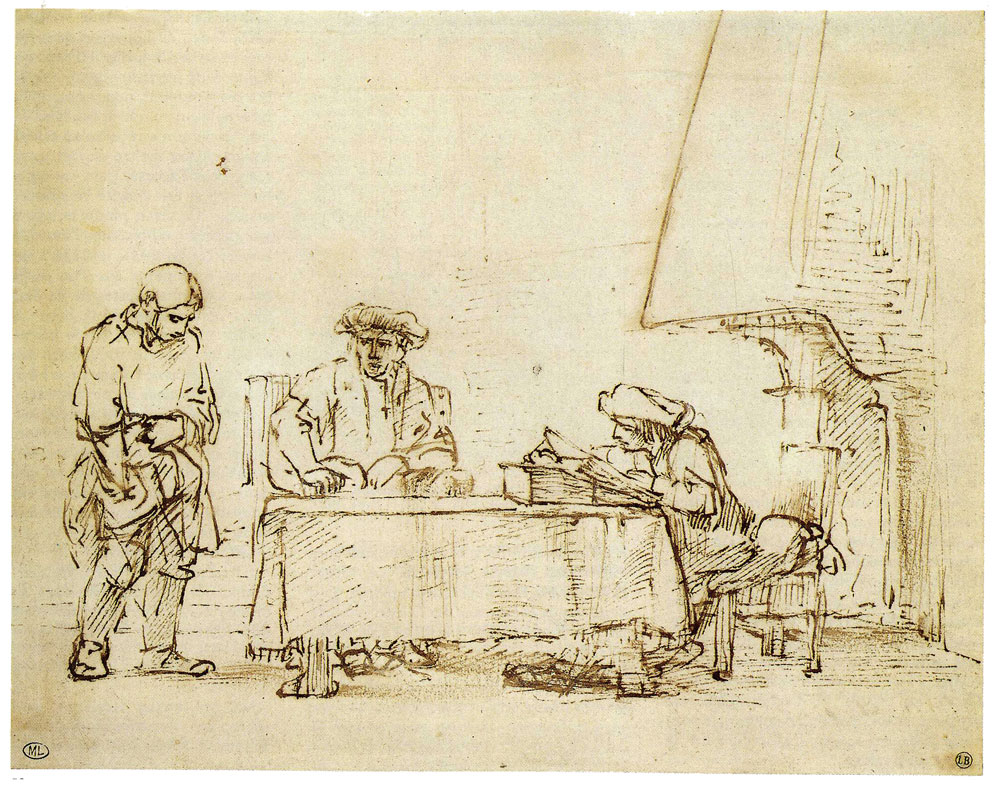
Rembrandt, The Parable of the Talents (c. 1652), Reed-pen and bistre, Louvre (Paris)
In today’s second reading, St. Paul tells the people of Thessalonika that the day of the Lord, the end of time, will come like a thief in the night when people least expect. Some of these people took Paul so seriously that they quit working and caring for their families. They expected everyone else to take care of them as they braced themselves for the end. Paul had to write a second letter to Thessalonika and tell the people there that those who refused to work, should not eat. Perhaps time will not end before we die, but when we die our own personal time comes to an end.
We spend the month of November praying for our loved ones and all the souls of the faithful departed who have died. Death is a reality everyone has to face. How then, should we prepare for the Lord to come whether it is at the end of all time or the end of our own personal time? Instructions are available throughout the Bible, but particularly in today’s Gospel, which comes in the section of the Gospel of Matthew where Jesus is speaking about the end of time.
Today’s Gospel is the Parable of the Talents. All our talents, all our gifts flow from God. None of us have the right to take credit for them. We emphasize this at the end of the Eucharistic Prayer when the priest holds up the Body and Blood of Christ and says, Through Him, and with Him, and in Him, O God Almighty Father, in the unity of the Holy Spirit, all glory and honor is yours, for ever and ever. Our talents came from God and must be developed to serve God. He is the focus, not us. His is the glory, not ours. We share in His Glory only to the extent that we have allowed Him to be seen in our efforts. Nothing that we do should be about us. All our gifts should be seen as just that, gifts from God. So, the Lord tells us in the parable that the Master will come for an accounting of how we used the particular talents He has given each of us. We cannot be concerned with worrying about the exact day or hour. What we have to be concerned with is doing our part to prepare for the Lord’s coming, either at the end of all time or the end of our personal time. If we develop the talents he has entrusted to us, the day will come when the Father will say to us, «Well done, good and faithful servants. Well done»
There is a wonderful story about Ludwig van Beethoven in this regard. The famous composer was well aware that he had few social skills. He found talking to people not just burdensome, but beyond his abilities. He just couldn’t do it, even if he had to speak to someone. The story is that one day he heard that a dear friend of his had suddenly lost his son. Beethoven rushed over to his friend’s house, but he just couldn’t find the words to comfort the dead boy’s father. So he used the gifts he had been given. Beethoven went to the piano and for a full thirty minutes he played a beautiful elegy. It is believed that he composed it on the spot. He used his talent to console the grieving • AE

Music for the soul
St. Dominic Catholic Church
Weekend Schedule

Saturday November 18, 2023
12.00 p.m. XV Mass – Fr. Jaime P.
2.00 p.m. XV Mass – Fr. Jaime P.
3.00 p.m. Sacrament of Reconciliation (Confessional) – Fr. Agustin E.
5.00 p.m. Holy Mass – Fr. Agustin E.
Sunday November 19, 2023
7.30 a.m. Holy Mass – Fr. Agustin E.
10.00 a.m. Holy Mass – Fr. Agustin E.
12.30 p.m. Holy Mass – Fr. Jaime P.
3.00 p.m. Santa Misa – Fr. Jaime P.
XXXIII Domingo del Tiempo Ordinario (Ciclo A)
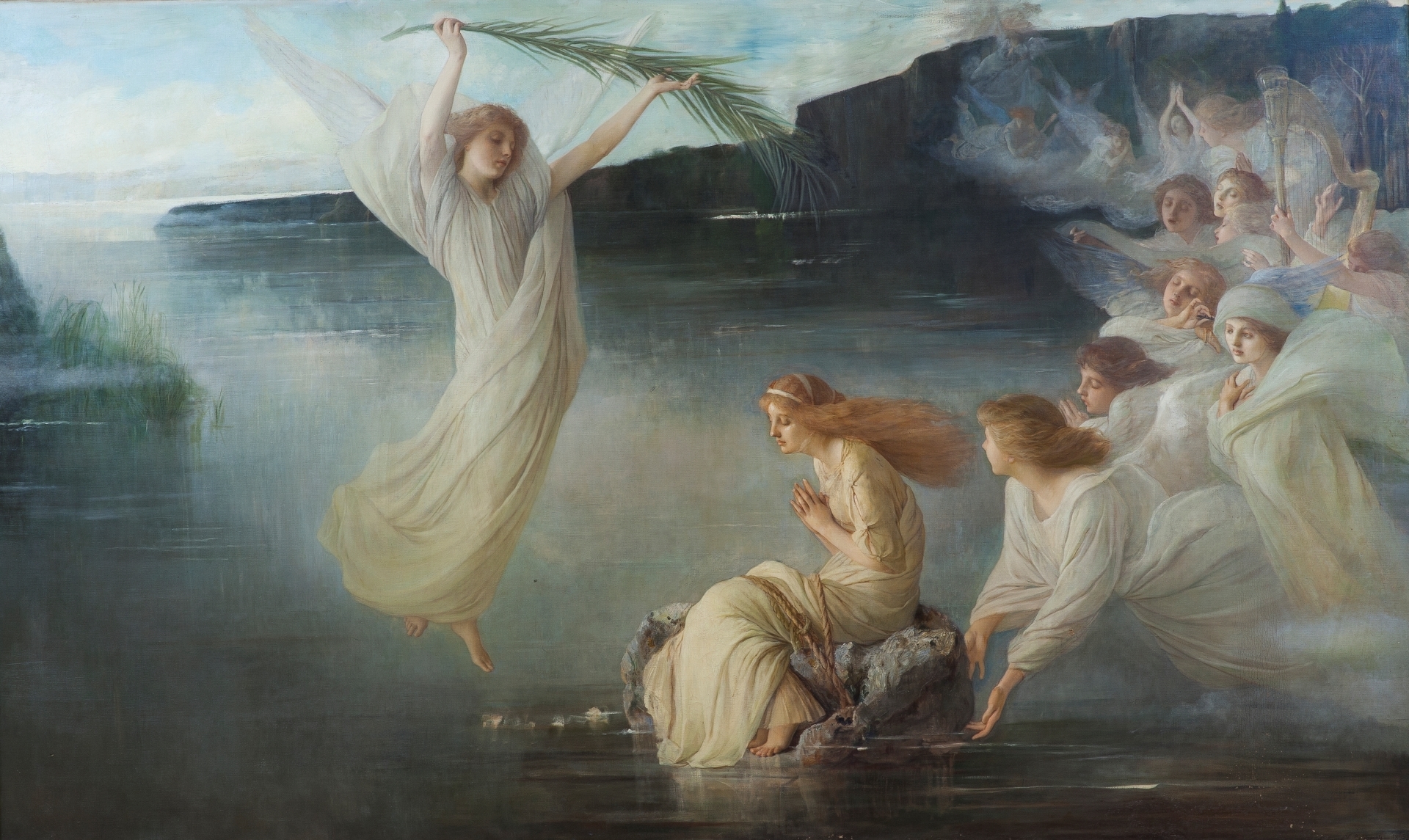
V. Palmaroli y Gonzalez, El martirio de santa Cristina de Bolsena (1895), oleo sobre tela, Museo Nacional del Prado (Madrid)
La parábola de los talentos es un relato que podria interpretarse de muchas formas, de hecho comentaristas y predicadores la han interpretado con frecuencia en diferentes direcciones. En este penúltimo domingo del Tiempo Ordinrio podríamos centrar la atención en el tercero de los siervos. Su conducta es… extraña. Mientras los otros siervos se dedican a hacer fructificar los bienes que les ha confiado su señor, a él no se le ocurre otra cosa que esconder bajo tierra el talento recibido para conservarlo seguro. Cuando el amo llega, lo condena como siervo negligente y holgazán que no ha entendido nada. ¿Cómo enteder su comportamiento? Este siervo no se siente identificado con su señor, ni con los intereses de su señor. Podriamos decir que no actúa movido por el amor. En realidad tiene miedo. Y es precisamente ese miedo el que lo paraliza y medio lo lleva a actuar buscando su propia seguridad. El mismo lo dice: «Tuve miedo y fui a esconder mi talento bajo tierra». Este siervo no comprendió en que consistía actuar con responsabilidad; pensó que estaba respondiendo a las expectativas de su señor, conservando su talento seguro, aunque improductivo; tampoco se implicó en proyecto alguno. Vivía como aburrido.
Cuando los cristianos pensamos que en nuestra fe lo unico que importa es conservar, dejando a un lado el buscar con coraje y confianza en el Señor caminos nuevos para acoger, vivir, y anunciar el proyecto del reino de Dios, estamos olvidando algo importante. Si no nos sentimos llamados a seguir las exigencias de Cristo más allá de lo enseñado y mandado; si no arriesgamos nada por hacer una Iglesia más fiel a Jesús y al evangelio, si nos mantenemos ajenos a cualquier conversión que nos pueda complicar la vida; si no asumimos la responsabilidad del reino como lo hizo Jesús, buscando vino nuevo en odres nuevos, quizá llegó el momento de re-aprender (sic) la fidelidad activa, creativa y arriesgada a la que nos invita la preciosa parábola de éste domingo y el testimonio de tantos mártires, misioneros y santos como los tenemos en la historia de nuestra querida la Iglesia. Como siempre, tenemos mucho qué reflexionar • AE
+ Lecturas para Otoño


 LA MEDITACION DE LA ESPOSA