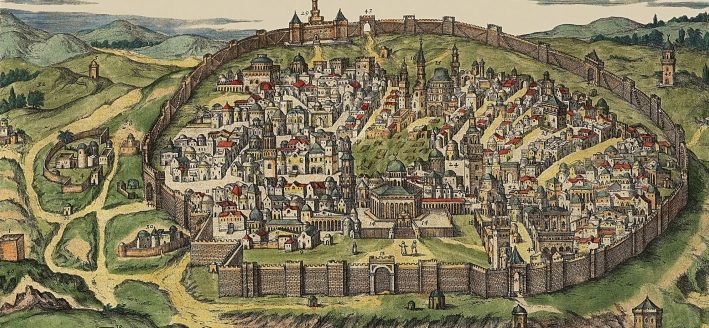
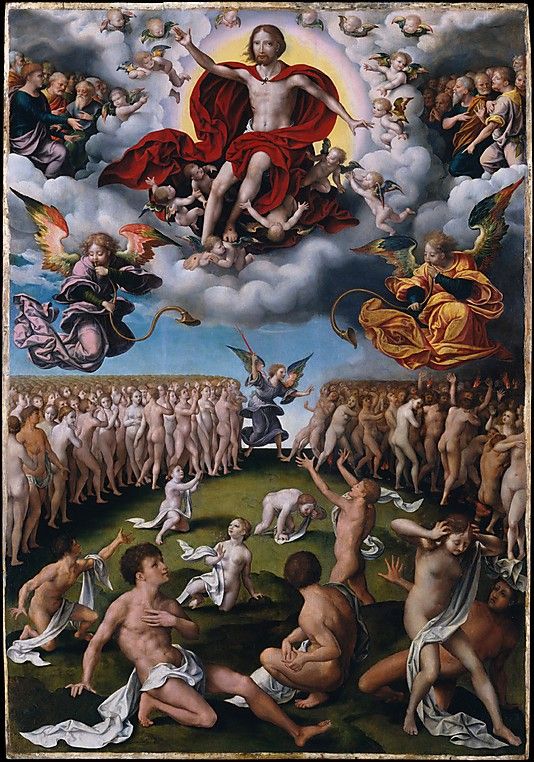
Joos van Cleve, The Last Judgment (1525), Oil on wood, Metropolitan Museum of Art (New York)
Today’s feast concludes the Church year with this exclamation: Jesus Christ is King. He is the King of Kings. His Kingdom does not follow the model of kingdom we might have in our minds. He is a conquering Messiah, but his army is spiritual, not physical. He battles to restore life, not destroy life. He came down from heaven to bring us to heaven. What will we find when we get there, when we get to heaven? We really do not know. We only know that it will be radically different than our fondest expectations. “What eye has not seen, and ear has not heard, and what has not entered the human heart, God has prepared for those who love him,” we read in 1 Corinthians 2:9.
C. S. Lewis wrote a humorous essay about what we would experience if we were admitted into heaven. He wrote that there would be a triple surprise, more than this, a triple shock. First, Lewis wrote, we would be surprised at the people in heaven. We would be shocked that there are people there we never would have thought would be there. The second surprise would be the shock at realizing there were people we expected to be in heaven who were not there. The third surprise would be that we would be astonished that we were there. We Catholics have only recently moved away from our rather arrogant and self-centered view that we have exclusive rights to heaven. Sadly there are still some Christians who are ready to exclude others from the reward of the Father. They hear about the goodness of Mahatma Gandhi, but they cannot get their heads around this. They cannot get themselves to believe that there might be a Hindu in heaven, let alone millions, billions, of good people who were never Christians. That would not follow the rules that the arrogant have made up for determining the Who’s Who in heaven. Yes, there is no way to the Father except through the Son, but the Son’s obedience to the Father sacrificing his life for us resulted in the Father and the Son sending the Holy Spirit to all people of good will. These people of good will are those who reach out to others in charity, and in so doing, reach out to the very presence of Christ in others, even if, like the sheep in today’s Gospel, they do not recognize Christ. There will be many who have been saved by Christ who did not know Him by that name but who reached out to Him in others. There will be many in heaven whom we would not expect to be there.
C. S. Lewis’s second conjecture is that there will be people missing from heaven whom we expected to be there. In our American denial of death, we try to ease our grief of death by canonizing our Loved Ones who have died. No matter who a person may be, we decide that they are in heaven after their death. For example, someone steal a car and then are killed in a horrible car accident. Alcohol and drugs are involved. Yet, their friends are told that they are with God now. Their presence in heaven will be determined by the Just Judge who recognizes those who loved him throughout their lives. This same Just Judge will listen to others pleading that their Loved Ones be fully united to Him. It is a good thing to pray for the dead.
Finally, Lewis says that the third surprise we would have if we took stock of the souls in heaven would be learning that we are there. When we are honest with ourselves, we are well aware of the many times that we have turned from God. Our sins are very clear to us. He allows us to replace with love that which we have destroyed with selfishness and sin. We live in His mercy. During the last twelve months we have followed the life of Jesus our Lord from the prophesies of last Advent, through his birth, mission, death and resurrection. We have prayed over the message of His life as well as His teachings. Now, at the conclusion to the year we beg Him to help us recognize Him in our world and to acknowledge His presence by reaching out to Him on others. We seek the mercy of His continual grace drawing us out of ourselves and into His presence in the need of his Kingdom. Christ is our King. May we be true members of his Kingdom • AE

Music for the soul
A German Requiem, to Words of the Holy Scriptures, Op. 45 by Johannes Brahms, is a large-scale work for chorus, orchestra, and soloists, composed between 1865 and 1868. It comprises seven movements, which together last 65 to 80 minutes, making this work Brahms’s longest composition. A German Requiem is sacred but non-liturgical, and unlike a long tradition of the Latin Requiem, A German Requiem, as its title states, is a Requiem in the German language.
St. Dominic Catholic Church
Weekend Schedule

Saturday, November 25, 2023
12.00 p.m. XV Celebration for Kaylee Camacho – Fr. Agustin E.
3.00 p.m. Sacrament of Reconciliation – Fr. Agustin E.
5.00 p.m. Holy Mass (English) – Fr. Agustin E.
Sunday, November 26, 2023
7.30 a.m. Holy Mass (English) – Fr. Enda McKenna
10.00 a.m. Holy Mass (English) – Fr. William Zapalac
12.30 p.m. Holy Mass (English) – Fr. Enda McKenna
3.00 p.m. Santa Misa – Fr. Agustin E.
Solemnidad de Nuestro Señor Jesucristo, Rey del Universo
Último domingo del Tiempo ordinario
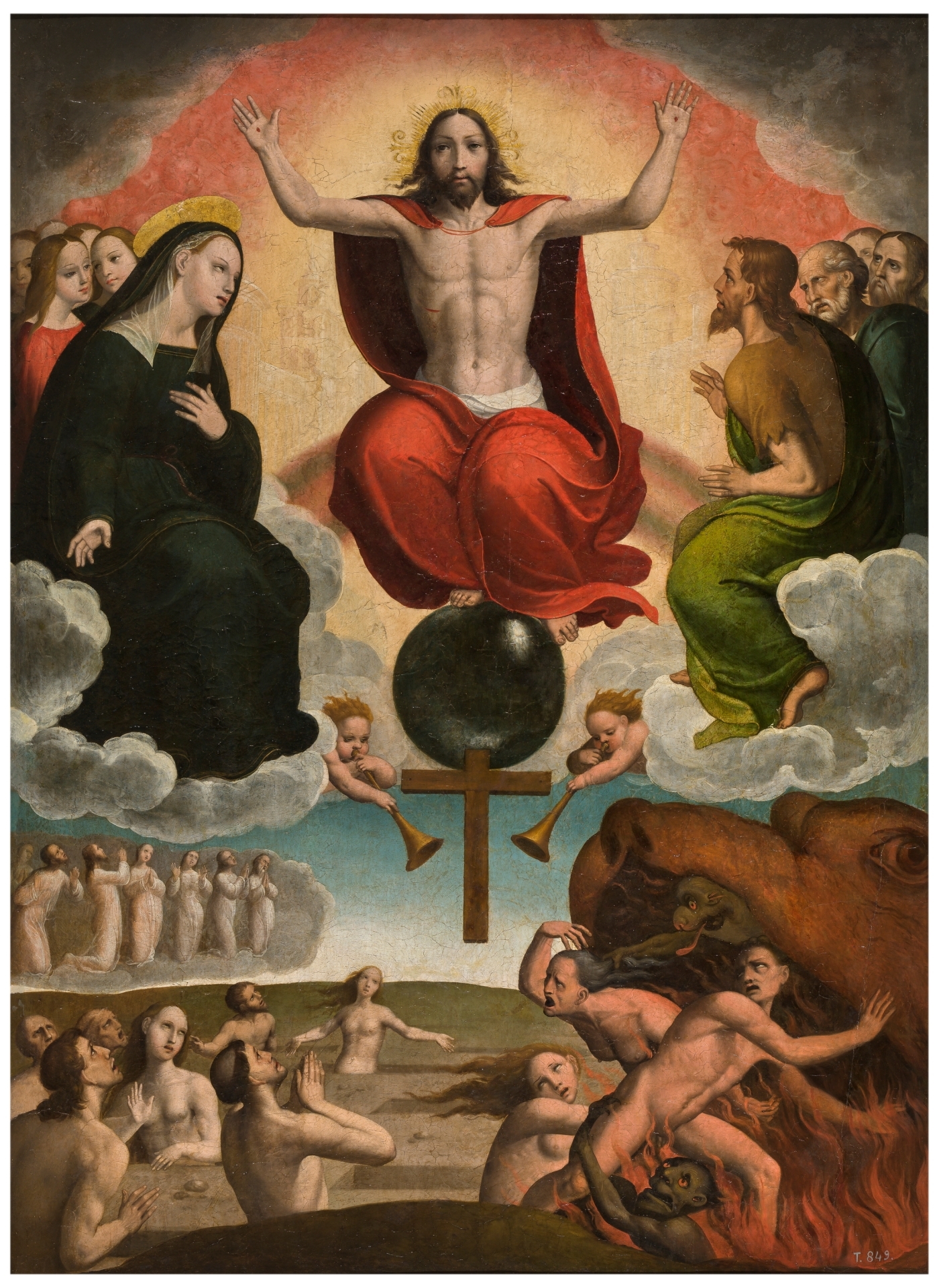
J. Correa de Vivar, El Juicio Final (1545), óleo sobre tabla, Museo Nacional del Prado (Madrid)
El texto del evangelio de este domingo se conoce popularmente como la parábola del juicio final, pero en realidad es más bien una descripción grandiosa del veredicto final sobre la historia humana. Allí están personas de todas las razas y pueblos, de todas las culturas y religiones. En aquel día se va a escuchar la última palabra que lo esclarecerá todo. Dos grupos van emergiendo de aquella muchedumbre. Unos son llamados a recibir la bendición de Dios: son los que se han acercado con compasión a los necesitados y han hecho por ellos lo que podían. Otros son invitados a apartarse: han vivido indiferentes al sufrimiento de los demás.
Lo que va a decidir la suerte final no es la religión en la que uno vivió. Lo decisivo será si uno vivió con compasión, ayudando al que sufría y necesitaba ayuda. Lo que hicimos a personas hambrientas, inmigrantes indefensos, enfermos desvalidos o encarcelados olvidados por todos, se le hicimos al mismo Dios.
En esta escena evangélica no se pronuncian grandes palabras como justicia, solidaridad o democracia. Sobran todas si no hay una ayuda real a los que sufren. Jesús habla de comida, ropa, algo de beber, un techo para resguardarse. Es muy sencillo de entender. Tampoco se habla tampoco de amor. A Jesús quizá le resultaba un lenguaje demasiado abstracto. No lo usó prácticamente casi nunca. El descendió a lo concreto: dar de comer, vestir, hospedar, visitar, salir al encuentro. No podemos olvidar que en el atardecer de la vida no se nos examinará del amor; se nos preguntará más bien hicimos frente a aquellos que necesitaban ayuda, sin importar que nos hayamos manchado o hasta deshilachado la vida. Sin duda una de las ideas más grandes que el santo padre Francisco nos ha regalado es aquella que dejó en su exhortación apostólica Evangelii Gaudium (La alegría del evangelio): «Prefiero una Iglesia accidentada, herida y manchada por salir a la calle, antes que una Iglesia enferma por el encierro y la comodidad de aferrarse a las propias seguridades. No quiero una Iglesia preocupada por ser el centro y que termine clausurada en una maraña de obsesiones y procedimientos. Si algo debe inquietarnos santamente y preocupar nuestra conciencia, es que tantos hermanos nuestros vivan sin la fuerza, la luz y el consuelo de la amistad con Jesucristo, sin una comunidad de fe que los contenga, sin un horizonte de sentido y de vida. Más que el temor a equivocarnos, espero que nos mueva el temor a encerrarnos en las estructuras que nos dan una falsa contención, en las normas que nos vuelven jueces implacables, en las costumbres donde nos sentimos tranquilos, mientras afuera hay una multitud hambrienta y Jesús nos repite sin cansarse: «¡Dadles vosotros de comer!» • AE

¿Y ahora qué vamos a leer?
 LA MEDITACION DE LA ESPOSA