
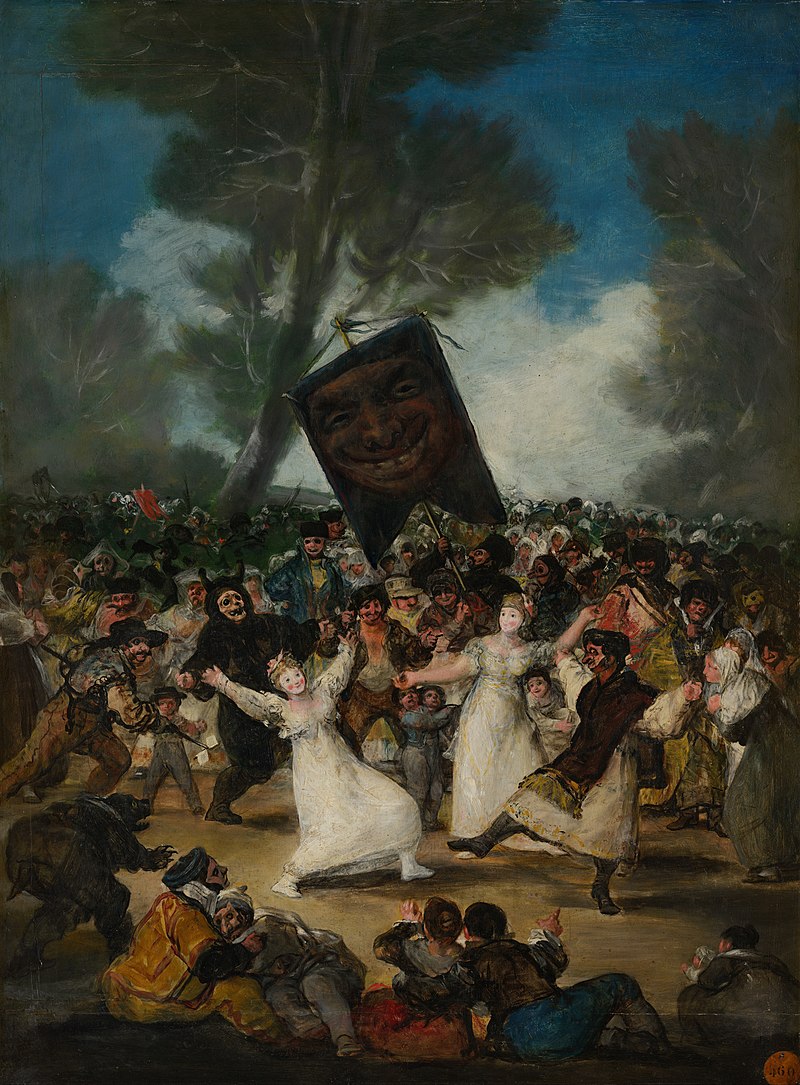
Francisco de Goya, The Burial of the Sardine (1819), oil on canvas, Real Academia de Bellas Artes de San Fernando (Madrid)
The Pharisees… well, they were the masters of seeing and being seen. That’s all they really wanted. They were just putting on a show. They knew how to hold their arms up in prayer. They knew what proper pious platitudes they should say. They pretended to be holy. But they were not really holy. They spoke about following God. They demanded that others live holy lives. But they did not live as people committed to God. They just dressed the part. Jesus called them… hypocrites. Harsh word that came from the Greek word for actor. God saw them. And God sees us. He looks at us and sees some of us putting on a show. He sees some religious leaders wearing costumes and saying all the proper things, but carrying on immoral actions that could not emanate from the soul of a holy person. He sees some people who proclaim their Christianity, but in reality are not open to God in their lives. He sees some people who pretend to be kind, but who are really carrying years of hate within their hearts. God also sees those who are really trying to live their commitment to Him. He sees us at our best not just when we are at our worst. He knows how we are trying to be better, to do better. He knows how we are fighting against any tendency we might have to be hypocrites ourselves. Today we are told that we cannot be satisfied with the outward appearance of religion. We are told to fight against our own hypocrisy. So, how can we do this? For one thing, we cannot demand more from others than we demand from ourselves. As a priest, I cannot demand that others fulfill their worship obligations if I do not fulfill mine. I cannot stand here and tell you that you need to say prayers at home every day if I am not faithful to saying the Liturgy of the Hours. I cannot demand that you fight against immorality if I partake in immorality. You also cannot not demand that others be kind and caring, if you are mean to that daughter-in-law or son-in-law you’ve never liked. We have to avoid playing dress up. Our lives cannot be an act. We have to fight against our own hypocrisy.
We also have to avoid masking our Christianity. We do this when we just go along with the group, being more concerned with being a member of that group instead of a member of God’s group, His family. And we have to take responsibility for our own lives rather than just join a crowd that entrusts their lives to others. We cannot be followers of other people, be they religious or political, to such an extent that we allow them to determine our actions, or even our lives. We cannot allow the mob mentality to take over our lives. We have the ability to set the course of our own lives. We must take responsibility for our faith lives. Call no man «father» or «rabbi» or «teacher» means “call no man guru.” If we have a guru, then we don’t take responsibility for what we do. We call our priests father in that they are the head of our faith family in our parishes, but we do not give our priests the position of guru, entrusting them with the responsibility for our lives. We entrust our lives to God and God only. Only Christ can be our guide. If we, you and I, can find the courage to let Jesus be our guide, if every aspect of our lives reflects the presence of Jesus in the world, then we will not wear masks. Then we would really and truly be followers of Christ. Last Tuesday was Halloween. Halloween is for children. Following Jesus is the serious work of people who have no need for masks. Following Jesus is the serious work of those who are willing to expose their faces and their lives to the world. People admire us Catholics with our determination to worship God and to live for Him. They see how we are united in our faith, and how our Church is universal. And they to look us to live lives that are wholesome, sincere, and genuine. May the have the courage to be Catholic • AE

St. Dominic Catholic Church
Weekend Schedule

Saturday November 4, 2023
8.00 a.m. -5.00 p.m. Archdiocesan Eucharistic Congress (St. Mary´s University)
3.00 p.m. Sacrament of Reconciliation (Confessional) – Fr. Agustin E.
5.00 p.m. Holy Mass – Fr. Jaime P.
Sunday October 29, 2023
7.30 a.m. Holy Mass – Fr. Jaime P.
10.00 a.m. Holy Mass – Fr. Jaime P.
12.30 p.m. Holy Mass – Fr. Agustin E.
3.00 p.m. Santa Misa – Fr. Agustin E.
XXXI Domingo del Tiempo Ordinario (Ciclo A)

Muchos se han marchado escandalizados o decepcionados por la actuación de una Iglesia que pareciera no ser fiel al evangelio de Jesús, o que no actúa en coherencia con lo que ella misma predica. También Jesús criticó con fuerza a los líderes religiosos, lo escuchamos en el evangelio de hoy, sólo que Jesús no se quedó ahí. Siguió buscando y llamando a todos a una vida más digna y responsable ante Dios. Todos hemos visto actuaciones de la Iglesia poco coherentes con el evangelio. Nos hemos escandalizado e incluso nos han hecho daño, sin embargo hay que mirar más allá: la mediocridad de la Iglesia no podría justificar nunca la mediocridad de nuestra fe cristiana.
En la Iglesia tendríamos que cambiar, sí, pero lo importante es que personalmente reavivemos nuestra fe, que aprendamos a creer de manera diferente, que no vivamos eludiendo a Dios, que sigamos con honestidad las llamadas de la propia conciencia, que cambie nuestra manera de mirar la vida, que descubramos lo esencial del evangelio y lo vivamos con gozo.
En la Iglesia tendríamos que superar el miedo a anunciar el evangelio en el mundo contemporáneo; debemos seguir al Señor de manera personal y sincera, sin falsos apoyos sociales y sin rutinas religiosas. Cada uno debemos de aprender a vivir de manera evangélica el trabajo y el amor, la actividad y el silencio, sin dejarnos modelar por el mundo, sin perder nuestra identidad en medio de tanta frivolidad y tanto ruido.
En la Iglesia tendríamos que revisar a fondo nuestra fidelidad a Cristo, la calidad de nuestra adhesión el Señor. Cada uno hemos de cuidar nuestra fe en el Dios revelado en Jesús. El pecado y las miserias de la institución eclesial no nos dispensan ni nos quitan la persona responsabilidad. La decisión de abrirnos a Dios o de rechazarlo es personal. En la Iglesia tendríamos que liberarnos de cobardías y recelos que le impiden contagiar esperanza en el mundo actual; somos responsables de nuestra alegría interior, alimentando la esperanza, acudiendo a la verdadera fuente: Jesús • AE

 LA MEDITACION DE LA ESPOSA