Feast of Our Lady of Guadalupe (2023)

Very early one Saturday morning at the beginning of December of 1531, a poor but respected Indian called Juan Diego (born, it is said, in Cuauhtitlan and under the pastoral care of the religious community of Tlatelolco) was on his way to Tlaltelolco on a holy errand. When he reached the hill called Tepeyac dawn was breaking and he heard singing coming from above the hill. The singing stopped and was not heard again, but he heard a voice calling to him from the top of the hill. “Beloved Juan Diego”, it said. He responded at once, bravely climbing the hill towards the place where the voice was coming from. When he reached the top he saw a Lady standing there, who called him to herself. When he came close to her he was stunned with how beautiful she was: her clothes shone like the sun. Then the Virgin gave him her command: “Know, beloved son, that I am the immaculate ever-virgin Mary, Mother of the true God who is the Origin of all life, who creates all things and keeps them in being, the Lord of Heaven and Earth. “I greatly wish, I earnestly desire, that my house should be built in this very place. I will show him to you there and praise him as I show him, my Love and Compassion, my Help and Defense. For in truth I am your compassionate Mother, yours and of all who live together in this land and of any others who love me, seek me, and call on me with confidence and devotion. In that house I will listen to their weeping and their sadness, I will give them help in their troubles and a cure for their misfortunes. “So that this desire of mine may be fulfilled, go to Mexico City, to the palace of the Bishop. Tell him that I have sent you to him to tell him how much I want a house to be built here for me, a church built here at the bottom of the hill.”

When Juan Diego arrived in the city he went immediately to the house of the Bishop, Juan Zumárraga, a Franciscan. But when the bishop heard what he had to say, he did not believe him completely and said “My son, come another time and I will listen to you then. Meanwhile I will consider what should be done about your wish and your desire.”

Another day he saw the Queen of Heaven coming down from where he had seen her. She came to meet him next to the hill, stopped him, and said “Listen, my beloved son, have no fear or anxiety in your heart. Do not try to do anything about your uncle’s grave illness or about any other trouble of yours. For am I not here with you, your mother? Are you not safe in the shadow of my protection? Am I not the source of your life and your happiness? Am I not holding you in my lap, wrapped in my arms? What else can you possibly need? Do not be upset or distressed. Climb again, my beloved son, to the summit of this hill, to the place where you saw me and heard me speak. You will find flowers growing there. Pick them and gather them and bring them down to me.” Juan Diego came back down with the flowers he had picked. She looked at them, took them with her blessed hands and put them in his tilma, or cape. She told him: “Most beloved son, these flowers are the sign that you are to carry to the Bishop. You yourself are my messenger and I entrust myself to your faithfulness. I strictly command you not to unfold your tilma in front of anyone except the Bishop; but to him you should show what it is you are carrying. As you do so, tell him the story of how I asked you to climb to the top of the hill and pick the flowers there. Tell him everything you saw and marvelled at, so that he will believe you and undertake to build the church I wish for.”

Obedient to the command of the Queen of Heaven, he took the road to Mexico City. He went happily, confident that all would turn out well. Coming into the palace he prostrated himself before the Bishop and recounted all that he had seen and told him the errand on which he had been sent. “My Lord,” he said, “I have done as you asked. I went to my Lady, the Queen of Heaven, holy Mary, the Mother of God, and told her that you had asked for a sign so that you might believe me and build the church that the Virgin herself desires. I told her that I had given my word to bring you back some sign of her wishes. She heard what you had asked and accepted with good grace your request for some sign so that you could fulfill her will. Today, very early, she sent me back to see you.” The whole city came running to see the holy image. They wondered at it, accepted it as the work of God and made prayers to him. And that day Juan Diego’s uncle, whom the Virgin had cured, told them in what way she should be revered and said that her image should be known as the ever-virgin Saint Mary of Guadalupe • 

The account of the apparition is found in the Nican Mopohua, or Huei Tlamahuitzoltica, written in Nahuatl, the Aztec language, by the Indian scholar Antonio Valeriano around the middle of the sixteenth century.  Unfortunately the original of his work has not been found. A copy was first published in Nahuatl by Luis Lasso de la Vega in 1649.


Fiesta de Nuestra Señora de Guadalupe (2023)

Schedule

Tuesday, December 12, 2023

5.30 a.m. Mañanitas a la Santísima Virgen de Guadalupe

6.00 a.m. Holy Mass – Fr. Jaime

8.30 a.m. Holy Mass Fr. Agustin

12.00 p.m. Holy Mass – Fr. Agustin

6.00 p.m. Holy Mass – Fr. Jaime


Nuestra Señora de Guadalupe (2023)
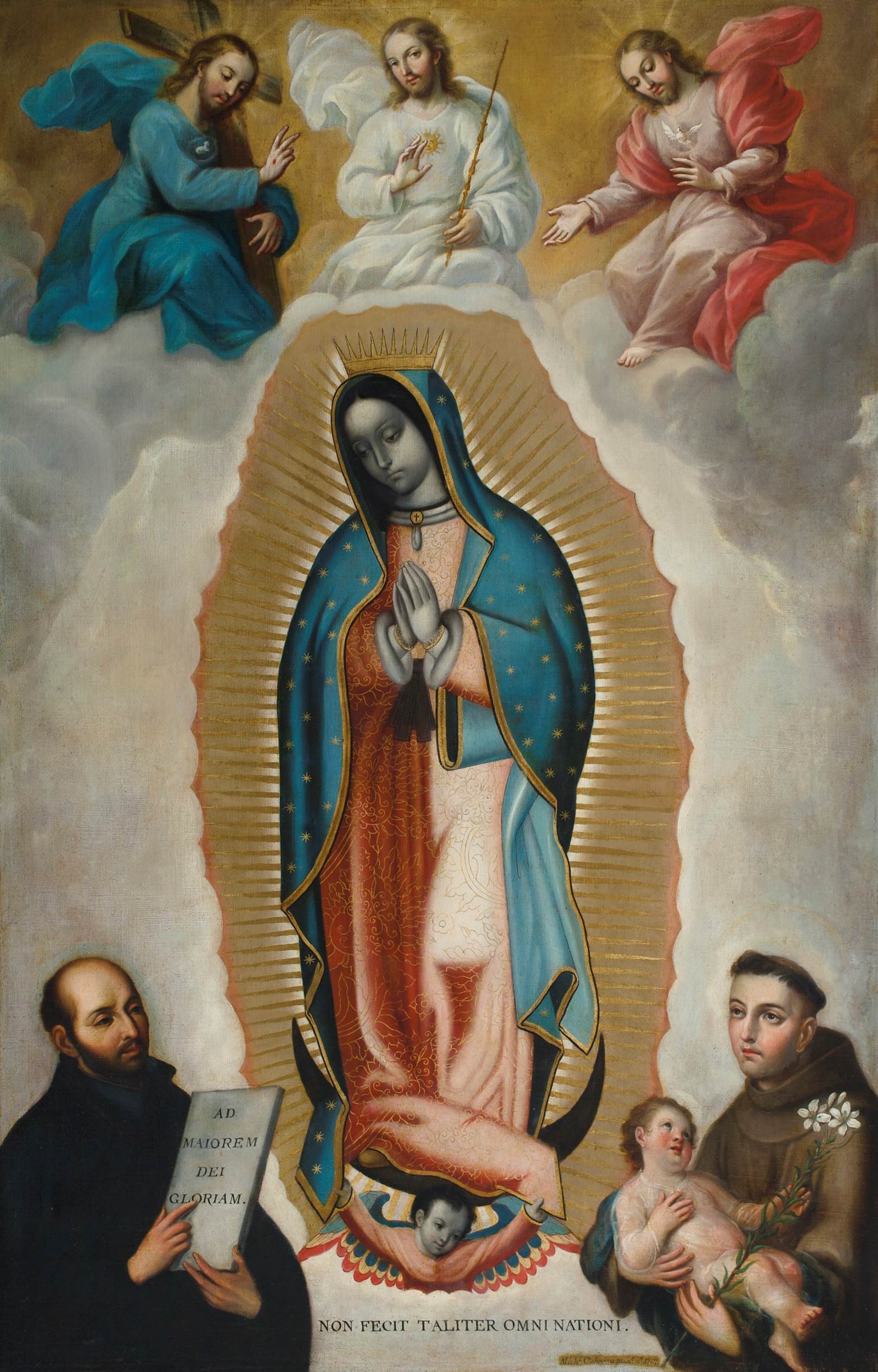
M. Cabrera, la Virgen de Guadalupe con la Santísima Trinidad, San Ignacio de Loyola y San Antonio (1767), Óleo sobre lienzo, Colección Museo de Historia Mexicana

Hace cuatro y medio siglos que María Santísima nos hizo un don: nos visitó en una mañana inolvidable. Nuestro suelo se estremeció de respeto y de amor, el aroma de las rosas del milagro embalsamó el ambiente, las estrellas del cielo tuvieron brillos misteriosos y el esplendor de la hermosura de la Virgen llenó de luz el Continente Americano. Y la voz de María, dulce como una caricia maternal, profunda como un eco de la voz divina, resonó en nuestro suelo y nos dijo palabras de amor; nos dijo «pequeñitos y delicados»; declaró que «era nuestra Madre»; nos brindó sus ternuras y su regazo, y dijo que allí, en él, viviríamos siempre, y que no necesitaríamos de otra cosa… En aquella mañana radiante, la Patria mexicana en germen pudo decir: «¿de dónde a mí este honor y esta gloria, que la Madre de Dios venga a mí?». Y vino de una manera singular, dulce y maravillosa, Ella, la evangelizadora perfecta y la que nos trajo a Jesús, al Jesús de la Paz y al Jesús de la lucha, al Jesús del dolor y al Jesús de la gloria, y, siempre, al Jesús del Amor. Su visita no fue fugaz; no vino y se fue, ¡se quedó con nosotros! ¿Sabemos lo que entraña el misterio de su visita? Un mensaje de amor de la Madre divina; un templo que surge por la magia de su voz celestial; una fuente de gracias copiosísimas que brota de la Colina del Tepeyac. Y estas tres cosas simbolizadas y perpetuadas en esa Imagen: que es la urna de nuestros recuerdos, el centro de nuestras esperanzas, la dicha de nuestro corazón» •

Mons. Luis María Martínez y Rodríguez, Arzobispo Primado de México, trigésimo segundo sucesor de Fray Juan de Zumárraga y custodio de la venerada imagen de la Virgen de Guadalupe del Tepeyac.


Second Sunday of Advent (Cycle B)

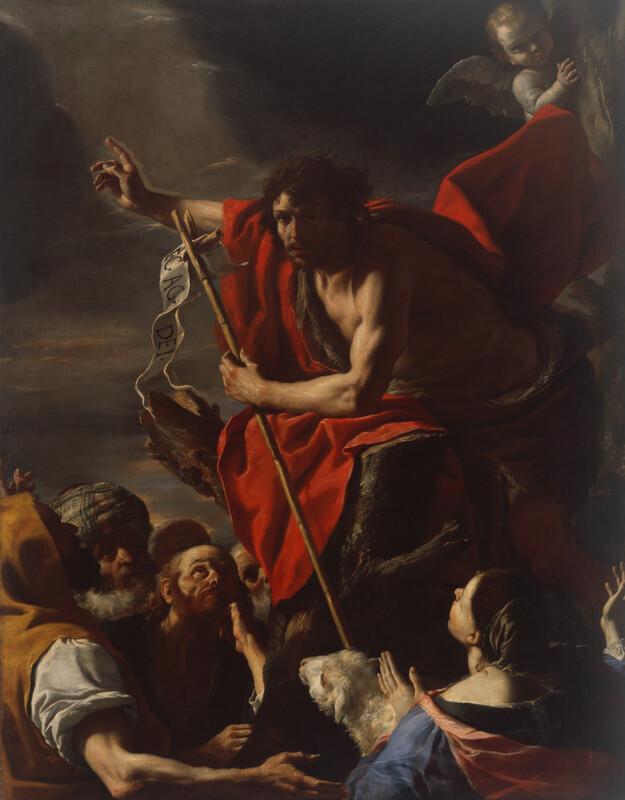
Mattia Preti (Il Cavaliere Calabrese), Saint John the Baptist Preaching (ca. 1665), oil on canvas, Museum of Fine Arts of Boston

Comfort, comfort my people. The prophet of the first reading is told that the time of misery is coming to an end. Comfort the people. Let them know that God is going to come to free them from their sadness and their pain. Right now, we need comforting. We are living in very difficult times. Politics has polarized us. People don’t just disagree with each other; they show anger and even hatred towards those who hold a different opinion then they do. Some Republicans shout out that all Democrats are communists. Some Democrats shout out that all Republicans are fascists. Our Church is also divided between those who want a return to a traditionalist faith where Mass is celebrated in Latin and those who want the Church to continue developing with the times. Deeper than that, there are those who treat the Holy Father as a heretic, and those who treat anyone who questions Rome as being schismatic. This is very stressful for us all. Many of our families have had difficult years with tragedies. Life as they knew it will never return. They need comforting. We all need comforting. That is a great word, comfort.

The prophet of the first reading promised comfort to the people. He told them that God was aware of their pain and suffering. They had been held captive by the Babylonians for fifty years. They were totally powerless. But then, after the prophecy that God is coming to bring comfort to the people. God found a way to bring comfort to his people. People are looking for comfort. They may not realize it, but they are looking for God. It is up to us to tell them that Divine Help is near. “Prepare the way of the Lord,” John the Baptist calls out in the Gospel reading for the Second Sunday of Advent. We are called to tell people that God is in control. He is going to free us from all that is attacking us. We have got to tell people to have faith and trust in God. We are called to let others know that comfort is near. More than that, we are called to let them know that Jesus, the Divine Comforter, is here. We can do this if our faith is the very center or our lives. We can do this if our lives are motivated by the presence of the Lord within us. We can proclaim comfort by living our Christianity. The decisions that we make in life, the way that we treat other people, the very way that we approach our day, must reflect the presence of Christ within us. People need us to be men and women of faith. People need our witness to our Christianity. Others are dependent on us. We must prepare them to receive the Lord in their lives. We must bring comfort to God’s people • AE


St. Dominic Catholic Church

Weekend Schedule

Saturday, December 9, 2023

3.00 p.m. Sacrament of Reconciliation – Fr. Agustin

5.00 p.m. Holy Mass (English) – Fr. Agustin

Sunday, December 10, 2023

7.30 a.m. Holy Mass (English) – Fr. Agustin

10.00 a.m. Holy Mass (English) – Fr. Agustin

12.30 p.m. Holy Mass (English) – Fr. Jaime

3.00 p.m. Santa Misa – Fr. Jaime


Segundo Domingo de Adviento (Ciclo B)

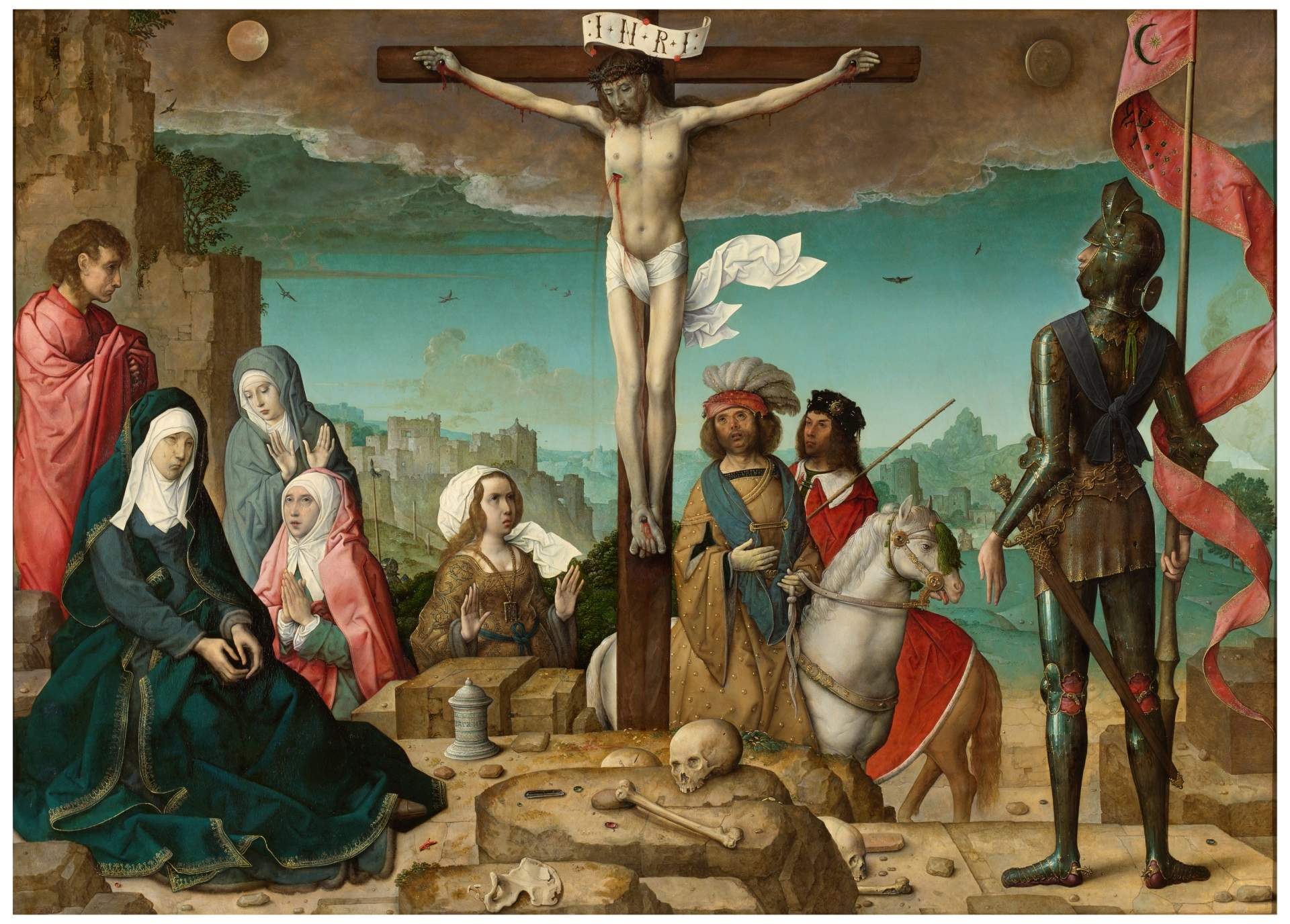
J. de Flandes, La Crucifixión (1509), óleo sobre tabla, Museo Nacional del Prado (Madrid)

A lo largo de este nuevo año litúrgico que empezó el domingo pasado con el inicio del adviento, en la Liturgia de la Palabra iremos escuchando los domingos el evangelio de Marcos. Su pequeño escrito arranca con este título: «Comienzo de la buena noticia de Jesús, el Mesías, Hijo de Dios». Estas palabras nos permiten evocar algo de lo que encontraremos en su relato.

Con Jesús «comienza algo nuevo». Es lo primero que quiere dejar claro el evangelista. Todo lo anterior pertenece al pasado. Jesús es el comienzo de algo nuevo e inconfundible. En el relato, Jesús dirá que el tiempo se ha cumplido y que con él llega la buena noticia de Dios. Esto es lo que vivian los primeros cristianos y quien se encuentra vitalmente con Jesús y penetra un poco en su misterio sabe que con él empieza una vida nueva, algo que nunca había experimentado anteriormente. Lo que encontramos en Jesús es una autentica buena noticia. Algo nuevo y bueno. La palabra evangelio que emplea Marcos es muy frecuente entre los primeros seguidores de Jesús y expresa lo que sienten al encontrarse con él. Una sensación de liberación, alegría, seguridad y desaparición de miedos. En Jesús se encuentran con la salvación de Dios.

Cuando alguien descubre en Jesús al Dios amigo del ser humano, el Padre de todos los pueblos, el defensor de los últimos, la esperanza de los perdidos, sabe que no encontrará una noticia mejor. Cuando conoce el proyecto de Jesús de trabajar por un mundo más humano, digno y dichoso, sabe que no podrá dedicarse a nada más grande.

Esta Buena Noticia es Jesús mismo, el protagonista del relato que va a escribir Marcos. Por eso su intención primera no es ofrecernos doctrina sobre Jesús, ni aportarnos información biográfica sobre él, sino seducirnos ¡preciosa palabra! para que nos abramos a la Buena Noticia que solo podremos encontrar en él.

Marcos le atribuye a Jesús dos títulos: uno típicamente judío; el otro, más universal. Sin embargo, reserva a los lectores algunas sorpresas. Jesús es el Mesías al que los judíos esperaban como liberador de su pueblo. Pero un Mesías muy diferente del líder guerrero que muchos anhelaban para destruir a los romanos. En su relato, Jesús es descrito como enviado por Dios para humanizar la vida y encauzar la historia hacia su salvación definitiva. Es la primera sorpresa. Jesús es Hijo de Dios, pero no dotado del poder y la gloria que algunos hubieran imaginado. Un Hijo de Dios profundamente humano, tan humano que solo Dios puede ser así. Solo cuando termine su vida de servicio a todos, ejecutado en una cruz, un centurión romano confesará: «Verdaderamente este hombre era Hijo de Dios». Es la segunda sorpresa • AE


El Mesías (G.F. Haendel)

El Mesías (en inglés, The Messiah), es un oratorio en inglés compuesto por Georg Friedrich Händel en 1741, con un texto bíblico recopilado por Charles Jennens de la Biblia del rey Jacobo. Se estrenó en Dublín en 1742 y se representó casi un año después en Londres. Después de una acogida de público inicial modesta, el oratorio ganó popularidad y finalmente se convirtió en una de las obras corales más conocidas e interpretadas con mayor frecuencia en la música occidental. Lo ponemos aquí porque el aria con la que éste oratorio empieza coincide con las preciosas palabras con las que inicia la segunda lectura.

Y por cierto: el próximo martes 12 de Diciembre, 2023, a las 10 de la mañana, en la parroquia, vamos a escuchar una estupenda grabación de esta obra musical al tiempo que iremos leyendo el texto para apreciarlo mejor, ¡estás cordialmente invitado!


DECEMBER 2023

Solemnity of the Immaculate Conception of the Blessed Virgin Mary (2023)

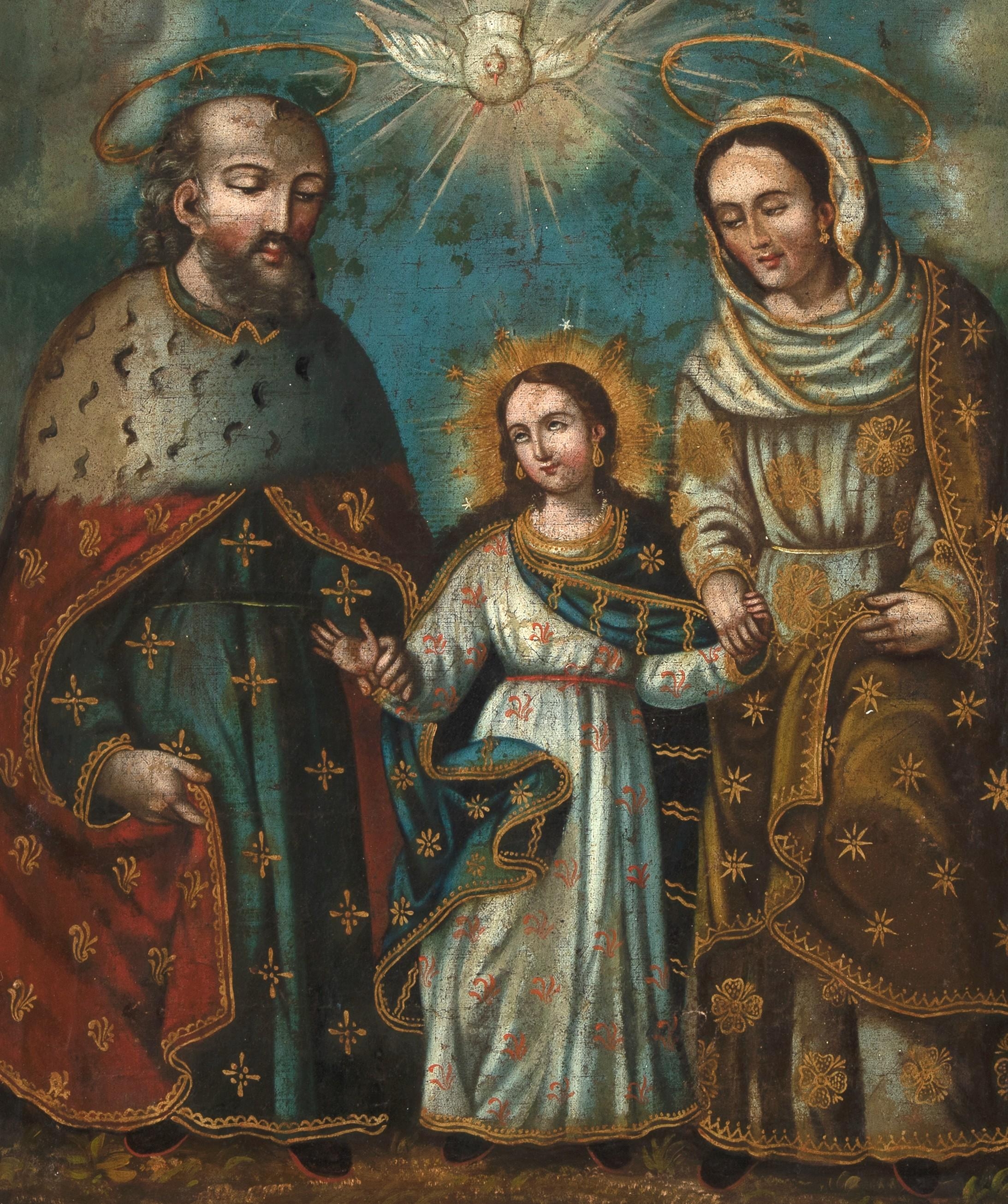
Spanish Colonial School, 18th Century, The Young Virgin with St. Joachim and St. Anne (ca. 1775), oil on canvas.

The season of Advent is a time of preparation and a time of anticipation.  We are preparing to welcome our Lord and we celebrate this season in anticipation of his birth.  Today, we celebrate the solemnity of the Immaculate Conception of the Blessed Virgin Mary, the day that Mary was conceived in the womb of St. Ann, the fact that she was conceived without original sin. From the first moment of her conception, from the moment when her life began, our Lady belonged entirely to God. The grace of the Immaculate Conception of the Blessed Virgin Mary is a grace of preparation. From the first moment of her life, when she can do nothing for herself, it is the grace of God that saves her. The work of salvation and the work of sanctification always begin with the action of God.

In the Immaculate Conception, the Blessed Virgin Mary is prepared to be the mother of the Messiah. She is given the grace to be able to give herself completely to the will of the Lord. It is the grace of her Immaculate Conception the enables her to respond to the words of the Archangel: “Let it be done unto me according to your word.”  So, the Blessed Virgin Mary is prepared by her Immaculate Conception to be the first tabernacle of the Lord Jesus.

The grace of the Immaculate Conception is a grace given in anticipation. This special grace is given to her in anticipation of the redemptive work of her Son, in whom alone and through whom alone is the salvation of the world.  Our Lady is the first to receive the grace that will be won on the cross of Calvary. So, today we celebrate the mighty work of Almighty God in this time of preparation and this time of anticipation. We join with all creation and with every generation and name Mary as the one who is blessed, and we ask God for another grace, another gift, the ability to prepare to receive with open heart and arms our Lord Jesus at Christmas Eve • AE


Solemnity of the Immaculate Conception of the Blessed Virgin Mary (Holiday of Obligation)

Thursday, December 7, 2023

6.00 p.m. (Vigil Mass) – Fr. Agustin E.

Friday, December 8, 2023

8.30 a.m. Holy Mass (English) – Fr. Jaime P.

6.00 p.m. Holy Mass (English) – Fr. Agustin E.


Salve Regina!


Solemnidad de la Inmaculada Concepción de la Santísima Virgen María

Dos casas tuvo Dios en este mundo señaladas entre todas las otras. La Una fue la humanidad de Jesucristo, en la cual mora la divinidad de Dios corporalmente, como dice el Apóstol [1] y la otra, las entrañas virginales de Nuestra Señora, en las cuales moró por espacio de nueve meses. Estas dos casas fueron figuradas en aquellos dos templos que hubo en el Viejo Testamento, uno de ellos que hizo Salomón [2] y el otro que se edificó en tiempo de Zorobabel, después del cautiverio de Babilonia [3]. Estos dos templos concuerdan en una cosa y difieren en dos. Concuerdan en ser ambos templos de un mismo Dios, y difieren, lo primero, en la riqueza y primor de las labores, porque mucho más rico fue el primero que el segundo, y lo segundo, en la fiesta de la dedicación de ellos[4].

Porque en la dedicación del primero todos cantaban y otros lloraban: cantaban los que veían ya acabada aquella obra que tanto deseaban y lloraban los que se acordaban de la riqueza y hermosura del templo pasado, viendo cuán baja obra era ésta en comparación de aquélla. Pues esto mismo nos acontece ahora en el día de la dedicación de estos dos templos místicos de que hablamos. Y por el día de la dedicación entendemos el día de la concepción; porque este día fueron estos dos templos dedicados y consagrados. Pues en el día de la concepción del Hijo, todos cantan, todos alaban a Dios, todos dicen que fue concebido del Espíritu Santo, y por eso su concepción fue santa y limpia de todo pecado, y donde no hay pecado, no hay materia de lágrimas, sino de alegría y de alabanza. Mas en la concepción de la madre, unos cantan, otros lloran; unos cantan y dicen: Toda eres hermosa, amiga mía y en ti no hay mancha [5]. Otros lloran y dicen: Todos pecaron en Adán [6] y tienen necesidad de la gracia de Dios. Mas todos concuerdan en que la sacratísima Virgen, antes que naciese, fue llena de todas las gracias y dones del Espíritu Santo, porque así convenía que fuese que ab eterno era escogida para ser madre del Salvador del mundo.

Cuán grande fuese esta gracia y estas virtudes, no hay lengua humana que lo pueda declarar. La razón es porque Dios hace todas las cosas conformes a los fines para que las escoge, y así las provee perfectísimamente de lo que para ellas es necesario. Escogió a Dios Oliab para maestro de su arca[7], escogió a San Pablo y a todos los otros apóstoles para maestros de su Iglesia. Pues, conforme a esto, los proveyó perfectísimamente de todas aquellas habilidades y facultades que para eso se requerían. Y porque a esta sacratísima Virgen escogió para la mayor dignidad que se puede conceder a pura criatura, de aquí viene que la adornó y engrandeció con mayor gracia, con mayores dones y virtudes que jamás se concedieron a ninguna pura criatura • Fray Luis de Granada (S. XVI)

[1] Col 2, 9 [2] 1R 7,1 [3] Esd 6,17 [4] 1R 8,1 [5] Ct 4, 7 [6] Rm 3, 23 [7] Ex 36,1