
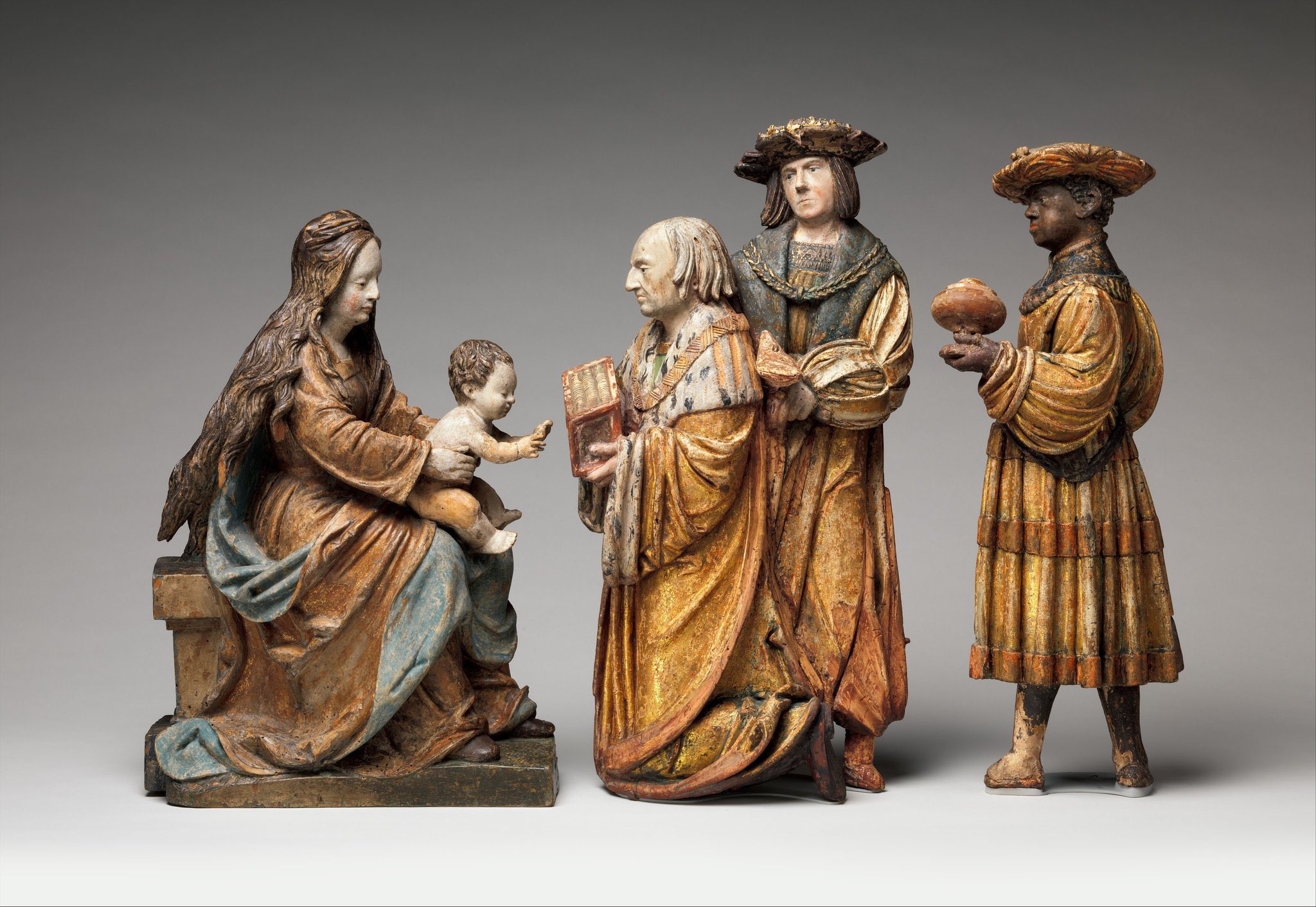
Workshop of Hans Thoman German, The Three Magi, from an Adoration Group (ca. 1515–20), Metropolitan Museum of Art (New York)
Herod and the magi offer a study in contrasts. Herod was a man of the political world, fiercely holding onto his power. The magi were men devoted to finding the King announced by the star, even though they did not know who this King was or exactly where the star would lead them. Herod was a Jew in name but a pagan in all things. The Magi were pagans in name, but acted like sincere Jews seeking the One who was the summit of God’s Plan for mankind. Sixteen centuries later, the mystic and doctor of the Church, St. John of the Cross, would reflect on his own life in a way that was similar to the lives of the ancient magi as well as the lives of all who seek the Lord. In his Songs of the Heart John of the Cross wrote, «I went without discerning and with no other light except for that which in my heart was burning.»
And so, we journey to the Lord. Where exactly are we going to find Him? We really don’t know. He may be in marriage. He may be in the priesthood or religious life. He may be in the life of the single determined to spread Christianity. He may be in children and Teens. He may be in a career. He may be in our caring for a sick spouse or relative. He may be in the outcast who reach out for us. He is in all these and countless more places. If we are wise, we will spend our lives seeking Him out, wherever He is. And yes, we might get sidetracked. Yes, we might find ourselves seeking Him in the wrong place, like in the palace of a hypocritical King Herod. We may have to break a relationship that is unhealthy for us. But if we are attune to God’s Word, He will set us straight and direct us to the course we need to follow. «Where am I going with my life?» we ask ourselves. Ideally, our answer should be, «I am going to Jesus, wherever He might be.» «When will I get there?» we also might ask. And we answer, «I will get there when the Lord decides that the journey of my life is complete.» For none of us has arrived at the goal of fully embracing the Lord. We need to keep searching for Him throughout our lives. After all, our lives are journeys of love, There are always new places to find love. We will all get to our Bethlehem’s if we are open to God’s call. And, so, we journey, not alone, but guided, guided by an interior star, the voice of the One we love who calls to us deep within ourselves. And we go «without discerning and with no other light except for that which in our hearts is burning.» So, let us pray today for the wisdom to seek the Lord • AE

St. Dominic Catholic Church • Weekend Schedule

Saturday, January 6, 2024
2.30 p.m. Quince Celebration for Justice Solis – Fr. Agustin
3.00 p.m. Sacrament of Reconciliation – Fr. Agustin
5.00 p.m. Holy Mass (English) – Fr. Agustin
Sunday, January 7, 2024
7.30 a.m. Holy Mass (English) – Fr. Agustin E.
10.00 a.m. Holy Mass (English) – Fr. Agustin E.
12.30 p.m. Holy Mass (English) – Fr. Jaime P.
3.00 p.m. Santa Misa – Fr. Jaime P.
Solemnidad de la Epifania del Señor (2024)
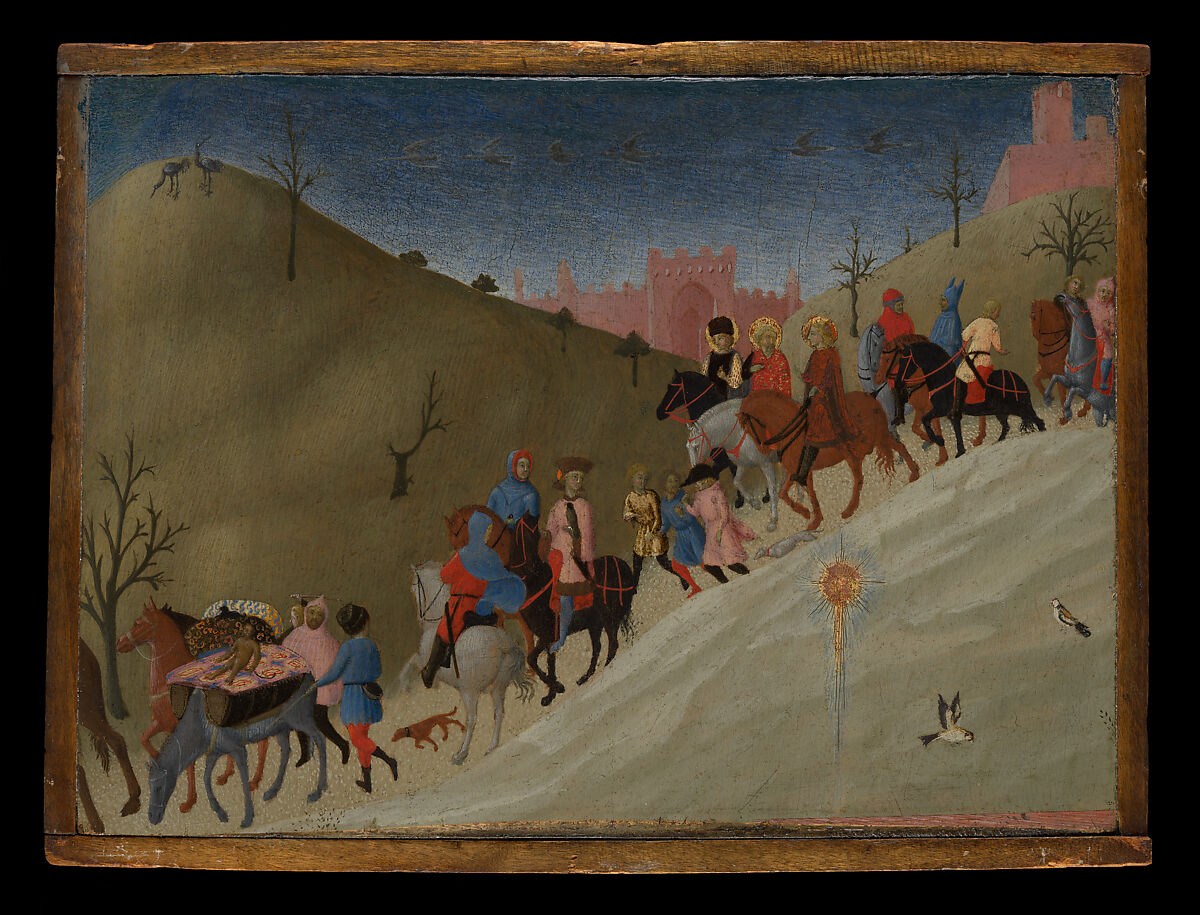
Sassetta, El viaje de los Magos (ca. 1433), tempera y oro sobre madera, Metropolitan Museum of Art (Nueva York)
La realidad es que no hay técnicas ni métodos que conduzcan de forma automática hacia Dios. Pero sí hay actitudes y gestos que pueden disponernos a encontrarnos con Él. Más aún. Las palabras más bellas y los discursos más brillantes sobre Dios son inútiles si no nos abrimos personalmente a él. ¿Cómo? Quizá lo más importante para orientarse hacia Dios es invocarlo desde el fondo del corazón, a solas, en la intimidad de la propia conciencia. Es ahí donde uno se abre confiadamente al misterio de Dios o decide vivir sin Él. Pero, ¿se puede invocar a Dios cuando uno no cree en él ni está seguro de nada? Charles Foucauld y otros increyentes iniciaron su búsqueda de Dios con esta invocación: «Dios, si existes, muéstrame tu rostro.» Esta invocación humilde y sincera en medio de la oscuridad es, probablemente, uno de los caminos más puros para hacerse sensible al misterio de Dios.
Y junto con esto, la escucha. Cada uno debemos vivir nuestra propia experiencia religiosa, pero es enriquecedor escuchar a los grandes creyentes: Abraham, Moisés, los profetas y, antes que todos ellos, Jesús, el Hijo de Dios. Se puede también escuchar a amigos y seres queridos que viven hoy su fe de forma convencida y gozosa. Si uno se queda encerrado en su pequeño mundo, sin abrirse a las experiencias de los demás, corre el riesgo de ignorar caminos de acercamiento al misterio.
Para orientarse hacia Dios es también importante eliminar de la propia vida aquello que, seguramente, no es compatible con él. Si uno, por ejemplo, tiene la pretensión de saberlo ya todo y de haber comprendido el misterio del mundo y del hombre, de la vida y de la muerte, es difícil que busque de verdad a Dios. Si uno vive encogido por el miedo o hundido en la desesperanza, ¿cómo confiará en un Dios que le ama sin fin? Si alguien se encierra en su propio egoísmo y solo siente desamor y distanciamiento hacia los demás, ¿cómo podrá abrirse a un Dios que es solo amor?
Para orientarse hacia Dios es fundamental la constancia. Mantener el deseo. Perseverar en la búsqueda. Seguir invocando. Saber esperar. No hay otra forma de ahondar en el misterio de quien es la fuente de la vida. El relato que nos regala el evangelio este domingo destaca de muchas formas la actitud ejemplar en la búsqueda del Salvador. Los Magos supieron ponerse en camino hacia el misterio. Supieron preguntar humildemente, superar momentos de oscuridad y perseverar en la búsqueda. La recompensa fue maravillosa: pudieron encontrar y adorar a Dios encarnado en la fragilidad de un ser humano • AE

 LA MEDITACION DE LA ESPOSA