
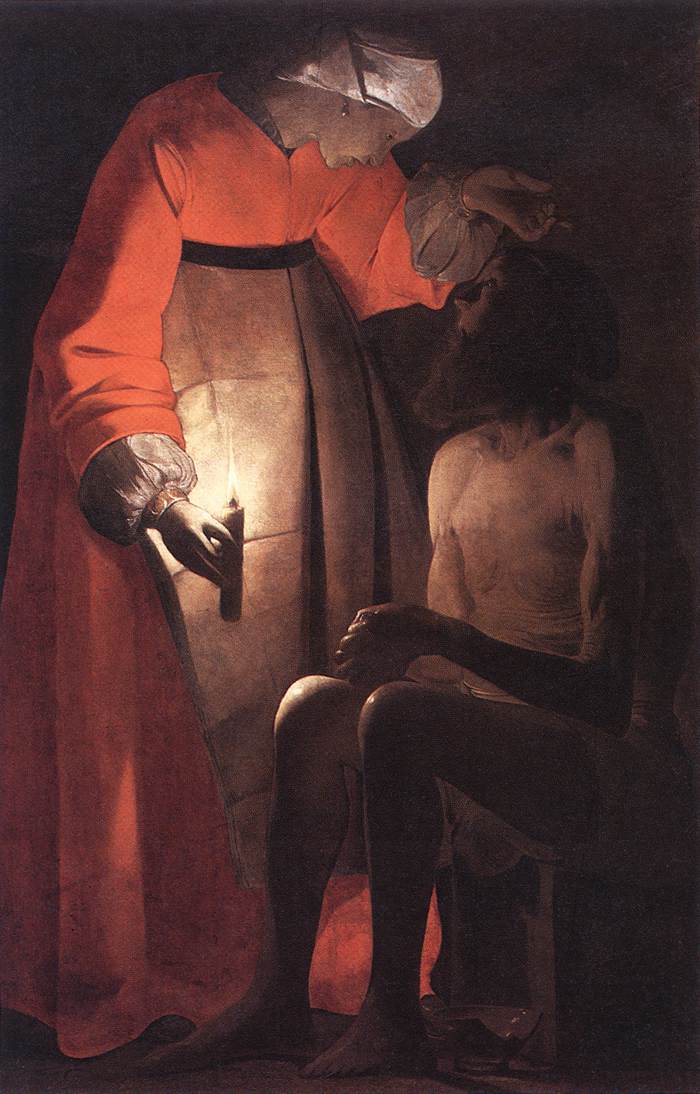
G. De La Tour, Job Mocked by his Wife (1630), Oil on canvas, Musée des Vosges, Épinal (France)
We need Job to remind us that there is so much more to existence than the physical here and now. The main section of the Book of Job concludes with Job recognizing that he will never have the answers to his problems. He has to place his trust in God. Jesus lived in a world of sickness. There was so much sickness, so much misery. We read in the Gospels people suffering from leprosy, paralysis, epilepsy. We hear about the blind and the deaf. It is no wonder that large crowds of people continually pressed on Jesus pleading with Him to heal them. And Jesus did heal many people, lepers, a man with a withered arm, cripples, and many, many more. Notice, though, what Jesus did before he healed people. He prayed. He prayed to His Father. His human nature stayed in touch with his divine nature as he went off to a deserted place to pray. And His prayers were answered with such power that he could heal. We do not know the reasons why there are so many problems in the world. We do not know why good people suffer. We do not know why children die. We do not even know the extent of suffering around us. What we do know is that if we keep a union with God, we can see all difficulties for what they are, temporary. “This too will pass,” the wise say. And so we meet challenges head on knowing that God will fight with us, helping us win the battle here so we can join him in the eternal celebration of His victory. And so, we pray. We welcome the spiritual into our lives. We welcome the Presence of God into our lives and witness Him strengthening our faith life. And we witness the power of prayer.
Jesus heals. He heals the pain not just of the people of the past, those people we hear about in the Gospels. Jesus heals the pain of the people of today. Some receive physical healing immediately. Others receive healing in stages. All who call out to the Lord are healed. Some are healed physically. Some are healed emotionally, able to accept their condition in life. All receive spiritual healing as they unite their pain to the Cross of Christ. We who carry Christ within us, carry within us the one who heals. If we believe in Him, if we trust in Him, then we refuse to join Job’s cry of despair. We recognize that Christ is present when we need Him the most, healing our internal and our external turmoil. We need to remember: we are not alone. Jesus is always with us. The last words of the Gospel of Matthew are so important: “Know that I am with you always until the end of time.” He is here to protect us from the doubts and despair that plagued Job. He is here to give us the courage to walk with Him over the threshold to a new life • AE

St. Dominic Catholic Church • Weekend Schedule

Saturday, February 3, 2024
3.00 p.m. Sacrament of Reconciliation – Fr. Jaime.
5.00 p.m. Holy Mass (English) – Fr. Jaime.
Sunday, February 4, 2024
7.30 a.m. Holy Mass (English) – Fr. Jaime P.
10.00 a.m. Holy Mass (English) – Fr. Jaime P.
12.30 p.m. Holy Mass (English) – Fr. Agustin E.
3.00 p.m. Santa Misa – Fr. Agustin E.
V Domingo del Tiempo Ordinario (Ciclo B)
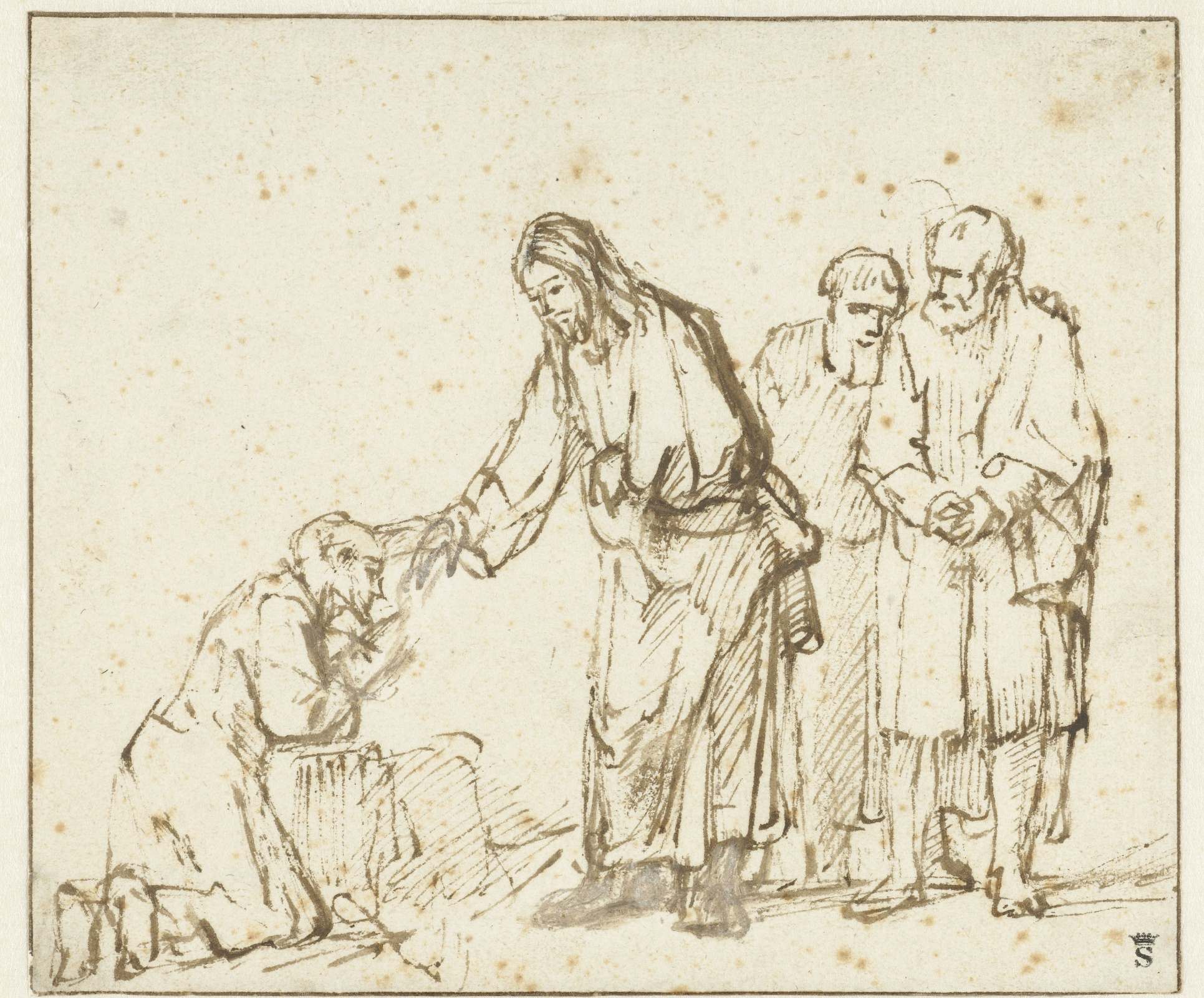
Rembrandt, Jesús cura a un leproso (1655), estudio preparatorio, Rembrandthuis (Amsterdam)
La enfermedad es una de las experiencias más duras del ser humano. No sólo padece el enfermo que siente su vida amenazada y sufre sin saber por qué, para qué y hasta cuándo. Sufre también su familia y quienes están cerca. De poco sirven las palabras y explicaciones. ¿Qué hacer cuando ya la ciencia no puede detener lo inevitable? ¿Cómo afrontar de manera humana el deterioro? ¿Cómo estar junto al familiar o el amigo gravemente enfermo? ¡Qué difícil responder!
Lo primero es acercarse. Al que sufre no se le puede ayudar desde lejos. Hay que estar cerca. Sin prisas, con discreción y respeto total. Ayudarle a luchar contra el dolor. Darle fuerza para que colabore con los que tratan de curarlo. Esto exige acompañarlo en las diversas etapas de la enfermedad y en los diferentes estados de ánimo. Ofrecerle lo que necesita en cada momento. No incomodarnos ante su irritabilidad. Tener paciencia. Permanecer junto a él. Es importante escuchar. Que el enfermo pueda contar y compartir lo que lleva dentro: las esperanzas frustradas, sus quejas y miedos, su angustia ante el futuro. Es un respiro para el enfermo poder desahogarse con alguien de confianza. No siempre es fácil escuchar. Requiere ponerse en el lugar del que sufre y estar atento a lo que nos dice con sus palabras y, sobre todo, con sus silencios, gestos y miradas. La verdadera escucha exige acoger y comprender las reacciones del enfermo. La incomprensión hiere profundamente a quien está sufriendo y se queja. «Animo», resignación»… son palabras inútiles cuando hay dolor. De nada sirven consejos, razones o explicaciones, “choros mareadores”, como dicen los chavos. Sólo la comprensión de quien acompaña con cariño y respeto alivia. La persona puede adoptar ante la enfermedad actitudes sanas y positivas o puede dejarse destruir por sentimientos estériles y negativos. Muchas veces necesitará ayuda para mantener una actitud positiva, para confiar y colaborar con los que le atienden, para no encerrarse solo en sus problemas, para tener paciencia consigo mismo o para ser agradecido.
El enfermo puede necesitar también reconciliarse consigo mismo, curar las heridas del pasado, dar un sentido más hondo a su dolor, purificar su relación con Dios. El creyente puede ayudarle a orar, a vivir con paz interior, a creer en el perdón y confiar en su amor salvador.
El evangelio de hoy nos dice que las personas acercaban sus enfermos y poseídos hasta Jesús. Él sabía acogerlos con cariño, despertar su confianza en Dios, perdonar su pecado, aliviar su dolor y sanar su enfermedad. Su actuación ante el sufrimiento humano siempre será para los cristianos el ejemplo a seguir en el trato a los enfermos, ¿al menos intentamos imitar al Señor? • AE
 LA MEDITACION DE LA ESPOSA