

Michelangelo, The Temptation of Saint Anthony (c. 1487), oil and tempera on panel, Kimbell Art Museum (Forth-Worth, Texas)
Usually on this Sunday we hear about three different temptations the Lord endured: turn rocks into bread, demand that your Father work a miracle to save you and trade His love for all the power of the world. We do not come upon these this year because they are in the Gospels of Matthew and Luke. Today’s reading is from the Gospel of Mark. Mark just states that Jesus went into the desert for 40 days, was confronted with temptations, beat off the devil and then began his mission. To prepare for Easter we spend forty days confronting temptation.
Sometimes people think that they must be very sinful because they have all sorts of temptations. People who are tempted are not sinful. They are alive. If any of us stops having temptations in our lives, we should check our pulse, we are probably dead. Temptations are difficult to overcome. If they were easy to fight off, then there would be no sin in the world, and we would be living in Utopia. No, temptations are difficult. Every temptation contains elements of attractiveness and has deep within it an aspect of goodness. Here is what I mean by that. All of God’s creation contains beauty. However, we can pervert that beauty and turn something that is good into something that is bad. For example, the human body is beautiful; pornography is a perversion of this beauty. All sin is attractive. If it were not attractive, we would not be tempted by it. Some people live by the saying, “If it feels good, do it.» What are they really saying? What they are saying is that anything is acceptable as long as they are getting pleasure from it. That is the way of the world. It is the way of selfishness, not the way of love. That is not the way of Jesus. Nor can it be our way. Jesus is the conqueror of sin. But His battle was not a simple task. Jesus was tempted to save His own life, give up and not go along with the Father’s plan. We are told to fight temptation with the Lord. When we choose Christ, the devil really does not stand a chance. In the battle for the Kingdom, Jesus fights with us, finding a way for us to win. Our weakness becomes a source of our strength because it leads us to depend on the Lord.
The 40 days of Lent are really about loving Jesus. We spend this time looking for ways to grow in our love for our Savior. We fight off temptation with Him. We give Him our sins in confession. We unite ourselves to Him through the Eucharist and many other ways of praying. We do everything possible to allow His grace into our lives. He is the Victor over sin. We are His. And He is ours • AE

Music for Lent
Canticum Canticorum is a cycle of 29 motets by Giovanni Pierluigi da Palestrina. Originally titled Motettorum – Liber Quartus, this Renaissance work is one of Palestrina’s largest collections of Sacred motets. The work is in Latin and based upon excerpts from the book in the Song of Songs of the Old Testament. The Song of Songs is thought to be an allegorical representation of the relationship of God and the faithful as husband and wife. The text uses the main image of a man and wife almost throughout, the poem suggesting movement from courting to consummation. Canticum Canticorum was written in the year 1584. This work, as with many of Palestrina’s works around this time, was dedicated to Pope Gregory XIII •

St. Dominic Catholic Church • Weekend Schedule

Saturday, February 17, 2024
3.00 p.m. Sacrament of Reconciliation – Fr. W. Zapalac.
5.00 p.m. Holy Mass (English) – Fr. W. Zapalac
Sunday, February 18, 2024
7.30 a.m. Holy Mass (English) – Fr. Jaime P.
10.00 a.m. Holy Mass (English) – Fr. W. Zapalac.
12.30 p.m. Holy Mass (English) – Fr. W. Zapalac
3.00 p.m. Santa Misa en Español – Fr. Jaime P.
PRIMER DOMINGO DE CUARESMA (CICLO B)
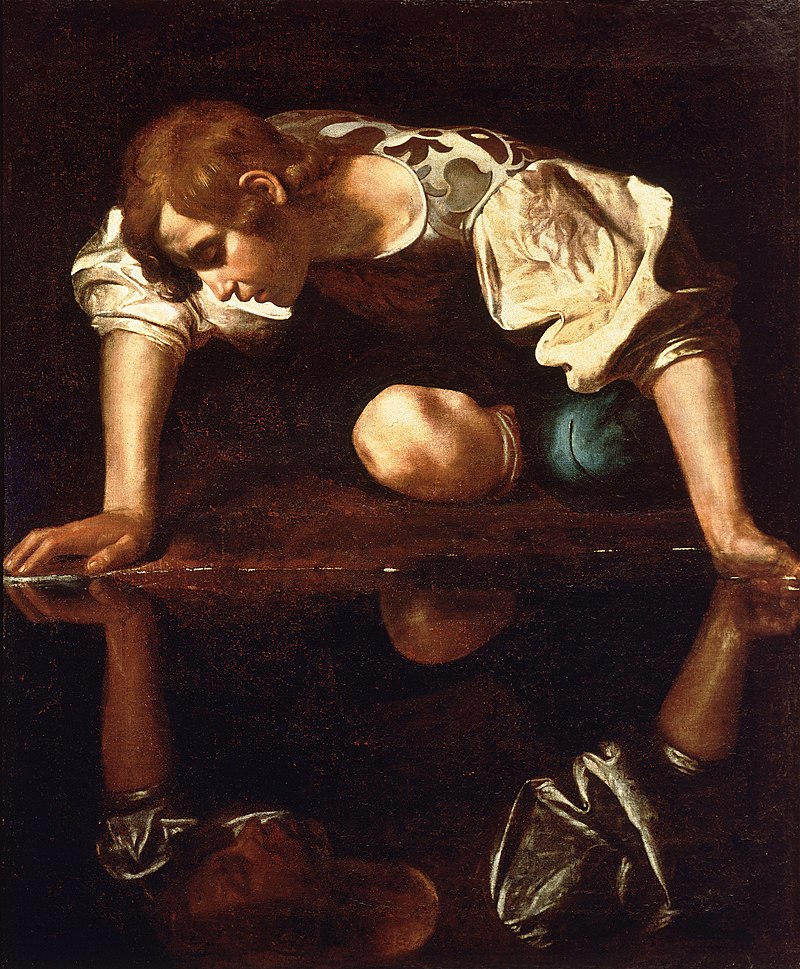
Caravaggio, Narciso (1597), óleo sobre tela, Galería Nacional de Arte Antiguo (Roma)
En su libro titulado La era del vacío, Gilles Lipovetsky dice que uno de los rasgos característicos del momento actual es el clima de seducción, algo que se produce no sólo en las relaciones interpersonales, sino que además es un elemento que poco a poco va regulando el consumo, la organización de la vida, la educación, las costumbres. Todo. La profusión de productos y la necesidad de captar al posible comprador ha llevado a la publicidad a extremar la estrategia de la seducción por medio de ofertas cada vez más tentadoras, imágenes más excitantes. Las relaciones autoritarias dejan paso a relaciones de seducción. Los jefes se han de mostrar cercanos y cordiales. La disciplina es sustituida por un estilo cálido y sugerente. La educación, antes autoritaria, se vuelve más permisiva y atenta a los deseos de los niños y adolescentes. Crece por todas partes el deseo de crear un clima más tranquilo y seductor. Se trabaja con hilo musical, se conduce escuchando el estéreo, se oye música desde la mañana a la noche como si el individuo tuviera necesidad de vivir transportado y envuelto en un ambiente relajado. El mismo lenguaje pretende crear un mundo suave y tolerante. Ya no hay ciegos y lisiados, sino invidentes y minusválidos. Los viejos se han convertido en “personas de la tercera edad». El aborto es solamente «una interrupción voluntaria del embarazo». Sin duda, es fácil detectar en este fenómeno de nuestro tiempo el deseo y la necesidad de humanizar la dureza de la vida moderna introduciendo un aire más cálido, cordial y tolerante.
Pero, como advierte el autor, esta sociedad seductora está generando un hombre de voluntad débil, seducido y esclavo de mil impulsos y deseos cambiantes. Cada vez son más los que viven a la carta, confeccionándose su propio menú según lo que se antoje en el momento, en medio de una búsqueda interminable de sí mismos, sin saber exactamente dónde enraizar su existencia, de ahí la proliferación de influencers, upstanders, y una gran variedad de conductas enraizadas en un profundo narcisismo. Basta asomarse a las redes sociales.
Los cristianos ¿dónde estamos? ¿hacia dónde miramos? ¿cuál es es nuestro punto de referencia? Una vida digna de este nombre -cristiano- exige no ceder a seducciones que pueden destruirnos como personas, de ahí la enorme importancia del evangelio de este domingo, el primero en el tiempo de Cuaresma, donde encontramos la figura sobria, fuerte, sencilla, de Jesús enfrentándose a la tentación, e invitándonos a hacer lo mismo, manteniendo despierto el oído interior, conservando limpio el corazón, estando atentos a la voz de nuestra conciencia. En seis sencillísimas palabras el Señor traza el camino que deberíamos recorrer: “Arrepiéntanse y crean en el Evangelio” • AE
lEctUrAS paRa lA cUaResMa

 LA MEDITACION DE LA ESPOSA