
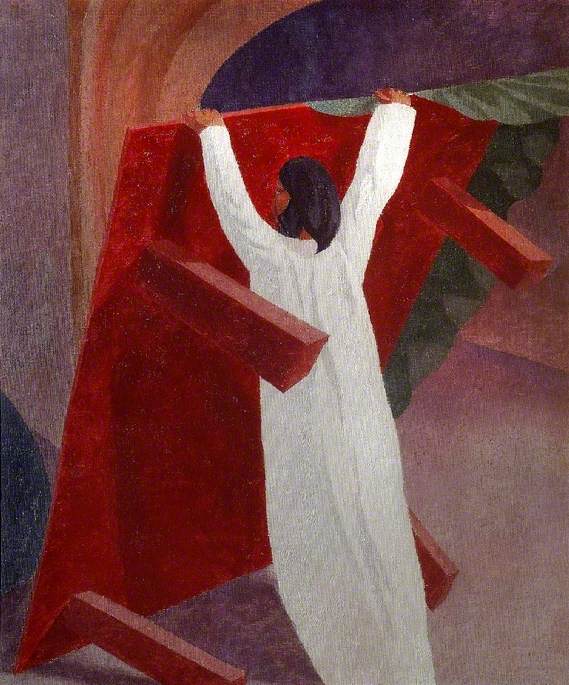
S. Spencer, Christ Overturning the Money Changers (1921), Oil on canvas, Stanley Spencer Gallery.
These are mysterious readings today on this third Sunday of Lent. Especially the gospel proclamation. There is the story of the cleansing of the temple—a truly remarkable episode in the life of Jesus! The whole Christian tradition does not generally think of Jesus as having anger at all, and so Christians thinkers have to find ways to justify these angry actions of Jesus. But the Gospel today does not describe Jesus as angry, only as determined that the temple will be a place of prayer.
One of the challenges of today’s readings is whether we are able simply to accept behavior that is inappropriate, or do we do something about it? So very often most of us try to avoid such situations. Today, there are tough questions: what do we think about the possibility of war? What is my position on the death penalty? What do we think about abortion? What do we think about birth control? What do we think about the goodness or badness of the economic policies of our country? There are so many issues on which we must have a clear and Christian position! Of course, we must remember that whatever our opinion, at least some others will be opposed to it. And we humans don’t like that kind of opposition. That is why there was a saying: don’t discuss religion or politics! But we are followers of Christ and so we must seek for ways to live that will pass on a truly divinely blessed life to those who come after us. We are Christians and so we want to embrace a crucified Christ and the notion that the salvation of the world comes about by embracing death. We are a people that accepts that life must be purified, just as the temple was purified. Within ourselves, we must get rid of all that keeps us away from God and all the works of the world that do not give glory to God. In that way, our lives become more and more focused on the one thing necessary: doing the will of God! Let us ask today that the temple of our own being may be cleansed by the grace and presence of our Lord • AE

St. Dominic Catholic Church • Weekend Schedule

Saturday, March 2, 2024
8.30 a.m. Sacrament of Reconciliation for CCD – Fr. Agustin E.
3.00 p.m. Sacrament of Reconciliation – Fr. Agustin E.
5.00 p.m. Holy Mass (English) – Fr. Agustin. E.
Sunday, March 3, 2024
7.30 a.m. Holy Mass (English) – Fr. Agustin E.
10.00 a.m. Holy Mass (English) & First Scrutiny of RCIA 2024 – Fr. Agustin E.
12.30 p.m. Holy Mass (English) – Fr. Jaime P.
3.00 p.m. Santa Misa – Fr. Jaime P.
III Domingo de Cuaresma (Ciclo B)
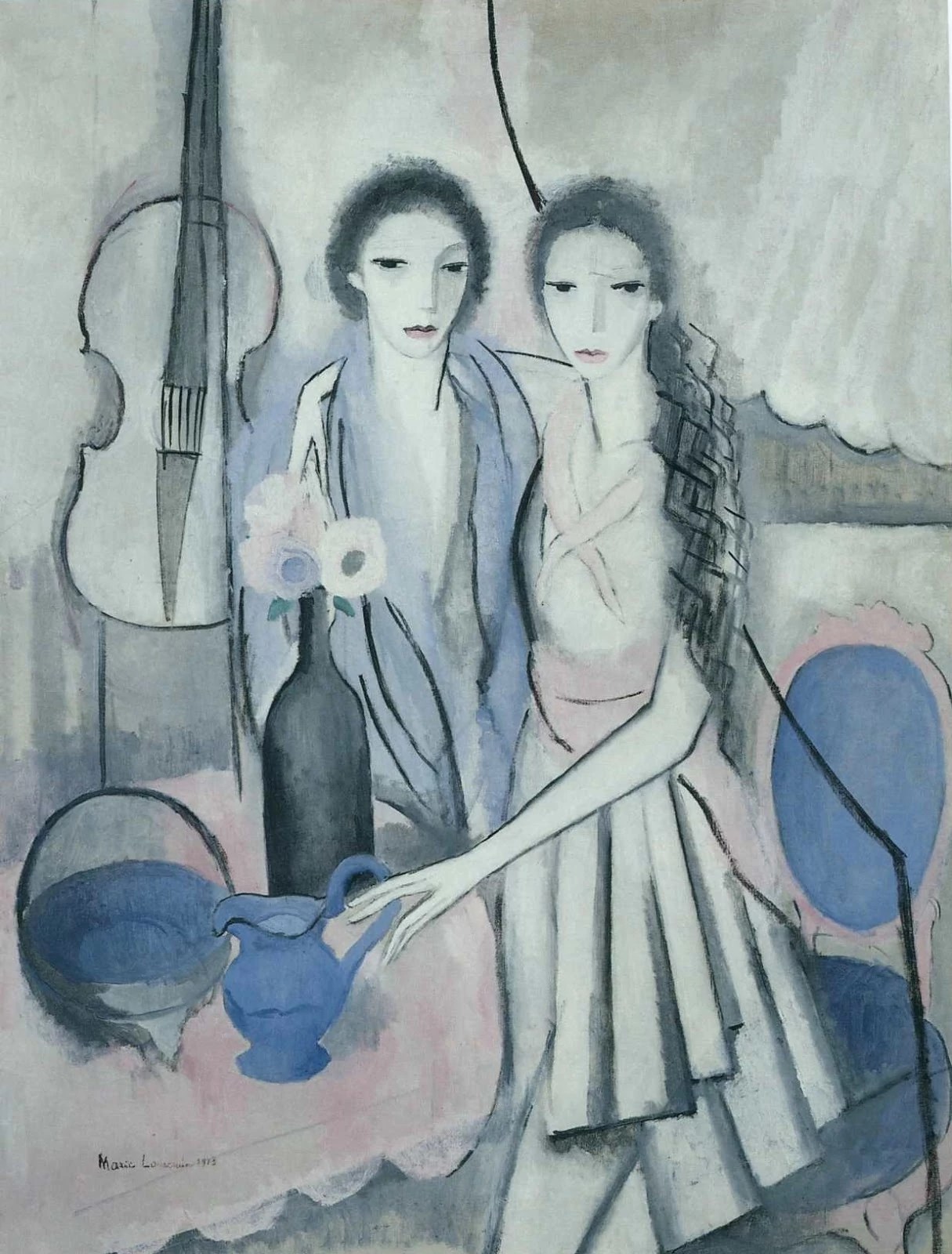
M. Laurencin, Dos hermanas con un cello (1913), óleo sobre tela, colección privada.
Cuando Jesús entra en el templo de Jerusalén no encuentra a personas buscando encontrarse con Dios sino comercio religioso. Su actuación violenta frente a vendedores y cambistas es la reacción del Profeta que se topa con la religión convertida en mercado. Aquel templo llamado a ser el lugar en que se había de manifestar la gloria de Dios y su amor fiel al hombre, se convirtió en lugar de engaño y abusos donde reinaba el afán de dinero y el comercio interesado. La indignación del Señor no debería extrañarnos. El corazón del mensaje de Jesús es la gratuidad de Dios que ama a los hombres sin límites y sólo quiere ver entre ellos amor fraterno y solidario. Por eso, una vida convertida en mercado donde todo se compra y se vende, incluso la relación con el misterio de Dios, es la perversión más destructora de lo que Jesús quiere promover entre los hombres. Es cierto que nuestra vida sólo es posible desde el intercambio y el mutuo servicio. Todos vivimos dando y recibiendo. El riesgo está en reducir todas nuestras relaciones a comercio interesado, pensando que en la vida todo consiste en vender y comprar, sacando el máximo provecho a los demás. Casi sin damos cuenta, nos podemos convertir en vendedores y cambistas que no saben hacer otra cosa sino negociar. Hombres y mujeres incapacitados para amar, que han eliminado de su vida todo lo que sea dar. Es fácil entonces la tentación de negociar incluso con Dios. Le regalamos un poco de tiempo, un poco de atención, unas cuántas monedas para quedar bien con él; pagamos algunas misas o hacemos promesas para obtener de él algún beneficio. Aún peor: cumplimos ciertos ritos para tenerlo a nuestro favor. Lo grave es olvidar que Dios es amor y el amor no se compra. Por algo repetía Jesús que Dios «quiere amor y no sacrificios». Deberíamos volver una y otra vez a la idea -y este tercer domingo de cuaresma es un buen momento-de que el amor de Dios es gratuito. Total y absolutamente gratuito. Es gracia. En un mundo convertido en mercado donde todo es exigido, comprado o ganado, sólo lo gratuito puede seguir fascinando y sorprendiendo pues es el signo más auténtico del amor. Los creyentes hemos de estar más atentos a no desfigurar a un Dios que es amor gratuito, haciéndolo a nuestra medida, tan triste, egoísta y pequeño como nuestras vidas mercantilizadas. Quien conoce la sensación de la gracia y ha experimentado alguna vez el amor sorprendente de Dios, se siente invitado a irradiar su gratuidad y, probablemente, es quien mejor puede introducir algo bueno y nuevo en esta sociedad donde tantas personas mueren de soledad, aburrimiento y falta de amor •

¿Y qué vamos a leer?

 LA MEDITACION DE LA ESPOSA