
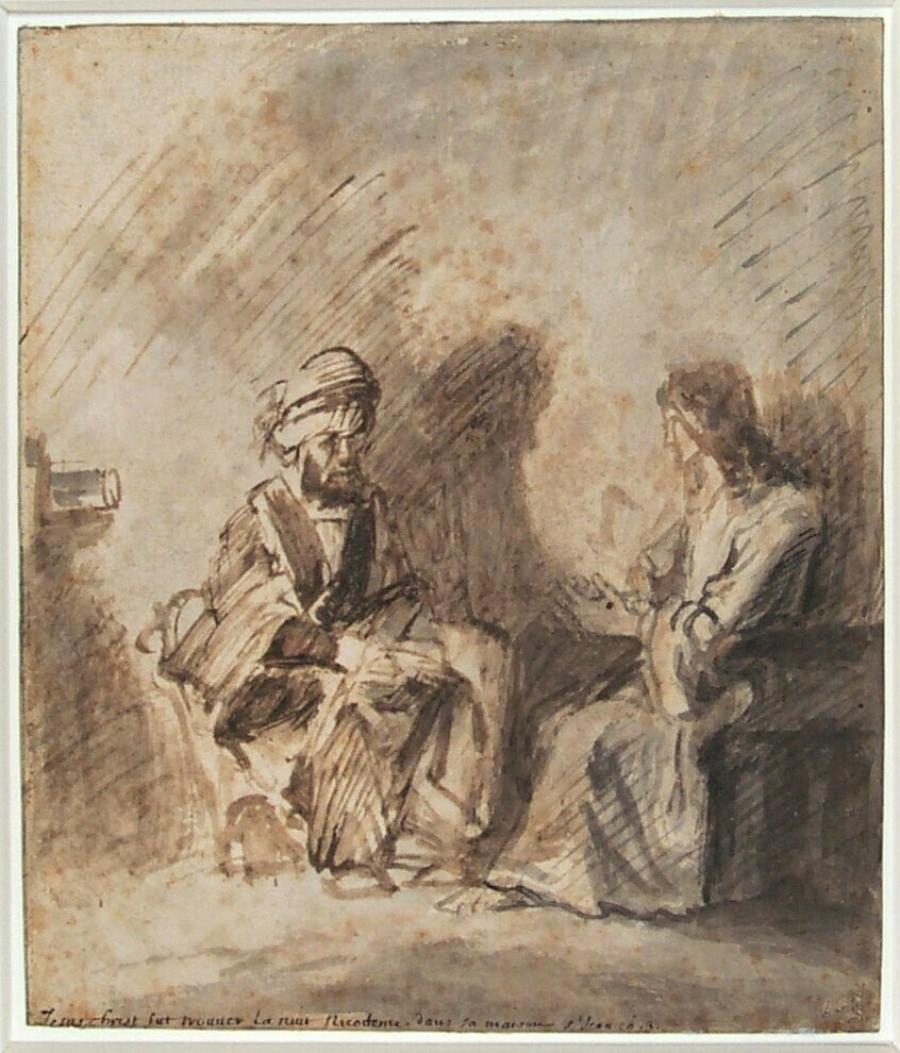
Anonymous, Christ and Nicodemus (c. 1600), pen and brush over paper, Museum Boijmans Van Beuningen
This Sunday is called Laetare Sunday. The word Laetare is Latin for joy and we are reminded of how much we are loved. The people of the first reading were suffering. They had been brought into exile by the Babylonians. Their Temple had been wrecked. Their palaces burned. They brought all this on themselves. The reading details how they committed one abomination after another. The psalms tell us that they even committed child sacrifice. God punished the people, or allowed the Babylonians to punish them. In exile in Babylon, the Jews were completely helpless. They had no army. They had no political clout. But what they did have was their determination to return to follow God. They became adamant in the practice of their faith. They formed a way of life, a system where they expressed their determination to live for God. And God had mercy on them. They were, after all, his people. He loved them, and this is the main teaching of that Gospel reading we have heard so often. We really need the reminder that we live in the joy of the Lord. This has been a heavy year. There are wars throughout the world. There are continual concerns on how to treat immigrants to our country with dignity while at the same time upholding our laws. And to make matters worse, this is a presidential election year. That would make any year difficult. Yet, through it all we still have the joy that the Lord sees, the Lord knows, and the Lord heals.
St. Ireneaus of Lyon, an early doctor of the church, is credited as writing “The Glory of God is man fully alive.” Human beings are the summit of God’s creation. When we reverence the Lord with all that we are, when the fear of the Lord becomes the core of our lives, then we become all God has created us to be. We are fully alive because we are not just physical. We are physical and spiritual. Again, St. Irenaeus, “The Glory of God is man fully alive.” And we are loved. We are loved by God. The love of God is deeper than the love a husband and wife have for each other. The love of God is stronger than the love parents have for their children. The love of God is so powerful that it leads us to conquer anything that is attacking us, outside of us, among us, or within us. As we come to a deeper understanding of how much God loves us, we experience joy. So, Laetare. For God so loved the world that he sent his only Son. He sent him for all of us, and he sent him for each of us. We are loved. Laetare • AE


Rejoice, O Jerusalem; and gather round, all you who love her; rejoice in gladness, after having been in sorrow; exult and be replenished with the consolation flowing from her motherly bosom. I rejoiced when it was said unto me: «Let us go to the house of the Lord.
St. Dominic Catholic Church • Weekend Schedule

Saturday, March 9, 2024
1.00 p.m. Memorial Mass for + Rosa Guerrero – Fr. Agustin E.
3.00 p.m. Sacrament of Reconciliation – Fr. Agustin. E.
5.00 p.m. Holy Mass and 2nd Scrutiny for RCIA 2024– Fr. Agustin. E.
Sunday, March 10, 2024
7.30 a.m. Holy Mass (English) – Fr. Agustin E.
10.00 a.m. Holy Mass (English) – Fr. Agustin E.
12.30 p.m. Holy Mass (English) – Fr. Jaime P.
3.00 p.m. Santa Misa – Fr. Jaime P.
IV Domingo de Cuaresma (Domingo Laetare)

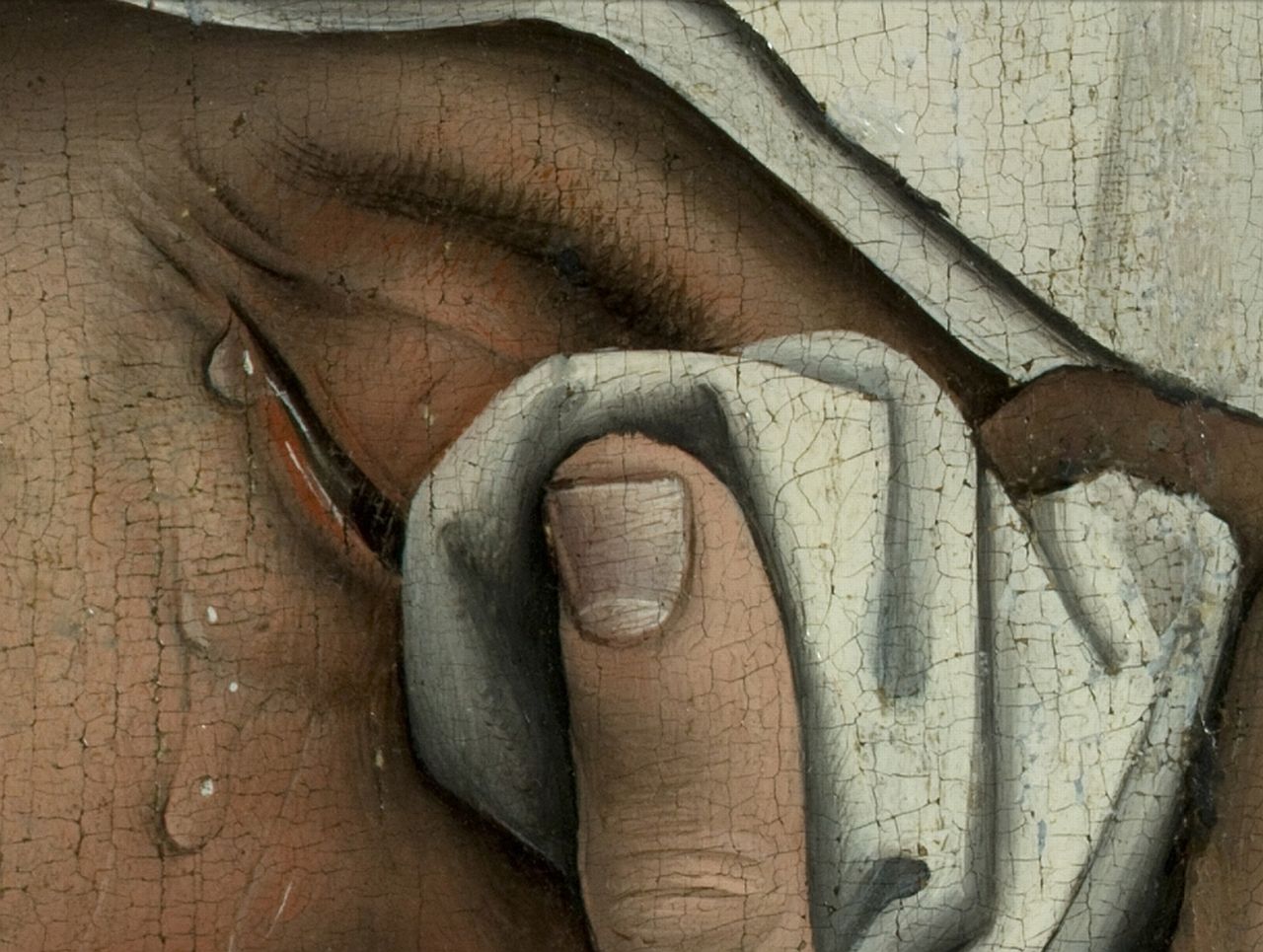
R. Van der Weyden, El descendimiento de la cruz (De Kruisafneming)(1436), Óleo sobre tabla, Museo del Prado (Madrid)
El evangelio de hoy relata el extraño encuentro entre Jesús y un fariseo llamado Nicodemo. Según el texto, es Nicodemo quien toma la iniciativa y va a donde Jesús de noche. Intuye que Jesús es un hombre venido de Dios, pero no esta muy claro. Jesús lo irá conduciendo hacia la luz. Nicodemo representa en el relato a todo aquel que busca sinceramente encontrarse con Jesús. Por eso, en cierto momento, Nicodemo desaparece de escena y Jesús prosigue su discurso para terminar con una invitación general a no vivir en tinieblas, sino a buscar la luz. Según Jesús, la luz que lo puede iluminar todo está en el Crucificado. La afirmación es atrevida: «Tanto amó Dios al mundo que entregó a su Hijo único para que no perezca ninguno de los que creen en él, sino que tengan vida eterna». ¿Podemos ver y sentir el amor de Dios en ese hombre torturado en la cruz? Acostumbrados desde niños a ver la cruz por todas partes, no hemos aprendido a mirar el rostro del Crucificado con fe y con amor. Nuestra mirada distraída no es capaz de descubrir en ese rostro la luz que podría iluminar nuestra vida en los momentos más duros y difíciles. Sin embargo, Jesús nos está mandando desde la cruz señales de vida y de amor. En esos brazos extendidos que no pueden ya abrazar a los niños, y en esa manos clavadas que no pueden acariciar a los leprosos ni bendecir a los enfermos, está Dios con sus brazos abiertos para acoger, abrazar y sostener nuestras pobres vidas, rotas por tantos sufrimientos. Desde ese rostro apagado por la muerte, desde esos ojos que ya no pueden mirar con ternura a pecadores y prostitutas, desde esa boca que no puede gritar su indignación por las víctimas de tantos abusos e injusticias, Dios nos está revelando su «amor loco» a la Humanidad. «Dios no mandó su Hijo al mundo para juzgar al mundo, sino para que el mundo se salve por él». Podemos acoger a ese Dios y lo podemos rechazar. Nadie nos fuerza. Somos nosotros los que hemos de decidir. Pero «la Luz ya ha venido al mundo». ¿Por qué tantas veces rechazamos la luz que nos viene del Crucificado? Él podría poner luz en la vida más desgraciada y fracasada, pero «el que obra mal… no se acerca a la luz para no verse acusado por sus obras». Cuando vivimos de manera poco digna, evitamos la luz porque nos sentimos mal ante Dios. No queremos mirar al Crucificado. Por el contrario, «el que realiza la verdad, se acerca a la luz». No huye a la oscuridad. No tiene nada que ocultar. Busca con su mirada al Crucificado. Él lo hace vivir en la luz • AE

¿Quieres algo para leer?

 LA MEDITACION DE LA ESPOSA