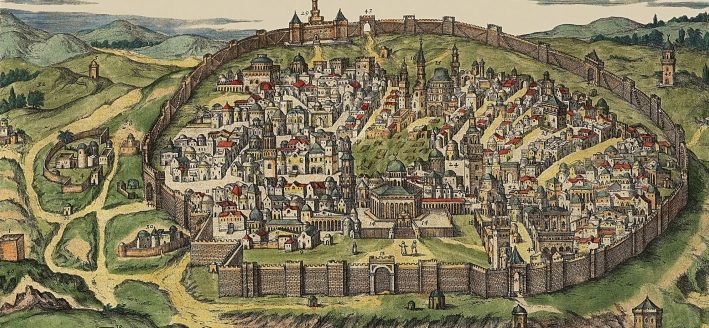

Unknown author, Triumphal entry into Jerusalem (1503), Illumination on parchment, National Library of Wales (UK)
Today we hold palm branches in our hands today. We say, Hosanna, a word that means, «Be now our Savior». Christ’s entry into Jerusalem is the sign of our hope of entry into the heavenly Jerusalem. A man with leprosy came before Jesus and was healed. But Jesus told him, «See that you say nothing to anyone about this.» A deaf man came to the Lord. Jesus said, «Ephphathat, Be Opened» and the man was able to hear. Then Jesus told him, “Say nothing about this to anyone.” A blind man had his sight returned, and, similarly, Jesus said to him, «Keep this quiet; don’t even enter the villages.» Jesus died on the Cross, and a pagan, a Roman centurion, made the announcement, «Surely this is the Son of God.» So, to understand who Jesus is, we have to recognize the Cross. To recognize how much God loves us, we have to realize the extent of his suffering for us. To realize what it means to be followers of Jesus, we have to join him on his holy Cross • AE
In the liturgy of the Church nothing is sung by chance. And the antiphons that the Roman Missal proposes for Holy Week express in a few words how much it is being celebrated. One of the latin songs proposed for Palm Sunday is titled Pueri hebraeorum, with a title taken from its first words: «The children of the Hebrews, carrying branches of olive trees, went out to meet the Lord, shouting and saying: Hosanna in heaven!». Could be sung in the initial procession of the Palm Sunday Mass, with palms and branches blessed. This outburst of joy will be found later, in the same celebration, with the dramatic horizon of the death of Jesus, since the Passion of our Lord Jesus Christ is proclaimed in the Mass. This version was composed by Tomas Luis de Vitoria, one of the most important composers of polyphonic music. in 1572 •

St. Dominic Catholic Church • Weekend Schedule

Saturday, March 23, 2024
3.00 p.m. Sacrament of Reconciliation – Fr. Jaime P.
5.00 p.m. Holy Mass (English) – Fr. Jaime P.
Sunday, March 24, 2024
7.30 a.m. Holy Mass (English) – Fr. Jaime P.
10.00 a.m. Holy Mass (English) – Fr. Agustin E.
12.30 p.m. Holy Mass (English) – Fr. Agustin E.
3.00 p.m. Santa Misa – Fr. Agustin E.
Domingo de Ramos de la Pasión del Señor (2024)
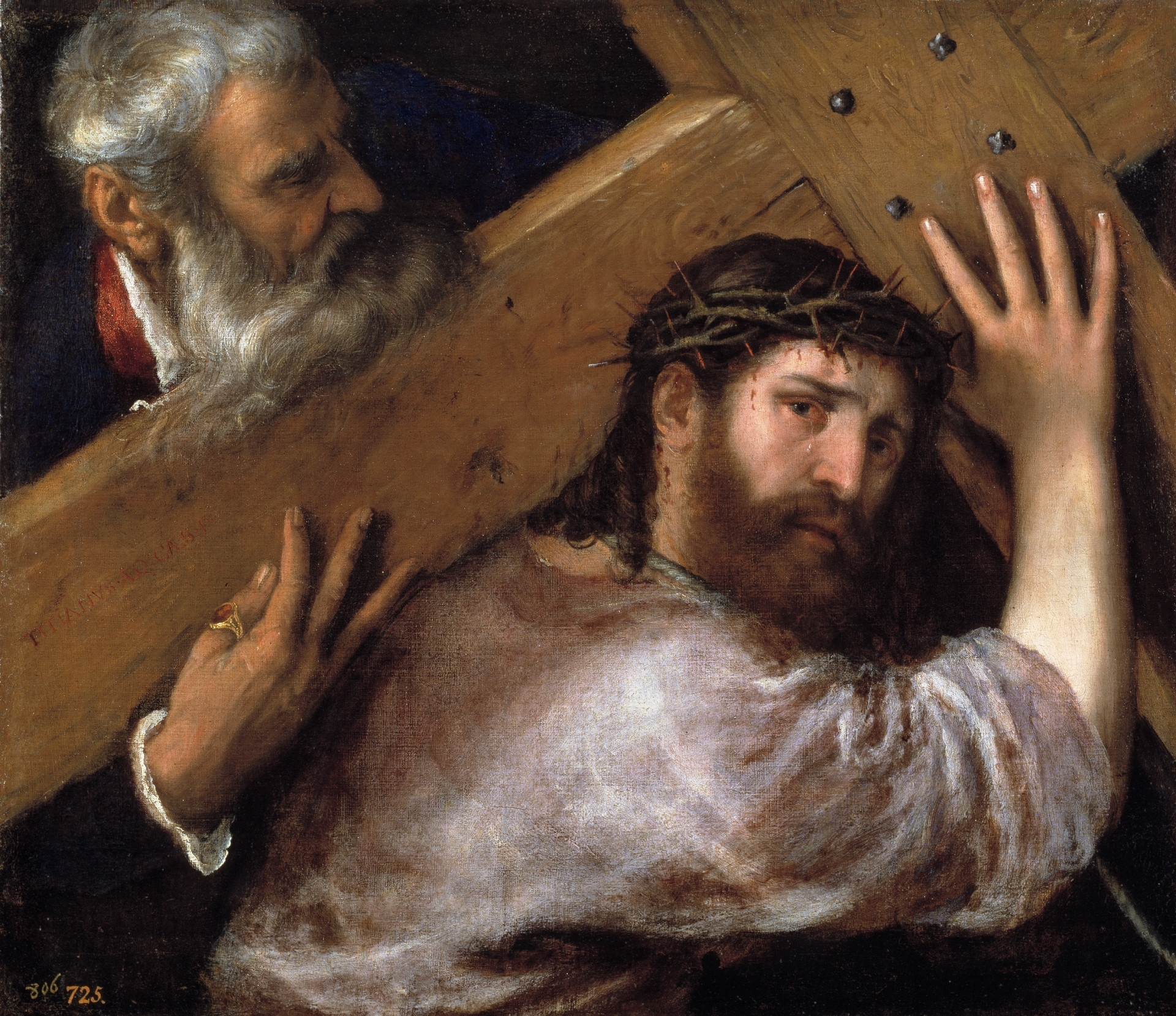
Tiziano, Cristo cargando la cruz ayudado por Simón de Cirene (c. 1565), óleo sobre tela, Museo Nacional del Prado (Madrid)
Lo que nos hace cristianos es seguir a Jesús. Nada más. Este seguimiento a Jesús no es algo teórico o abstracto. Significa seguir sus pasos, comprometernos como él a hacer más humana la vida. Esto quiere decir que los seguidores de Jesús estamos llamados a poner verdad donde hay mentira, a introducir justicia donde hay abusos y crueldad con los más débiles, a reclamar compasión donde hay indiferencia y pasividad ante los que sufren. Y esto exige construir comunidades donde se viva con el proyecto de Jesús, con su espíritu y sus actitudes. Las tres cosas. Seguir así a Jesús trae consigo, por lo tanto, conflictos, problemas y sufrimiento. Los tres. Hay que estar dispuesto a cargar con las reacciones y resistencias de quienes, por una razón u otra, no buscan un mundo más humano, tal como lo quiere el Padre de Jesús. Quieren otra cosa. Los evangelios han conservado una llamada realista de Jesús a sus seguidores. Lo escandaloso de la imagen sólo puede provenir de él: «Si alguno quiere venir detrás de mí cargue con su cruz y sígame». Jesús no engaña. Si le siguen de verdad, tendrán que compartir su destino. Terminarán como él. Esa será la mejor prueba de que su seguimiento es fiel.
Seguir a Jesús es una tarea apasionante: es difícil imaginar una vida más digna y noble. Pero tiene un precio. Para seguir a Jesús, es importante «hacer»: hacer un mundo más justo y más humano; hacer una Iglesia más fiel a Jesús y más coherente con el evangelio. Sin embargo, es tan importante o más padecer: padecer por un mundo más digno; padecer por una Iglesia más evangélica. Al final de su vida, Rahner escribía: «Creo que ser cristiano es la tarea más sencilla, la más simple y, a la vez, aquella pesada “carga ligera” de que habla el evangelio. Cuando uno carga con ella, ella carga con uno, y cuanto más tiempo viva uno, tanto más pesada y más ligera llegará a ser Al final sólo queda el misterio. Pero es el misterio de Jesús» • AE

Lecturas para la Semana Santa

 LA MEDITACION DE LA ESPOSA