
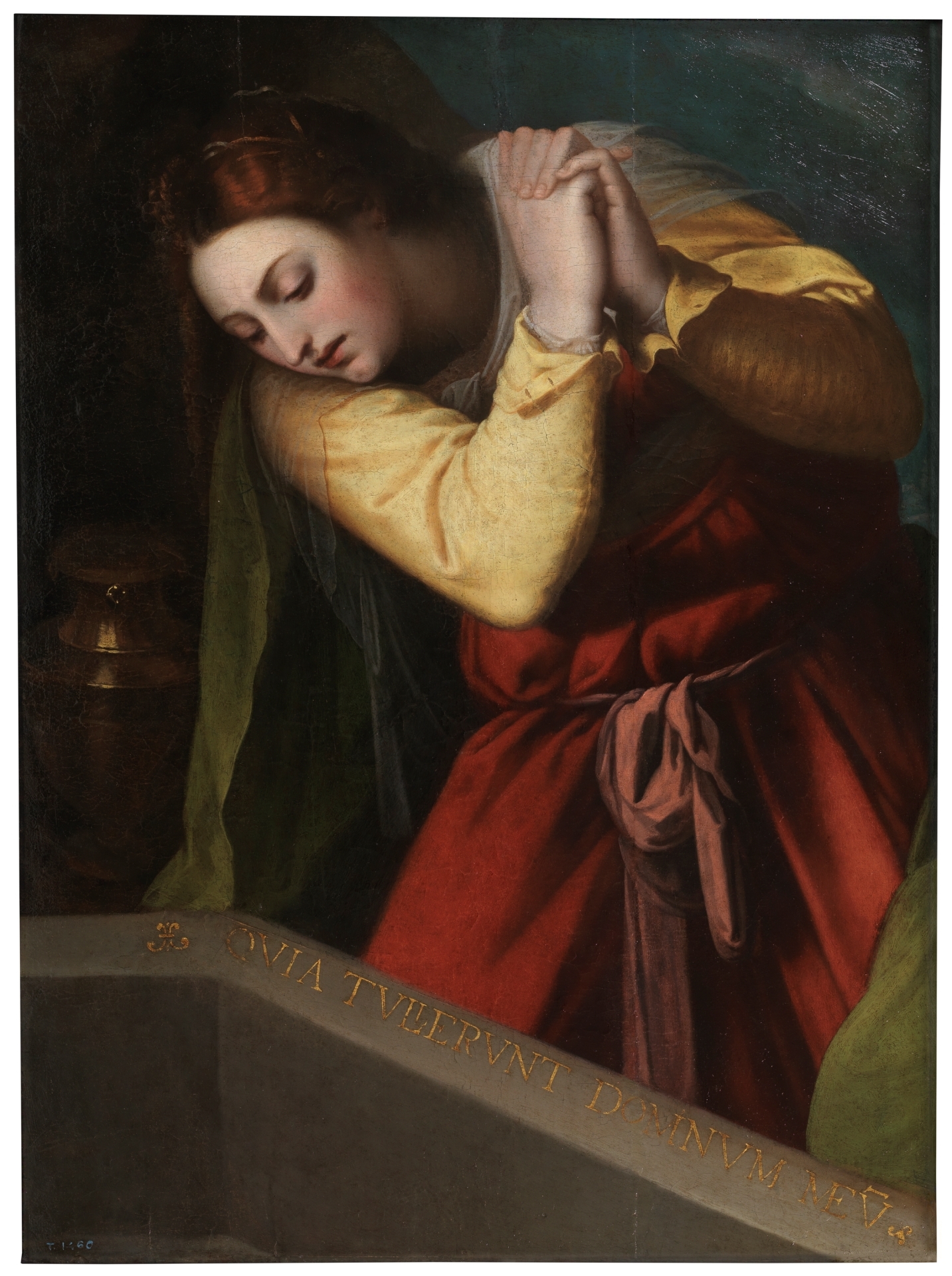
F. de Ribalta, Mary Magdalene before Christ´s Tomb (1612), oil on canvas, Museo Nacional del Prado (Madrid)
According to the gospel this morning Mary Magdalen is the first to discovers that the tomb is empty. She is missing Jesus. She really wants to see again her Master whom she had faithfully followed to the end. Who will she follow now? So, she cries: «They have taken the Lord from the tomb, and we do not know where they have put him» . We do not know where they have put him. These words of Mary Magdalen express so well our feelings in our time: What have we done with Jesus? Who has taken him? Where have we put him? The Lord in whom we believe… is He a Christ full of life, or a Christ whose memory is disappearing from hearts?
Today is more urgent than ever to seek Jesus And, you know, we cannot look for more «evidence» to believe more firmly. We cannot rely only into the Magisterium of the Church to find answers. It is useless to look only into the lectures of scholars, or Bible experts. To meet the Risen Lord, it is necessary to have a daily up close and personal communication with Him. This morning, we only hear the first part of the narrative of resurrection, I invite you to read the second part, because there you will see how Mary Magdalen is from one place to another looking for her Master. That is what we should do: That’s what we should do: Search without rest. Maybe it happens that we do not see Him, or we do not recognize Him, but we can be sure that he will be shown. At some point Mary thinks he is the landscape gardener. And then Jesus asks two questions. Only two. «Woman, why are you crying? Who are you looking for? ».
Well, today is the right time to ask ourselves same questions: What is it that I am looking for so anxiously? Where is the origin of my sadness? What does my heart really want? Mary Magdalene does not recognize Jesus. She is very focused on her own pain, on her own problems. It is then that Jesus calls her by name, He does it with tenderness and affection, «Mary! », he says, and she responded quickly: «Rabbuni, Teacher». Mary Magdalen recognizes Jesus when she feels personally called by him.
This is the point! Two thousand years later, the Lord continues doing exactly the same: calling each of us personally. Calling us by name. He did it at the day of our Baptism. He does it at the Sacrament of Confession. And he keeps calling us by name at Holy Communion.
It is easter Sunday. Today we have a wonderful opportunity to renew our faith; to revive our commitment; to restore our covenant of love with Him. Today is a great chance to tell the Lord that despite our fatigue, boredom, our sins… we want to keep walking; we want to keep trying; we want to do our best to be with Him. So, today let us ask the Lord for one gift. Only one: A brave, passionate heart like the one of Mary Magdalen. She searched and searched for Jesus, until she found him, and then she announced him to the others. That is the model of the Christian: a man, a woman, who constantly seeks Christ, and when he or she finds Him, he speaks of Him to others. We are invited to do the same. We have already found the Lord here, in the celebration of the Eucharist, in listening to His Word. What else should we do? We must continue to seek him in ordinary life; in the tasks of each day; in the stuff what we usually do, and for this we need a passionate, burning heart, and clear eyes. So, let us ask for this exactly: May ay the Lord Jesus give us a heart on fire, full of determination, full of love, so like Mary Magdalen, we can recognize Him every day of our lives and in all situations: in joy, in pain, in sadness, in success, in family life. In everything and always. And let us not forget the other Mary. The Mother of the Lord. Mary was the only light that remained lit in the Passion. That is why we call her: «Our Life, our sweetness and our hope». May she also intercede for us today. Happy Easter to each and every one •

Secuencia (Victimae paschali laudes)
Ofrezcan los cristianos
ofrendas de alabanza
a gloria de la Víctima
propicia de la Pascua.
Cordero sin pecado
que a las ovejas salva,
a Dios y a los culpables
unió con nueva alianza.
Lucharon vida y muerte
en singular batalla
y, muerto el que es la Vida,
triunfante se levanta.
¿Qué has visto de camino,
María, en la mañana?
A mi Señor glorioso,
la tumba abandonada,
los ángeles testigos,
sudarios y mortaja.
¡Resucitó de veras
mi amor y mi esperanza!
Venid a Galilea,
allí el Señor aguarda;
allí veréis los suyos
la gloria de la Pascua.
Primicia de los muertos,
sabemos por tu gracia
que estás resucitado;
la muerte en ti no manda.
Rey vencedor, apiádate
de la miseria humana
y da a tus fieles parte
en tu victoria santa.

Domingo de Pascua de la Resurrección del Señor (2024)
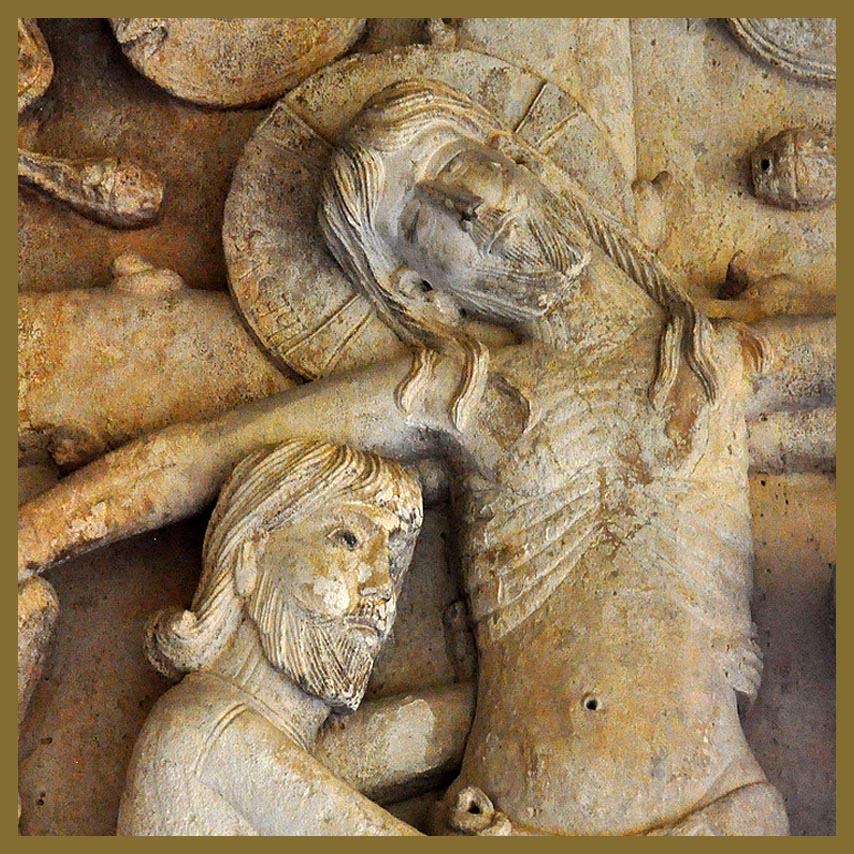
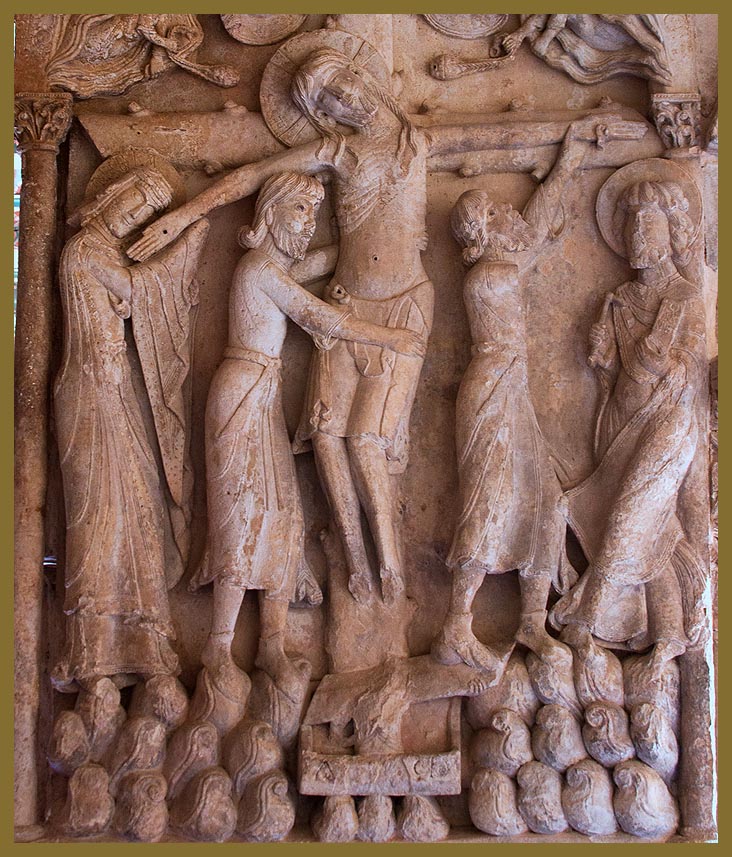
Artista anónimo, Descendimiento de la Cruz (s. XI) Monasterio de Santo Domingo de Silos (Burgos)
«Ustedes lo mataron, pero Dios lo resucitó». Esto es lo que predican con fe los discípulos de Jesús por las calles de Jerusalén a los pocos días de la muerte del Señor. Para ellos, la resurrección es la respuesta de Dios a la acción injusta y criminal de quienes han querido callar para siempre su voz y anular de raíz su proyecto de un mundo más justo. No lo hemos de olvidar jamás. En el corazón de nuestra fe hay un crucificado al que Dios le ha dado la razón. En el centro mismo de la Iglesia hay una víctima a la que Dios ha hecho justicia. Por tanto, una vida crucificada, pero motivada y vivida con el espíritu de Jesús, no terminará en fracaso sino en resurrección.
Esto cambia totalmente el sentido de nuestros esfuerzos, penas, trabajos y sufrimientos por un mundo más humano y una vida más dichosa para todos. Vivir pensando en los que sufren, estar cerca de los más desvalidos, echar una mano a los indefensos.., seguir los pasos de Jesús no es algo absurdo. Es caminar hacia el Misterio de un Dios que resucitará para siempre nuestras vidas.
Los pequeños abusos que podamos padecer, las injusticias, rechazos o incomprensiones que podamos sufrir, son heridas que un día cicatrizarán para siempre. Hemos de aprender a mirar con más fe las cicatrices del resucitado. Así serán un día nuestras heridas de hoy. Cicatrices curadas por Dios para siempre. Esta fe nos sostiene por dentro y nos hace más fuertes para seguir corriendo riesgos. Poco a poco hemos de ir aprendiendo a no quejamos tanto, a no vivir siempre lamentándonos del mal que hay en el mundo y en la Iglesia, a no sentirnos siempre víctimas de los demás. ¿Por qué no podemos vivir como Jesús diciendo: «Nadie me quita la vida, sino que soy yo quien la doy»? Seguir a Jesús crucificado hasta compartir con él la resurrección es, en definitiva, aprender a dar la vida, el tiempo, nuestras fuerzas y tal vez nuestra salud por amor. No nos faltarán heridas, cansancio y fatigas. Una esperanza nos sostiene: Un día Dios enjugará las lágrimas de nuestros ojos, y no habrá ya muerte ni habrá llanto, ni gritos ni fatigas porque todo este mundo viejo habrá pasado •
Exultate, Jubiulate (W.A. Mozart)
Exultate, jubílate (K 165/158ª) es un motete religioso de Wolfgang Amadeus Mozart escrito en 1773. Fue compuesto durante la visita del compositor austríaco a Milán, en la época en la que viajó a Italia y fue escrito para el castrato Venanzio Rauzzini, el favorito de Mozart para sus óperas. En las representaciones modernas, es interpretado normalmente por una soprano. Está dividido en tres partes: Allegro, Andante Allegro; el allegro final es un destacado y alegre Alleluia •
 LA MEDITACION DE LA ESPOSA