

The Church gives us the Solemnity of Corpus Christi to remind us of as adults of what we are doing and whom we are receiving which we approach the Eucharist. The original celebration of the Body of Christ was begun in the thirteenth century and promoted by one of our spiritual ancestors named St. Juliana of Liege, a visionary and an Augustinian nun. Soon after this the pope, Pope Urban IV, asked Thomas Aquinas, to prepare a Mass to celebrate this new feast. We still sing some of the hymns that he wrote for this Mass, particularly the Tantum Ergo and the O Salutaris Hostia.
Most often we refer to the Eucharist as «communion». The communal aspect of the Eucharist is far more than a group of people sharing a meal. It is the union of those who share the Body of Christ into the Kingdom of God. When we receive holy Communion, we are by that very action recommitting ourselves to fighting paganism in our lives and our world. We are recommitting ourselves to be active members of that community that spreads the Kingdom of God through sacrificial love. Because we receive the Eucharist so often, it is easy to overlook the huge commitment we are making to live and spread the Kingdom of God. The Eucharist, a word that means thanksgiving, is the way that we thank God for life we have received. We thank God for uniting us to the community of salvation. We thank God for the many ways that we experience his love in every aspect of our lives. The Eucharist is the mystery of commitment and strength. The commitment is to do the work of the Kingdom. We are a part of the Grand Adventure, the Great Quest. When we receive Communion, we reaffirm our role in the battle to transform the world into the Kingdom of God. The Eucharist is also the mystery of strength. The strength that we need for the Great Quest is the very presence of Jesus within us as Church and as individuals. We are not in this battle alone. We carry the Lord, our strength. Do we have a difficult decision to make? We ask Jesus within us for guidance after we receive. Do we feel that our lives are falling apart? We ask Jesus to keep us together. Are we searching for a way to serve the Lord? We give ourselves over to the Lord within us. Are we sick, gravely sick, even terminal? We ask Jesus within us how we can use our sickness to fulfill our part of the Grand Adventure. Do we feel alone? We stop and pray after communion and realize that we are never alone when we are with the Lord. There are so many reasons why we pray when we have Jesus within us after we receive communion. All of them are valid. Every petition is heard by the Lord, particularly when he is within us. Today we pray for sincerity. We pray that we might be sincere in the commitment we make every time we receive the Lord in holy Communion • AE
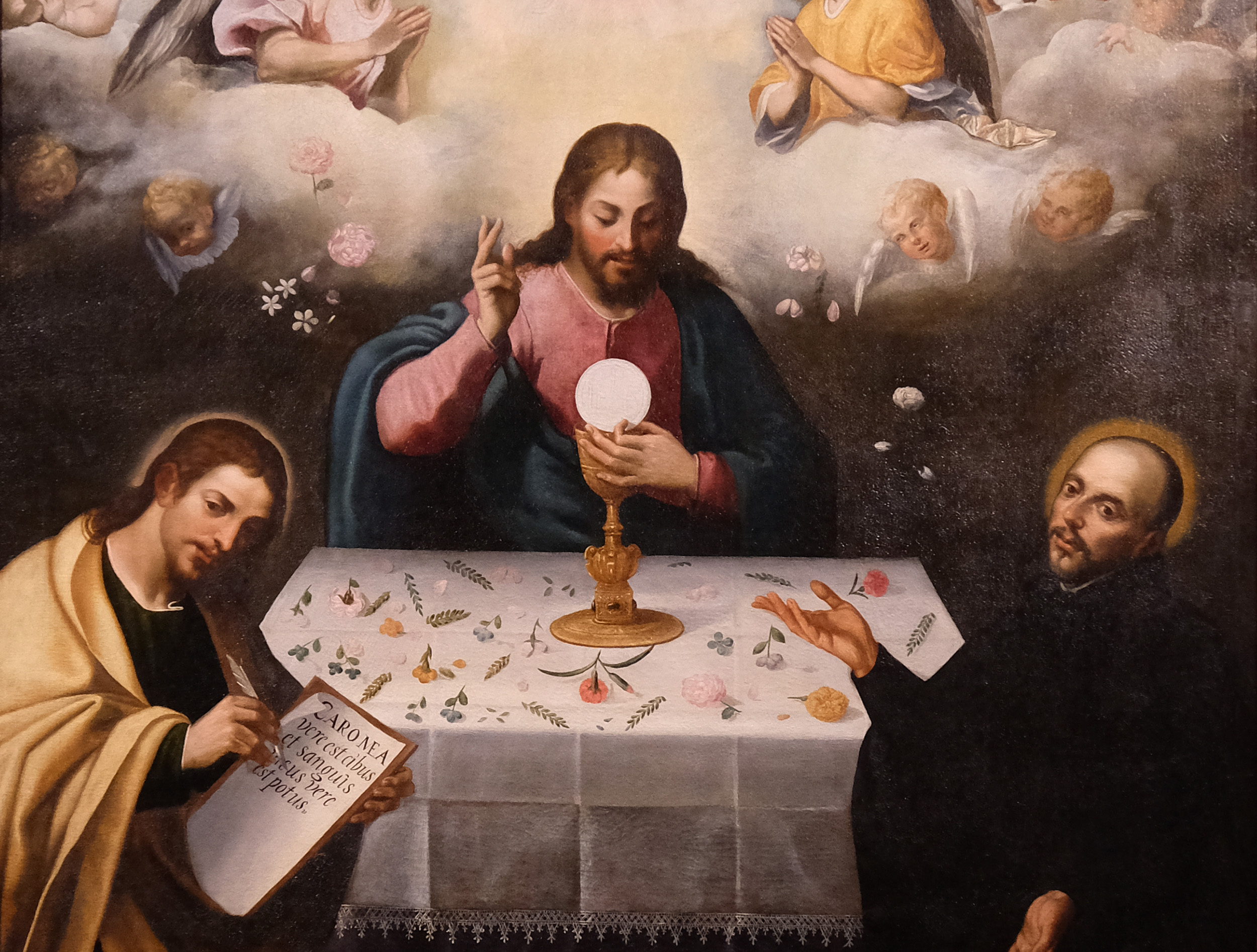

Ave verum corpus is a short Eucharistic chant that has been set to music by many composers. It dates to the 13th century, first recorded in a central Italian Franciscan manuscript. A Reichenau manuscript of the 14th century attributes it to Pope Innocent. During the Middle Ages it was sung at the elevation of the Eucharist during the consecration at Mass. It was also used frequently during Benediction of the Blessed Sacrament. The prayer is a meditation on Jesus’s Real Presence in the Blessed Sacrament, and ties it to the redemptive meaning of suffering in the life of all believers.
Hail, true Body, born
of the Virgin Mary,
truly suffered, sacrificed
on the cross for mankind,
from whose pierced side
flowed water and blood:
Be for us a foretaste [of the Heavenly banquet]
in the trial of death!
O sweet Jesus, O holy Jesus,
O Jesus, son of Mary,
have mercy on me. Amen.
Ave verum corpus, natum
de Maria Virgine,
vere passum, immolatum
in cruce pro homine
cuius latus perforatum
fluxit aqua et sanguine:
esto nobis prægustatum
in mortis examine.
O Iesu dulcis, O Iesu pie,
O Iesu, fili Mariae.
Miserere mei. Amen.

St. Dominic Catholic Church • Weekend Schedule

Saturday June 1, 2024
3.00 p.m. Sacrament of Reconciliation – Fr. Agustin E.
5.00 p.m. Holy Mass (Corpus Christi Vigil) – Fr. Agustin E.
Sunday, June 2, 2024
7.30 a.m. Holy Mass – Fr. Agustin E.
10.00 a.m. Holy Mass – Fr. Agustin E.
12.30 p.m. Holy Mass – Fr. Jaime P.
3.00 p.m. Santa Misa – Padre Jaime P.
Solemnidad del Cuerpo y la Sangre de Cristo (2024)
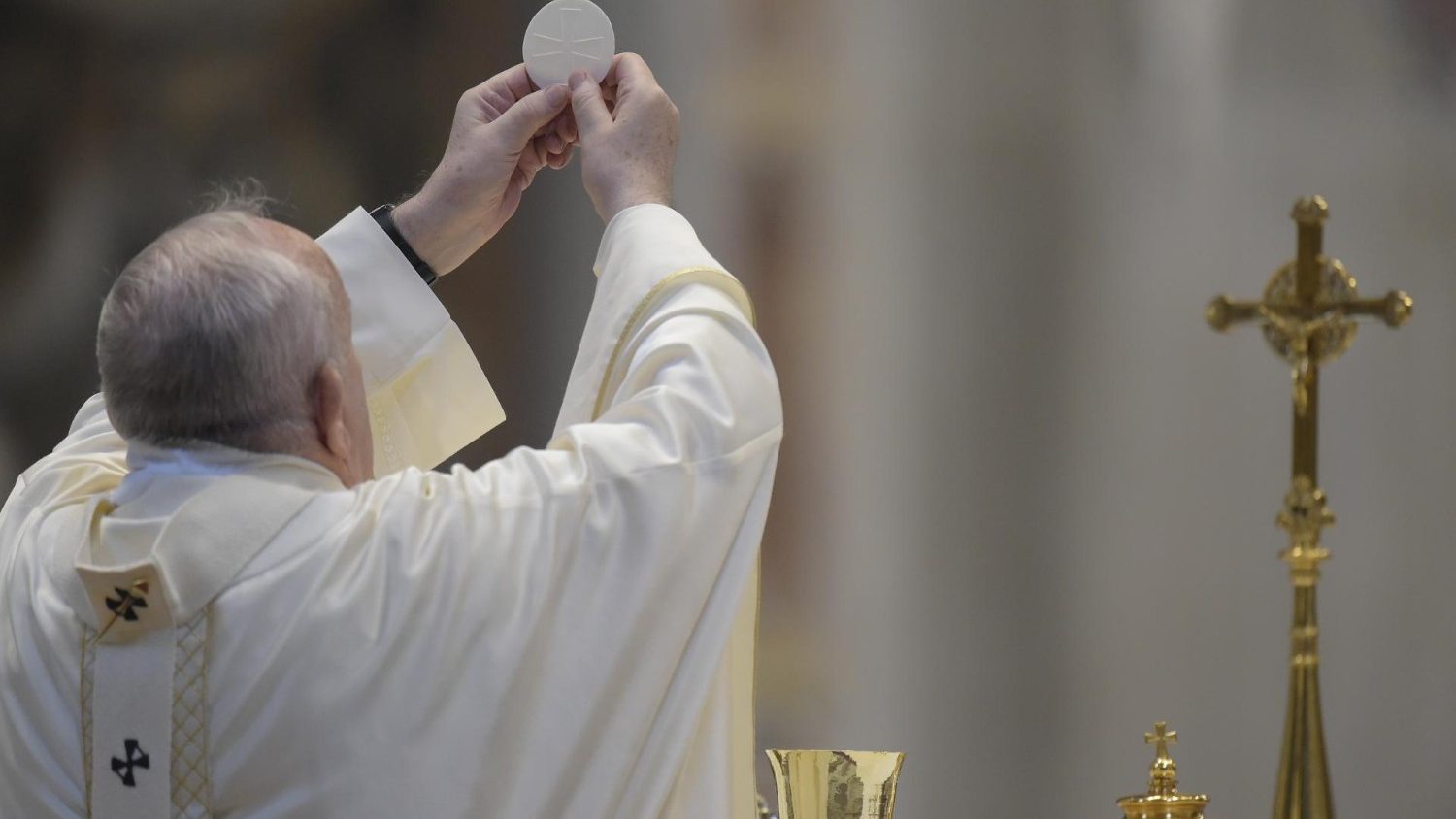
La celebración de la santa misa ha ido cambiando a lo largo de los siglos. Según la época, teólogos y liturgistas han ido destacando algunos aspectos y descuidando otros. La misa ha servido de marco para celebrar coronaciones de reyes y papas, rendir homenajes o conmemorar victorias de guerra. Los músicos la han convertido en concierto. Los pueblos la han integrado en sus devociones y costumbres religiosas… Después de veinte siglos, puede ser necesario recordar algunos de los rasgos esenciales de la última Cena del Señor, tal como era recordada y vivida por las primeras generaciones cristianas.
En el fondo de esa cena hay algo que jamás será olvidado: sus seguidores no quedarán huérfanos. La muerte de Jesús no podrá romper su comunión con él. Nadie ha de sentir el vacío de su ausencia. Sus discípulos no se quedan solos, a merced de los avatares de la historia. En el centro de toda comunidad cristiana que celebra la eucaristía está Cristo vivo y operante. Aquí está el secreto de su fuerza. De Él se alimenta la fe de sus seguidores. No basta asistir a esa cena. Los discípulos son invitados a comer. Para alimentar nuestra adhesión a Jesús necesitamos reunirnos a escuchar sus palabras e introducirlas en nuestro corazón, y acercarnos a comulgar con él identificándonos con su estilo de vivir. Ninguna otra experiencia nos puede ofrecer alimento más sólido. No podemos olvidar que comulgar con Jesús es comulgar con alguien que ha vivido y ha muerto entregado totalmente por los demás. Así insiste Jesús. Su cuerpo es un cuerpo entregado y su sangre es una sangre derramada por la salvación de todos. Es una contradicción acercarnos a comulgar con Jesús, resistiéndonos egoístamente a preocuparnos de algo que no sea nuestro propio interés. Nada hay más central y decisivo para los seguidores de Jesús que la celebración de esta cena del Señor. Por eso hemos de cuidarla tanto. Bien celebrada, la eucaristía nos moldea, nos va uniendo a Jesús, nos alimenta de su vida, nos familiariza con el evangelio, nos invita a vivir en actitud de servicio fraterno, y nos sostiene en la esperanza del reencuentro final con Él • AE
COME IN FAITH. LEAVE WITH HOPE!
 LA MEDITACION DE LA ESPOSA