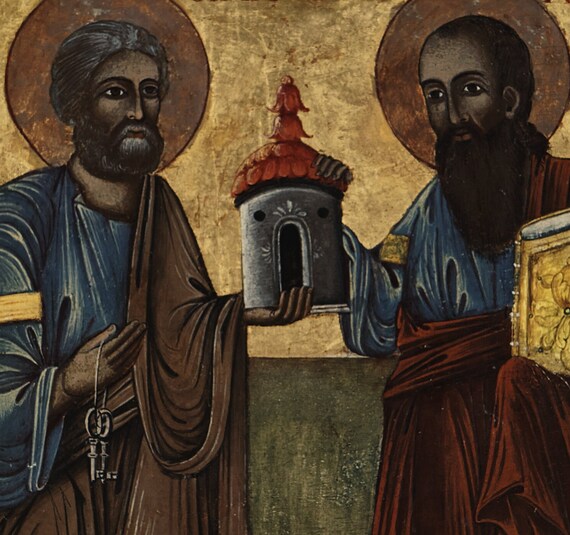
Pedro fundó la primitiva Iglesia con el resto de Israel;
Pablo la extendió entre los paganos llamados a la fe.
De esta forma, Señor,
por caminos diversos,
congregaron a la única familia de Cristo;
y coronados por el martirio,
son igualmente venerados por tu pueblo.
Por eso, con todos los ángeles y santos,
te alabamos, proclamando sin cesar:
Santo, Santo, Santo es el Señor,
Dios de universo. Llenos están el cielo y la tierra de tu gloria.
Hosanna en el cielo.
Bendito el que viene en nombre del Señor
Hosanna en el cielo •
Misal Romano, Prefacio de los santos Pedro y Pablo.
Tu es Petrus!
On the solemnity of Saints Peter and Paul, the Holy Father usually presides at Mass in the Vatican Basilica, there he imposes the pallium on the new metropolitan archbishops. In this year of 2015, at the end of the mass, accompanied by Patriarch Athenagoras, he went down to the crypt of the basilica to venerate the remains of the apostle Peter, while the choir sang Tu es Petrus, Sung by the Choir of New College Oxford and the Cappella Sistina, directed by Mons. Massimo Palombella.
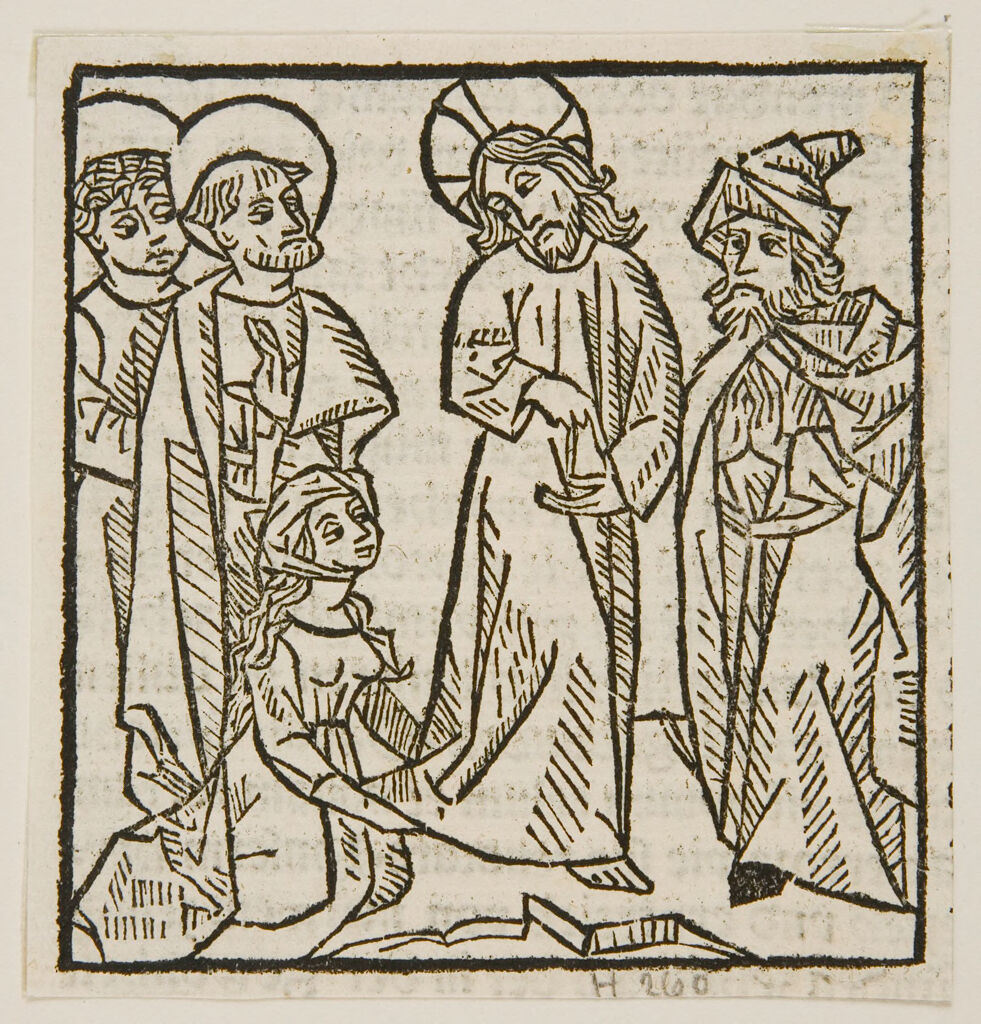
Anonymous, The Bleeding Woman touching the hem of Christ’s Garment, (1475), Harvard Art Museums
Today’s readings deal with topics we Americans, and perhaps people everywhere, would rather avoid. The readings deal with sickness and death. We do our best to avoid sickness and death. That’s reasonable. But there is much in us that is afraid of sickness and death. We do our best to avoid talking about them. That is not reasonable. That’s a denial of reality. We have such a hard time with these topics that we have created stories tone down the reality. So, when a baby dies or a child, we say, “God must have wanted another angel with Him in heaven. This is not true. God doesn’t go around killing babies and little children because his angel inventory is low. And besides, the whole concept of people becoming angels after they die is a complete fabrication. Angels are different beings than human beings, including dead human beings. Human beings do not become angels and angels do not become human beings.
Let’s face it, most of us cannot understand the very fact of death, so we put it all on God’s shoulders. “It’s God’s will,” we say when a person dies. No it isn’t. To say that it is God’s will is to say that God does evil things. If God is All Good, and He is, how can He do evil things? So how can we arrive at some understanding of the existence of sickness and death? How can we understand why that poor lady in the Gospel was suffering for years from hemorrhages, or why Jairus’ daughter should die? How can we understand why good people that you know and that I know have become terribly sick or have died? Perhaps we can’t answer these questions, but we certainly are wrong when we pass the blame off to God.
The author of the first reading, from the Book of Wisdom is not afraid to tell the truth. Our readings began today with his telling us, “God did not make death. Nor does He rejoice in the destruction of the living.” He made everything wholesome and good. He formed man to be imperishable, made in the image of His own nature. But through the envy of the devil, death entered into the world. This is something else we don’t want to hear. Sickness and death are the result of sin. Most often this is not the result of the sins of the person who gets sick or dies, but it is due to the consequences of sin in the world. Now, it is tempting to just blame Adam and Eve, but that takes us out of the picture. We are not all that innocent. Look, would there be wars if pride and avarice and other sins did not exist? No, there would be no reason for war. So we blame Adam and Eve. Or worse, we blame God. God did not create evil. So, is there hope for this world? Yes, there is hope. There is hope because Christ is in this world. We learned today how He healed that lady and how He raised up that child. We know that He alone has power over sickness and death. We are convinced that there are many who have returned to health due to the direct intervention of the Lord of Life. And we also know, that those who believe in Him with their lives but who do not return to health, those who do die, in fact remain alive with Him. We believe in the gift of Christ’s resurrection. He gave His Life to those who accept Him, not just with words but with their lives. We believe in Baptism, for at Baptism we received the spiritual life of the Trinity. We hold on to Jesus Christ with all our might, because He alone makes sense of the confused reality of life.
So, we entrust our dead to the Lord seeking His mercy and compassion, asking Him to reward them for the goodness of their lives and forgive them for their participation in sin. And we ask the Lord to help us transform the world from its slavery to sin by giving us the courage to fight sin in our own lives. “God did not make death,” the reading proclaims. He made life, eternal life. And we, the baptized, have been given the gift of this life • AE
St. Dominic Catholic Church • Weekend Schedule
Saturday, June 29, 2024
3.00 p.m. Sacrament of Reconciliation – Fr. Jaime P.
5.00 p.m. Holy Mass – Fr. Jaime P.
Sunday, June 30, 2024
7.30 a.m. Holy Mass – Fr. Jaime P.
10.00 a.m. Holy Mass – Fr. Jaime P.
12.30 p.m. Holy Mass – Fr. Jaime P.
3.00 p.m. Santa Misa – Fr. Jaime P.
XIII Domingo del Tiempo Ordinario (Ciclo B)
El Señor tuvo con las mujeres una actitud tan sorprendente que desconcertó incluso a sus mismos discípulos. En aquella sociedad judía donde el varón daba gracias a Dios cada día por no haber nacido mujer, no era fácil entender a un maestro que acogía sin discriminaciones a hombres y mujeres en la nueva comunidad. Para Jesús hombres y mujeres tienen igual dignidad personal; la mujer no es ni debe ser objeto del dominio del varón. Sin embargo, los cristianos no hemos sido capaces todavía de extraer todas las consecuencias que se siguen de la actitud del Señor. Laurentin decía que se trataba de una revolución ignorada por la Iglesia. Tenia razón. Por lo general, los varones seguimos sospechando de todo movimiento feminista y reaccionamos contra cualquier planteamiento que pueda poner en peligro nuestra situación privilegiada sobre la mujer. Es así. Los creyentes deberíamos tomar conciencia de que el actual dominio de los varones sobre las mujeres no es algo natural, sino una estructura y un comportamiento profundamente viciados por el egoísmo y la imposición injusta de nuestro poder. Aun así ¿Es posible superar este dominio masculino? La revolución urgida por Jesús no se realiza despertando la agresividad mutua, ni promoviendo entre los sexos una guerra que acarrearía nuevos riesgos para nuestra supervivencia humana. Jesús llama más bien a una revolución de las conciencias que nos haga vivir de otra manera las relaciones que nos unen a unos con otros.
Las diferencias ente los sexos, además de su función en el origen de una nueva vida, han de ser encaminadas hacia la cooperación, el apoyo y el crecimiento mutuos. Los varones hemos de escuchar con mucha más lucidez y sinceridad la interpelación de aquel de quien, según el relato evangélico, salió una fuerza para curar a aquella mujer. En 2013, cuatro meses después de ser elegido Papa, en el viaje de regreso desde Brasil, –donde se había celebrado la Jornada mundial de la juventud–, frente a una pregunta a propósito del diaconado femenino y la presencia de la mujer en los dicasterios romanos, el santo Padre Francisco afirmó: “Creo que nosotros no hemos hecho todavía una teología profunda de la mujer en la Iglesia”. Unos días después, en una entrevista con el director de la Civiltá Cattolica, se le preguntó, precisamente, sobre el papel de la mujer en la Iglesia, a lo que respondió: “Es necesario ampliar los espacios para una presencia femenina más incisiva en la Iglesia […] Las mujeres están formulando cuestiones profundas que debemos afrontar. La Iglesia no puede ser ella misma sin la mujer y el papel que ésta desempeña […] En los lugares donde se toman las decisiones importantes es necesario el genio femenino”.
Estas afirmaciones, que se han ido repitiendo a lo largo de su pontificado, permiten reconocer que la mujer constituye un punto importante en su agenda, haciendo hincapié en dos grandes líneas: por un lado, lo que él llama “teología de la mujer en la Iglesia” y, por otro, la ampliación de espacios para una presencia femenina más incisiva, particularmente necesaria en los lugares donde se toman las decisiones importantes. Pues eso • AE
R. Van der Weyden (c.1399-1464), Cristo y San Juan Bautista, óleo sobre tela, National Gallery of Art (Londres)
La Iglesia celebra el nacimiento de Juan como algo sagrado, y él es el único de los santos cuyo nacimiento se festeja; celebramos el nacimiento de Juan y el de Cristo. Ello no deja de tener su significado, y, si nuestras explicaciones no alcanzaran a estar a la altura de misterio tan elevado, no hemos de perdonar esfuerzo para profundizarlo y sacar provecho de él.
Juan nace de una anciana estéril; Cristo, de una jovencita virgen. El futuro padre de Juan no cree el anuncio de su nacimiento y se queda mudo; la Virgen cree el del nacimiento de Cristo y lo concibe por la fe. Esto es, en resumen, lo que intentaremos penetrar y analizar; y, si el poco tiempo y las pocas facultades de que disponemos no nos permiten llegar hasta las profundidades de este misterio tan grande, mejor os adoctrinará aquel que habla en vuestro interior, aun en ausencia nuestra, Aquel que es el objeto de vuestros piadosos pensamientos, Aquel que habéis recibido en vuestro corazón y del cual habéis sido hechos templo.
Juan viene a ser como la línea divisoria entre los dos Testamentos, el antiguo y el nuevo. Así lo atestigua el mismo Señor, cuando dice: La ley y los profetas llegaron hasta Juan. Por tanto, él es como la personificación de lo antiguo y el anuncio de lo nuevo. Porque personifica lo antiguo, nace de padres ancianos; porque personifica lo nuevo, es declarado profeta en el seno de su madre. Aún no ha nacido y, al venir la Virgen María, salta de gozo en las entrañas de su madre. Con ello queda ya señalada su misión, aun antes de nacer; queda demostrado de quién es precursor, antes de que él lo vea. Estas cosas pertenecen al orden de lo divino y sobrepasan la capacidad de la humana pequeñez. Finalmente, nace, se le impone el nombre, queda expedita la lengua de su padre. Estos acontecimientos hay que entenderlos con toda la fuerza de su significado.
Zacarías calla y pierde el habla hasta que nace Juan, el precursor del Señor, y abre su boca. Este silencio de Zacarías significaba que, antes de la predicación de Cristo, el sentido de las profecías estaba en cierto modo latente, oculto, encerrado. Con el advenimiento de aquel a quien se referían estas profecías, todo se hace claro. El hecho de que en el nacimiento de Juan se abre la boca de Zacarías tiene el mismo significado que el rasgarse el velo al morir Cristo en la cruz. Si Juan se hubiera anunciado a sí mismo, la boca de Zacarías habría continuado muda. Si se desata su lengua es porque ha nacido aquel que es la voz; en efecto, cuando Juan cumplía ya su misión de anunciar al Señor, le dijeron: ¿Tú quién eres? Y él respondió: Yo soy la voz que grita en el desierto. Juan era la voz; pero el Señor era la Palabra que en el principio ya existía. Juan era una voz pasajera, Cristo la Palabra eterna desde el principio.
S. Agustín, Sermón: La voz que clama en el desierto (Sermón 293,1-3: PL 38,1327-1328)
Jan Brueghel, Christ in the Storm on the Sea of Galilee (1596), oil on canvas, Thyssen Museum (Madrid)
Who is this whom even the wind and sea obey?” Jesus’ disciples asked in today’s Gospel. Jesus conquered the sea. But only God could take control of the sea. The disciples had been terrified. Jesus said that they should not have been afraid. They needed to have faith in Him. There is a great deal of chaos in our world and in our individual lives. We have to have faith in the Lord to be with us through the chaos. Think about those who died for the faith, the martyrs. So many of them were surrounded by people jeering at them, mocking them, hurting them, killing them. They kept their faith in the Lord, and even those who were horribly tortured died in the peace of knowing that they were returning to the God they refused to reject. In this way God was present through the chaos. All of us have experienced episodes of chaos in our lives. There are times that we feel that everything is falling apart. Most often we did not cause the chaos. We are victims of a world that has chosen the material over the spiritual, a world that has rejected God. Bad things happen to good people. A member of our family becomes chronically ill. Our family’s life suddenly revolves around caring for him or her. Everyone in our family needs to muster up all the strength we have to help our loved one fight the sickness. Or, perhaps there is a sudden accident and a lasting ailment like paralysis or tragic death or deaths. We might feel that our world is falling apart. It is then that we have to remember that the Lord is on the ship with us. We need faith. The One who conquers the sea, will conquer the chaos of our lives. Worse, there are times that we are responsible for the chaos. We fall into sin and then experience what our sin has done to our family as well as to ourselves. We willingly chose what is destroying us and those we love. We know that we have caused this. We deserve whatever is happening to us. But our family doesn’t deserve what is happening to them. Do we dare to ask the Lord to get us out of the mess we have created? Yes. We have to trust in Him. He is on the ship of our lives. No matter what we have done, God can control the storm. He calls out to us in the middle of the storm to have faith in Him, to trust Him, to allow Him to conquer the storm. The problem is that we, you and I, often don’t have the faith in God we need. We see the chaos within us and don’t even consider that God is stronger than the chaos. So, this morning is time for faith, the faith we need to trust in the Lord to conquer our chaos • AE
Antonio Vivaldi wrote a set of flute concertos, Op. 10, that were published c. 1728 by Amsterdam publisher Michel-Charles Le Cène. This is the Flute Concerto No. 1 called, La Tempesta di Mare (The Storn in the sea)
St. Dominic Catholic Church • Weekend Schedule
Saturday June 22, 2024
12.30 p.m. XV Mass for Amber Oliva – Fr. Agustin E.
3.00 p.m. Sacrament of Reconciliation – Fr. Agustin E.
5.00 p.m. Holy Mass – Fr. Agustin E.
Sunday, June 23, 2024
7.30 a.m. Holy Mass – Fr. Dennis Darilek
10.00 a.m. Holy Mass – Fr. Dennis Darilek
12.30 p.m. Holy Mass – Fr. Stuart Juleen
3.00 p.m. Santa Misa – Fr. Enda M.
XII Domingo del Tiempo Ordinario (Ciclo B)
Hoy en dia apenas y hablamos de la Providencia de Dios. Es un lenguaje que ha ido cayendo en desuso o que se ha convertido en una forma piadosa de considerar ciertos acontecimientos. Se habla de un hecho «providencial» cuando se produce un suceso feliz e inesperado. Sin embargo, creer en el amor providente de Dios es un rasgo básico del cristiano. Todo brota de una convicción radical: Dios no abandona ni se desentiende de aquellos a quienes crea, sino que sostiene su vida con amor fiel, vigilante y creador. No estamos a merced del azar, el caos o la fatalidad. En el interior de la existencia está Dios, conduciendo nuestro ser hacia el bien.
Esta fe no libera de penas y trabajos, pero nos enraíza a los creyentes en una confianza total en Dios, que expulsa el miedo a caer definitivamente bajo las fuerzas del mal. Dios es el Señor último de nuestras vidas. De ahí la invitación de la primera carta de san Pedro: «Descargad en Dios todo agobio, que a él le interesa vuestro bien».
Esto no quiere decir que Dios intervenga en nuestra vida como intervienen otras personas o factores. La fe en la Providencia ha caído a veces en descrédito precisamente porque se la ha entendido en sentido intervencionista, como si Dios se entrometiera en nuestras cosas, forzando los acontecimientos o eliminando la libertad humana. No es así. Dios respeta totalmente las decisiones de las personas y la marcha de la historia. Por eso, no se debe decir propiamente que Dios guía nuestra vida, sino que ofrece su gracia y su fuerza para que nosotros la orientemos y guiemos hacia nuestro bien. Así, la presencia providente de Dios no lleva a la pasividad o la inhibición, sino a la iniciativa y la creatividad.
No podemos olvidar tampoco que si bien podemos captar signos del amor providente de Dios en experiencias concretas de nuestra vida, su acción permanece siempre inescrutable. Lo que a nosotros hoy nos parece malo, puede ser mañana fuente de bien. Nosotros somos incapaces de abarcar la totalidad de nuestra existencia; se nos escapa el sentido final de las cosas; no podemos comprender el menor acontecimiento en sus últimas consecuencias. Todo queda bajo el signo del amor de Dios, que no olvida a ninguna de sus criaturas.
Desde esta perspectiva adquiere toda su hondura la escena del evangelio de hoy en el lago de Toberíades. En medio de la tormenta, los discípulos ven a Jesús dormido confiadamente en la barca. De su corazón lleno de miedo brota un grito: «Maestro, ¿no te importa que nos hundamos? Jesús, después de contagiar su propia calma al mar y al viento, les dice: «¿Por qué son tan cobardes? ¿Aún no tienen fe?» AE
lEcturAs pArA eL vERanO
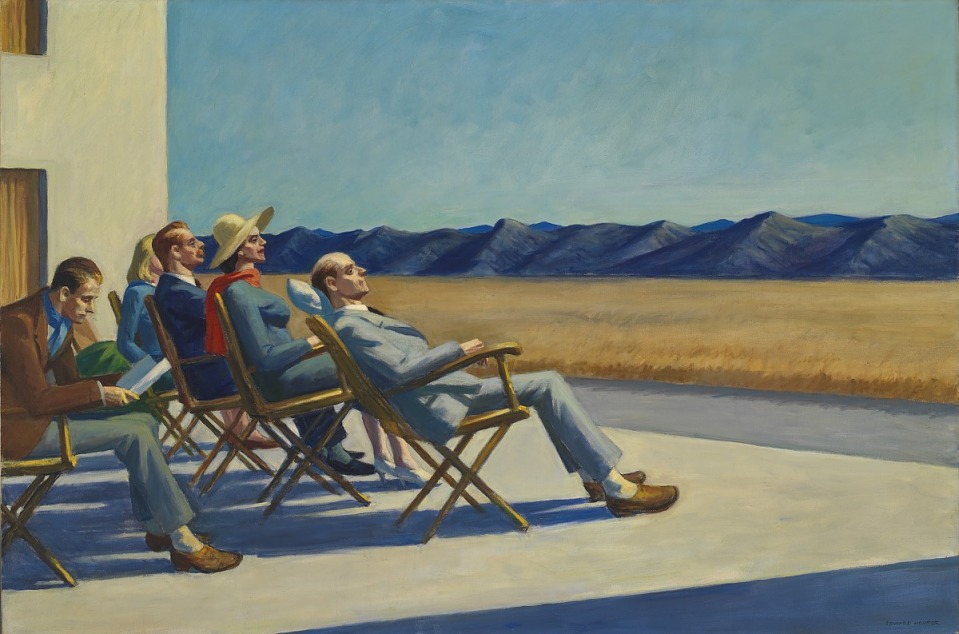
E. Hopper, People in the Sun (1960), óleo sobre tela, Smithsonian American Art Museum (Washington)
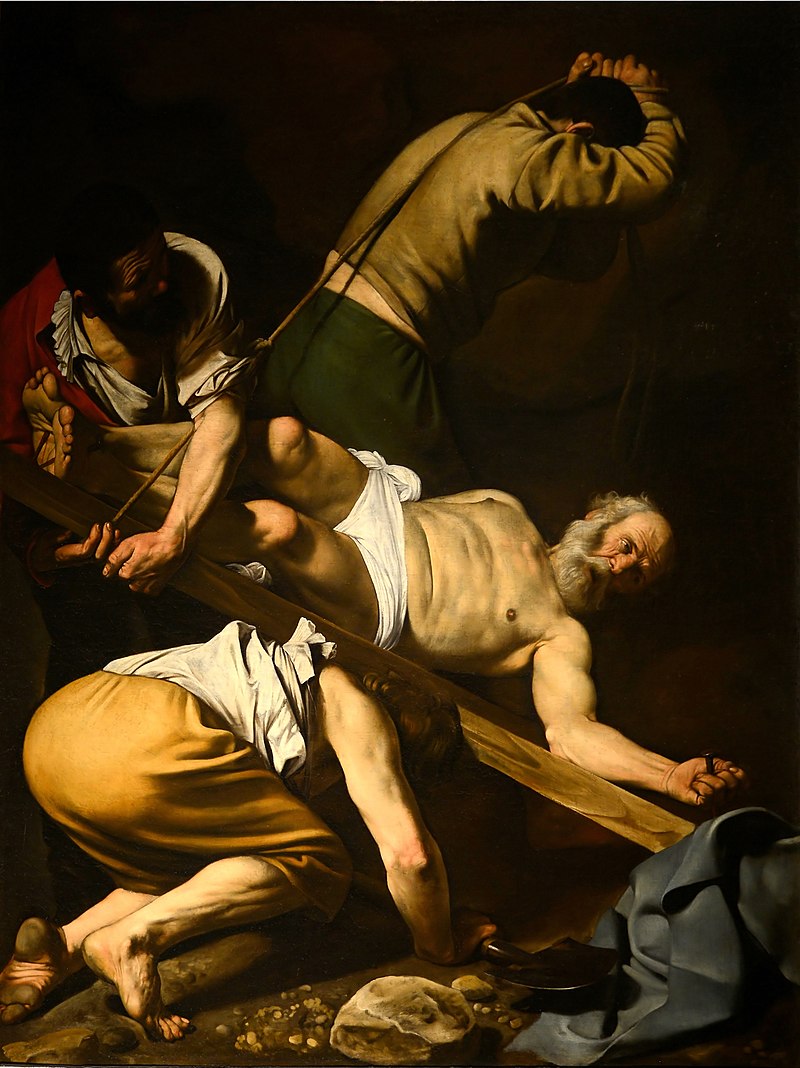
Caravaggio, Crucifixion of Saint Peter (1601), oil on canvas, Santa Maria del Popolo (Rome)
The parable in today’s gospel comforted the people of the early Church in face of discouragement when their efforts did not seem to be getting them anywhere. Remember, early Christianity grew as a development of the Jewish faith, but the Christians were rejected by the Jews. It must have been difficult for them to explain to the pagan gentiles how Jesus was predicted by the Jewish prophets when the Jews had rejected Him and them. Early Christians were mocked and persecuted by the pagans. They witnessed Peter, Paul and many of their leaders martyred. Persecuted on every side, the early Christians had to trust God to give growth to His Kingdom. And He did. And He still does. The Catholic Church lives on despite the persecution from the Romans, despite the internal dogmatic fights and debates of the second through fifth centuries, despite the Fall of Rome and conquest of the barbarians, despite the corruption from within during the Middle Ages and the Renaissance, despite the Reformation, despite the clergy sex abuse scandal, and despite two thousand years of martyrdom aimed at destroying the faith, the Catholic Church still lives on, and grows. God gives the growth. He does wonders with our feeble efforts. He turns that which is insignificant into that which is substantial.
Among other things, some Catholics are upset by the recent survey that showed a decline in the number of Catholics in the United States. We should be concerned, but our concern should be tempered by the large number of young Catholics devoted to the faith. It is God who gives the growth. We also need to recognize the wonders of God’s hand in our own lives. Does our faith mean more to us today than it did twenty years ago, or even ten years ago? I think most of us would say, «Yes» to that question. Well, how does it happen that we are more determined to live our faith now than we had been? It happens because God continues to give growth to the faith! We are members of the Church. No matter what the media may say, we are part of the only truly relevant organization in the world. We give meaning to the whole purpose of existence. The Catholic Church continues to grow; for the Lord Jesus, not people, gives the growth. When we are confronted with those who compare the numbers of priests and priest-less parishes and the numbers of Catholics to figures of sixty years ago, we need to remember that the Catholic Church will exist until the Second Coming of the Lord. The Church will adjust and flourish in the future just as it has in the past. And it will grow, for God gives it growth. And when we are confronted with immorality on all sides, when we are convinced that the world will soon be coming to an end because so many people are behaving so poorly, we need to remember that the Church not only lives on through the muddle and the mire of the world, but it also actually grows. You and I also grow as long as we do everything, we can stay united to the Church. For in the face of turmoil, outside us and within us, God gives his Church growth. St. Paul wrote in today’s second reading: we walk by faith, not by sight. So, we need to be strong members of the Church, and God will work the miracle of His growth • AE
St. Dominic Catholic Church • Weekend Schedule
Saturday June 15, 2024
3.00 p.m. Sacrament of Reconciliation – Fr. Agustin E.
5.00 p.m. Holy Mass – Fr. Jaime P.
Sunday, June 16, 2024
7.30 a.m. Holy Mass – Fr. Agustin E.
10.00 a.m. Holy Mass – Fr. Agustin E.
12.30 p.m. Holy Mass – Fr. Jaime P.
3.00 p.m. Santa Misa – P. Jaime P.
XI Domingo del Tiempo Ordinario (Ciclo B)
Vincent Van Gogh, El Sembrador (1888), óleo sobre tela, Kroller Museum (Paises Bajos)
Es muy posible -por decirlo de alguna manera- que al Señor le preocupara que sus seguidores terminaran un día desalentados al ver que sus esfuerzos por un mundo más humano y dichoso no obtenían el éxito esperado. ¿Olvidarían el reino de Dios? ¿Mantendrían su confianza en el Padre? Lo más importante es que no olviden nunca cómo han de trabajar.
Con ejemplos tomados de la experiencia de los campesinos de Galilea los anima a trabajar siempre con realismo, con paciencia y con una confianza grande. No es posible abrir caminos al reino de Dios de cualquier manera. Se tienen que fijar en cómo trabaja Él. Lo primero que han de saber es que su tarea es sembrar, no cosechar. No deben vivir pendientes de los resultados. No les ha de preocupar la eficacia ni el éxito inmediato. Su atención se centrará en sembrar bien el Evangelio. Los colaboradores de Jesús han de ser sembradores. Nada más.
Después de siglos de expansión religiosa y gran poder social, los cristianos hemos de recuperar en la Iglesia el gesto humilde del sembrador. Olvidar la lógica del cosechador, que sale siempre a recoger frutos, y entrar en la lógica paciente del que siembra un futuro mejor. Este es el punto. Los comienzos de toda siembra siempre son humildes. Más todavía si se trata de sembrar el proyecto de Dios en el ser humano. La fuerza del Evangelio no es nunca algo espectacular o clamoroso. Según Jesús, es como sembrar algo tan pequeño e insignificante como «un grano de mostaza», que germina secretamente en el corazón de las personas. Por eso el Evangelio sólo se puede sembrar con fe. Es lo que Jesús quiere hacerles ver con sus pequeñas parábolas. El proyecto de Dios de hacer un mundo más humano lleva dentro una fuerza salvadora y transformadora que ya no depende del sembrador. Cuando la Buena Noticia de ese Dios penetra en una persona o en un grupo humano, allí comienza a crecer algo que a nosotros nos desborda.
En la Iglesia no sabemos en estos momentos cómo actuar en esta situación nueva e inédita, en medio de una sociedad cada vez más indiferente y fría. Nadie tiene la receta. Nadie sabe exactamente lo que hay que hacer. Lo que necesitamos es buscar caminos nuevos con la humildad y la confianza de Jesús. Tarde o temprano, los cristianos sentiremos la necesidad de volver a lo esencial. Descubriremos que solo la fuerza de Jesús puede regenerar la fe en la sociedad descristianizada de nuestros días. Entonces aprenderemos a sembrar con humildad el Evangelio como inicio de una fe renovada, no transmitida por nuestros esfuerzos pastorales, sino engendrada por él • AE









 LA MEDITACION DE LA ESPOSA