Twenty-second Sunday of Ordinary Time (Cycle B)

At the end of today’s gospel, Jesus speaks about those things that defile a person. He lists the negatives within the hearts of sinful people. The Lord also recognizes the opposite, those things within a person that lead him or her closer to God. For within a person there are truth, beauty and love Within a person there is the determination to live for God. All these are really gifts of grace planted within a person by the Lord. They show their presence when that person is generous, truthful, kind, empathetic, and wise, to name a few virtues. When we treasure that which is within us, the very presence of God, we cannot help but serve His presence in others. Religion that is pure and undefiled before God and the Father is this: to care for orphans and widows in their affliction and to keep oneself unstained by the world.

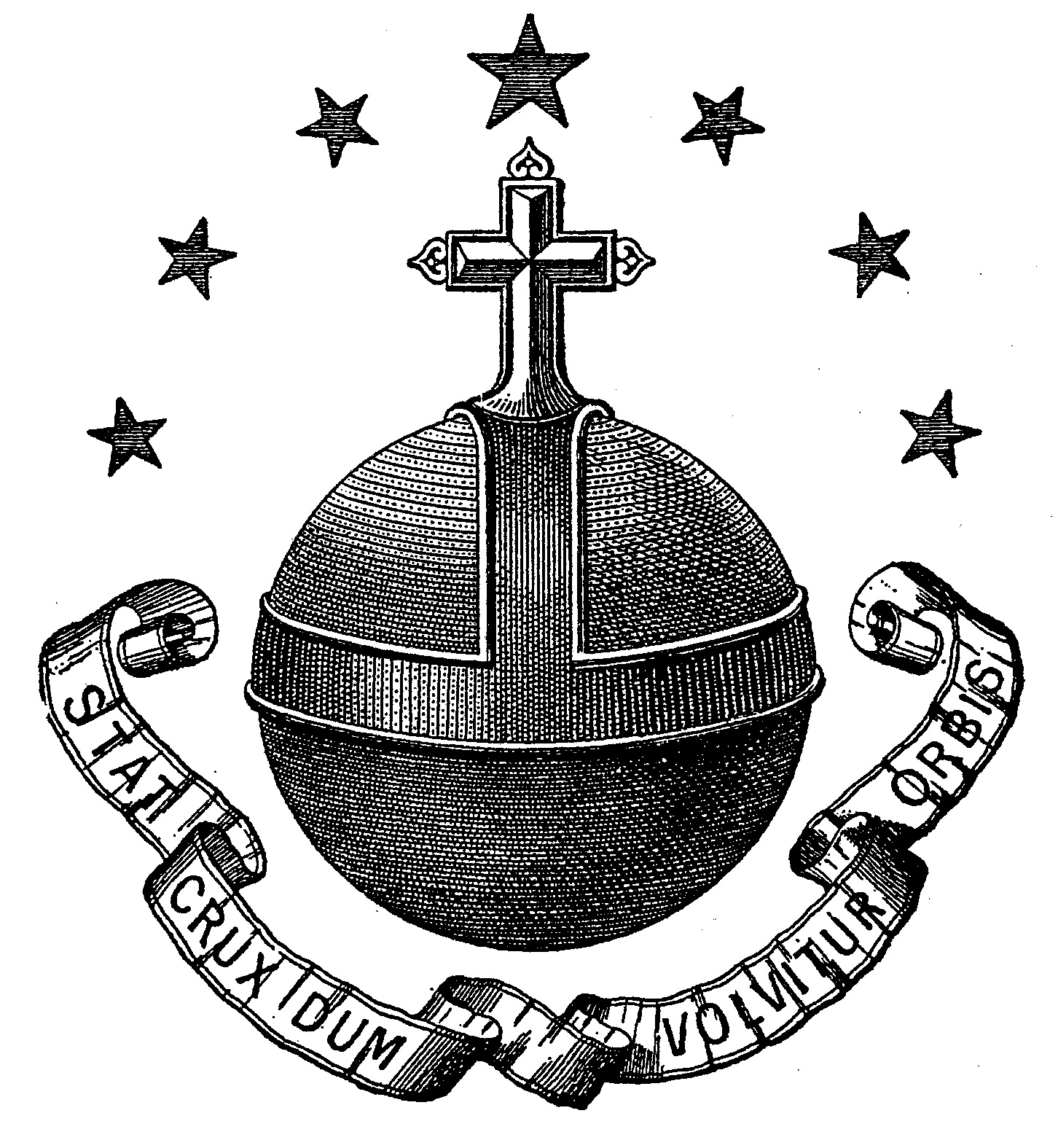
We cannot and should not turn our faith and our places of prayer into platforms for singing about how rotten the world is or how infiltrated the Church is. We cannot forget that Jesus assured us that the wheat and the weeds grow together. We must recognize, yes, that there is evil in the world in which we live and within us, but evil will never have the last word. The last word is for Christ, dead on a cross and resurrected forever. That is why the motto of the Carthusian Order is so fascinating and attractive. Back in the tenth century, Saint Bruno chose these wise words for the order he had just founded, as a reminder for those who would follow his spirituality: Stat crux dum volvitur orbis, Latin for The Cross is steady while the world turns.

The symbol of the Christian is the Cross. The cross is both a reminder of the sacrificial gift of the Lord and a call to join the Lord in the unique and only true love that exists, sacrificial love. By reaching out to others, by sacrificing ourselves for others, we take steps out of ourselves and leap into the Love of God. Religion is not difficult. All that is required of us is for us to take a close look at our interior attitudes and then let our external actions reflect whom we are, followers of Jesus Christ, religious people, people tied to God • AE


St. Joseph Catholic Church (Dilley, TX) • Weekend Schedule

Fr. Agustin E. (Parish Administrator)

Saturday August 31, 2024.

5.00 p.m. Sacrament of Reconciliation

6.00 p.m. Santa Misa.

Sunday, September 1, 2024

8.00 a.m. Sacrament of Reconciliation

8.30 a.m. Holy Mass.

10.30 p.m. Sacrament of Reconciliation.

11.00 a.m. Holy Mass.

Friday, September 6, 2024 First Friday Devotion

5.00 p.m. Sacrament of Confession

6.00 p.m. Holy Mass

7.00 p.m. Eucharistic Adoration & Eucharistic Benediction


Vigésimo Segundo Domingo del Tiempo Ordinario (Ciclo B)
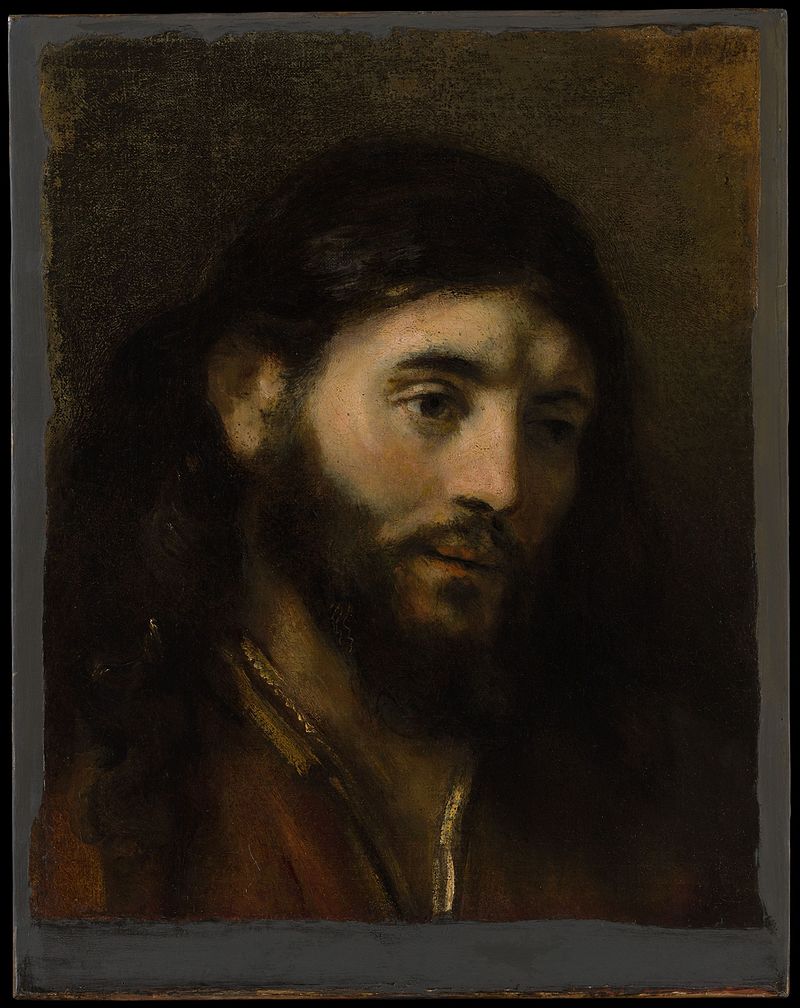
Rembrandt, Rostro de Cristo (1605), óleo sobre tela, Museo Metropolitano de Nueva York

Un grupo de fariseos de Galilea se acerca a Jesús en actitud crítica. No vienen solos. Les acompañan algunos escribas venidos de Jerusalén, preocupados sin duda por defender la ortodoxia de la gente sencilla de las aldeas. La actuación de Jesús es peligrosa. Conviene corregirla. Observan que sus discípulos no siguen ciertas tradiciones. Aunque hablan del comportamiento de los discípulos, su pregunta se dirige a Jesús, pues saben que es él quien les ha enseñado a vivir con aquella libertad sorprendente. ¿Por qué?

Y Jesús responde con unas palabras del profeta Isaías que iluminan su mensaje y su actuación. Estas palabras con las que Jesús se identifica totalmente hemos de escucharlas con atención, pues tocan algo muy fundamental de nuestra religión. Según el profeta, esta es la gran queja Dios: «Este pueblo me honra con los labios, pero su corazón está lejos de mí». Este es siempre el riesgo de toda religión: dar culto a Dios con los labios, repitiendo fórmulas, recitando salmos, pronunciando palabras hermosas, mientras nuestro corazón está lejos de él. Sin embargo, el culto que agrada a Dios nace del corazón, de la adhesión interior, de ese centro íntimo de la persona de donde nacen nuestras decisiones y proyectos. Cuando nuestro corazón está lejos de Dios, nuestro culto queda sin contenido. Le falta la vida, la escucha sincera de la Palabra de Dios, el amor al hermano. La religión se convierte en algo exterior que se practica por costumbre, pero en la que faltan los frutos de una vida fiel a Dios.

En toda religión hay tradiciones que son humanas: Normas, costumbres, devociones que han nacido para vivir la religiosidad en una determinada cultura. Pueden hacer mucho bien. Pero también pueden hacer mucho daño cuando nos distraen y alejan de lo que Dios espera de nosotros. Las costumbres y tradiciones nunca han de tener la primacía.

Después de citar al profeta, Jesus dice: «Ustedes dejan a un lado el mandamiento de Dios, para aferrarse a las tradiciones de los hombres”. Cuando nos aferramos ciega o fanáticamente a tradiciones humanas, corremos el riesgo de olvidar el mandato del amor, alejándonos del camino trazado por Jesus, Palabra encarnada de Dios. En la religión cristiana, lo primero es siempre Jesús y su llamada al amor. Solo después vienen nuestras tradiciones humanas, por muy importantes que nos puedan parecer. El padre Antonio Ruiz Retegui hablaba con mucha sensatez sobre la absolutización de lo institucional. Hace tiempo escribía: «El aspecto institucional tiende a hacerse dominante sobre el aspecto propiamente espiritual, de conciencia. La institución se convierte en instancia última y, en consecuencia, en la referencia definitiva y absoluta: la institución se convierte en un fin en sí misma. El fin que la institución está llamada a cumplir se desvanece y aparece como el mantenimiento de la propia institución, que tenderá a prevalecer sobre las personas. Su unidad ya no procederá de la concordia en el cumplimiento de la misión, sino en la defensa de los elementos estructurales de la propia institución en sí misma». Y terminaba: cuando el fin se difumina, la propia institución cambia de carácter y se desvirtúa. El padre Ruiz Retegui hablaba de una institución dentro de la Iglesia, pero esto aplica para una parroquia, una orden religiosa, una escuela, incluso una familia. No hemos de olvidar nunca lo esencial. Que el Espíritu de Dios nos regale hoy su luz para volver nuestros corazones a Dios, y alabarlo con ambos: labios y corazón • AE



Twenty-first Sunday of Ordinary (Cycle B)

Anonymous Master, Multiplication of the Loaves and Fish (Late 12th Century), stainless window, Victoria and Albert Museum (London)

When they heard Jesus speak about His flesh as real food, when they heard Him say that they had to eat His flesh and drink His blood, they left. This teaching was too hard for them to accept. Jesus was not about to tone down the teaching. He was not about to make it more palatable. The teaching had to be accepted by those who wished to follow Him. So, many of them left. “Are you going too?” the Lord asked. Peter replied in a great confession of faith, “Lord to whom shall we go? You have the words of eternal life.”

People have always been tempted to compromise on the hard truths of the faith. Some have turned Jesus into a great man, but not divine. Others have said that He was divine, but did not really exist as a man, He just appeared that way. The truth of the Incarnation, of Jesus being both human and divine was too hard for them to accept, so they compromised and said he was one or the other, but not both. They wanted to do the same thing regarding the teaching on the Bread of Life. They wanted to call it symbolic, but not real. They ignored Jesus’ teaching. Or they left Him. Faith demands continual decisions to take steps beyond our minds’ ability into the vast richness of Divine revelation. Faith demands the humility to accept that we cannot understand all that is revealed. Faith demands that we set our minds free from the shackles of physical knowledge and take leaps into the wisdom of God. Faith means opening ourselves up to eternal life.

It is sad that throughout history many people have rejected the One who has the words of eternal life and have instead given themselves over to a blind following of those who can offer them no more than a political view of life. Demagogues appear everywhere and at every time. So they said, “Hail Caesar,” and sacrificed the Roman Republic. They said, “Heil Hitler,” and sacrificed their morality. Today, the Eucharist gives us the strength to be authentic, true, real Christians, authentic, true, real Catholics. It is Jesus Christ who is calling us to a living, a vital faith. If we refuse to follow Him, where exactly can we go? Whom can we follow? Who else has the words of eternal life? We are convinced that Jesus is the Holy One of God. We have no choice. Eternal Life can only be found in Him. The conclusion of John six is far more than a call to believe in the Eucharist. It is this, but it is more. It is a call to trust in the Lord. It is a call to dare to be different from those who have left him and who give lip service to their Christianity. We are called to be different. We are called to be holy, for, after all, that is what holiness is, being separate for the Lord. We have a choice…..Or do we? No, we really do not have a choice. Where else can we go? He alone has the words of eternal life! • AE


St. Joseph Catholic Church (Dilley, TX) • Weekend Schedule

Fr. Agustin E. (Parish Administrator)

Saturday August 24, 2024.

5.00 p.m. Sacrament of Reconciliation

6.00 p.m. Santa Misa.

Sunday, August 25, 2024

8.00 a.m. Sacrament of Reconciliation

8.30 a.m. Holy Mass.

10.30 p.m. Sacrament of Reconciliation. 11.00 a.m. Holy Mass


XXI Domingo del Tiempo Ordinario (Ciclo B)

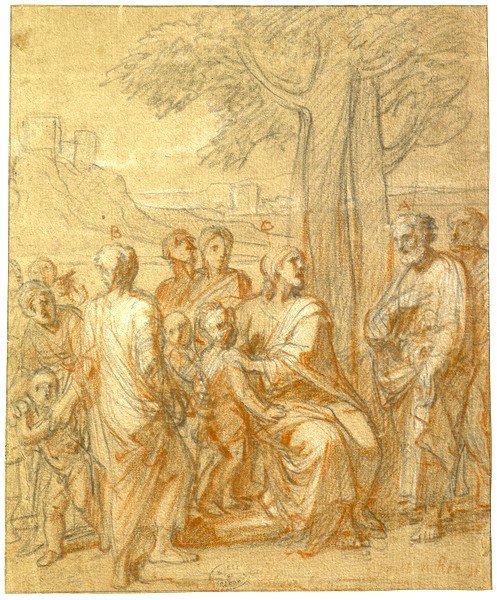
F. Verdier, Cristo, los apóstoles y los niños (1650), lápiz sobre papel, Museo de Grenoble (Francia)

Muchos cristianos sienten -sentimos- brotar en su interior dudas, no sobre tal o cual punto particular del mensaje de Jesús sino más sobre la totalidad de la fe cristiana. Lo que les preocupa no son los dogmas sino algo más fundamental y previo: ¿Por qué habría de orientar mi vida siguiendo las fórmulas ingenuas que encuentro en unos documentos tan arcaicos y, al parecer, tan legendarios? ¿Por qué mi anhelo por la vida, el placer y la libertad han de subordinarse a una moral rigurosa y casi imposible? Muchas veces, sin formularlo de manera precisa, experimentan en su interior una división profunda: “Quisiera creer pero me siento incapaz de adherirme con sinceridad total a la fe cristiana”. “Siento que no puedo o no debo abandonar mi fe pero al mismo tiempo me encuentro cada vez más lejano y extraño a todo eso”. Es fácil entonces sentirse culpable de algo, sin saber con seguridad de qué: ¿Qué me ha pasado? ¿Qué he hecho a lo largo de los años para llegar a esta situación? Es posible, ciertamente, que haya una parte de responsabilidad en todo ello, pero ahora lo importante es vivir esa experiencia de duda religiosa de manera, digamos, positiva.

Esa duda y falta de certeza interior puede ser precisamente una ocasión para superar la inmovilidad y la rutina, para liberarse de una religión excesivamente infantil y para descubrir a Jesús de manera nueva. Quizás, por vez primera, descubro que soy libre para creer o no creer. Ciertamente, es más cómodo no plantearse cuestión alguna y vivir tranquilo, pero es más digno enfrentarme a mi propia libertad y saber por qué abandono la fe o por qué me comprometo a seguir al Señor. Si sigo buscando la verdad, pronto sentiré que no soy yo sólo el que hago preguntas. Ahora es el mismo Cristo el que me interpela a mí: “¿También tú quieres marcharte?”. Y uno se ve obligado a introducir nuevas cuestiones en su planteamiento: ¿Por qué me resisto a reorientar mi vida y reorganizarlo todo desde la llamada de Cristo? ¿Puedo responder sinceramente por qué? Tarde o temprano llega el momento de tomar una decisión: o bien pongo a Jesús en el mismo plano que a otras grandes figuras de la humanidad, o bien me decido a experimentar personalmente qué hay de único en su persona y su mensaje. Al final, lo importante es la sinceridad del corazón. No hay que fiarse de las certidumbres y seguridades del pasado, ni desanimarse cuando comienzan las dudas. La verdadera fe no está en nuestras explicaciones bien fundadas, ni en nuestras dudas, sino en la sinceridad del corazón que busca a Dios. Y es que cuando uno busca con sinceridad, tal vez no encuentre respuesta inmediata a todos sus interrogantes, pero es fácil que en el fondo del corazón broten las palabras, maravillosas, entrañables, del buen Pedro -que también dudó- a Jesús: Señor, ¿a quién vamos a acudir? Tú tienes palabras de vida eterna • AE


¿qUE vAs a lEEr?


Twentieth Sunday of Ordinary Time (Cycle B)

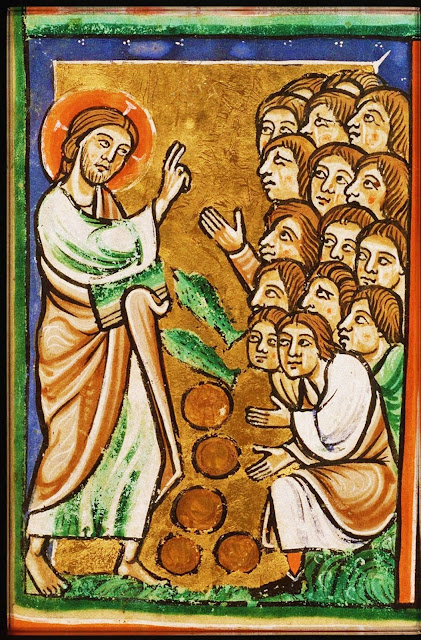
Anonymous artist, Multiplication of the Loaves and Fish, French (St. Omer), c. 1190-1200, Koninklijke Bibliotheek (The Hague)

This week we come to the climax of the Discourse on the Bread of Life. Todays gospel is about sustenance. It is about eating. It is about nourishment. It is about the Eucharist. We assimilate the food. But that is not what happens when we receive the Eucharist. When we receive the Eucharist, the food assimilates us. When we receive the Eucharist, Jesus transforms us. Instead of the food taking on our life, we take on the life of the Lord.

We just heard: “Just as the living Father sent me and I have life because of the Father, so also the one who feeds on me will have life because of me.” The attraction of the Eucharist is dynamic. Jesus is dynamic. When we receive communion or when we come to pray before the Blessed Sacrament, we don’t just kneel before a static object. It is not a crucifix or a statue that reminds us of something. This is Jesus. The One Who Is. When we receive communion or come to adoration, we come before the dynamic, powerful Presence who speaks to us through the life He has given us. How great is our God. He has found a way for each of us to have continual, intimate encounters with Him.

When Jesus gave us his Body and Blood the night before he died and when he gives us his Body and Blood every time we receive communion, the Lord gives us the total sacrifice of himself to his Father. When we receive the Eucharist, Jesus is present as the Servant of God who in his sacrificial death is saving us all. Right here, right now. Today’s Gospel states: ‘The one who feds on my flesh and drinks my blood has life eternal.” In the real presence of Jesus in the Eucharist we receive Jesus saving his people. When we receive communion, we receive Jesus saving us now. We receive Christ strengthening us and transforming our joys and sorrows into prayers to his Father. Our union with Christ in the Eucharist is union with Christ in passion, death and resurrection. Sometimes we are full of the joy of the Resurrection, sometimes the sorrow of the Passion, but always we are strengthened by the one who gives us his body and blood. The Lord is always in action. His Presence is dynamic.

We may come to Church with the attitude that we are winning our salvation, as though we were capable of usurping the power of God. We think that we decide what God can and cannot do to effect our salvation. That’s the beginning of today’s gospel. It is a Pelagian attitude. That was a heresy we all share a bit in that says “I can cause my own salvation.” No, it is not about me. It is about Jesus. Everything that matters is about Jesus. He saves me, and He does it for only one reason: He loves me.

The marvelous paradox of our Eucharistic relationship with Jesus is that the more we have Him, the hungrier we are for Him. Only, God in His Infinite Wisdom could find a way to satisfy our hungry hearts while leaving us hungry for Him. We can’t get enough of Him. We never will until we are fully united to Him in heaven. Today we pray for the Gift of the Holy Spirit called Reverence. May we revere the Dynamic Presence that assimilates Us into Himself every time we receive His Body and Blood • AE


St. Joseph Catholic Church (Dilley, TX) • Weekend Schedule

Fr. Agustin E. (Parish Administrator)

Saturday August 17, 2024.

5.00 p.m. Sacrament of Reconciliation.

6.00 p.m. Santa Misa.

Sunday, August 18, 2024

8.00 a.m. Sacrament of Reconciliation.

8.30 a.m. Holy Mass.

10.30 p.m. Sacrament of Reconciliation.

11.00 a.m. Holy Mass.

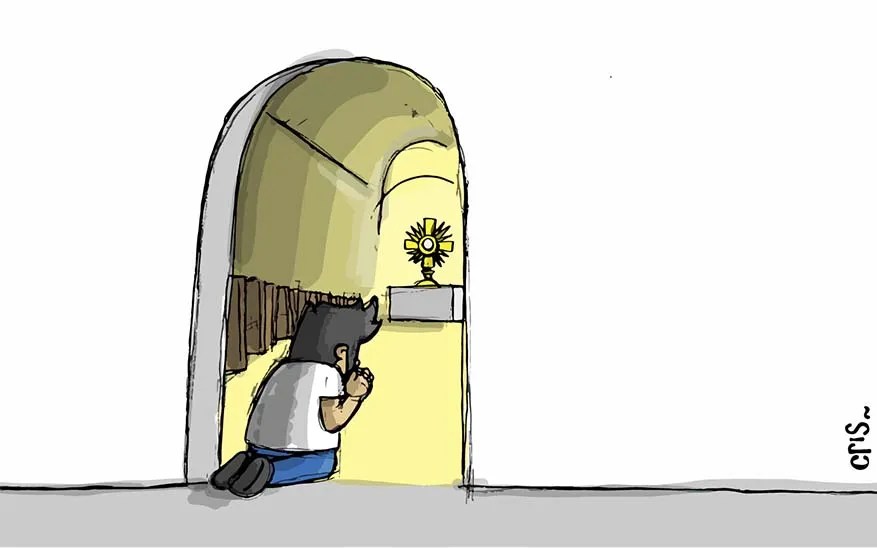
Our daily chapel is open Monday, Wednesday & Friday from 8.00 a.m. to 8.00 p.m. Stop by and pay a visit to the Most Holy Sacrament.

Nuestra capilla está abierta lunes, miércoles y viernes de las 8.00 a.m. a las 8.00 p.m. ¡Ven a visitar Jesús presente en el Santísimo Sacramento!


XX Domingo del Tiempo Ordinario (Ciclo B)

J. Espinosa, La misa de San Gregorio (1650), óleo sobre tela, Museo del Prado (Madrid)

Cuando la celebración de la eucaristía no nos dice mucho, puede haber varias razones: actuación rutinaria del celebrante, desconocimiento del significado de los gestos litúrgicos, lenguaje alejado de la realidad actual… Hay, sin embargo, otra razón fundamental: por muy cálida y viva que sea la celebración, si no participamos interiormente y nos abrimos a Dios en cada momento, la Eucaristía termina diciendo poco, o nada.

Hay cuatro etapas importantes en la celebración de la Eucaristía que es necesario vivir con la actitud apropiada. El primer momento es de encuentro. Llegamos a la parroquia, nos saludamos y vamos formando entre todos la asamblea litúrgica. Es el momento de preparar nuestro corazón para la celebración. Los ritos iniciales, con el precioso acto penitencial, nos ayudan a distanciarnos de nuestro ritmo de vida a veces tan agitado y tenso, a despertar nuestra fe, pedir perdón y disponemos para vivir un encuentro gozoso con Dios.

El segundo momento es de escucha. Nos mantenemos sentados para escuchar la Palabra de Dios. Después de haber oído durante la semana tantas palabras, noticias, comentarios e información, nos disponemos a escuchar ahora una Palabra diferente que puede iluminar y orientar nuestras vidas. Escuchamos la Palabra que pone sentido, verdad y esperanza en nuestra existencia. Ante el Evangelio nos ponemos de pie pues las palabras de Jesús tienen para nosotros un valor único. Son realmente espíritu y vida

El tercer momento es de acción de gracias. Estamos de pie unidos al celebrante que, en nombre de todos, pronuncia la plegaria eucarística. La actitud es clara desde el principio: los corazones levantados hacia el Señor, dando gracias y alabando su bondad. Aquí ya no se predica ni se enseña, no se analiza ni se medita. Estamos en el corazón de la Eucaristía. Aquí lo importante es la alabanza y el agradecimiento hondo a Dios por el regalo de su Hijo.

Y el último momento es de comunión y encuentro íntimo con el Señor. Todo nos conduce a participar en la mesa preparada para nosotros: el Padrenuestro que nos recuerda que somos hermanos, hijos de un mismo Padre; el gesto de la paz que nos reconcilia e invita al mutuo perdón; el Cordero de Dios nos recuerda nuestra indignidad y la enorme necesidad que tenemos de recibir al Señor. Y luego el breve camino hacia el altar para alimentarnos del Señor, recuerdo de que somos peregrinos, que vamos caminando, y que la Eucaristía no es un premio, sino una medicina. Alimento para el camino. Es el momento de comulgar con Cristo y con los hermanos • AE


Solemnity of the Assumption of the Blessed Virgin Mary (2024)

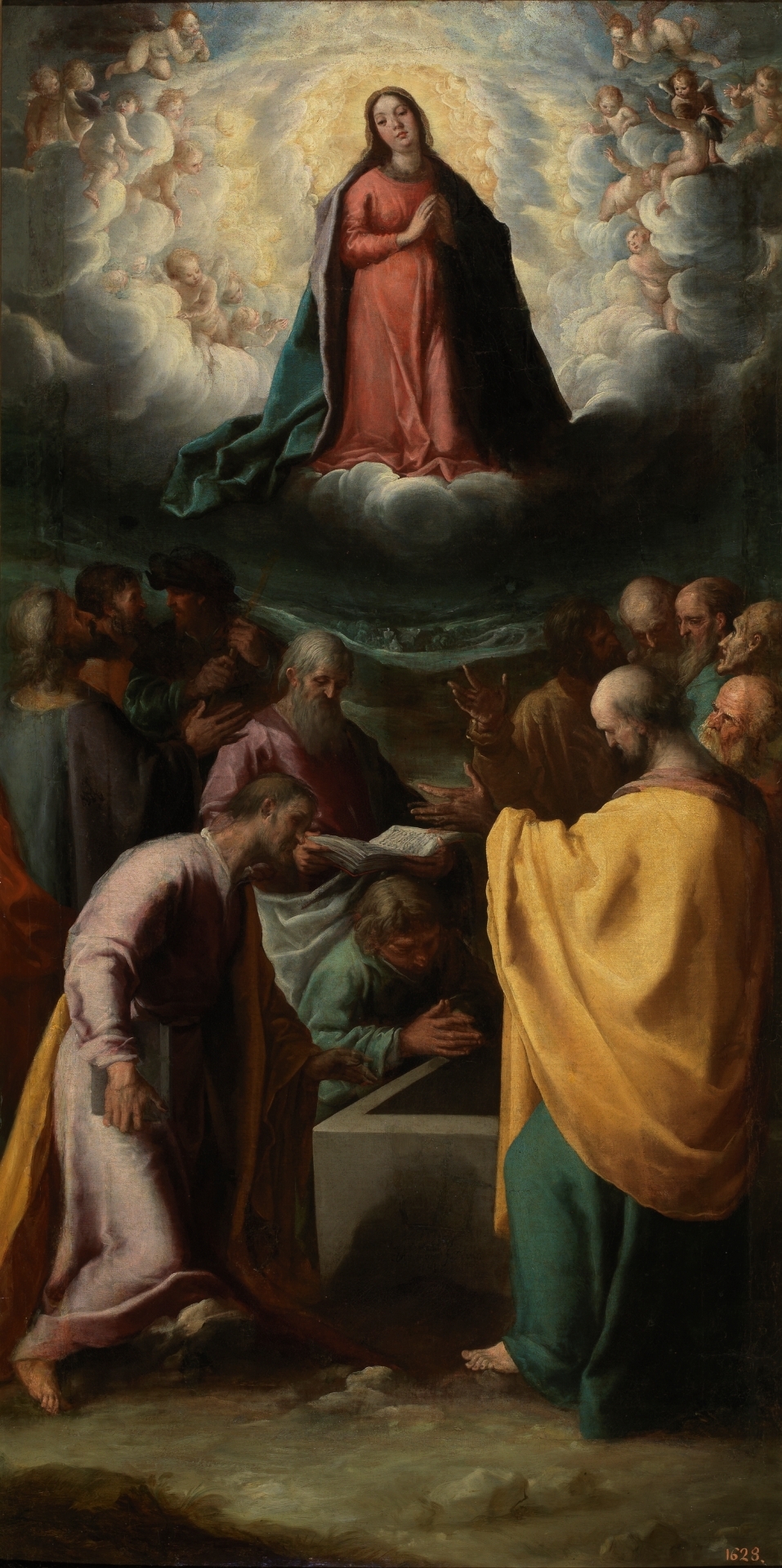
E. Cajés, The Assumption of the Virgin Mary (1603), oil on canvas, Museo Nacional del Prado (Spain)

Today, with the universal Church, we affirm our belief that Mary, the Mother of God is the perfect model of Christian life, who was preserved from the corruption of the grave and who is the Queen of Heaven and Earth. On this Solemnity, we are also reminded that our destiny lies beyond the grave and each day we are being called to eternity. For that reason, we said these words in our Opening Prayer: “Always attentive to the things that are above, may we merit to be sharers of Mary’s glory.” We cannot assume that we will go to heaven. We must strive daily to cooperate with the Lord’s grace so that we may be prepared on the day He calls us to Himself. Mary shows us the way: Like her, we must, “proclaim the goodness of the Lord and rejoice in God our Savior. Like her, we must with profound trust say daily: “Let it be done to me according to your word.” In other words, as humble and faithful disciples our souls must magnify—not ourselves, but the One is Lord, the Son of God, the Son of Mary. How blessed are we that from the Cross he gave Mary to us as our Mother to guide us on our earthly journey and to the ultimate goal for which we long.  Just yesterday we celebrated the Feast of St. Maximilian Kolbe who offered us this sound advice: “We should let ourselves be guided by Mary and rest quiet and secure in her hands. She will watch out for us; provide for us; answer our needs of body and spirit and dissolve all our difficulties and worries” Mary, Queen of Heaven and Earth, pray for us today and always. Amen • AE

Solemnidad de Asunción de la Santísima Virgen María (2024)

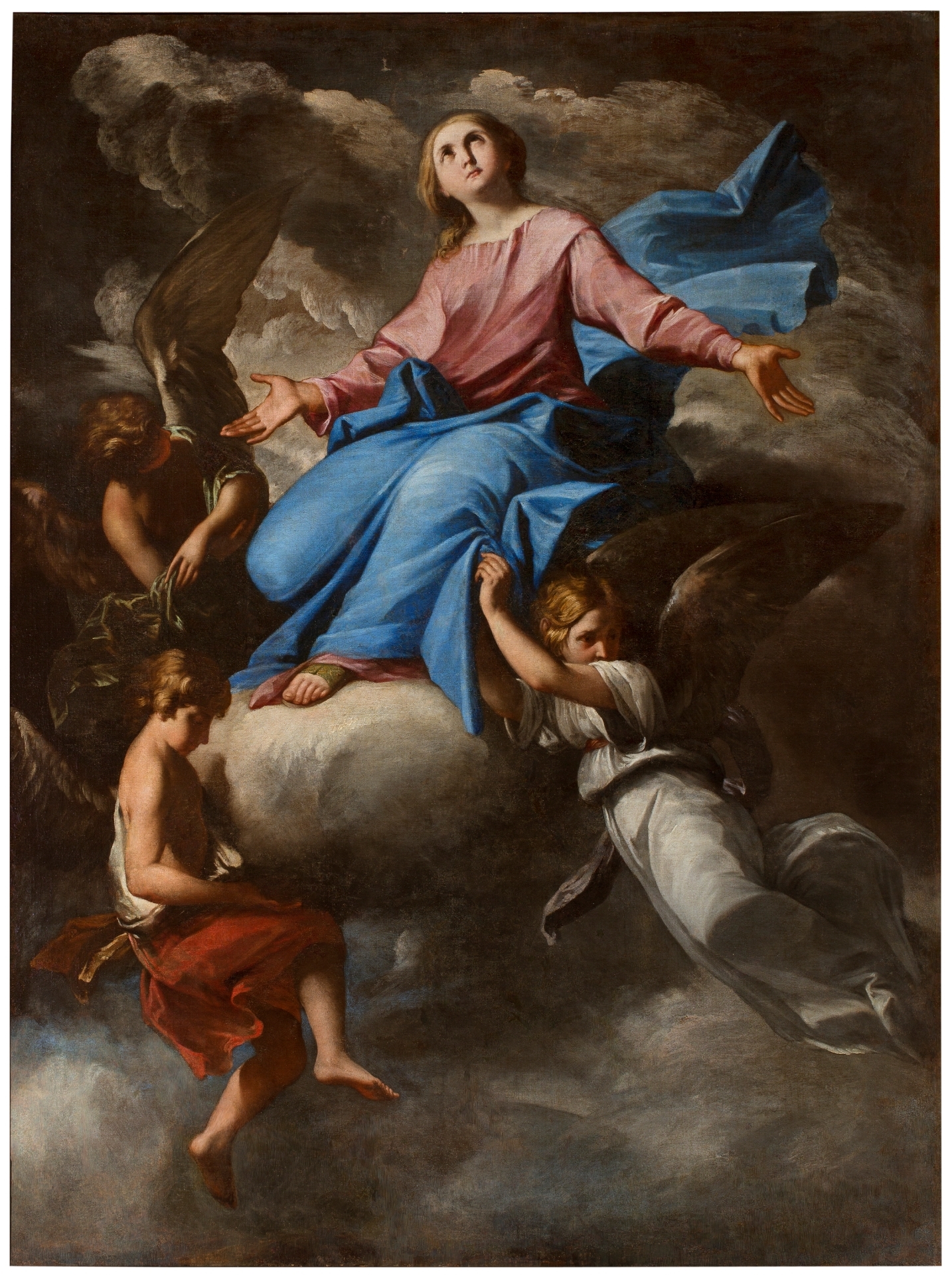
B. Gennari, La Asunción de la Virgen María (1700), oleo sobre tela, Museo Nacional del Prado (Madrid)

La fiesta de hoy, por las lecturas mejor proclamadas que nunca, debería contagiarnos esperanza. La Asunción es un grito de fe en que es posible la salvación y la felicidad: que es verdad el programa salvador de Dios. Es una respuesta a los pesimistas, que todo lo ven negro. Es una respuesta al hombre materialista, que no ve más que los factores económicos o sensuales: algo está presente en nuestro mundo que trasciende nuestras fuerzas y que lleva más allá. La Asunción de María Santísima es la prueba de que el destino del hombre no es la muerte, sino la vida. Y, además, que es toda la persona humana, alma y cuerpo, la que está destinada a la vida total, subrayando también la dignidad del cuerpo humano. En María Santísima ya ha sucedido. En nosotros no sabemos cómo y cuándo sucederá, pero tenemos plena confianza en Dios: lo que ha hecho en ella quiere hacerlo también en nosotros. Cada vez que participamos en la Eucaristía, elevamos a Dios nuestro canto de alabanza, exactamente como hizo la Santísima Virgen con su Magníficat. La plegaria eucarística es como un Magníficat prolongado por la historia de amor y salvación que va construyendo Dios. Cada vez que participamos en la Eucaristía recibimos como alimento el Cuerpo y la Sangre del Señor Resucitado de quien nos había dicho «Quien come mi Carne y bebe mi Sangre, tiene vida eterna y yo le resucitaré el último día». La Eucaristía es como la semilla y la garantía de la vida inmortal para los seguidores de Jesús. Por tanto, de alguna manera, también nosotros estamos recorriendo el camino hacia la gloria, como la que ya conseguido María, la Madre. Cada Eucaristía nos acerca al misterio de la Asunción. Si la celebramos bien, con amor y devoción, vamos pues por buen camino • AE


El Akathistos

El Himno Akátistos es la más grande composición mariana de la Iglesia de oriente, y una de las más grandes de todos los tiempos. Ha gozado siempre de gran estima entre los fieles lo que se refleja en el hecho de que su uso litúrgico se haya mantenido inintemunpido durante mil quinientos años. Según el relato del Synaxario el himno fue creado para agradecer a la Madre de Dios su protección sobre la ciudad de Constantinopla ante el ataque de los bárbaros. Según el mismo relato su peculiar nombre se debe a que el pueblo, careciendo de espacio para sentarse, permanecía de pie toda la velada y en adelante escucharla siempre este himno en esa posición en honor a la Virgen defensora• AE


Nineteenth Sunday in Ordinary Time (Cycle B)

Giovanni da San Giovanni, Christ with the Eucharist between two angels (1633), oil on canvas, Santa Maria Della Fonte Nuova (Italy)

We Christians eat the Body and drink the blood of the Lord in a mysterious way. From the earliest days of the Church, we have referred to the Eucharist as the Mystery of Faith, an expression of Christ’s death, resurrection and second coming. For all of us, to understand Communion is to take a leap of faith into mystery. We are receiving the real Body and Blood of the Lord. At Mass, the bread and wine are consecrated, not just blessed. They become Jesus in a mystical way, a way beyond our understanding. The Eucharist is infinitely more than a meal of fellowship. It is this, but it is far more than this. The Eucharist is infinitely more than the union of the community with Christ as its head. It is this, but it is far more than this. When we receive communion, we receive Jesus, Body and Blood, Soul and Divinity. The bread and wine become the Lord and remain the Lord. The consecrated hosts are kept in our tabernacles for us to take to the sick and for us to pray before in adoration. Our non-Catholic brothers and sisters have no reason to do this. They do not have tabernacles because they do not believe that bread and wine are transformed into the Lord’s Body and Blood. Nor do they have priests capable of doing this for the community. Their communion services are radically different than ours. That is the reason why a Catholic cannot leave the Catholic Church without leaving the Eucharist even if they join a faith that has a communion service.

So, we Catholics are people of mystery. We do not know how, but somehow, we are united to Christ in a mystical way every time we receive communion. To understand the miracle and mystery of the Eucharist, our starting point must be Jesus. Jesus is Divine, the Second Person of the Blessed Trinity. He is the Eternal Son of the Father. When we eat His Body and drink His Blood, when we receive communion, He gives us who He is, Eternal Life. Our Founding Fathers, Washington, Adams, Franklin, Jefferson gave us liberty, but they were not liberty. Abraham Lincoln gave the slaves freedom, but he was not freedom. But Jesus gave the Bread of the Eternal Life because He is the Bread of Life. Jesus was not just a great man. He is Divine. The Bread of Life is Jesus, our Divine Sustenance. And we take Him into ourselves. When we receive the Eucharist, we are united to Him, to each other and to the whole Body of Christ. It is no wonder that those who wish to destroy the Church begin by attacking the Eucharist. In England of the Sixteenth and Seventeenth Centuries, France in the Eighteenth Century, Mexico in the Twentieth Century, and throughout the world in the Twenty-first century. Throughout history and continuing to the present day priests are tortured and killed for saying Mass for the people who long for the Bread of Life.

Every Sunday, and for some of us every day, we enter into the Mystery of the Eucharist. We receive the One who is the Bread of Life. This is Jesus who unites Himself to Us with His Body and Blood. This is the Second Person of the Blessed Trinity, the Eternal Son of the Father, who humbled Himself to become one of us, to die for us, and then gave the gift of His Life and Death to us in the form to the Blessed Sacrament. This is Jesus whom we will take into ourselves today when we receive communion. The people of the Gospel reading murmured. They murmured because they were not open to faith. We do not murmur. We proclaim • AE


St. Joseph Catholic Church (Dilley, TX) • Weekend Schedule

Fr. Agustin E. (Parish Administrator)

Saturday August 10, 2024.

5.00 p.m. Sacrament of Reconciliation

6.00 p.m. Santa Misa.

Sunday, August 11, 2024

8.00 a.m. Sacrament of Reconciliation

8.30 a.m. Holy Mass.

10.30 p.m. Sacrament of Reconciliation.

11.00 a.m. Holy Mass.

Thursday, August 15, Solemnity of the Assumption of the Blessed Virgin Mary

(Holy Day of Obligation)

6.00 p.m. Holy Mass


XIX Domingo del Tiempo Ordinario (Ciclo B)

La incredulidad no es como decía un autor (profundamente equivocado, desde luego) una «deformación perversa del espíritu», o algo propio de hombres malvados y retorcidos que pretenden enfrentarse con Dios. No. La incredulidad sutil, una tentación que siempre va a estar presente en nuestra vida y que empieza a echar raíces cuando decidimos, en pequeños o en grandes momentos, vivir de espaldas a Dios.

Vivimos en un mundo en el que Dios no está de moda, y en el caso de que lo necesitemos, luego resulta fácil arrinconarlo en algún lugar donde no moleste demasiado. Al final, lo más fácil es vivir como si Dios no existiera ¿Qué puede significar hoy para muchos hombres y mujeres la invitación de Jesús en el evangelio de este domingo a vivir como discípulos, escuchando lo que dice el Padre? Y es que incluso los que nos decimos creyentes hemos ido perdiendo capacidad para escuchar a Dios. No es que Dios no hable ya en el fondo de las conciencias. Es que, llenos de ruido, avidez, posesiones y autosuficiencia, no sabemos ya percibir Su presencia. Quizá sea ésta una de las mayores tragedias del hombre contemporáneo. Estamos arrojando a Dios de nuestra conciencia. Rehusamos escuchar su llamada que nos busca. Intentamos ocultarnos a su mirada amistosa y a la invitación que nos hace a sentir su amor, su perdón, su luz y su alegría. Preferimos otros dioses con quienes vivir con más tranquilidad. El Concilio Vaticano II nos recordó que la conciencia es el núcleo más secreto y el sagrario del hombre, en el que se siente a solas con Dios, cuya voz resuena en el recinto más íntimo de aquélla (Gaudium et Spes, 16). Cuando los hombres perdemos esta capacidad de escuchar la invitación de Dios en el fondo de nuestra conciencia, cuando no hay silencio interior, cuando vivimos del ruido y por el ruido, corremos el riesgo de gritar colectivamente afirmaciones muy solemnes sobre el amor, la justicia, la solidaridad y honestidad, pero sin hacerlas vida en nuestra vida. Llamaradas de petate, que dice la sabiduría popular. Como aquel que gritaba, en auditorios llenos de personas, aquello que de cien almas le interesaban las cien, pero al final le interesaban solamente aquellas que le reportaran algún beneficio.

Cuando no escuchamos la llamada personal de Dios e intentamos responder, con esfuerzo, con sacrificios, con días malos y con días buenos, empezamos a escuchar con más atención nuestros intereses egoístas, y a buscar la satisfacción de nuestros deseos por encima de todo. Y de todos.

No podemos olvidar que nuestra vida la vamos construyendo no tanto en los acontecimientos ruidosos, y mucho menos en nuestra a veces tan vacía participacion en redes sociales. Nuestra vida se va haciendo en esas horas silenciosas en las que hablamos con el Señor y le escuchamos, en esas horas de trabajo, en esos días a veces grises, a veces luminosos, en los que damos nuestro mejor esfuerzo por encontrarnos con el Señor • AE


Music for prayer

Giovanni Pierluigi da Palestrina (1525 -1594) was an Italian composer of late Renaissance music. The central representative of the Roman School, with Orlande de Lassus and Tomás Luis de Victoria, Palestrina is considered the leading composer of late 16th-century Europe. Primarily known for his masses and motets, which number over 105 and 250 respectively, Palestrina had a long-lasting influence on the development of church and secular music in Europe, especially on the development of counterpoint. According to many scholars, Palestrina’s «success in reconciling the functional and aesthetic aims of Catholic church music in the post-Tridentine period earned him an enduring reputation as the ideal Catholic composer, as well as giving his style (or, more precisely, later generations’ selective view of it) an iconic stature as a model of perfect achievement.» It is to Palestrina that we owe this beautiful version of Ego Sum Panis Vivus • AE