We continue today with our five-week study of the sixth chapter of John. It began last week with the multiplication of loaves and fish with all its Eucharistic implications. Today’s Gospel takes place the next day as the people came looking for Jesus. Jesus and his disciples were on the other side of the lake. The disciples crossed over by themselves, but Jesus met up with them walking on the water. That is why the Gospel for this Sunday begins with the crowds saying, «Rabbi, when did you get here?» Jesus responds that they are only looking for him because they ate loaves and fish yesterday and want more today. They were not concerned with the sign that He performed. They were just concerned with free food.
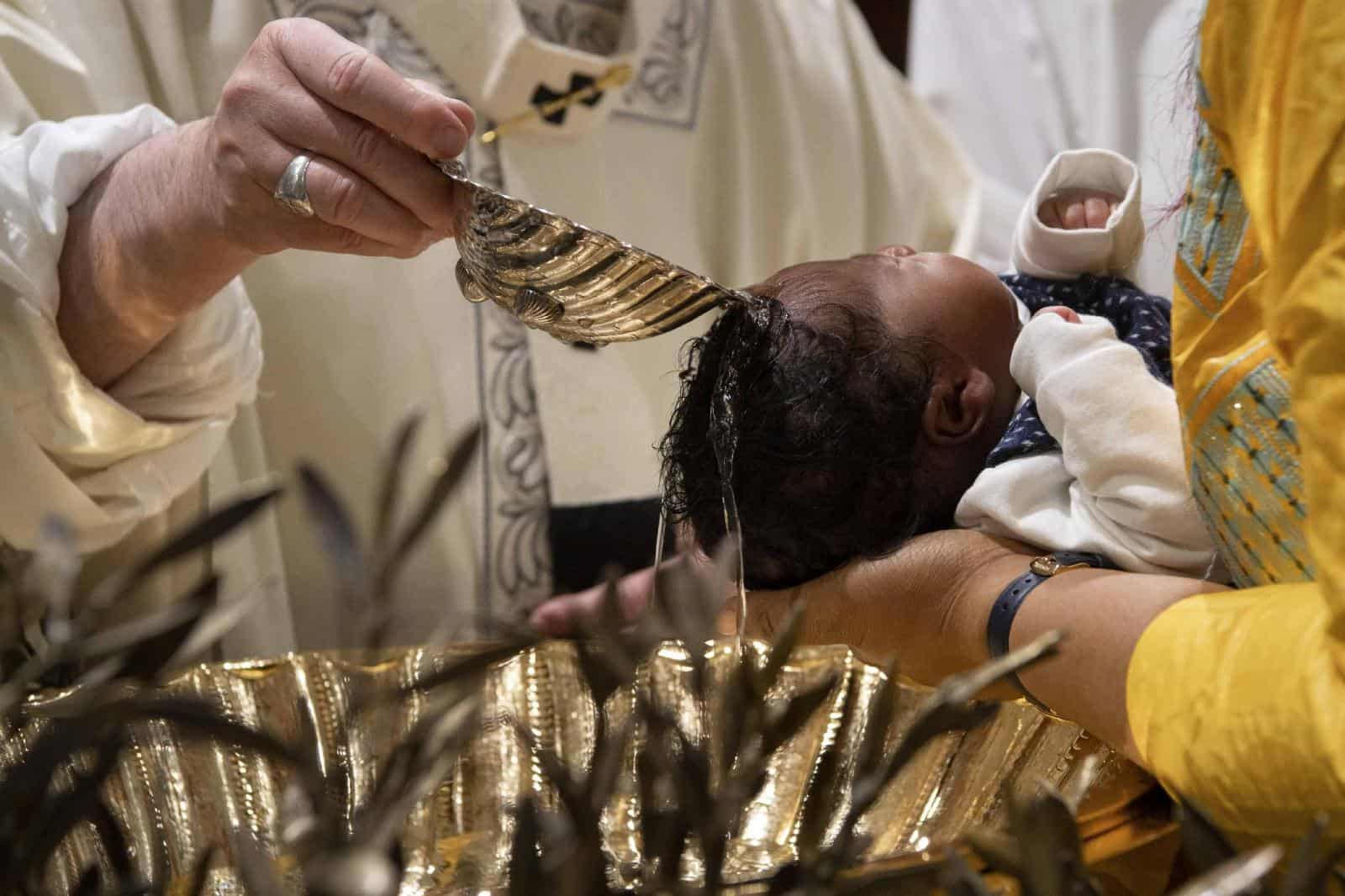
So, what makes a person a Christian? What makes a person a Catholic? Does the sacrament of baptism do it? Perhaps theologically, but if the person does not reaffirm his or her faith with his or her life, then baptism is an act lost in the forgotten past, theologically something that took place, but a life that no longer exists due to the person’s refusal to live this life. The Life of God cannot be taken from us, but it can be surrendered by us, given away by us. That is the reason people feel empty when they commit serious sin. They may fill their lives with all sorts of experiences, or all sorts of things, but they still feel so empty. They sense that they have given away the Life of God within them. Back to the question: What makes a person a member of a parish, a Christian, a Catholic? Does filling out paperwork make a person a member of a parish? That is easy enough to do. So, then does attendance in Church do it? No, there are plenty of people who wish they could come to Church but who can’t due to sickness or age or both. Although not in Church, these people are certainly active members of the parish. They pray daily for the parish and for sick members of the parish. On the opposite side of the spectrum, there are some people who attend Church but who do not live a Christian life outside of the building. We are all sinners, no doubt, but most of us want to be better, want to fight sin. But those few who cheat others continually or support abortion stubbornly and who firmly intend to keep living this way, are they Christians simply because they attend Mass? What makes a person in reality, not in name, a Christian, a Catholic, an active member of a parish? The answer is simple: Jesus Christ. Everything that matters is about Jesus. All else is false. Those who seek Jesus and who worship Him in their daily lives as well as with the community of believers are members of the parish, members of the Church. They, we, are Christians. They, we, are Catholic and The food is Jesus Christ. The Eucharist is the sacramental expression of this food. The Eucharist is our union with the Lord loving us to death on the cross. The Eucharist is the most significant of the many ways that we receive the Bread of Life. So, what makes a person a member of a parish, a member of the Church, a Catholic? The question was phrased incorrectly. It is not the what, it is the Who that unites a person to God’s intimate love. The Who is Jesus Christ, the One who gives life by dying, and has set us on fire with the Love of God and who has filled us with the only food we will ever need, Himself • AE

St. Joseph Catholic Church (Dilley, TX) • Weekend Schedule

Fr. Agustin E. (Parish Administrator)
Saturday August 3, 2024.
5.00 p.m. Sacrament of Reconciliation
6.00 p.m. Santa Misa.
Sunday, August 4, 2024
8.00 a.m. Sacrament of Reconciliation
8.30 a.m. Holy Mass.
10.30 p.m. Sacrament of Reconciliation.
11.00 a.m. Holy Mass.
XVIII Domingo del Tiempo Ordinario (Ciclo B)
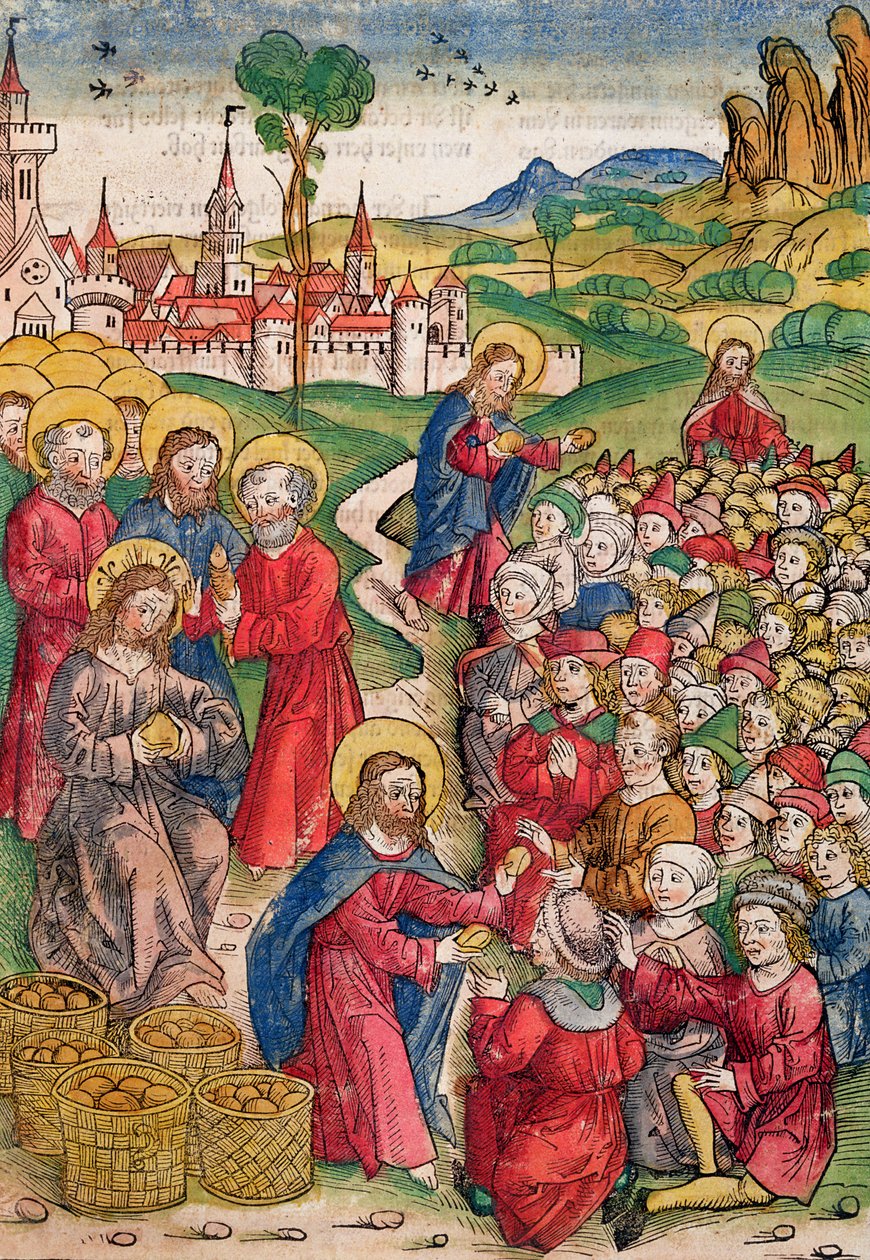
M. Wolgemut, La Multiplicación de los Panes y los Peces (1491), xilografía en color).
¿Es Jesucristo relevante para los hombres y mujeres del siglo XXI? ¿Nos va a resolver acaso los problemas del mundo actual? El evangelio de este domingo, el segundo en este largo discurso del Pan de Vida recoge un dialogo que Jesús mantiene con la gente que lo sigue. El día anterior han compartido con Jesús una comida sorprendente y gratuita. Han comido pan hasta saciarse. ¿Cómo lo van a dejar que se vaya así nada más? Lo que buscan es que Jesús repita su gesto y los vuelva a alimentar gratis. No piensan en otra cosa. Y Jesús los desconcierta con un planteamiento inesperado: «Esfuércense no por conseguir el alimento transitorio, sino por el permanente, el que da la vida eterna». Pero ¿cómo no preocuparnos por el pan de cada día? El pan es indispensable para vivir. Lo necesitamos y debemos trabajar para que no falte. Jesús lo sabe. El pan es lo primero. Sin comer no podemos subsistir. Por eso se preocupa de los hambrientos y mendigos que no reciben de los ricos ni las migajas que caen de su mesa. Por eso tiene palabras duras para quienes almacenan el grano sin pensar en los pobres. Por eso enseña a sus seguidores a pedir cada día al Padre pan para todos sus hijos.
Pero Jesús quiere despertar en ellos un hambre diferente. Les habla de un pan que no sacia solo el hambre de un día, sino el hambre y la sed de vida que hay en el ser humano. No lo hemos de olvidar. En nosotros hay un hambre de justicia para todos, un hambre de libertad, de paz, de verdad. Jesús se presenta como ese Pan que nos viene del Padre, no para hartarnos de comida sino para dar vida al mundo. Este Pan, venido de Dios, da la vida eterna. Los alimentos que comemos cada día nos mantienen vivos durante años, pero llega un momento en que no pueden defendernos de la muerte. Es inútil que sigamos comiendo. No nos pueden dar vida más allá de la muerte. Jesús se presenta entonces como Pan de vida eterna. Cada uno ha de decidir cómo quiere vivir y cómo quiere morir. Pero los cristianos hemos de saber que creer en Cristo es alimentar en nosotros una fuerza imperecedera, empezar a vivir algo que no acabará en nuestra muerte. Sencillamente, seguir a Jesús es entrar en el misterio de la muerte sostenidos por su fuerza resucitadora. Al escuchar sus palabras aquellos hombres y mujeres le gritan desde lo hondo de su corazón esas palabras maravillosas que escuchamos casi al final del relato: «Señor, danos siempre de ese pan». Desde nuestra fe vacilante, a veces nosotros no nos atrevemos a pedir algo semejante. Quizás, solo nos preocupa la comida de cada día. Y, a veces, solo la nuestra • AE
¿y PaRA lEer?
Ego sum panis vivus (Ettore Pozzoli)
Ego sum panis vivus es fundamentalmente un cántico Eucarístico que forma parte de la música compuesta para la solemnidad del Corpus Christi; existen muchas versiones. El texto está inspirado en el Discurso del Pan de vida recogido en el capitulo 6 del evangelio de San Juan.
 LA MEDITACION DE LA ESPOSA