
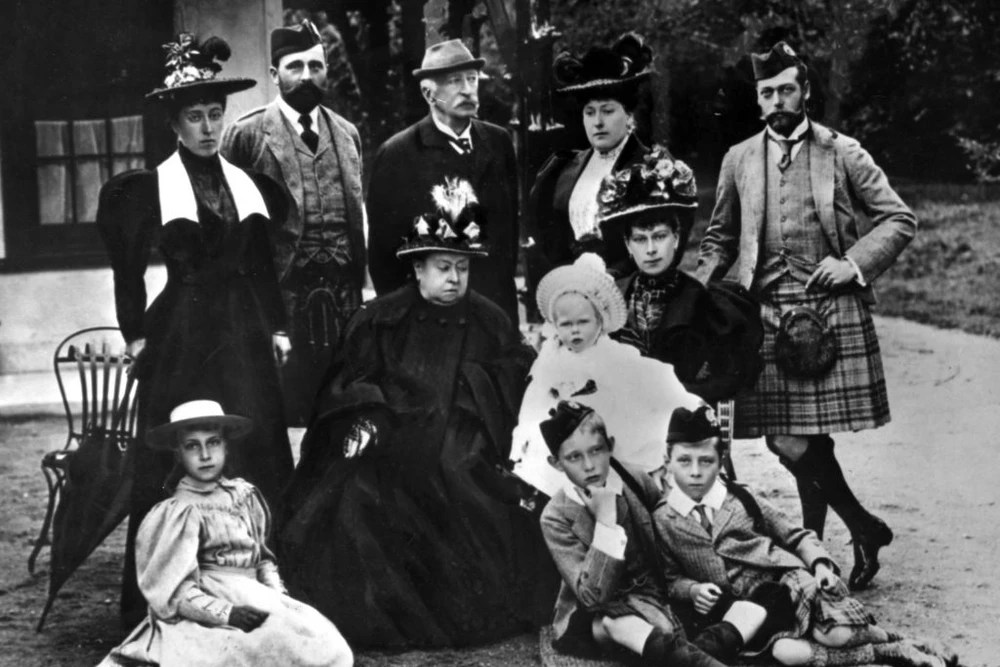
Although today´s reflection may become a little longer, let’s start with a small piece of history. Queen Victoria, the great queen of England who ruled from 1838 to 1901 had nine children. She never nursed any of them. She said she was a queen. Nursing a child, she said, would be beneath her dignity. When they were little, the children would be cared for by various nannies. Once a day, they would be presented to the Queen and their father, Prince Albert. They would be dressed properly and recite their lessons or, perhaps, even play games with their parents for about an hour. They would not eat with their parents until they were teenagers. Their parents did not tuck them in at night. That was beneath their parents’ dignity. There was nothing extraordinary about Victoria and Albert’s parenting. Care for a child was something that many people of Victoria’s time relegated to the poor. The poor cared for their own children, and they cared for the children of the rich. At the same time as the reign of Queen Victoria, the well off in America often had their slaves or a freed African lady care for their children. These parents also thought that they were too important to lower themselves to child care.
In today’s Gospel, Jesus hears the disciples arguing about which of them was the greatest. Jesus used a child to convey what the true work of a Christian is. What he was saying is that there is no room for arrogance in the Kingdom of God. But the disciples were not concerned with hearing him. They were too busy considering who was the greatest among them. Each was looking for respect from the others. Each was demanding a position of greater respect than the other disciples. Finally, Jesus had enough of this talk. He turned the tables on them. He called over a child, and he said, «You want to be great? Well, take care of a child.» Now, changing diapers and wiping running noses did not seem to them to be the work of a great person. But this is the work of the great in the Kingdom of God. For in the Kingdom of God anyone who wishes to be first, had to be last of all and a servant to all. «Where jealousy and self ambition exist there is disorder and every foul practice,» James warns in the second reading. He goes on to say that wars, conflicts, and every sort of evil flow from an attitude that makes continual demands on others. The apostle James had learned the lesson that he was taught in today’s Gospel when he was just a follower of the Lord. True wisdom is pure, peaceful, compliant, full of mercy and good fruit, and without inconsistency or insincerity. The fruit of this type of selfless wisdom is peace.
Perhaps there are times that we all are too concerned with getting the respect we think we are due in society, be that society in general, or the society of our home, workplace or school. Perhaps, there are times that we all are more concerned with what others are saying or even thinking about us then we are concerned with who we are. We are followers of Jesus Christ. His way is the way of service. Who are the best people at work? Who are the best students in a school? Who are the best people in our families? Who are the best people in our society? The best people are those who are kind, compassionate, just, full of mercy. Maybe we need to think about some of those grudges we still hold on to so tightly. So many of our grudges come from our conviction that we were not treated with the respect we felt we had a right to, be that from a boss, a neighbor, a distant relative or even a member of our immediate family. This is wrong, very wrong. The way of the Christian is not the way of being concerned with what others think. We are Christians. The basic attitude of our relationship with others must be that of Jesus Christ. His way was the way of service. Christianity is not a popularity contest. It is a contest of service. The Christian is not concerned with getting respect. He is concerned with giving respect. At the conclusion of the Eucharistic Prayer the priest and deacon hold up the Blessed Sacrament and proclaim: «Through Him and with Him and in Him, O God Almighty Father, in the unity of the Holy Spirit, all glory and honor is yours, forever and ever.» All answer, «Amen.» That is both an affirmation of the miracle of the Eucharist and a proclamation that the only glory and honor we need to be concerned with is that which we give to God. That is the way of Jesus Christ. That is the way of the Christian. St. Teresa of Calcutta addressed this problem head on. She wrote or at least edited a prayer for her sisters, and really for us, to help us understand what really we need to be concerned with in life: People are often unreasonable, irrational, and self-centered. Forgive them anyway. If you are kind, people may accuse you of selfish, ulterior motives. Be kind anyway. If you are successful, you will win some unfaithful friends and some genuine enemies. Succeed anyway. If you are honest and sincere people may deceive you. Be honest and sincere anyway. What you spend years creating, others could destroy overnight. Create anyway. If you find serenity and happiness, some may be jealous. Be happy anyway. The good you do today, will often be forgotten. Do good anyway. Give the best you have, and it will never be enough. Give your best anyway. In the final analysis, it is between you and God. It was never between you and them anyway. This is the way of wisdom. This is the way of the Christian • AE

St. Joseph Catholic Church (Dilley, TX) • Weekend Schedule

Fr. Agustin E. (Parish Administrator)
Saturday September 21, 2024.
5.00 p.m. Sacrament of Reconciliation
6.00 p.m. Santa Misa.
Sunday, September 22, 2024
8.00 a.m. Sacrament of Reconciliation
8.30 a.m. Holy Mass.
10.30 p.m. Sacrament of Reconciliation.
11.00 a.m. Holy Mass.
XXV Domingo del Tiempo Ordinario (Ciclo B)

G. Rouault, Cristo y los niños (1935), tinta sobre papel, Buffalo AKG Art Museum
Camino de Jerusalén, Jesús sigue instruyendo a sus discípulos sobre el final que le espera. Insiste una vez más en que será entregado en manos de los hombres y estos lo matarán, pero Dios lo resucitará. El evangelista dice que no entendían lo que les quería decir, pero les daba miedo preguntar. Aquí estamos perfectamente retratados los cristianos de todos los tiempos: no logramos entender a Jesús y además nos da miedo ahondar en su mensaje.
Al llegar a Cafarnaún, Jesús les pregunta de qué discutían por el camino, y los discípulos callan. Están avergonzados. Habían discutido sobre quién era el más importante. Ciertamente, es vergonzoso ver a Jesús, camino de la cruz, y acompañado por un grupo de discípulos llenos de estúpidas ambiciones. ¿Acaso no estamos hoy igual? ¿De qué discutimos hoy en la Iglesia mientras decimos seguir a Jesús?
Una vez en casa Jesus les dice algo importante: «Quien quiera ser el primero que sea el último de todos y el servidor de todos». En el grupo que sigue a Jesús, el que quiera sobresalir y ser más que los demás, ha de ponerse el último, detrás de todos; así podrá ver qué es lo que necesitan y podrá ser servidor de todos. La verdadera grandeza consiste en servir. El verdadero poder es el servicio. Para Jesús, el primero no es el que ocupa un cargo de importancia, sino quien vive sirviendo y ayudando a los demás. Los primeros en la Iglesia no son los jerarcas sino esas personas sencillas que viven ayudando a quienes encuentran en el camino. No podemos ni debemos olvidarlo. Para Jesús, su Iglesia debería ser un espacio donde todos piensan en los demás. Una comunidad donde estemos atentos a quien más nos pueda necesitar. No es sueño un de Jesús. Para él es tan importante, que pondrá un ejemplo tangible. Se sienta y llama a sus discípulos, acerca un niño y lo pone en medio de todos para que fijen su atención en él. En el centro de la Iglesia apostólica ha de estar siempre ese niño, símbolo de las personas débiles y desvalidas, personas que necesitan instrucción, amor, ternura; son los necesitados de acogida, apoyo y defensa. No han de estar fuera, lejos de la Iglesia de Jesús. Han de ocupar el centro de nuestra atención. Luego Jesús abraza al niño. Quiere que los discípulos lo recuerden siempre así: identificado con los débiles. Mientras tanto, les dice: «El que acoge a un niño como éste en mi nombre a mí me acoge, y el que me acoge a mí acoge al que me ha enviado».
La enseñanza de Jesús es clara: el camino para acoger a Dios es acoger a su Hijo Jesús presente en los pequeños, los indefensos, los pobres y desvalidos. ¿Por qué lo olvidamos tan fácilmente? ¿Qué es lo que hay en el centro de la Iglesia si no tenemos a Jesús identificado con los pequeños? ¡Hay tanto para pensar en este día! • AE

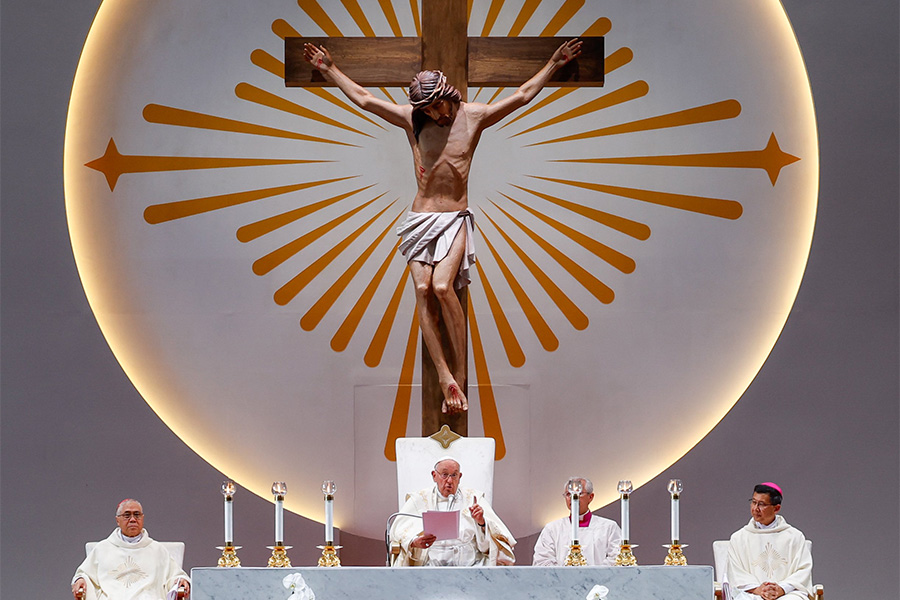
VIAJE APOSATOLICO DE SU SANTIDAD FRANCISCO A INDONESIA, PAPÚA NUEVA GUINEA, TIMOR-ORIENTAL Y SINGAPUR. SEPTIEMBRE 2024.

Puedes leer todos los documentos AQUI:

 LA MEDITACION DE LA ESPOSA