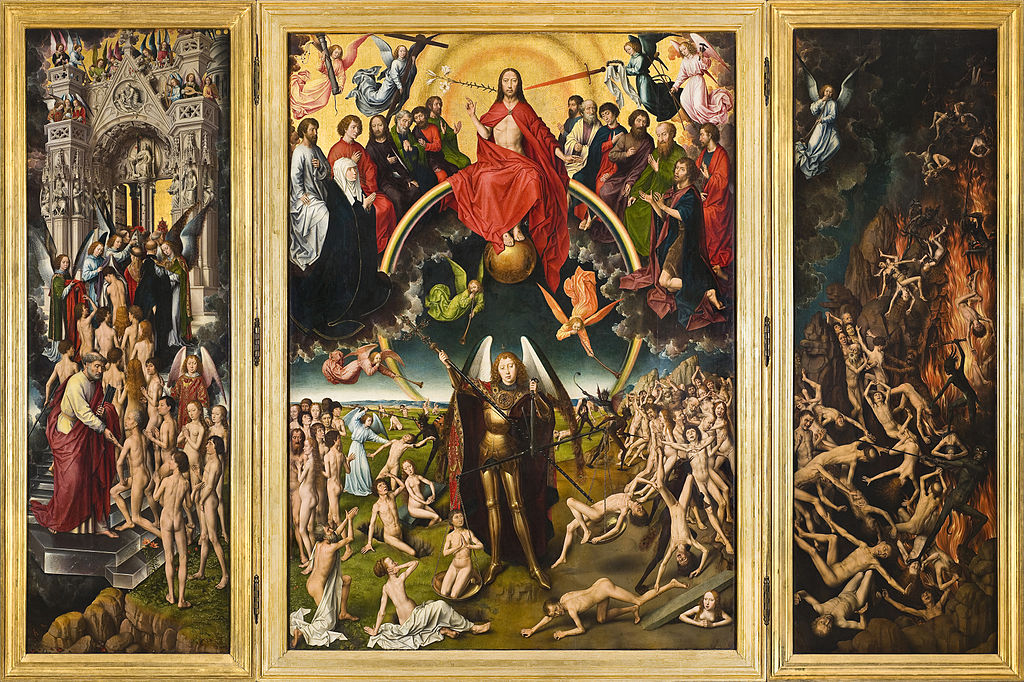
Hans Memling’s Last Judgement (c. late 1460s) National Museum, Gdańsk
In the Gospel reading the Lord speaks in apocalyptic terms of a time of great tribulation, a time when the sun will be darkened, and the moon will not give its light, and the stars will fall out of the skies. This is not just figurative language. Jesus is speaking about a time when we should be frightened. He tells us that the world will come to an end, and that we need to be ready. We need to have faith in God. He can get us through the horrible times. We need to trust in God. He will conquer our fears.
One of the saddest things of the Book of Revelations is that when people experience the horrible plagues of the end of time, many of them still refused to believe in God and trust in God. Nor did they repent of their murders, their magic potions, their unchastity, or their robberies. The fear of dying, be it from an epidemic or from any cause, seen or unforeseen, is not the real fear we need to have. The real fear we need to have is the fear of denying God when we make the final decision of our lives. The martyrs, ancient and modern, all feared denying God more than they feared what their tormentors would do to them.
Our fear is not in what others can do to us, our fear is what we can do to ourselves if we are not willing to live and die for the Lord. If we do not have a living faith, we have nothing but fear. This is not a scary movie. This is the reality of existence. If we do not confess the Lord with our lives, we will condemn ourselves to being victims of our fear. We are besieged with movies about the end of the world. They all follow the same format: people are selfish. Their selfishness leads to the destruction of the world. But a few people survive the apocalyptic events. Most of these people are also evil, but there are some good ones who fight the evil ones and live on to start a new future. Nowhere in these movies is God called upon to defend His people. Nowhere is there even a remote suggestion of building a God-fearing world. These movies are the creations of a godless media, a media who refuses to acknowledge mankind’s dependence on his Creator. We need to fight evil. We need to do battle for the Lord. «Michael, the great prince and guardian of the people will fight for us and with us,» the Book of Daniel says. «The Son of Man will come on the clouds of heaven and gather his elect from the four winds,» Jesus adds in today’s gospel. We do not fight alone. We fight for the Lord and with the Lord. If we want to know what really will happen at the end of time, we need to reread the Book of Revelations, the Apocalypse. In the Book of Revelations, God wins the battle for our world. We need to realize that God is in control of the universe. He will also be in control of our lives–if we just allow Him into our lives. We do not fight alone • AE
St. Joseph Catholic Church (Dilley, TX) • Weekend Schedule

Fr. Agustin E. (Parish Administrator)
Saturday November 16, 2024.
9.00 a.m. Holy Rosary, Funeral Mass & Grave side for + Ms. Audiencia Martinez
1.30 p.m. Funeral Mass & Grave side for + Felipe Ariza Jr.
4.00 p.m. Taller para nuevos lectores
5.00 p.m. Sacramento de la Confesión
6.00 p.m. Santa Misa.
Sunday, November 17, 2024
8.00 a.m. Sacrament of Reconciliation
8.30 a.m. Holy Mass.
10.30 p.m. Sacrament of Reconciliation.
11.00 a.m. Holy Mass.
XXXIII DOMINGO DEL TIEMPO ORDINARIO (CICLO B)
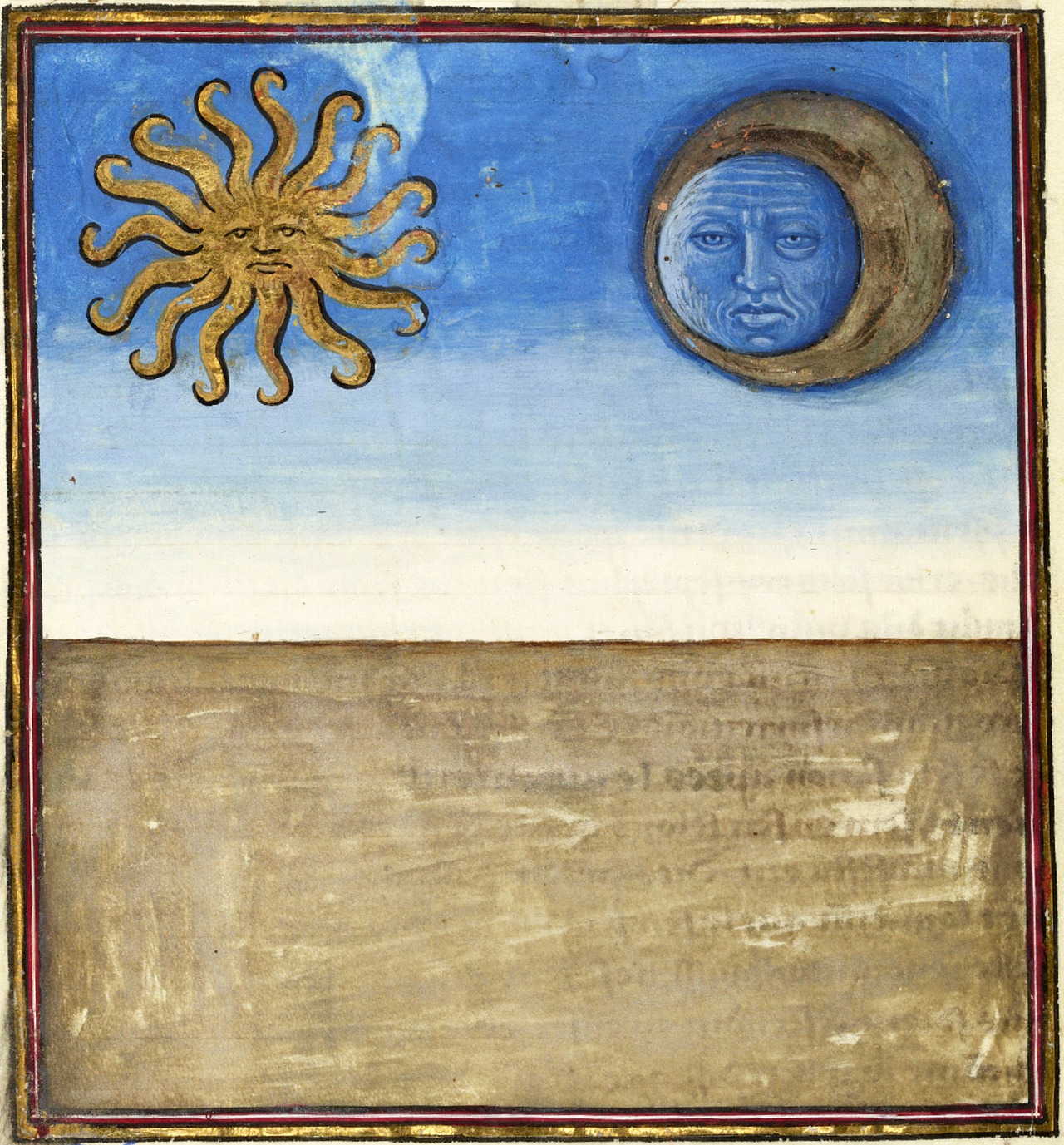
Autor anónimo, El sol y la Luna. Libro de la Vida de Nuestro Señor (1470), manuscrito iluminado, Biblioteca Bodleiana (Oxford)
Llegamos casi al final del año litúrgico y las lecturas este domingo son realmente apocalípticas: el profeta Daniel en la primera de las lecturas, y el discurso escatológico en el evangelio, ¿cómo comprender bien la Palabra de Dios?
Poco a poco iban muriendo los discípulos que habían conocido a Jesús. Los que quedaban, creían en él sin haberlo visto. Celebraban su presencia invisible en las eucaristías, pero ¿cuándo verían su rostro lleno de vida? ¿cuándo se cumpliría su deseo de encontrarse con él para siempre? Seguían recordando con amor y con fe las palabras de Jesús. Eran su alimento en aquellos tiempos difíciles de persecución. Pero ¿cuándo podrían comprobar la verdad que encerraban? ¿No se irían olvidando poco a poco? Pasaban los años y no llegaba el Día Final tan esperado, ¿qué podían pensar? El discurso apocalíptico que encontramos en el evangelio de este domingo nos da unas convicciones podrían alimentar nuestra esperanza.
Primera convicción. La historia apasionante de la Humanidad llegará un día a su fin.
El «sol» que señala la sucesión de los años se apagará. La «luna» que marca el ritmo de los meses ya no brillará. No habrá días y noches, no habrá tiempo. Además, «las estrellas caerán del cielo», la distancia entre el cielo y la tierra se borrará, ya no habrá espacio. Esta vida no es para siempre. Un día llegará la Vida definitiva, sin espacio ni tiempo. Viviremos en el Misterio de Dios.
Segunda convicción. Jesús volverá y sus seguidores podrán ver por fin su rostro deseado: «verán venir al Hijo del Hombre».
El sol, la luna y los astros se apagarán, pero el mundo no se quedará sin luz. Será Jesús quien lo iluminará para siempre poniendo verdad, justicia y paz en la historia humana tan esclava hoy de abusos, injusticias y mentiras.
Tercera convicción. Jesús traerá consigo la salvación de Dios.
Llega con el poder grande y salvador del Padre. No se presenta con aspecto amenazador. El evangelista evita hablar aquí de juicios y condenas. Jesús viene a «reunir a sus elegidos», los que esperan con fe su salvación.
Cuarta convicción. Las palabras de Jesús «no pasarán».
Nunca perderán su fuerza salvadora. Seguirán alimentando la esperanza de sus seguidores y el aliento de los pobres. En menos palabras: no caminamos hacia la nada y el vacío. No. Nos espera el abrazo con Dios y el vivir junto a Él para siempre • AE
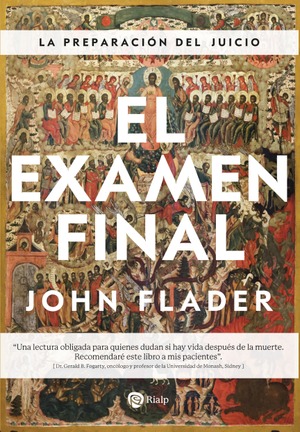
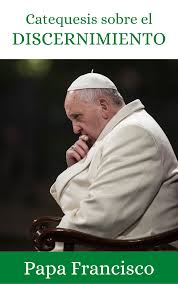
¿LEEMOS ALGO?

Música para leer
Un réquiem alemán (título original en alemán: Ein deutsches Requiem) es una composición para soprano, barítono, coro y orquesta de Johannes Brahms. Catalogada como su opus 45, se trata de una meditación sobre la vida y la muerte a partir de textos bíblicos. Se estrenó de forma parcial en la Catedral de Bremen el 10 de abril de 1868, Viernes Santo, y de forma completa en 1869 en la Gewandhaus de Leipzig. Posteriormente, se interpretó por toda Europa y Brahms empezó a ser considerado como un compositor de importancia.
Esta version fue interpretada por la Berliner Philharmoniker, dirigida por nuestro querido Herbert von Karajan, en Salzburg, en el Großes Festspielhaus en Marzo de 1978. Se trata de una auténtica joya.
 LA MEDITACION DE LA ESPOSA