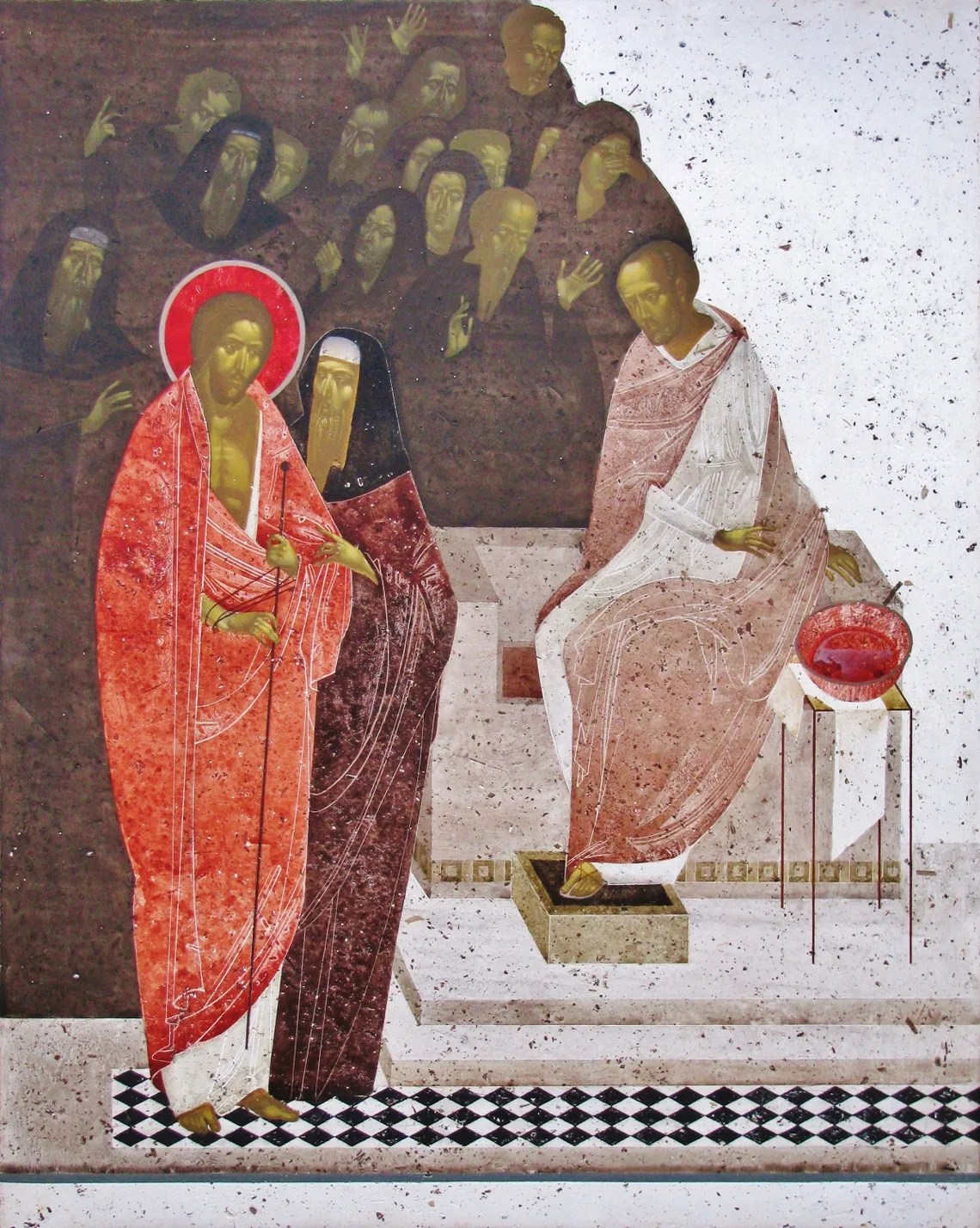
I. Demchuk, Pilate condemns Jesus (2023), print on natural canvas, Ukraine.
The highest point of today’s Gospel is the conversation between our Lord and Pilate. Pilate was the ambassador of Rome. His palace, his garb, his behavior radiated the power of the Roman Empire. Jesus was…let us say an itinerant preacher, a carpenter a quite simple person at the sight of the world. There was nothing about him that would throw a powerful man in fear. Jesus held no titles; an army did not support him. He didn’t even wear shield or carry a sword. So here was this weak and poor Jesus, standing before the powerful Pilate. Was Pilate mocking Jesus or intrigued when he asked him, Are you a king? We do not really know. But we do know Jesus’ answer: You say I am a king. For this I was born and for this I came into the world, to testify to the truth.
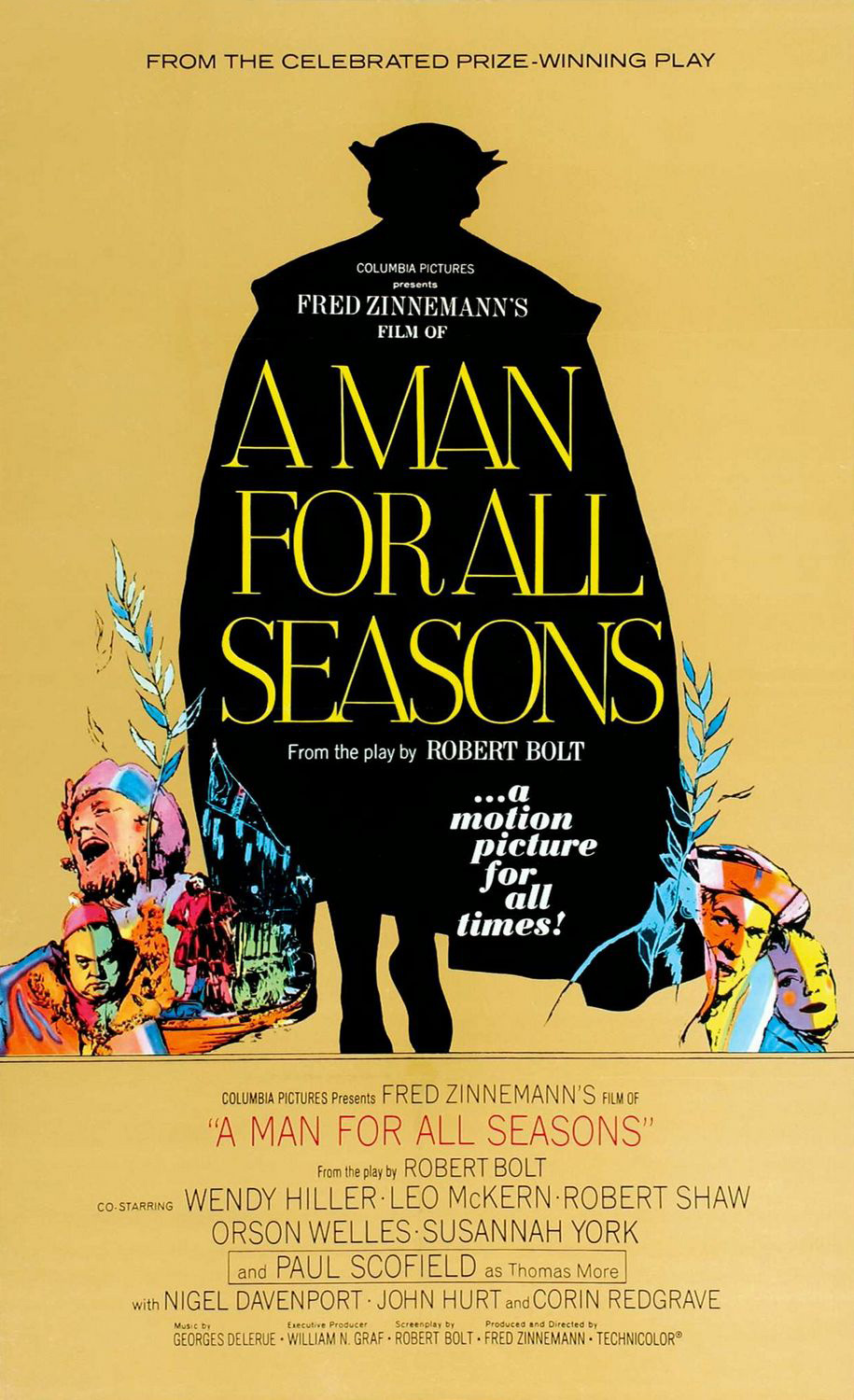
To testify to the truth. That is what true royalty is about, so this solemnity of Christ the King is a good moment to reflect about testifying to the truth, about integrity. There is a great scene in the great movie A Man for All Seasons that fits so well here. You might remember the movie; it was about the determination of St. Thomas More to stand for the faith against the persecution of King Henry VIII. Well, in the scene I am referring to, after the King made all his arguments, Thomas More said that he himself was unfit to intervene in this argument and the King should take it to Rome. Henry VIII retorted that he did not need a pope to tell him what he could or could not do. Then we come to the center point. Thomas More asks the King, “Why do you need my support?” Henry VIII replies with words we would all love to hear said about each of us, “Because, Thomas, you are honest. And what is more to the point, you are known to be honest. There are plenty in the Kingdom who support me, but some do so only out of fear and others only out of what they can get for their support. But you are different. And people know it. That is why I need your support.” In the presence of integrity, Henry VIII knew who King was and who was subject.
Thomas More, John Fisher, Maximilian Kolbe and so many others followed Jesus Christ in being people of integrity. The powerful Pilate could have Jesus tortured and killed, and he did in fact, but Pilate himself remained a prisoner because he lived a lie. And Jesus remained a King because he testified to the truth to his last breath.
Then you are a King? Pilate asked, and Jesus answered, you say that I am a king. For this was I born…to testify to the truth. This gospel, this solemnity of Christ the King reminds us that each of us was born for this same reason, to testify to the truth. And what is the truth? Jesus Christ is the truth, and the way, and the life, as we know very well…So as we leave this liturgical year, we might leave wondering, how can I enter into the kingship Christ gives me? And the Gospel gives the answer. On this last day of the church year then, let us take the time to think about our own life. How disordered has our life has been? Have we been putting too much effort in the wrong places? And let us not get discouraged, or disappointed, because we have the Shepherd watching over us, helping us on to be on the right path, caring for us and providing for us. His message is quite simple: “Put your hope on me and think about others”, that is how we will reach the kingdom of heaven at the end of our time on earth. These are the good news today • AE

St. Joseph Catholic Church (Dilley, TX) • Weekend Schedule

Fr. Agustin E. (Parish Administrator)
Saturday, November 23, 2024.
5.00 p.m. Sacramento de la Confesión
6.00 p.m. Santa Misa.
Sunday, November 24, 2024
8.00 a.m. Sacrament of Reconciliation
8.30 a.m. Holy Mass.
10.30 p.m. Sacrament of Reconciliation.
11.00 a.m. Holy Mass.
Solemnidad de Jesucristo, Rey del universo (2012)
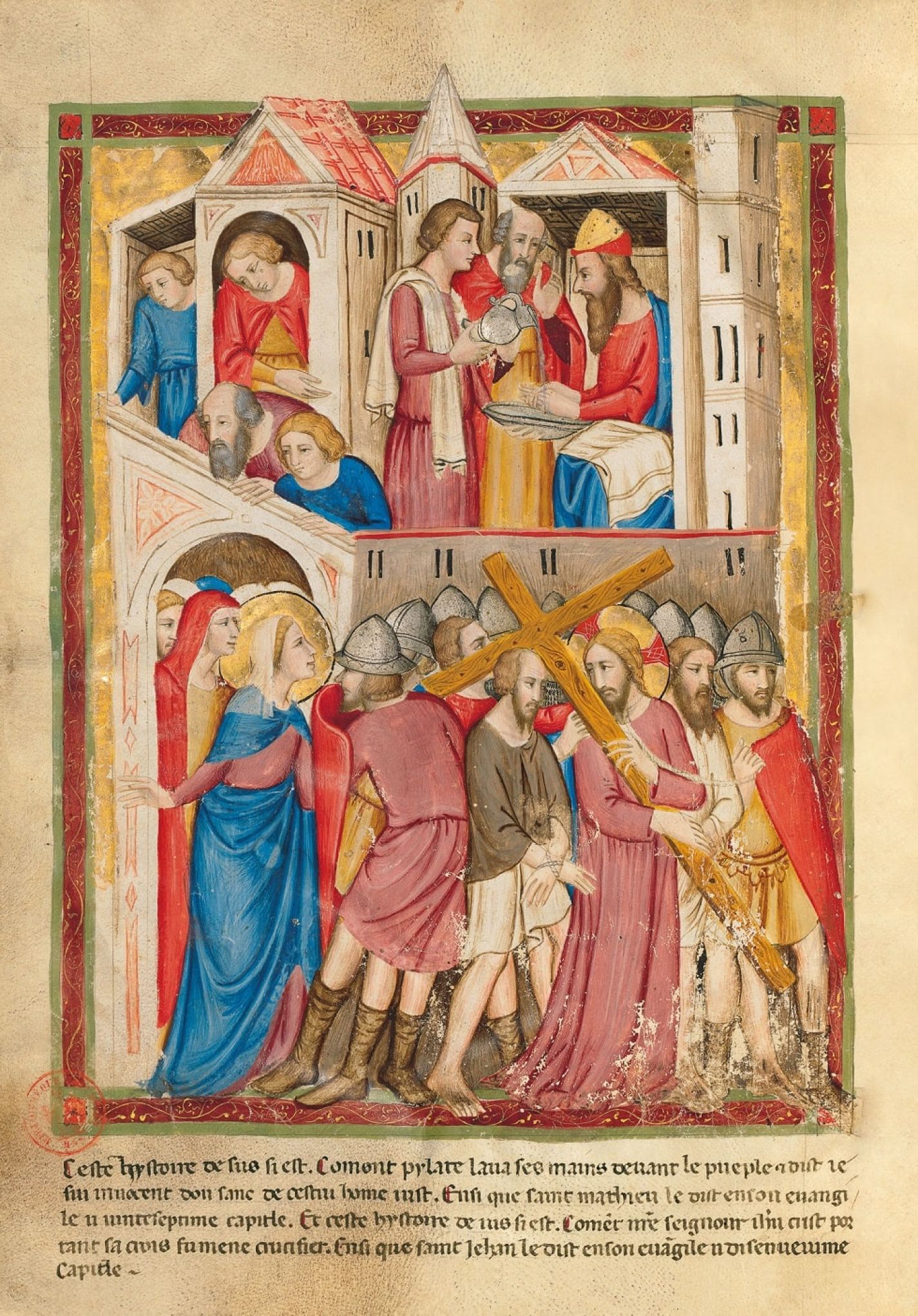
Autor anónimo, Pilatos se lava las manos; Jesús con la cruz a cuestas, Biblia moralizada de Nápoles, Biblioteca Nacional de Francia (Paris)
Y qué es la verdad? Es la gran pregunta que formula Pilatos, pero sin esperar apenas la respuesta, condena a muerte al que podía responderle. Y es que no siempre preguntamos porque no sabemos; a veces preguntamos porque no queremos saber, para despistar, pues sospechamos que hay preguntas que no tienen respuesta. A muchos interesa hoy la verdad objetiva, de ahí que otros piensen que no hay más verdad que la subjetiva, entendiendo subjetiva como individual: cada uno la suya. A esos les contestó [hermosamente] el poeta:
¿Tu verdad? No, la Verdad / y ven conmigo a buscarla / La tuya, guárdatela
De manera que la pregunta sigue en pie. Y seguirá posiblemente, mientras tengamos la firme decisión de buscarla. Esa decisión de buscar, más allá de la razón y de la ciencia: en la fe. No se trata de creer cada uno lo que le da la gana. El que cree no las tiene todas consigo, pero cree, intuye, y por eso sigue buscando con ilusión. ¿Qué significa celebrar a un Cristo Rey, vivo, interpelante, que dirige, gobierna y potencia todos los momentos de la vida? ¿Cómo se puede entender en lenguaje actual el Reino de Dios? ¡Grandes preguntas! Para muchos hablar de Cristo Rey es casi hablar de algo superado desde el compromiso de la fe. Desde el mundo actual Cristo Rey es algo, dirán, intrascendente, pues no se admite ni se da valor a un reino que no es político, ni entra en conflicto con los valores y exigencias de los reinos mundanos.
Por otra parte qué fácil es aclamar a Cristo Rey en un domingo de Ramos, en una procesión, en un momento de euforia espiritual. Lo difícil –y por ende valioso- es creer en un Cristo presente e influyente en la vida de todos los días, en un Cristo que compromete y cambia la existencia del hombre, en un Cristo exigente que pide fidelidad a los valores permanentes del evangelio. Existe también una gran contradicción: hacer mundano el reino de Cristo, que no es de este mundo. Y salta la enorme tentación de confundir el poder económico, político y social con el poder de Dios. Y pueden gastarse demasiadas fuerzas y empeños en influir en las situaciones de este mundo para hacer presente el reino de Dios.
El Señor no reinó desde los sitios privilegiados ni desde los puestos de influencia, lo hizo desde el servicio, la entrega y la humildad; lo hizo en el compromiso con los necesitados y con los desgraciados, con los pecadores y las mujeres de la vida, con los que estaban marginados en la sociedad de entonces: ciegos, leprosos, viudas. Con mucha frecuencia los cristianos pretendemos hacer un reino de Dios a nuestro gusto y medida; y de hecho construimos nuestros pequeños reinos de incienso y adoración, de admiración y marquesados. Es un engaño terrible, fruto del egoísmo humano. Cristo fue y es Rey por ser testigo de la verdad y del amor sin límites. Y nuestra vida está cargada de mentiras y desamores. No es una visión fatalista. Es realista. Asómate a algún periódico o a la red. Hoy no sirve decir “no pasa nada, vamos bien”. No. Sí pasa. Pasa mucho. Es preciso el cambio y la conversión. Vivir en cristiano es descubrir las exigencias y maravillas del reino de Dios con entrega total y confiada • AE

¿Qué vamos a leer?


 LA MEDITACION DE LA ESPOSA