The Feast of the Presentation of the Lord (2025)

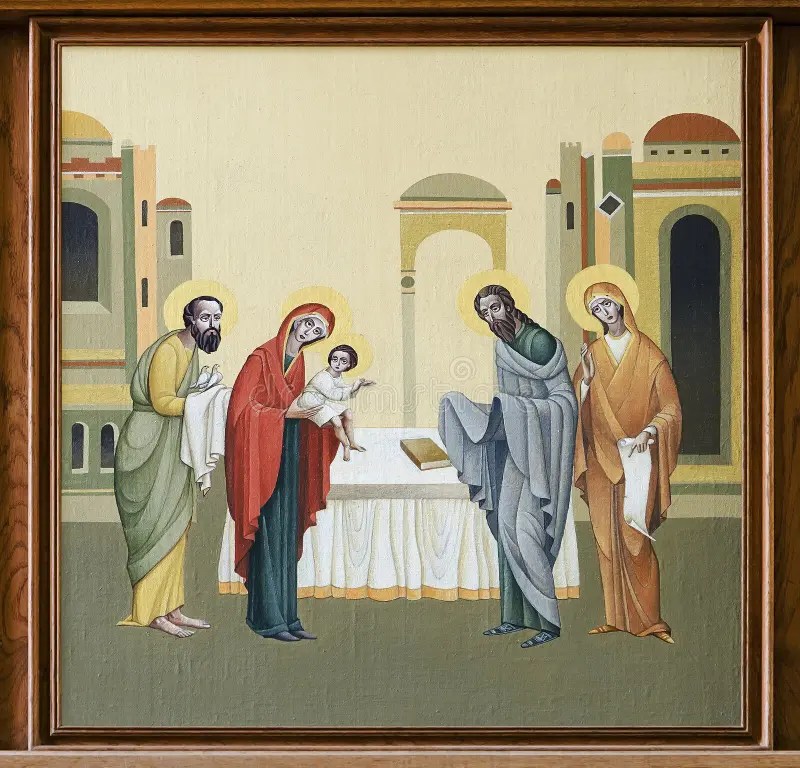
Contemporary icon depicting the Presentation of the Lord in the Temple of Jerusalem.

A Light for All Nations

This Sunday, the Church celebrates the Feast of the Presentation of the Lord, a day rich in meaning and steeped in tradition. The readings for this feast draw us into the beauty of God’s plan of salvation, reminding us of Christ’s role as the Light of the World.

The prophet Malachi (Malachi 3:1-4) speaks of the Lord’s coming as a moment of refinement and purification. Christ enters His temple not just as a child carried in His mother’s arms but as the fulfillment of centuries of waiting, the very presence of God come to dwell among His people. Psalm 24 beautifully complements this message, declaring, “Lift up your heads, O gates! … that the King of glory may come in!” Indeed, the King of glory is among us, bringing light and salvation to all who open their hearts to Him. The Letter to the Hebrews (2:14-18) offers a profound reflection on why Christ came in human flesh. By sharing in our humanity, He destroyed the power of death and became a merciful and faithful high priest. His solidarity with us is our greatest hope—He knows our struggles and walks with us in our trials. The Gospel of Luke (Luke 2:22-40) introduces us to Simeon and Anna, two faithful servants who waited patiently for the Messiah. Simeon’s hymn, the Nunc Dimittis, proclaims Jesus as “a light for revelation to the Gentiles and glory for your people Israel.” Anna, too, rejoices in the fulfillment of God’s promise, testifying to all who would listen. These figures remind us of the virtue of patient hope and the joy of recognizing God’s work in our lives.

In some countries, this feast is also known as Día de la Candelaria (Candlemas), emphasizing the connection between Christ as the Light of the World and the candles blessed in His honor. The word candela means “candle,” symbolizing how Christ’s light dispels the darkness of sin and death. As we reflect on the Presentation, let us also remember the importance of Sunday as the Lord’s Day. It is a time set apart for worship, rest, and renewal, a weekly invitation to encounter the Light of the Nations in Word and Sacrament. May we, like Simeon and Anna, seek Christ with expectant hearts and carry His light into the world. May the Light of Christ guide your path this week and always. Happy Feast of the Presentation!• AE


St. Joseph Catholic Church (Dilley, TX) • Weekend Schedule

Fr. Agustin E. (Parish Administrator)

Saturday, February 1, 2025.

5.00 p.m. Sacramento de la Confesión

6.00 p.m. Santa Misa.

Sunday, February 2, 2025

8.00 a.m. Sacrament of Reconciliation

8.30 a.m. Holy Mass.

10.30 p.m. Sacrament of Reconciliation.

11.00 a.m. Holy Mass.


Fiesta de la Presentación del Señor (2025)
Celebramos la Fiesta de la Presentación del Señor, también conocida en muchos países, como México, como el Día de la Candelaria. Este día tiene un significado profundo: recordamos cómo Jesús, siendo un niño, fue presentado en el Templo como la Luz del mundo. El término «Candelaria» viene de candela, que significa vela, un símbolo perfecto para Cristo, quien ilumina nuestras vidas y disipa toda oscuridad.

Las lecturas de esta fiesta nos ayudan a comprender mejor el mensaje de salvación que se cumple en Jesús. En el libro de Malaquías (3:1-4), se anuncia que el Señor llegará a su Templo como un fuego purificador, listo para renovar a su pueblo. El Salmo 24 nos invita a abrir las puertas de nuestro corazón con las palabras: “¡Ábranse, portones eternos, para que entre el Rey de la gloria!” Este Rey es Jesús, el Mesías esperado, quien viene para salvarnos. En la carta a los Hebreos (2:14-18), se nos recuerda que Jesús tomó nuestra misma carne para vencer a la muerte y compartir nuestras luchas. Es un mensaje lleno de esperanza: no estamos solos, porque Jesús, nuestro sumo sacerdote, camina con nosotros y entiende nuestras debilidades. En el Evangelio (Lucas 2:22-40) conocemos a dos figuras inspiradoras: Simeón y Ana. Ambos eran ancianos, pero su fe estaba más viva que nunca. Simeón, al ver al niño Jesús, proclama el hermoso himno del Nunc Dimittis: “Mis ojos han visto a tu Salvador, luz para iluminar a las naciones.” Por su parte, Ana, una profetisa que dedicó su vida a la oración, reconoce al Mesías y comparte con todos la alegría de la salvación.

Simeón y Ana nos enseñan que se puede envejecer con dignidad, clase y elegancia cuando nuestra vida está anclada en la fe. A pesar de los años, ellos vivieron con esperanza, esperando ver la luz de Dios. Su ejemplo nos invita a ser pacientes y a mantenernos firmes en la confianza de que Dios cumple sus promesas.

En este Día de la Candelaria, también es una oportunidad para reflexionar sobre la importancia del domingo como el Día del Señor. Así como Simeón y Ana dedicaron su tiempo a buscar a Dios, nosotros también estamos llamados a apartar el domingo para encontrarnos con Jesús, especialmente en la Misa, donde celebramos su presencia como la Luz que guía nuestras vidas. Que esta fiesta nos inspire a mantener viva la fe, a reconocer la luz de Cristo en nuestra vida diaria y a compartirla con los demás. Como las velas que se bendicen hoy, que nuestra vida sea un reflejo de la luz de Jesús en el mundo. Y que el Señor, la Luz de las naciones, ilumine siempre nuestro camino • AE

A. Grammatica, La Presentación de Jesús en el Templo (s. XVII), óleo sobre tela, Museo Cívico de Viterbo (Italia)


Música para leer

El Himno Nunc Dimittis: Un Canto de Paz para el Final del Día

El Nunc Dimittis, también conocido como el Cántico de Simeón, es un hermoso himno que encontramos en el Evangelio de San Lucas (2:29-32). Estas palabras fueron pronunciadas por Simeón, un hombre justo y piadoso, quien reconoció en el niño Jesús al Salvador prometido. Movido por el Espíritu Santo, Simeón proclama:

«Ahora, Señor, puedes dejar que tu siervo muera en paz, según tu palabra, porque mis ojos han visto a tu Salvador, a quien has presentado ante todos los pueblos: luz para iluminar a las naciones y gloria de tu pueblo Israel.»

En la Liturgia de las Horas, este himno se recita cada noche durante las Completas, la última oración antes de dormir. ¿Por qué? Porque el Nunc Dimittis expresa una profunda confianza en Dios y una paz interior que nos invita a entregar nuestro día y nuestra vida en sus manos. Así como Simeón pudo descansar en paz tras encontrar a Cristo, nosotros también podemos confiar en que Él vela por nosotros mientras descansamos. El Nunc Dimittis nos enseña a cerrar el día con gratitud, entregando nuestras preocupaciones y alegrías al Señor, y recordándonos que la verdadera paz se encuentra al reconocer a Jesús como la Luz que ilumina nuestra vida y nuestro camino. Que este himno sea una fuente de consuelo y esperanza cada noche, recordándonos que, en Cristo, podemos descansar en paz.



Third Sunday in Ordinary Time (Cycle C)

If you have read Victor Hugo’s great work, Les Misérables, then this number will sound familiar to you: 2-4-6-0-1. Is the prison number of the protagonist, Jean Val Jean. The antagonist, Inspector Javert, refuses to call Jean Val Jean by his name. To him he is a number, depersonalized, just one of many prisoners who by law has to be released, but who in the eyes of Javert, is not fit to have a name, just a number. There is much in our society that also depersonalizes us. For example, we are often identified by our Social Security number. This is how all the branches of the government recognize us, as well as banks, investments firms, colleges, etc. All this can easily lead us to see ourselves as just a number, one of many, depersonalized before all except our closest relatives and companions. This is not how God views us. He doesn’t see someone as human being #18,352,786,674,504. To God we are each a unique person, a unique reflection of his image and likeness, an integral part of the Body of Christ. He created each of us to have a particular role in the living, spiritual entity that is the Body of Christ on earth. St. Paul teaches this in today’s second reading. Each of us has a necessary function in the Body. No two of us are alike, no two functions in the Body are alike. We are each necessary for the victory of that Body.

When we hear this reading about how the eye needs the body and the body needs the eye, the ear needs the body and the body needs the ear, and so forth, we ask ourselves, «So what is my function in the body? What is it that I have to offer?» The reading presents general areas in the Body of Christ. Some are prophets, apostles, healers, teachers, etc. We can add, some are mothers, fathers, priests, ministers, artists, handymen, care givers, investors, service men and women. Some are health care workers, other protectors of legal rights. Some design buildings, others build them. All are different. Everyone is necessary. Together we each have our general roles in the Grand Plan, God’s plan of love for his people. Together we constitute the vehicle for God’s plan. Together we make God’s plan a reality. Together we make up the Body of Christ. None of our roles is insignificant. The Body of Christ needs every part, every person, to fulfill his or her role in life so that God’s plan can triumph over the powers of evil. None of us is number 2-4-6-0-1. To God each of us is a person. Each of us fulfills our roles in a unique distinct way.

There is much in our world that attempts to depersonalize us. There is nothing with God that turns us into just another number. That is why we can be our true selves when we are united to God. It is also why we lose our identities when we turn away from Him. Sin leads us to reject our unique identity before God. But when we are united to God, we become the unique person God created us to be, a person with a name that God knows and a reason for being that brings joy to the Body of Christ and receives life from the Body of Christ. We are children of God. In one Spirit we were baptized into one Body. This Body is not a single part but many. We are Christ’s Body and, individually, parts of it. We pray today for the courage to embrace every moment of our lives as unique members of the Body, the Body that gives each of us meaning for our existence • AE


St. Joseph Catholic Church (Dilley, TX) • Weekend Schedule

Fr. Agustin E. (Parish Administrator)

Saturday, January 25, 2025.

5.00 p.m. Sacramento de la Confesión

6.00 p.m. Santa Misa.

Sunday, January 26, 2025

8.00 a.m. Sacrament of Reconciliation

8.30 a.m. Holy Mass.

10.30 p.m. Sacrament of Reconciliation.

11.00 a.m. Holy Mass.


III Domingo del Tiempo Ordinario (Ciclo C)

G. Van den Eeckhout, Cristo en la sinagoga de Nazaret (1658), óleo sobre tela, National Gallery (Dublin)

El evangelio de este domingo, el tercero del Tiempo Ordinario es nada menos y nada más que el comienzo del evangelio de san Lucas que quiere dejarn claro cuál es la pasión que impulsa a aquel hombre, la meta de toda su actuación. Los cristianos debemos de saber en qué dirección empuja a Jesús el Espíritu de Dios, pues seguirlo es precisamente caminar en su misma dirección. Lucas describe con todo detalle lo que hace Jesús en la sinagoga de su pueblo: se pone de pie, recibe el libro sagrado, busca él mismo un pasaje de Isaías, lee el texto, cierra el libro, lo devuelve y se sienta. Todos han de escuchar con atención las palabras escogidas por Jesús, pues exponen la tarea a la que se siente enviado por Dios.

Sorprendente y maravillosamente, el texto no habla de organizar una religión más perfecta, o de implantar un culto más digno, sino de comunicar liberación, esperanza, luz y gracia a los que menos tienen, a los que más sufren. El Espíritu de Dios está en Jesús enviándolo a los pobres, orientando toda su vida hacia los más necesitados, los oprimidos, los humillados. Y justo en esta dirección hemos de trabajar sus seguidores. Ésta es la orientación que Dios, encarnado en Jesús, quiere imprimir a la historia humana. Los últimos han de ser los primeros en conocer esa vida más digna, más liberada y más dichosa, una vida que Dios quiere ya desde ahora para todos. La así llamada «opción por los pobres» que tan mala prensa ha tenido, no es un invento de unos teólogos del siglo veinte, ni algo que se puso de moda en los años posteriores al Concilio Vaticano II, y si fue así, en estos días esa idea ha sido retomada con gran fuerza por el santo Padre Francisco, que no deja de invitarnos a salir a las periferias a buscar a los que menos tienen y hacer algo por ellos. Esta opción es en realidad el Espíritu de Dios que anima la vida entera de Jesús, y que los cristianos hemos de introducir en la historia humana. Lo decía el santo padre Pablo VI: es un deber de la Iglesia ayudar a que nazca la liberación…y hacer que sea total.

No podemos anunciar a Jesucristo si no es desde la defensa de los últimos y la solidaridad con los excluidos. Si lo que hacemos y proclamamos desde la Iglesia de Jesús no es captado como algo bueno y liberador por los que más sufren, ¿qué clase de evangelio estamos predicando? ¿A qué Jesús estaríamos siguiendo? ¿Qué espiritualidad estamos promoviendo? Dicho con otras palabras: Hoy por hoy ¿Estamos caminando en la misma dirección que Jesús? Esta es la gra pregunta que viene como consecuencia del evangelio de este domingo • AE


¿+ Lecturas?

(Tú, que ya te revolviste incómodo en tu silla, pensando: «El fader anda como muy hijo de Fidel Castro, nieto de Mao-Tse-Tung y simpatizando con López-Obrador», échale, en serio, un ojo, a este texto. Pocos personajes tan observantes de la ortodoxia católica como el cardenal Mülller)


Second Sunday in Ordinary Time (Cycle C)

Jan van Eyck, The Arnolfini Portrait (1434), oil on oak, National Gallery (London)

We often refer to marriage preparation courses as Pre-Cana meetings. The name is an encouragement to the bride and groom to enter into a relationship where the Lord is present as He was at Cana. The sacrament of matrimony elevates marriage from a civil affair to one of great dignity. A couple who celebrates the sacrament of marriage celebrates the union of Jesus’ love to their love for each other. The more they grow in love, the closer they come to the Lord. The closer they come to the Lord, the closer they come to each other. God can and does show His Presence in their marriage. Others sense the presence of God in their relationship, so there is a great dignity in the sacrament of matrimony. It is the dignity of people of God making His Love real for others. We have all witnessed many wonderful examples of sacramental marriages. We all have witnessed husbands who have devoted their retired years to taking care of their wives, and wives their husbands. We have also seen so many young husband and wives who understand the hurt their spouse suffered as a child or a teen and who care for them often at the expense of their own desires and even needs. For all this, today we give thanks!

The essence of a sacramental marriage is forming a life of giving, a life of true love. The essence of a sacramental marriage is the very presence of Jesus Christ. It is a wonderful paradox in life that the more someone takes, the less he or she has and the more someone gives, the more he or she has. Those who are really married understand this. Having someone to give to is infinitely more important and infinitely more mature than having someone from whom a person can take.

The great gift of marriage is that the married are continually challenged with ways to love sacrificially. Occasions present themselves daily whether it is doing the shopping, changing the baby, getting the child to soccer or dance, working harder to provide better, taking the cars in for an oil change, or simply, getting off the couch to play with the kids. All are expressions of sacrificial love which are the routine of marriage. All are ways of living the sacrament of marriage. Let us not forget this, and also let us be so grateful for our parents. I was well loved because my parents loved each other with the love of Jesus Christ. Young men, you want to be a good father? Love your wife! Young women, you want to be a good mother? Love your husband! Those of us who are not married need you who are married to continue to be loving husbands and wives. We need to experience the Love of the Lord in your way of life, your sacrament of matrimony.

Today we celebrate the epiphany of Christ at the Wedding Feast of Cana and the Epiphanies of the Lord in your marriages • AE


St. Joseph Catholic Church (Dilley, TX) • Weekend Schedule

Fr. Agustin E. (Parish Administrator)

Saturday, January 18, 2025.

5.00 p.m. Sacramento de la Confesión

6.00 p.m. Santa Misa.

Sunday, January 19, 2025

8.00 a.m. Sacrament of Reconciliation

8.30 a.m. Holy Mass.

10.30 p.m. Sacrament of Reconciliation.

11.00 a.m. Holy Mass.


II Domingo del Tiempo Ordinario (Ciclo C)

Winifred Knights, Las Bodas de Caná (1923), óleo sobre tela, Te Papa Tongarewa (Museo Nacional de Nueva Zelanda).

En aquel tiempo hubo una boda en Galilea». Así comienza el evangelio de este domingo, el segundo del tiempo ordinario, que nos cuenta la primera intervención pública de Jesús, intervención que ¡ay! no tiene nada de religioso, de hecho ni siquiera sucede en un lugar sagrado. Jesús inicia su vida pública echando la mano una fiesta de bodas que podía haber terminado muy mal. El evangelio nos dice que fue en medio de una de estas bodas donde Jesús hizo su primer signo, el signo que nos ayudará a entender el sentido profundo de toda su misión salvadora. El evangelista no habla de milagros. A los gestos sorprendentes que realiza Jesús los llama simplemente signos. Quizá no quiere que sus lectores se queden en lo que puede haber de prodigioso en su actuación sino a que descubran -descubramos- su significado más profundo.

La madre de Jesús también está presente, y atenta a los detalles de la fiesta: se da cuente de que no les queda vino, y se lo indica a su hijo. Tal vez los novios, de condición humilde, se han visto desbordados por los invitados. María está preocupada. La fiesta está en peligro. ¿Cómo puede terminar una boda sin vino? Ella confía en Jesús. Entre los campesinos de Galilea el vino era un símbolo muy conocido de la alegría y del amor. Lo sabían todos. Si en la vida falta la alegría y falta el amor, ¿en qué puede terminar la convivencia? María no se equivoca. Jesús interviene para salvar la fiesta proporcionando vino abundante y de excelente calidad.

Este gesto de Jesús nos ayuda a captar la orientación de su vida entera y el contenido fundamental de su proyecto: extender el reino de Dios. Mientras los dirigentes religiosos y los maestros de la ley se preocupaban de la religión, Jesús se dedica a hacer más humana y llevadera la vida de la gente. Los evangelios presentan a Jesús concentrado no en el culto, ni en los preceptos ni en las normas del templo, sino en la vida de las personas. Jesús se dirige no solo a personas religiosas y piadosas, sino que especialmente se acerca a quienes se han quedado decepcionados o lejos, aquellos que sienten necesidad de vivir de manera más digna y dichosa pero no saben cómo hacerlo. ¿Por qué lo hace así? Porque Jesús tiene muy clara su misión, porque quiere que todos conozcan a su Padre, que se salven y lleguen al conocimiento de la verdad; que confíen en que se puede vivir con alegría y paz interiores. ¿Cómo podemos pretender seguir a Jesús sin cuidar más entre nosotros la alegría y el amor?, ¿qué puede haber más importante que esto en la Iglesia y en el mundo?, ¿hasta cuándo podremos conservar en tinajas de piedra una fe triste y aburrida?, ¿para qué sirven todos nuestros esfuerzos, si no somos capaces de introducir amor en nuestra religión? Nada puede ser más triste que decir de una comunidad cristiana: no les queda vino • AE


+ lEcTURaS


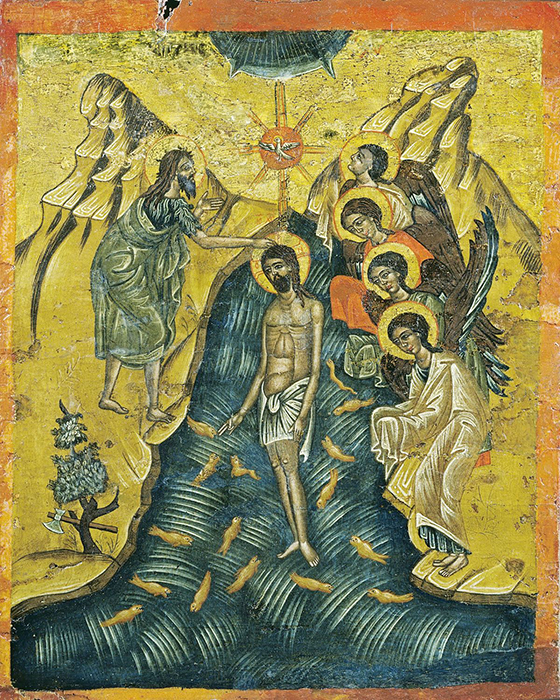
The Baptism of the Lord (2024)

Anonymous artist, The Baptism of the Lord (Epiphany), XVII century), The Victoria and Albert Museum (London)

The Feast of the Baptism of the Lord speaks eloquently to us of two things: commitment and Spirit. First of all, we must be committed to the Kingdom of God. The Olympic athlete does not take a break from training because he or she has made a commitment to perfect his or her abilities. And the dedicated professional, doctor, lawyer, nurse, priest, educator, etc., never completes his or her education because he or she must continue to develop along with the advances in his or her profession. The sincere Christian must be thoroughly committed to the Kingdom of God. This means that we must grow in our faith life through prayer and study. Prayer time is not something that we just add on to our day. It has to be fundamental to our day. When we think about what we are going to do tomorrow or any day of the week, we have to first consider making the time we need to be united with Christ in prayer. For some families that might mean fifteen to thirty minutes before the kids get up or after the children go to sleep. For all of us that means making a prayer schedule and keeping it. The sincere Christian must be so thoroughly committed to the Kingdom of God that he or she is capable of defending the faith when challenged by those who would destroy the body of Christ. This challenge is most often caused by the hedonists mentality which dominates so many aspects of our society. Hedonism destroys the Body of Christ because its main focus is selfishness. It proposes that we do what is most pleasing for our bodies here and now without considering our responsibility to others or even to ourselves. It is a rather immature mentality, one that is only interested in immediate pleasure. The committed Christian ascertains the effects of an action upon his or her sharing in the Life of Christ. He or she is not concerned with what a majority of people say. He or she is concerned with the effects of an action upon the spread of the Kingdom.

When John baptized Jesus, his human nature received the Holy Spirit. Of course, His Divine nature was always united to the Holy Spirit, but now His human nature was raised up, if you will, spiritualized. As his human nature received the Holy Spirit, so too does the human nature of all who accept the baptism of the Lord. Baptism gives life, the life of God. We often refer to this as the Indwelling of the Holy Trinity. Think about this. We are no longer just the rational part of creation. We are spiritualized. We are sons and daughters of God. We have dignity, the dignity of the One about whom the voice from heaven said at his baptism by John, “This is my son, my beloved, in whom I am well pleased.” Our Father in heaven says this about each of us when we live our commitment to the Lord. Called to commitment and led by the Spirit, which is the combo we need. Daily. Determined to live the Christian life • AE


St. Joseph Dilley, TX • Weekend Schedule

Fr. Agustin E. (Parish Administrator)

Saturday, January 11, 2025.

5.00 p.m. Sacramento de la Confesión

6.00 p.m. Santa Misa.

Sunday, January 12, 2025

8.00 a.m. Sacrament of Reconciliation

8.30 a.m. Holy Mass.

10.30 p.m. Sacrament of Reconciliation.

11.00 a.m. Holy Mass.


El Bautismo del Señor (2024)

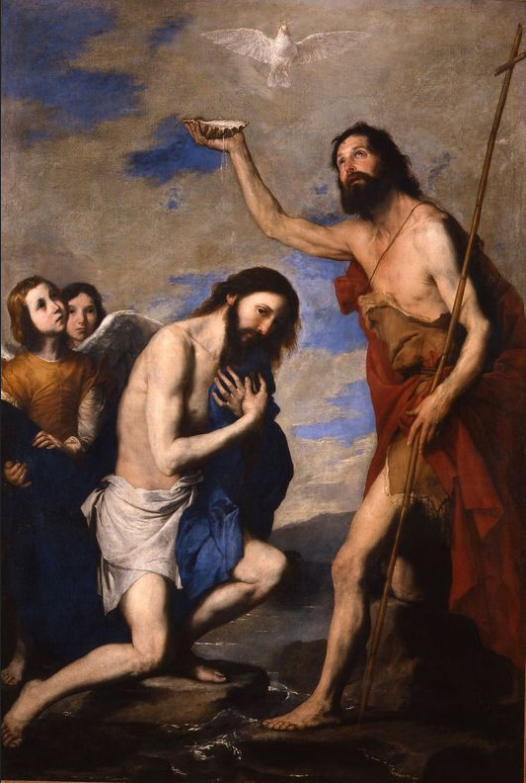
José de Ribera, El Bautismo de Cristo (1643), óleo sobre tela, Museo de Bellas Artes de Nancy (Francia)

Jesús vivió en el Jordán una experiencia que marcó para siempre su vida. No se quedó al lado del Bautista. Tampoco volvió a su trabajo en la aldea de Nazaret, donde probablemente había vivido hasta ese momento. Después del bautizo en el Jordán comenzó a recorrer los caminos de Galilea anunciando la Buena Noticia de Dios. Como es natural, los evangelistas no pueden describir lo que ha vivido Jesús en su intimidad, pero han sido capaces de recrear una escena conmovedora para sugerirlo. Está construida con rasgos de hondo significado. Los cielos se rasgan y ya no hay distancias; Dios se comunica íntimamente con Jesús. Se oye una voz venida del cielo: Tú eres mi hijo querido. En ti me complazco.

De esta experiencia brotan dos actitudes que Jesús vivió y trató de contagiar a todos: confianza increíble en Dios y docilidad. Jesús confía en Dios de manera espontánea. Se abandona a él sin recelos ni cálculos. No vive nada de forma forzada o artificial. Confía en Dios. Se siente hijo querido. Por eso enseña a todos a llamarle a Dios Padre. Le apena la fe pequeña de sus discípulos. Con esa fe raquítica no se puede vivir. Les repite una y otra vez: No tengan miedo. Confíen. Toda su vida la pasó infundiendo confianza en Dios. Y al mismo tiempo Jesús vive en una actitud de docilidad total a Dios. Nada ni nadie le apartará de ese camino. Como hijo bueno, busca ser la alegría de su padre. Como hijo fiel, vive identificándose con él, imitándole en todo.

En tiempos de crisis de fe, o de mas oscuridad, o se obstáculos en el camino, no hay que perderse en lo accesorio, en lo accidental, o en lo secundario. Hay que cuidar lo esencial: la confianza total en Dios, y la docilidad humilde a lo que Él va diciendo -comunicando- a través de su Palabra, de la liturgia, de la gente con la que nos relacionamos ¡de lo que sucede a diario! Todo lo demás viene después • AE


lECtUrAS iNVernaLeS


The Solemnity of the Epiphany of the Lord (2025)

Anonymous artist, Adoration of the Magi (c. 744), low relief of the altar of Duke Rachis, Cividale del Friuli (Italy).

There is message that is fundamental to the Epiphany that we might not reflect on as we should. We hear this message in today’s second reading. St. Paul speaks about a great mystery that has been revealed. The mystery is simply this: «the Gentiles are coheirs with the Jews, members of the same body, and copartners of the promise of Christ in the gospel.»

The wise men came from the East. They were pagan astrologers called to the manger, called to faith. Their journey is our journey, the journey of people throughout the world and throughout history being called to the manger, being called to faith. The Epiphany is the celebration of our being included in the Mystery of Jesus Christ. And not just included, more than included. The Epiphany is the celebration of our being equal to the very people chosen to be the physical ancestors of the human nature of our Lord. This was certainly difficult for the Jewish people of the first century to understand. They normally referred to those who were not Jews, the Gentiles, as dogs. Yes: dogs. It was mind overwhelming for them to think that God would consider the Gentiles their equals. The Jews were the chosen people. Would God include others in His Plan for their salvation? Well, Yes! And the Epiphany is telling us that this was always God’s plan! He never intended to be the God for only one portion of mankind. Even more, all people would be co-heirs of the Grace of Christ. It was difficult for Jewish Christians to buy into the message of the Epiphany. It is also difficult for many of us. When we envision the birth of the Lord, we tend to see him in the viewpoint of our own frame of reference. Most of the pictures of Mary and Jesus are from European painters. Mary is often a fair skinned girl with a bouncing, blue-eyed baby. But Jesus and Mary were not Europeans, not even Italian (as hard as that is to believe!). Mary and Jesus were Semitic. There is a certain arrogance that many Catholics have that is evident when they look down on people who are not from their culture. So, this beautiful and luminous feast of the Epiphany is telling us that African Catholics are as Catholic as Asian Catholics and European Catholics and all Catholics.  We Catholics do not have the right to assume a spiritual superiority over any members of our faith whose background may be different than ours, or whose history in the Church might be shorter than ours. If we are intolerant of others, then others will be denied seeing his presence in us. Spiritual arrogance, whether that of ancient pharisees or modern ones, hides the presence of the Lord.  

The word Epiphany means a showing or manifestation of the Lord. He was first shown to the wise men; astrologers whose faith guided them to Bethlehem. We need to show Him to all people seeking the spiritual body where they can be one with God • AE


Solemnidad de la Epifania del Señor (2024)

G. David, La Adoración de los Magos (1515), óleo sobre tela, National Gallery of Art (Londres)

Llegaron ya los reyes y eran tres
Melchor, Gaspar y el negro Baltazar
Arropa y miel le llevarán
Y un poncho blanco de alpaca real

Llegaron ya los reyes y eran tres
Melchor, Gaspar y el negro Baltazar
Arropa y miel le llevarán
Y un poncho blanco de alpaca real

Changos y chinitas muévanse
Que ya Melchor, Gaspar y Baltazar
Todos los regalos dejarán
Para jugar mañana al despertar

El niño Dios muy bien agradeció
Comió la miel y el poncho lo abrigo
Y fue después que los miró
Y a medianoche el Sol relumbro

¿Estamos atrofiados para descubrir a Dios? ¡Es la gran pregunta de hoy, 2025! El hombre contemporáneo no es que sea ateo, es quizá que se ha hecho incapaz de Dios. Cuando un hombre o una mujer sólo busca o conoce el amor bajo formas degeneradas y cuando su vida está movida exclusivamente por intereses egoístas de beneficio o ganancia, algo se seca en su corazón. Cuántos viven hoy un estilo de vida que les abruma y empobrece. Envejecidos prematuramente, endurecidos por dentro, sin capacidad de abrirse a Dios por ningún resquicio de su existencia, caminan por la vida sin la compañía interior de nadie. A. Delp (ejecutado por los nazis, por cierto), veía en este endurecimiento interior el mayor peligro para el hombre moderno: «Entonces deja el hombre de alzar hacia las estrellas las manos de su ser. La incapacidad del hombre actual para adorar, amar, venerar, tiene su causa en su desmedida ambición y en el endurecimiento de la existencia». Esta incapacidad para adorar a Dios se ha apoderado también de muchos creyentes que sólo buscan un Dios útil. Sólo les interesa un Dios que sirva para sus proyectos privados o sus programas sociopolíticos. Dios queda así convertido en un artículo de consumo del que podemos disponer según nuestras conveniencias e intereses. Pero Dios es otra cosa. Dios es Amor infinito, encarnado en nuestra propia existencia. Y ante ese Dios, lo primero es adoración, júbilo, acción de gracias. Cuando olvidamos esto el cristianismo corre peligro de convertirse en un esfuerzo gigantesco de humanización y la Iglesia en una institución siempre tensa, siempre agobiada, siempre con la conciencia de no lograr el éxito moral por el que lucha y se esfuerza.

Pero la fe cristiana, antes que nada, es descubrimiento de la Bondad de Dios, experiencia agradecida de que sólo Dios salva. El gesto de los Magos ante el Niño de Belén expresa la actitud que todos los creyentes deberíamos tener: búsqueda, aunque sea cansada. Dios existe. Está ahí, en el fondo de nuestra vida. Somos acogidos por Él. Quizá no sabemos cómo será el camino, pero podemos vivir con confianza ante el misterio. Ante un Dios del que sólo sabemos que es Amor, no cabe sino el gozo, la adoración y la acción de gracias, ¡justo como los Magos! • AE