

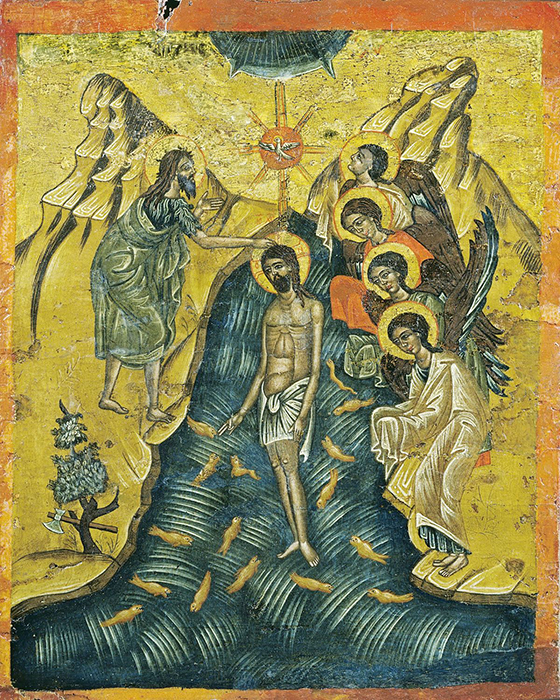
Anonymous artist, The Baptism of the Lord (Epiphany), XVII century), The Victoria and Albert Museum (London)
The Feast of the Baptism of the Lord speaks eloquently to us of two things: commitment and Spirit. First of all, we must be committed to the Kingdom of God. The Olympic athlete does not take a break from training because he or she has made a commitment to perfect his or her abilities. And the dedicated professional, doctor, lawyer, nurse, priest, educator, etc., never completes his or her education because he or she must continue to develop along with the advances in his or her profession. The sincere Christian must be thoroughly committed to the Kingdom of God. This means that we must grow in our faith life through prayer and study. Prayer time is not something that we just add on to our day. It has to be fundamental to our day. When we think about what we are going to do tomorrow or any day of the week, we have to first consider making the time we need to be united with Christ in prayer. For some families that might mean fifteen to thirty minutes before the kids get up or after the children go to sleep. For all of us that means making a prayer schedule and keeping it. The sincere Christian must be so thoroughly committed to the Kingdom of God that he or she is capable of defending the faith when challenged by those who would destroy the body of Christ. This challenge is most often caused by the hedonists mentality which dominates so many aspects of our society. Hedonism destroys the Body of Christ because its main focus is selfishness. It proposes that we do what is most pleasing for our bodies here and now without considering our responsibility to others or even to ourselves. It is a rather immature mentality, one that is only interested in immediate pleasure. The committed Christian ascertains the effects of an action upon his or her sharing in the Life of Christ. He or she is not concerned with what a majority of people say. He or she is concerned with the effects of an action upon the spread of the Kingdom.
When John baptized Jesus, his human nature received the Holy Spirit. Of course, His Divine nature was always united to the Holy Spirit, but now His human nature was raised up, if you will, spiritualized. As his human nature received the Holy Spirit, so too does the human nature of all who accept the baptism of the Lord. Baptism gives life, the life of God. We often refer to this as the Indwelling of the Holy Trinity. Think about this. We are no longer just the rational part of creation. We are spiritualized. We are sons and daughters of God. We have dignity, the dignity of the One about whom the voice from heaven said at his baptism by John, “This is my son, my beloved, in whom I am well pleased.” Our Father in heaven says this about each of us when we live our commitment to the Lord. Called to commitment and led by the Spirit, which is the combo we need. Daily. Determined to live the Christian life • AE

St. Joseph • Dilley, TX • Weekend Schedule

Fr. Agustin E. (Parish Administrator)
Saturday, January 11, 2025.
5.00 p.m. Sacramento de la Confesión
6.00 p.m. Santa Misa.
Sunday, January 12, 2025
8.00 a.m. Sacrament of Reconciliation
8.30 a.m. Holy Mass.
10.30 p.m. Sacrament of Reconciliation.
11.00 a.m. Holy Mass.
El Bautismo del Señor (2024)
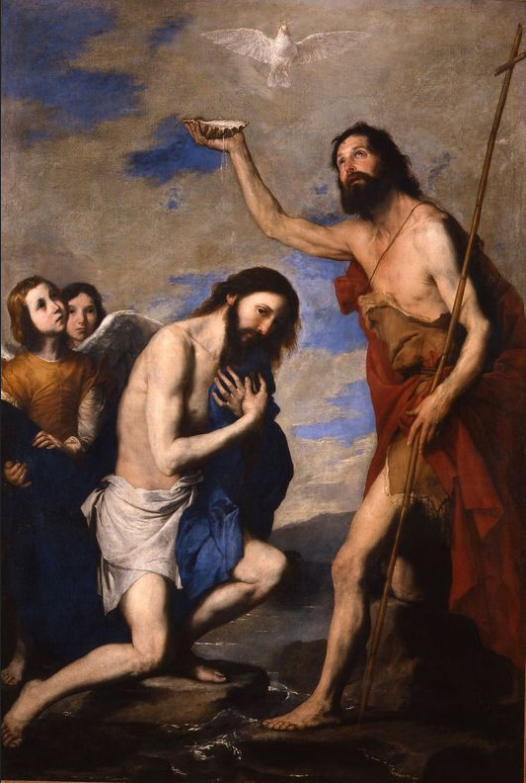
José de Ribera, El Bautismo de Cristo (1643), óleo sobre tela, Museo de Bellas Artes de Nancy (Francia)
Jesús vivió en el Jordán una experiencia que marcó para siempre su vida. No se quedó al lado del Bautista. Tampoco volvió a su trabajo en la aldea de Nazaret, donde probablemente había vivido hasta ese momento. Después del bautizo en el Jordán comenzó a recorrer los caminos de Galilea anunciando la Buena Noticia de Dios. Como es natural, los evangelistas no pueden describir lo que ha vivido Jesús en su intimidad, pero han sido capaces de recrear una escena conmovedora para sugerirlo. Está construida con rasgos de hondo significado. Los cielos se rasgan y ya no hay distancias; Dios se comunica íntimamente con Jesús. Se oye una voz venida del cielo: Tú eres mi hijo querido. En ti me complazco.
De esta experiencia brotan dos actitudes que Jesús vivió y trató de contagiar a todos: confianza increíble en Dios y docilidad. Jesús confía en Dios de manera espontánea. Se abandona a él sin recelos ni cálculos. No vive nada de forma forzada o artificial. Confía en Dios. Se siente hijo querido. Por eso enseña a todos a llamarle a Dios Padre. Le apena la fe pequeña de sus discípulos. Con esa fe raquítica no se puede vivir. Les repite una y otra vez: No tengan miedo. Confíen. Toda su vida la pasó infundiendo confianza en Dios. Y al mismo tiempo Jesús vive en una actitud de docilidad total a Dios. Nada ni nadie le apartará de ese camino. Como hijo bueno, busca ser la alegría de su padre. Como hijo fiel, vive identificándose con él, imitándole en todo.
En tiempos de crisis de fe, o de mas oscuridad, o se obstáculos en el camino, no hay que perderse en lo accesorio, en lo accidental, o en lo secundario. Hay que cuidar lo esencial: la confianza total en Dios, y la docilidad humilde a lo que Él va diciendo -comunicando- a través de su Palabra, de la liturgia, de la gente con la que nos relacionamos ¡de lo que sucede a diario! Todo lo demás viene después • AE

lECtUrAS iNVernaLeS

 LA MEDITACION DE LA ESPOSA