Eight Sunday in Ordinary Time (Cycle C)

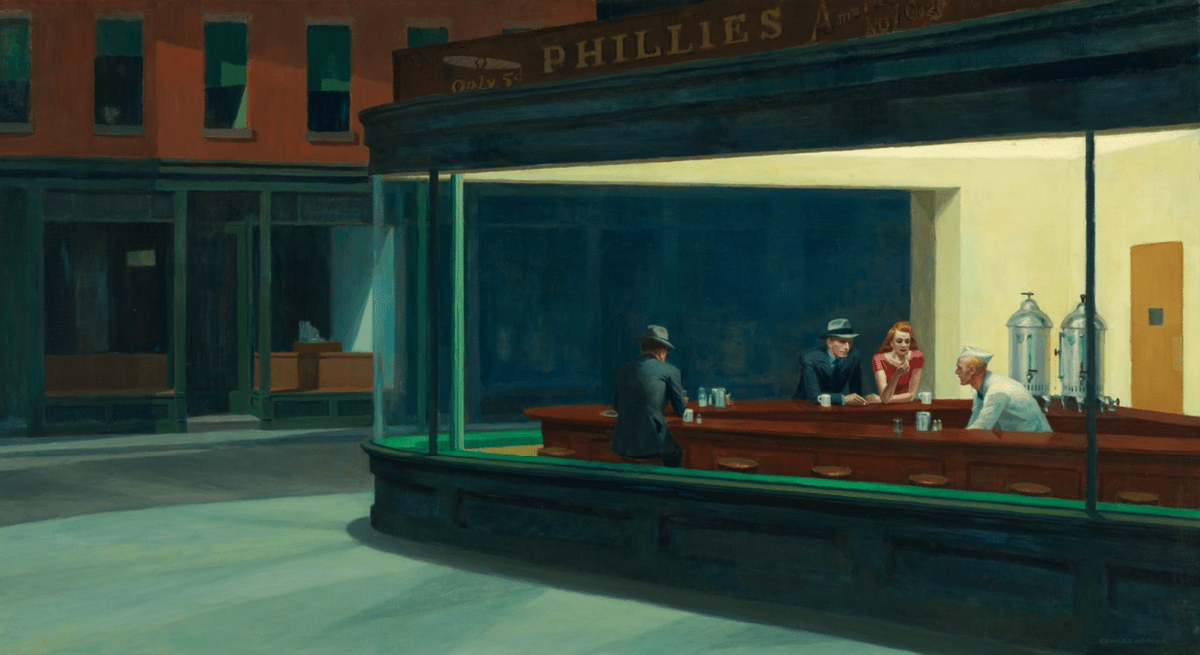
E. Hopper, Nighthawks (detail) (1942) oil on canvas, Art Institute of Chicago

There is a scene in Dostoevsky’s The Brothers Karamazov where Father Zosima, the elder, speaks of the power of the spoken word: «A word is a great thing, it can bring life, it can destroy, it can set the heart on fire.» The Gospel this Sunday, taken from Luke 6:39-45, brings us into a similar reflection. Jesus reminds us that the mouth speaks from the abundance of the heart. If the heart is filled with truth, love, and grace, its words will bear fruit. But if it harbors resentment, pride, or hypocrisy, its speech will betray it. The Book of Sirach (27:4-7) gives us a striking image: just as a sieve separates the husks from the grain, so too do words reveal what is truly within a person. Our speech is never accidental; it is the overflow of what lives deep inside us. This is not just a warning but an invitation. If we want our words to bring life, we must cultivate our hearts with the wisdom of God.

One of the great tragedies of modern society is how speech has become careless, divisive, and at times even destructive. We live in an age where words are thrown like stones, whether in personal conversations or in the anonymity of the digital world. And yet, the Church has always seen speech as a sacred act. St. John Paul II, in his apostolic letter Tertio Millennio Adveniente, spoke of the need for a purification of memory, a renewal of the way we speak about one another, so that history may be marked by reconciliation rather than division. If this is true on a large scale, it is even more urgent in our personal lives.

Consider the Requiem by Gabriel Fauré, one of the most serene and hopeful compositions ever written on death. Unlike other requiems, which emphasize fear and judgment, Fauré’s piece is filled with gentleness and light. The music itself speaks of trust in God’s mercy, of a soul that finds peace rather than terror in the final judgment. This is what happens when the heart is purified: even in the face of death, it can sing a song of hope. Our words should follow the same path—not words of condemnation, but of clarity, truth, and love.

Jesus warns against hypocrisy: «How can you say to your brother, ‘Let me remove the splinter from your eye,’ while you yourself do not see the beam in your own eye?» This is not simply an accusation; it is a call to humility. We are all tempted to judge others without first allowing God to heal us. The saints understood this deeply. St. Francis of Assisi, in his famous prayer, did not ask for the ability to correct others, but to be an instrument of peace, to console rather than to be consoled, to understand rather than to be understood. Words that bring life come from a heart that has been touched by grace.

In the end, the question we must ask ourselves is simple: what do our words say about our hearts? Do they reveal a spirit shaped by the Gospel? Do they build up the Body of Christ, or do they tear it down? Just as a good tree produces good fruit, so too does a heart nourished by God’s presence produce words that give life. As we enter into this Sunday’s liturgy, let us ask for the grace to let our words be purified. May they be words that heal, words that strengthen, words that reflect the mercy and truth of Christ. For in the end, our words will not just be a testimony to others—they will be the measure by which we stand before God • AE

St. Joseph Catholic Church (Dilley, TX) • Weekend Schedule

Fr. Agustin E. (Parish Administrator)

Saturday, March 1, 2025.

5.00 p.m. Sacramento de la Confesión

6.00 p.m. Santa Misa.

Sunday, March 2, 2025

8.00 a.m. Sacrament of Reconciliation

8.30 a.m. Holy Mass.

10.30 p.m. Sacrament of Reconciliation.

11.00 a.m. Holy Mass.


VIII Domingo del Tiempo Ordinario (Ciclo C)
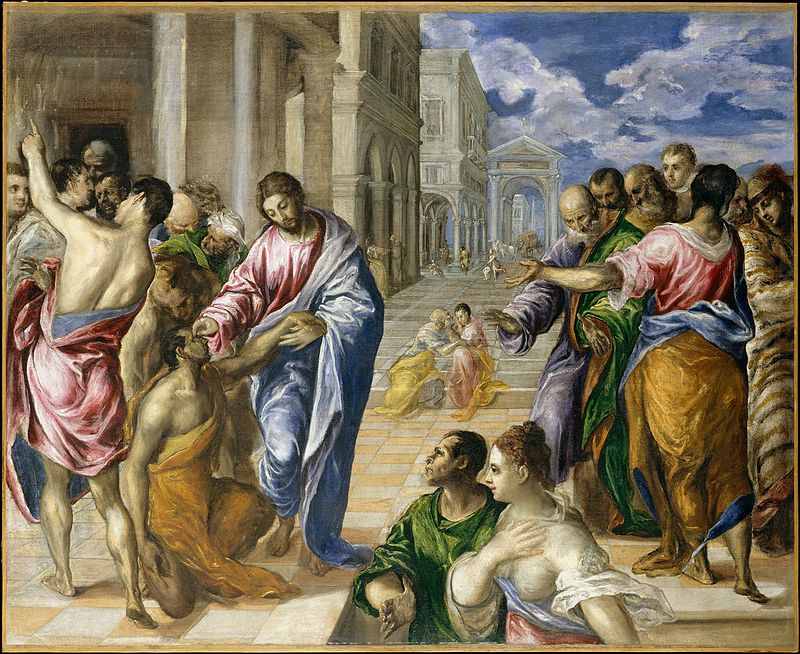
En este cuadro de El Greco titulado La curación del ciego la luz y la sombra juegan un papel esencial. No solo se trata de la sanación física, sino de un paso de la oscuridad a la claridad, de la ceguera a la visión verdadera. Es una escena profundamente evangélica, que nos recuerda las palabras de Jesús en el Evangelio de este domingo: «¿Acaso puede un ciego guiar a otro ciego? ¿No caerán los dos en un hoyo?» (Lc 6,39).

El Evangelio de Lucas nos invita a la autoconciencia y a la humildad antes de querer corregir a los demás. Jesús nos habla de la viga en nuestro ojo antes de señalar la paja en el ojo ajeno. Es un llamado a la autenticidad y a la conversión sincera. Si no cuidamos nuestro propio corazón, si no examinamos nuestras propias fallas, terminaremos guiando mal a otros, cayendo nosotros mismos en el hoyo de la hipocresía y la soberbia. El libro del Eclesiástico lo confirma con una imagen agrícola: «El fruto revela cómo ha sido cultivado el árbol» (Sir 27,6). La boca expresa lo que hay en el corazón, del mismo modo que un árbol bueno no puede dar frutos malos. Esto nos lleva a la pregunta esencial: ¿qué estamos cultivando en nuestro interior? ¿Qué palabras salen de nuestra boca?

El Papa San Juan XXIII, en su diario espiritual, anotó una vez: «Antes de juzgar a los demás, tengo que examinarme a mí mismo y corregir mis propias faltas. Solo desde la misericordia puedo hablar con verdad». La Iglesia siempre ha entendido que la corrección fraterna no es cuestión de orgullo o de justicia personal, sino de amor y de responsabilidad comunitaria. No se trata de ser ciegos frente a los errores, sino de mirar con claridad, con un corazón sanado y dispuesto a la compasión. Este pasaje evangélico nos invita a recordar también la música sacra, que ha sido durante siglos un reflejo del corazón humano en su búsqueda de Dios. El Magnificat de Bach es un canto de humildad y de alabanza, donde la Virgen proclama la grandeza de Dios y la pequeñez de la criatura. En esta obra encontramos el espíritu de este Evangelio: solo el que reconoce su pequeñez ante Dios puede dar frutos de gracia.

En la misa de este domingo, la Palabra nos coloca frente a un espejo. ¿Soy ciego guiando a otros ciegos? ¿Soy árbol de buenos frutos? ¿Es mi corazón fuente de bondad o de juicio amargo? Que esta liturgia sea un momento para pedir la gracia de una visión renovada, de una conversión sincera y de una vida que dé frutos de verdad y de amor • AE


Some music for reading

Gabriel Fauré composed his Requiem in D minor, Op. 48, between 1887 and 1890. The choral-orchestral setting of the shortened Catholic Mass for the Dead in Latin is the best-known of his large works. Its focus is on eternal rest and consolation. Fauré’s reasons for composing the work are unclear, but do not appear to have had anything to do with the death of his parents in the mid-1880s. He composed the work in the late 1880s and revised it in the 1890s, finishing it in 1900 • AE



Seventh Sunday in Ordinary Time (Cycle C)

In the heart of South Texas, under the vast, ever-changing sky, we find a reflection of the gospel’s call to love, a message not always easy to hear, but one that resonates deeply when we think of our lives and the world around us. The call is clear: «Love your enemies,» and this is where the challenge lies. We know this teaching, but do we live it? In this part of the world, we are no strangers to hard work and sacrifice, especially in our small towns, where neighbors help each other without expecting anything in return. But the kind of love Jesus speaks about goes beyond the simple kindness we show to one another in our communities—it asks for something more radical, more transformative. It challenges us to love even when we are wronged, to bless those who curse us, and to forgive those who have hurt us.

This isn’t a call to deny our human feelings or to ignore the wrongs done to us. Instead, it’s a call to rise above our instincts, to embody a love that transcends the limits of our own desires. Just as the great writers of the world—Dante, Tolstoy, or even someone like Maya Angelou—show us the power of forgiveness and the depth of human suffering, so too does the gospel teach us that true love can heal even the deepest wounds. In modern art, too, we see this tension. Artists like the Mexican painter Rufino Tamayo, whose works are filled with bold lines and vibrant colors, capture the complexity of human emotion—sometimes chaotic, sometimes serene. His art invites us to embrace the full spectrum of human experience, just as Christ calls us to love without reservation, without counting the cost.

And the call to mercy is not just for the grand gestures; it’s for the everyday. It’s seen in the quiet sacrifice of a mother in the small, dusty streets of Laredo, who, despite her own burdens, stops to help a stranger. Or in the gesture of a child forgiving a friend after a fight at school. These everyday acts of love are what transform a community and, ultimately, the world.

Pope Francis often reminds us that mercy is not just a theological concept; it’s a way of life. He speaks of the joy found in forgiving and being forgiven, and how this shapes our relationship with God and with one another. In a world that so often calls for division, for «us vs. them,» the gospel asks us to build bridges, not walls. This, I believe, is the heart of the Christian message today. In our daily lives, in our work and in our relationships, we have the opportunity to bring this love into the world. It’s not always easy, and it doesn’t always make sense to our worldly logic, but it is this love that holds the power to heal, to bring peace, and to transform not only our hearts but the world around us. Let us then take up this call to love—love that is patient, love that is kind, love that knows no enemy, love that is shaped by mercy, and love that, in the end, is a reflection of the heart of God • AE


St. Joseph Catholic Church (Dilley, TX) • Weekend Schedule

Fr. Agustin E. (Parish Administrator)

Saturday, February 22, 2025.

5.00 p.m. Sacramento de la Confesión

6.00 p.m. Santa Misa.

Sunday, February 23, 2025

8.00 a.m. Sacrament of Reconciliation

8.30 a.m. Holy Mass.

10.30 p.m. Sacrament of Reconciliation.

11.00 a.m. Holy Mass.


VII Domingo del Tiempo Ordinario (Ciclo C)

M. Rothko, N. 14, 1960, (1960), óleo sobre tela, Museo de Arte Moderno de San Francisco (California)

En el relato de David y Saúl, encontramos una poderosa lección de misericordia, humildad y fe. La figura de David, un joven que se ve enfrentado al rey Saúl, quien lo persigue con el deseo de matarlo, se convierte en un símbolo de la tensión entre el poder terrenal y la justicia divina. David tiene la oportunidad de vengarse, de tomar el control y dar fin a la persecución, pero elige un camino diferente: el de la paciencia y la confianza en que Dios hará justicia. Esta escena no solo nos invita a reflexionar sobre el perdón, sino también sobre nuestra relación con la autoridad y el poder. En la historia universal, personajes como Mahatma Gandhi o Nelson Mandela han vivido de manera similar, resistiendo la tentación de la violencia para mostrar que la verdadera grandeza radica en la capacidad de perdonar, en el poder transformador de la misericordia. No es un acto de debilidad, sino de verdadera fuerza interior.

El arte moderno, aunque a menudo se aleja de las representaciones religiosas tradicionales, también refleja esta lucha interna. Pintores como Mark Rothko, con sus vastos campos de color, nos invitan a sumergirnos en un espacio de contemplación profunda. En sus lienzos, la simplicidad y la armonía buscan lo trascendental, un recordatorio de que, a veces, la belleza y la fuerza no necesitan de imágenes figurativas para ser entendidas.

Así, el acto de David al perdonar a Saúl puede verse como una obra de arte en sí misma, una creación espiritual que nos llama a la reflexión sobre nuestra capacidad de amar incluso a quienes nos hacen daño. En este sentido, la historia no solo es un relato antiguo, sino una invitación diaria a vivir según el Evangelio, a seguir la enseñanza del Papa Francisco, quien nos recuerda constantemente que la misericordia de Dios no tiene límites y que debemos ser portadores de esa misericordia en un mundo que, a menudo, escoge el camino fácil de la venganza y el rencor. Hoy, al leer este pasaje, nos enfrentamos a una pregunta esencial: ¿seguimos el ejemplo de David, que confía en la justicia de Dios y elige la paz, o caemos en la tentación de la violencia, la venganza o el juicio precipitado? El llamado es claro, no solo para un momento histórico o para un personaje del pasado, sino para nosotros, hoy, en nuestra vida diaria. Dios, como un gran artista, está constantemente invitándonos a participar en su obra maestra de amor y reconciliación. ¿Responderemos con generosidad a esta invitación? • AE


¿Y tú qUé eStÁs lEYeNDo?


Sixth Sunday in Ordinary Time (Cycle C)

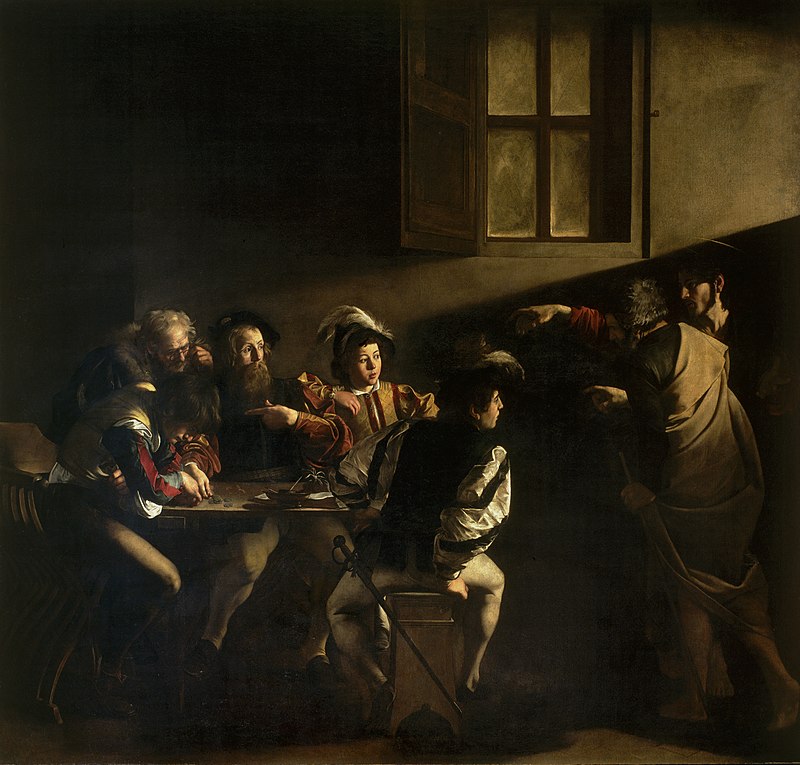
Caravaggio, The Calling of Saint Matthew (1599), oil on canvas, San Luigi dei Francesi Church (Rome)

Trust is a central theme in our faith. Jeremiah the prophet tells us that those who trust in human strength alone are like dry shrubs in the desert, but those who trust in the Lord are like trees planted by the water, never fearing the heat or drought. In today’s gospel Jesus speaks to the crowd and tells them that the poor, the hungry, and those who weep are blessed, while those who rely on their wealth and comfort should be cautious. These readings remind us that true happiness is found in God, not in power or riches. Pope Francis, in Evangelii Gaudium, invites us to rediscover the joy of the Gospel. He reminds us that faith is not just about following rules but about trusting in God’s love and sharing that love with others. Like the tree in Jeremiah, we must be deeply rooted in faith so that even in difficult times, we continue to bear fruit. Evangelii Gaudium calls us to go beyond ourselves, to serve the poor and marginalized, and to find joy in sharing our blessings.

Art often reflects this theme of trust and divine providence. Take, for example, Caravaggio’s The Calling of Saint Matthew. The painting captures a moment of decision, of being called out of comfort and into a life of faith. Matthew, a tax collector, was surrounded by money, yet Jesus invited him to something greater. Like in Luke’s Gospel, we are reminded that trusting in God’s call leads us to a fuller life.

In music, Johann Sebastian Bach’s Jesu, Joy of Man’s Desiring captures the peace and joy that comes from a heart centered on God. Its gentle and flowing melody lifts the soul, much like the tree planted by the water in Jeremiah. In literature, The Brothers Karamazov by Dostoevsky wrestles with questions of faith, doubt, and where true joy is found. The characters struggle between worldly success and deep, sacrificial love, mirroring Jesus’ teachings in Luke.

Today, as we reflect on these readings, let us ask ourselves: where do we place our trust? Are we like the dry shrub in the desert, or like the tree nourished by living waters? Do we seek happiness in fleeting things, or do we root ourselves in the joy of the Gospel? May we take inspiration from Jesus’ words, from Pope Francis’ call to mission, and from the beauty of art, music, and literature, all pointing us toward a life of deeper faith and joy • AE


St. Joseph Catholic Church (Dilley, TX) • Weekend Schedule

Fr. Agustin E. (Parish Administrator)

Saturday, February 15, 2025.

5.00 p.m. Sacramento de la Confesión

6.00 p.m. Santa Misa.

Sunday, February 16, 2025

8.00 a.m. Sacrament of Reconciliation

8.30 a.m. Holy Mass.

10.30 p.m. Sacrament of Reconciliation.

11.00 a.m. Holy Mass.


VI Domingo del TIempo Ordinario (Ciclo C)

Luisa Rivera, ilustración para Cien Años de Soledad, de Gabriel García Márquez,  en una edición que celebra los 50 años de la publicación original del libro.

Las bienaventuranzas son el corazón del Evangelio, esa invitación de Jesús a encontrar la verdadera felicidad en caminos que el mundo muchas veces desprecia. «Bienaventurados los pobres en espíritu, porque de ellos es el Reino de los cielos», nos dice el Señor, y el papa Francisco, en Evangelii Gaudium, nos recuerda que los pobres tienen mucho que enseñarnos, porque conocen el sufrimiento, pero también la alegría sencilla de quien confía en Dios. No se trata solo de darles algo, sino de aprender de ellos, de dejarnos evangelizar por su testimonio.

La verdadera felicidad no está en la acumulación ni en la apariencia, sino en el servicio y en la entrega. En la Capilla Sixtina, Miguel Ángel pintó el Juicio Final, donde Cristo no aparece como un juez severo, sino como el Señor que llama a la vida. En ese fresco, los bienaventurados no son los poderosos, sino los que han amado con sencillez. Esto nos hace pensar en las palabras del Concilio Vaticano II, que nos invita a ser una Iglesia pobre y para los pobres, una comunidad que no teme ensuciarse las manos con la realidad del mundo. Los que lloran, los misericordiosos, los perseguidos por causa de la justicia… Jesús promete consuelo y plenitud a quienes siguen su camino. En Evangelii Gaudium, el Papa insiste en que no podemos ser cristianos con cara de funeral, sino discípulos llenos de la alegría del Evangelio. Como en los versos de Cien años de soledad, donde los personajes viven con la certeza de que la historia se repite, pero al final siempre hay una esperanza escondida en lo inesperado, así también la fe nos invita a confiar en que Dios tiene la última palabra.

San Óscar Romero, mártir de América, entendió esto bien. Supo que la vida cristiana no se mide en éxitos humanos, sino en fidelidad al Evangelio. Y aunque su vida terminó en un acto de violencia, su mensaje sigue vivo: la Iglesia debe ser voz de los que no tienen voz, debe estar donde hay sufrimiento y donde se necesita esperanza. Ser bienaventurado es abrazar la vida con confianza, con misericordia, con sed de justicia y con el corazón limpio. Y eso, aunque a veces parezca locura, es el verdadero camino a la felicidad • AE


Música para el alma

Jesús, alegría de los hombres (título original en alemán: Jesus bleibet meine Freude, Jesús sigue siendo mi alegría) es el décimo movimiento de la cantata Herz und Mund und Tat und Leben (BWV 147) del compositor alemán Johann Sebastian Bach, escrita durante su primer año en Leipzig, Alemania. Hoy en día, es una de las piezas más conocidas de la música clásica, y generalmente se interpreta con un tempo lento, en contraposición a lo anotado por Bach originalmente. El texto es simple y sencillamente maravilloso:

Jesús sigue siendo mi alegría,

consuelo y bálsamo de mi corazón.

Jesús me defiende de toda pena.

Él es la fuerza de mi vida,

el gozo y el sol de mis ojos,

el tesoro y la delicia de mi alma;

por eso no quiero dejar ir a Jesús

fuera de mi corazón y de mi vista


Fifth Sunday in Ordinary Time (Cycle C)

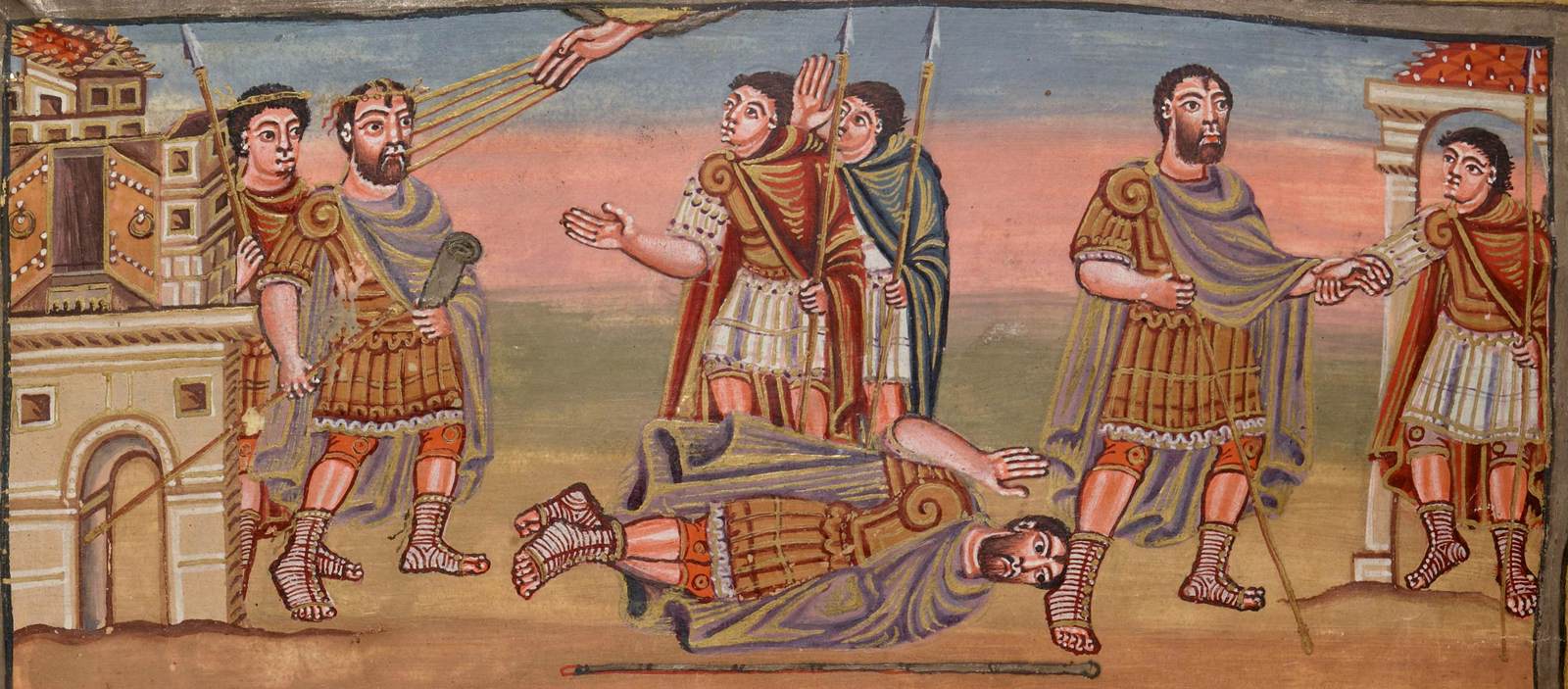
Anonymous artist, The Conversion of St. Paul, miniature in the Vivian Bible, c. 845, Vatican Museums (Rome)

Today we witness a moment of profound transformation. Jesus calls Simon Peter, a simple fisherman, to leave everything behind and follow Him. Peter, overwhelmed by his unworthiness, falls to his knees and says, “Depart from me, Lord, for I am a sinful man!” But Jesus does not focus on Peter’s sins or inadequacies. Instead, He invites him to become a fisher of men, showing that God’s call is not based on human merit but on divine mercy.

This theme resonates with Paul’s story the second reading. He openly acknowledges his unworthiness, describing himself as «the least of the apostles» because of his past persecution of the Church. Yet, it is through God’s grace that Paul becomes a powerful witness to the Gospel. He reminds us that our weaknesses, sins, and limitations are no obstacle to God’s plans. It is God’s grace that transforms us and gives us the strength to respond to His call. The prophet Isaiah had a similar experience. In a vision of God’s holiness, Isaiah feels unclean and inadequate. Yet, when God asks, “Whom shall I send?” Isaiah responds with courage, “Here I am, send me!” This reminds us that God does not call the perfect but purifies and equips those He calls. And the psalm today echoes the confidence we can have in God’s mercy and faithfulness. The psalmist praises God for answering his prayers and strengthening his soul. Even when we walk in the midst of trouble, God stretches out His hand to save us. His love never abandons us. As we prepare for the Jubilee of 2025, Pope Francis reminds us that it is a time to rediscover the joy of encountering Jesus, especially in our brokenness. He says, “Let us never forget that the Lord comes to meet us just as we are, even in our poverty, fragility, and sinfulness. His arms are always open wide.”

The lives of Peter, Paul, and Isaiah teach us that God calls us despite our flaws. Like them, we are invited to trust in His mercy and respond generously. The Jubilee is an opportunity to open our hearts to this call, to let go of fear, and to embrace the mission God has for each of us. In our encounter with Jesus, we find the courage to say, «Here I am, send me,» trusting that His grace is sufficient for every step of the journey • AE


St. Joseph Catholic Church (Dilley, TX) • Weekend Schedule

Fr. Agustin E. (Parish Administrator)

Saturday, February 8, 2025.

5.00 p.m. Sacramento de la Confesión

6.00 p.m. Santa Misa.

Sunday, February 9, 2025

8.00 a.m. Sacrament of Reconciliation

8.30 a.m. Holy Mass.

10.30 p.m. Sacrament of Reconciliation.

11.00 a.m. Holy Mass.


V Domingo del Tiempo Ordinario (Ciclo C)

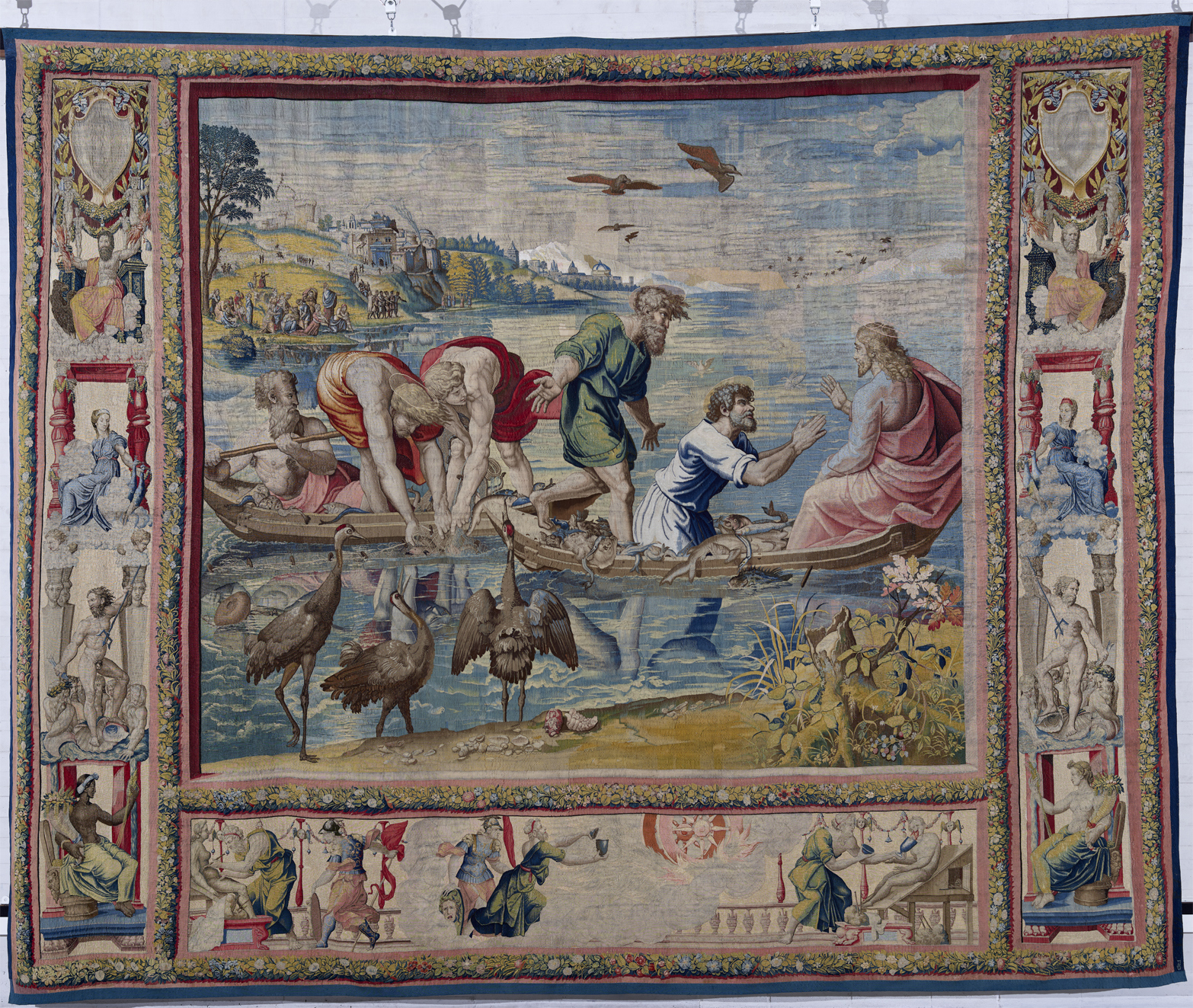
Rafael Sanzio de Urbino, La pesca milagrosa (c. 1560), tapiz, Galeria de las Colecciones Reales (Madrid)

El evangelio de este domingo nos dice algo muy claro: hemos de poner nuestra esperanza en la fuerza y el atractivo del Evangelio. El relato comienza con una escena insólita. Jesús está de pie a orillas del lago, y la gente se va acercando para oír la Palabra de Dios. No vienen movidos por la curiosidad. No se acercan para ver prodigios. Solo quieren escuchar de Jesús la Palabra de Dios. No es sábado. No están congregados en la cercana sinagoga de Cafarnaún para oír las lecturas que se leen al pueblo a lo largo del año. No han subido a Jerusalén a escuchar a los sacerdotes del Templo. Lo que les atrae tanto es el Evangelio del Profeta Jesús, rechazado por los vecinos de Nazaret.

También la escena de la pesca es insólita. Cuando de noche, en el tiempo más favorable para pescar, Pedro y sus compañeros trabajan por su cuenta, no obtienen resultado alguno. Cuando, ya de día, echan las redes confiando solo en la Palabra de Jesús que orienta su trabajo, se produce una pesca abundante, en contra de todas sus expectativas.

Hoy, 2025, hay un hecho innegable: la Iglesia está perdiendo de modo imparable el poder de atracción y la credibilidad que tenía hace solo unos años. Los cristianos venimos experimentando que nuestra capacidad para transmitir la fe a las nuevas generaciones es cada vez menor. No han faltado esfuerzos e iniciativas. Pero, al parecer, no se trata solo ni primordialmente de inventar nuevas estrategias. Ha llegado el momento de recordar que en el Evangelio de Jesús hay una fuerza de atracción que no hay en nosotros. Esta es la pregunta más decisiva: ¿Seguimos «haciendo cosas» desde un Iglesia que va perdiendo atractivo y credibilidad, o ponemos todas nuestras energías en recuperar el Evangelio como la única fuerza capaz de engendrar fe en los hombres y mujeres de hoy?

 ¿No tendríamos que poner el Evangelio en el primer plano de todo? Lo más importante en estos momentos críticos no son las doctrinas elaboradas a lo largo de los siglos, sino la vida y la persona de Jesús. Lo decisivo no es que la gente venga a tomar parte en nuestras cosas sino que puedan entrar encontrarse con él, ¿son nuestras comunidades parroquiales aduanas en las que se tasa a la gente y se decide si son dignos o no? ¿Somos una iglesia en salida, como tanto le gusta repetir al santo padre Francisco? La fe cristiana solo se despierta cuando las personas descubren el fuego de Jesús, y este domingo a esto nos invita la liturgia de la Palabra • AE


¿Qué vamos a leer?