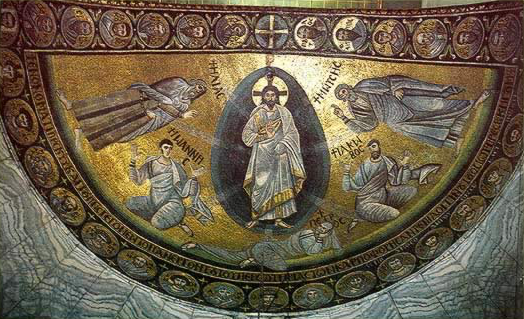
The mosaic of the Transfiguration in Saint Catherine’s Monastery on Mount Sinai is the earliest surviving Eastern depiction of the event. It was created between 565 and 566, likely during the reign of Justinian the Great.
One of the most beautiful depictions of today’s gospel is the mosaic of the Transfiguration in the Monastery of Saint Catherine on Mount Sinai (6th century). In this Byzantine masterpiece, Christ appears radiant at the center, with beams of light emanating from His body, while the disciples fall to the ground in awe. The golden background does not represent a physical place but eternity—the divine realm breaking into human vision. This icon reminds us that the Transfiguration is not merely an external vision but a spiritual event: God allows Himself to be seen, but only those who have purified their hearts can truly perceive Him. Lent is precisely this time of purification, of climbing the mountain of prayer, letting go of what binds us, and opening ourselves to Christ’s light.
The Flemish mystic Ruysbroeck, in his work The Spiritual Espousals, speaks of the inner light that transforms the soul when it fully surrenders to God. The Transfiguration teaches us that God desires to make us partakers of His light, but this requires a path of humility and self-giving. True conversion is not a solitary effort but a trusting surrender into the hands of the Lord. Pope Francis reminds us: «Jesus shows us the goal of our Christian journey: full communion with God, in which we too, by the grace of the Holy Spirit, can reflect something of His light in this world.» It is not just about admiring Christ’s glory but allowing Him to transform our lives.
If there is a musical piece that helps us enter into the mystery of the Transfiguration, it is Palestrina’s «Sicut Cervus». This Renaissance motet, inspired by Psalm 42—«As the deer longs for streams of water, so my soul longs for You, O God»—expresses the deep yearning of the soul for divine transformation. Its pure harmonies and delicate interplay of voices echo the disciples’ awe on the mountain, inviting us to thirst for Christ’s presence.
The Gospel tells us that the disciples descended the mountain in silence. They did not fully understand, but something within them had changed. Likewise, after every encounter with Christ—in prayer, in the Eucharist, in the life of faith—we are called to reflect His light in the world. We cannot remain in contemplation alone; we must become witnesses. This Lenten season invites us to ask ourselves: Am I allowing the light of Christ to transform my life? Or am I still clinging to the shadows of my own selfishness? Where is the Lord calling me to ascend with Him, to be illuminated and renewed? May the Transfiguration inspire us to live this Lent with our eyes fixed on Christ, so that when Easter arrives, we too may shine with the light of His Resurrection • AE

St. Joseph Catholic Church (Dilley, TX) • Weekend Schedule

Fr. Agustin E. (Parish Administrator)
STATIONS OF THE CROSS & SACRAMENT OF RECONCILITATION
Every Friday of Lent at 6.00 p.m.
(March 7, 14, 21, 28, & April 4, 11, 2025)
Saturday, March 15, 2025.
5.00 p.m. Sacramento de la Confesión
6.00 p.m. Santa Misa.
Sunday, March 16, 2025
8.00 a.m. Sacrament of Reconciliation
8.30 a.m. Holy Mass.
10.30 p.m. Sacrament of Reconciliation.
11.00 a.m. Holy Mass.
Segundo Domingo de Cuaresma (Ciclo C)
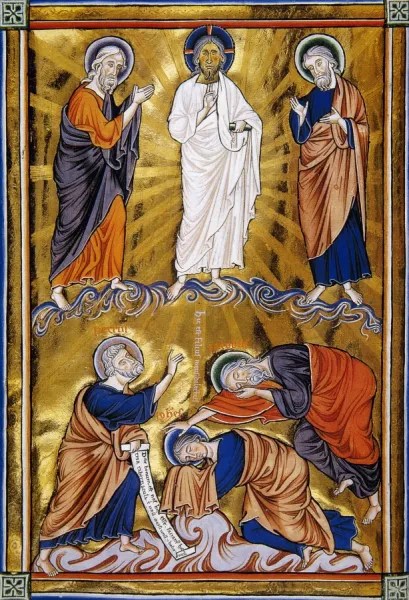
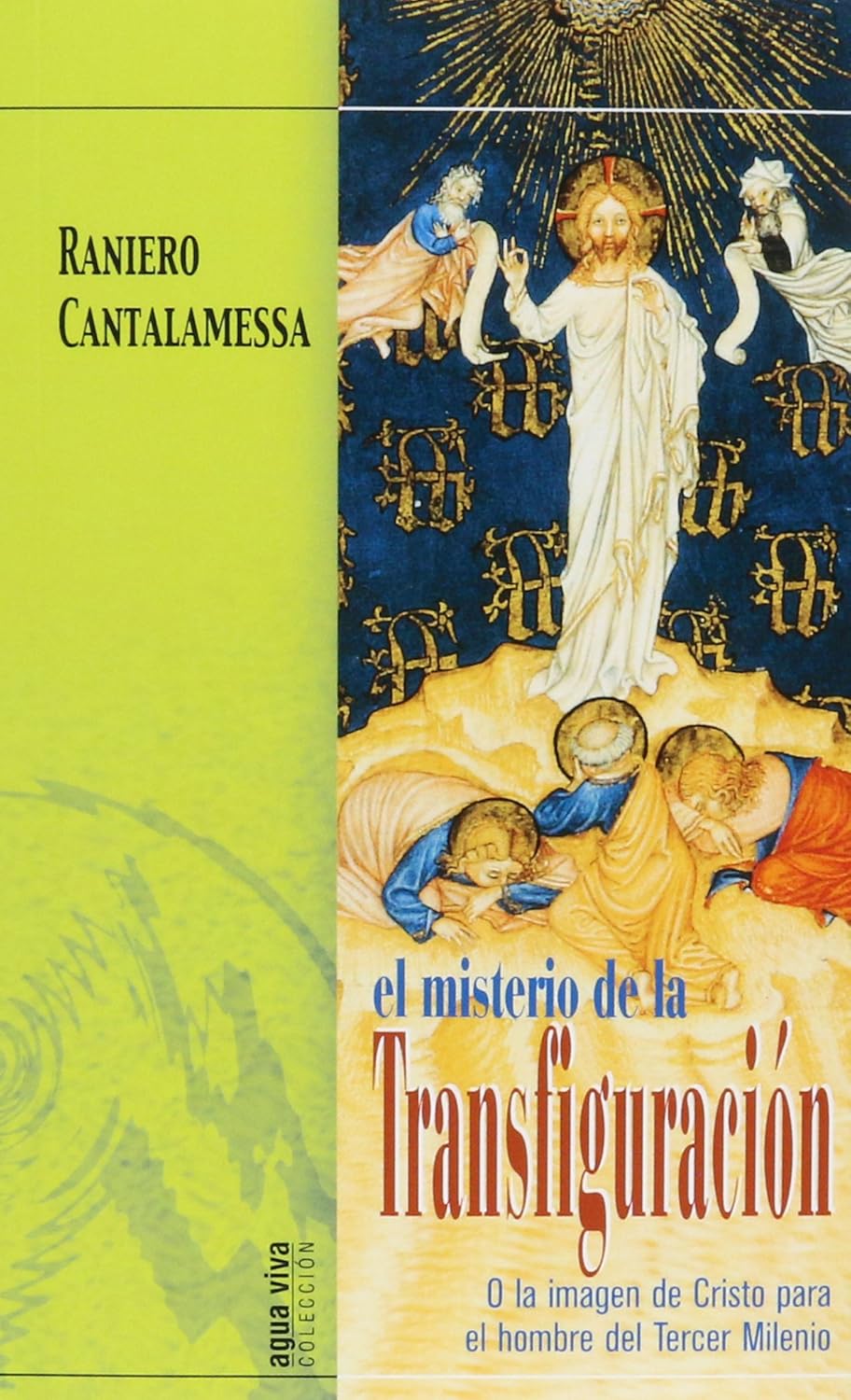
Anónimo, La Transfiguración de Cristo, miniatura del s. XV, Biblioteca del Castillo de Chantilly (Francia)
Para captar la verdadera identidad de Jesús, lo esencial no es estudiar, sino experimentarlo a Él, subir con Jesús a la montaña de la oración, levantar el espíritu, mirar la vida desde un horizonte más elevado, y sobre todo no dejarnos arrastrar siempre por la rutina y la inercia que tiran de nosotros hacia abajo. Es lo primero que nos dice el relato de la transfiguración de Jesús de este domingo. La escena que nos presenta el evangelio es preciosa. Mientras Jesús ora, el aspecto de su rostro cambia. Los discípulos que están orando con él, comienzan a verlo de otra manera. Es Jesús, su maestro querido de siempre, pero en su rostro comienzan a contemplar el destello de algo nuevo. Sin embargo, junto a él siguen viendo a dos personajes muy queridos por la tradición judía. Moisés, el hombre que ha guiado al pueblo hasta el país de la libertad y le ha dotado de leyes y normas para vivir en paz. Y Elías, el profeta de fuego, que ha luchado contra nuevos ídolos que han surgido en Israel. Los discípulos no parecen entender gran cosa. Están como aturdidos por el sueño. Pedro propone hacer tres tiendas, una para cada uno. No ha captado la novedad de Jesús. Lo pone en el mismo plano que a Moisés y Elías.
Pero la voz que sale de una nube lo aclara todo: Éste es mi Hijo, el escogido; escuchadle a él. No escuchéis a Moisés o Elías, escuchad a Jesús. Sólo él es el Hijo. Escojanlo a él porque es el escogido por Dios. Los cristianos hemos de poner en el centro de nuestra fe a Jesús, no a Moisés. Dejarnos conducir por Jesús hacia el amor, no hacia la ley. Es un error confundir a Dios con un conjunto de obligaciones interiorizadas durante años en nuestra conciencia. Dios está más allá de esas leyes. Quien escucha a Jesús lo va encontrando como fuente de Amor. Si: Hemos de poner en el centro de nuestro corazón a Jesús, no a Elías. Nadie como él puede liberarnos de los ídolos que albergamos dentro de nosotros. Ídolos construidos por nuestros miedos, fantasmas y deseos de seguridad y bienestar. Es muy difícil quitarle a uno sus «dioses», pues se queda como vacío e indefenso. Quien escucha a Jesús se va llenando de la fuerza y de la vida que regala Dios • AE

lECtUrAS rECoMenDaDAs
Puedes leer el texto aqui en español, y aqui en inglés
 LA MEDITACION DE LA ESPOSA