

The scene in today’s Gospel is both unsettling and liberating. A woman is dragged before Jesus, accused and exposed, her guilt proclaimed before the crowd. The law is clear—she must die. The tension is palpable: will Jesus affirm the sentence or challenge it? But instead of answering, He bends down and writes on the ground. His silence speaks louder than any words. And when He finally speaks, His response is disarming: “Let the one among you who is without sin be the first to throw a stone.” One by one, the accusers leave. What began as a spectacle of judgment becomes an encounter with grace. Jesus does not deny the woman’s actions, nor does He justify them. But He refuses to reduce her to her worst moment. His mercy is not indulgence—it is an invitation to renewal. “Go, and from now on do not sin anymore.” There is no room for condemnation, but neither is there room for complacency. Mercy is not the absence of justice; it is the triumph of love over punishment. A striking artistic depiction of this scene is “Christ and the Woman Taken in Adultery” by Guercino (17th century). Unlike other versions, which emphasize the woman’s shame or the crowd’s rage, Guercino paints Jesus looking directly at her—not with accusation, but with compassion. The light falls on her, highlighting the transformative moment of mercy. It is a painting not of judgment, but of possibility. Musically, John Tavener’s “The Protecting Veil” captures the essence of this Gospel passage. Written as a meditation on the Virgin Mary’s protective love, the piece unfolds in long, soaring phrases that evoke both tenderness and transcendence. Like Jesus’ silence before speaking, Tavener’s music creates space—a space where mercy enters, where love replaces condemnation. A literary parallel can be found in “The Scarlet Letter” by Nathaniel Hawthorne. Hester Prynne, condemned by her Puritan community for adultery, carries the mark of her sin in the form of a scarlet letter on her chest. Yet, as the novel unfolds, we see that true righteousness is not found in those who judge her, but in her quiet strength, her dignity, and ultimately, in her ability to love despite rejection. Like the woman in today’s Gospel, she is more than her past—she is someone capable of renewal. This Gospel challenges us on every level. It demands that we put down our stones—not just the ones we throw at others, but also the ones we carry against ourselves. Mercy is the only path forward. The only question that remains is whether we are ready to receive it • AE


St. Joseph Catholic Church (Dilley, TX) • Weekend Schedule

Fr. Agustin E. (Parish Administrator)
STATIONS OF THE CROSS & SACRAMENT OF RECONCILITATION
Every Friday of Lent at 6.00 p.m.
(March 7, 14, 21, 28, & April 4, 11, 2025)
Saturday, April 5, 2025.
5.00 p.m. Sacramento de la Confesión
6.00 p.m. Santa Misa.
Sunday, April 6, 2025
8.00 a.m. Sacrament of Reconciliation
8.30 a.m. Holy Mass.
10.30 p.m. Sacrament of Reconciliation.
11.00 a.m. Holy Mass.
V Domingo de Cuaresma (Ciclo C)

L. Lotto, La Mujer adúltera (1527), óleo sobre tela, Museo de Louvre (Paris)
El Evangelio de este domingo nos ofrece una de las escenas más conmovedoras de la misericordia de Cristo: la mujer sorprendida en adulterio, expuesta ante la multitud, esperando su condena. En lugar de un veredicto de muerte, recibe un acto de gracia. Jesús, inclinándose hacia el suelo, escribe con el dedo, guarda silencio, deja que la acusación se disuelva en su propia inconsistencia. “El que esté sin pecado, que tire la primera piedra”, dice. Y una a una, las piedras caen al polvo. Lo que parecía un juicio se convierte en una liberación. Este pasaje nos invita a mirar el rostro de la misericordia. No es un perdón superficial ni una negación del pecado, sino una invitación a la transformación. Jesús no dice “no importa lo que hiciste”, sino “a partir de ahora, no peques más”. La misericordia no borra la verdad, pero la redime.
Una imagen que puede ayudarnos a meditar esta escena es Cristo y la mujer adúltera de Lorenzo Lotto. En su versión renacentista del episodio, la mujer no es una simple figura pasiva, sino alguien que encuentra en la mirada de Cristo no solo compasión, sino una llamada. La luz, que en otras representaciones ilumina el acto de la denuncia, aquí resalta la oportunidad de conversión. En el claroscuro del Renacimiento, Lotto nos recuerda que la misericordia es una invitación a caminar hacia la luz. En la música, Stabat Mater de Francis Poulenc resuena con la emoción de este Evangelio. Compuesta en el siglo XX, su dramatismo no es grandilocuente, sino íntimo. Poulenc, tras un periodo de indiferencia religiosa, experimentó un reencuentro con la fe y dejó en esta obra una profunda expresión de compasión. Es la súplica de quien, como la mujer adúltera, ha sido confrontado con su miseria y, en lugar de condena, ha encontrado ternura. En la literatura, La caída de Albert Camus ofrece un contrapunto interesante. Su protagonista, Jean-Baptiste Clamence, es un hombre que construye su vida en la justicia, en la apariencia de integridad, hasta que un día, en un puente de París, oye un grito en la noche y no se detiene a ayudar. A partir de ese momento, su vida cambia: se da cuenta de su propia hipocresía, de su falta de compasión. Camus nos muestra cómo el juicio que lanzamos contra otros a menudo esconde nuestra propia fragilidad. Es lo que Jesús revela en este Evangelio: todos hemos caído, todos necesitamos misericordia.
Este domingo nos pone frente a una pregunta esencial: ¿qué hacemos con la misericordia que recibimos? Podemos dejarla pasar de largo o podemos permitir que nos transforme. Dios no nos condena, pero nos invita a una vida nueva. La elección sigue siendo nuestra • AE

¿Qué leemos?
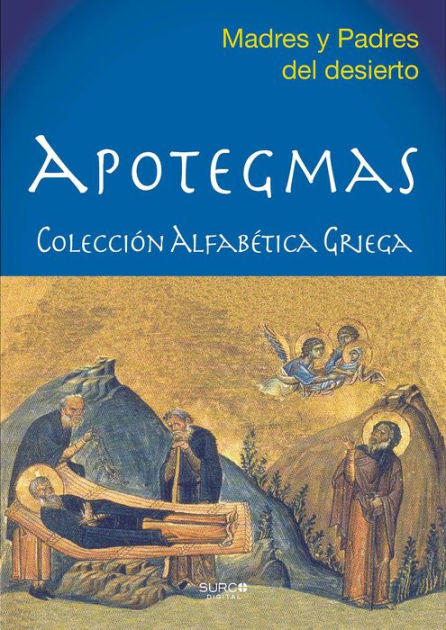


 LA MEDITACION DE LA ESPOSA
Hola Padre, he visto sus diferentes blogs, así como su cuenta de X y me parece que está muy bien formado. Me gustaría comentarle algunas dudas que tengo sobre la Iglesia y sus instituciones. Yo soy católico practicante pero hay ciertos temas que me generan dudas. Si puede facilitarme su dirección de correo para escribirle, se lo agradezco. La mía es ecerpante@gmail.com
Muchas gracias de antemano.