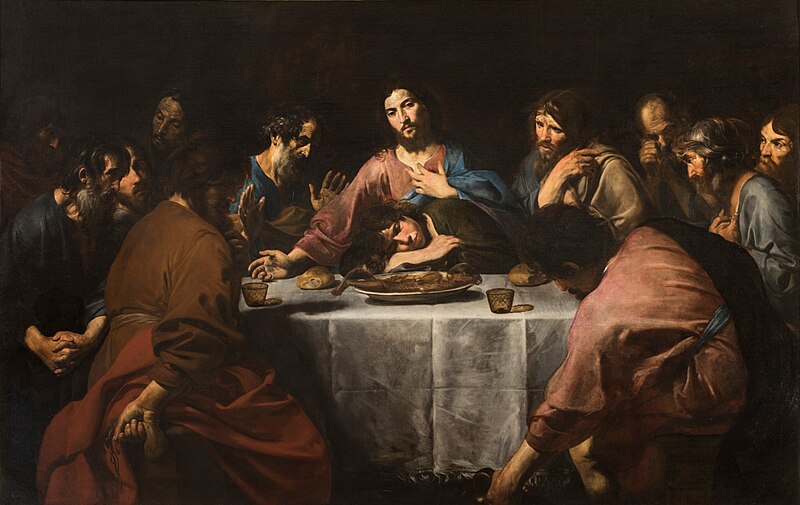
V. de Boulougne, The Last Supper (1625), oil on canvas, Galleria Nazionale d’Arte Antica (Rome)
Holy Thursday is a threshold. We enter the Paschal Triduum through a scene that is as intimate as it is overwhelming: a table, bread and wine, a Master kneeling to wash the feet of His disciples. Knowing that His hour has come, Jesus does not leave behind theological arguments or strategic plans for the future. Instead, He bends down, serves, breaks the bread, and gives Himself away. The washing of the feet is the Gospel in action. Jesus does not merely speak of love; He enacts it. He wraps a towel around Himself, kneels, and touches the dust of those who will abandon Him within hours. Peter, confused, tries to resist, but Jesus tells him, “Unless I wash you, you have no share with me” (Jn 13:8). The humility of God is so radical that even those closest to Him struggle to receive it. The Last Supper is not just a farewell, but a beginning. Jesus takes the bread, blesses it, and gives it away with words that echo through every Eucharist: “This is my body, given for you.” This is not mere metaphor or symbol. It is the ultimate act of love made presence. God does not remain in concepts—He becomes food. In art, The Last Supper by Valentin de Boulogne, housed in the Louvre Museum, offers a profound depiction of this moment. The use of chiaroscuro and the realistic portrayal of the apostles’ emotions draw the viewer into the depth of the scene, reflecting the solemnity and significance of the institution of the Eucharist. For music, Louange à l’Éternité de Jésus from Olivier Messiaen’s Quartet for the End of Time captures the mystery of Holy Thursday. Written in a concentration camp, the piece moves with an unhurried, meditative slowness, as if stretching time itself—like the silence after Jesus’ words, like the stillness of love given freely.
The wisdom of Joseph Ratzinger gives us a key insight: “The Eucharist is God’s response to the hunger of the world. It is the moment when time and eternity meet, when history and heaven touch.” The Last Supper is not just a memory—it is a reality that continues to feed the world. Holy Thursday is not just the beginning of the Passion—it is the night in which God shows us that to love is to serve, that glory is found in giving oneself away, and that His real presence in the Eucharist is the greatest miracle of all.
A quiet voice resounds within the bread,
a whispered promise woven into wine,
the hands that bless now break, the hands that bled
will trace the cross in mercy’s grand design.
O feet once kissed, now washed with love’s embrace,
the humble King who bends to serve His own,
a gesture strong enough to shift and place
a throne within the dust where feet have known.
And so He kneels, so we must kneel as well,
to love, to serve, to bear the weight of grace,
to hold the chalice and be wholly fed.
The cup is full, the silence speaks to tell:
He gave, He gives, He offers still His face—
the night of love, where Heaven shares its bread.
Easter Triduum 2025
HOLY THURSDAY OF THE LORD´S SUPPER, APRIL 17
6.00 p.m. Mass of the Lord’s Supper (Bilingual)
(Adoration of the Most Holy Sacrament until 10.00 p.m. @ Chapel)
FRIDAY OF THE PASSION OF THE LORD (Good Friday), APRIL 18
10.00 a.m. Los Siete Dolores de la Santísima Virgen María
11.30 a.m. Live performance of the Passion of the Lord
(we start @ the police station, we end @ St. Joseph grounds)
6.00 p.m. Liturgical Celebration of the Lord’s Passion (Bilingual)
HOLY SATURDAY, APRIL 19
8.00 p.m. The Easter Vigil in the Holy Night (Bilingual)
EASTER SUNDAY OF THE RESURRECTION OF THE LORD, APRIL 20
8.30 a.m. English mass @ St. Mary´s Chapel
11.00 a.m. English mass @ church
12.30 p.m. Easter Egg Hunt @ St. Joseph grounds
Jueves Santo de la Cena del Señor (2025)
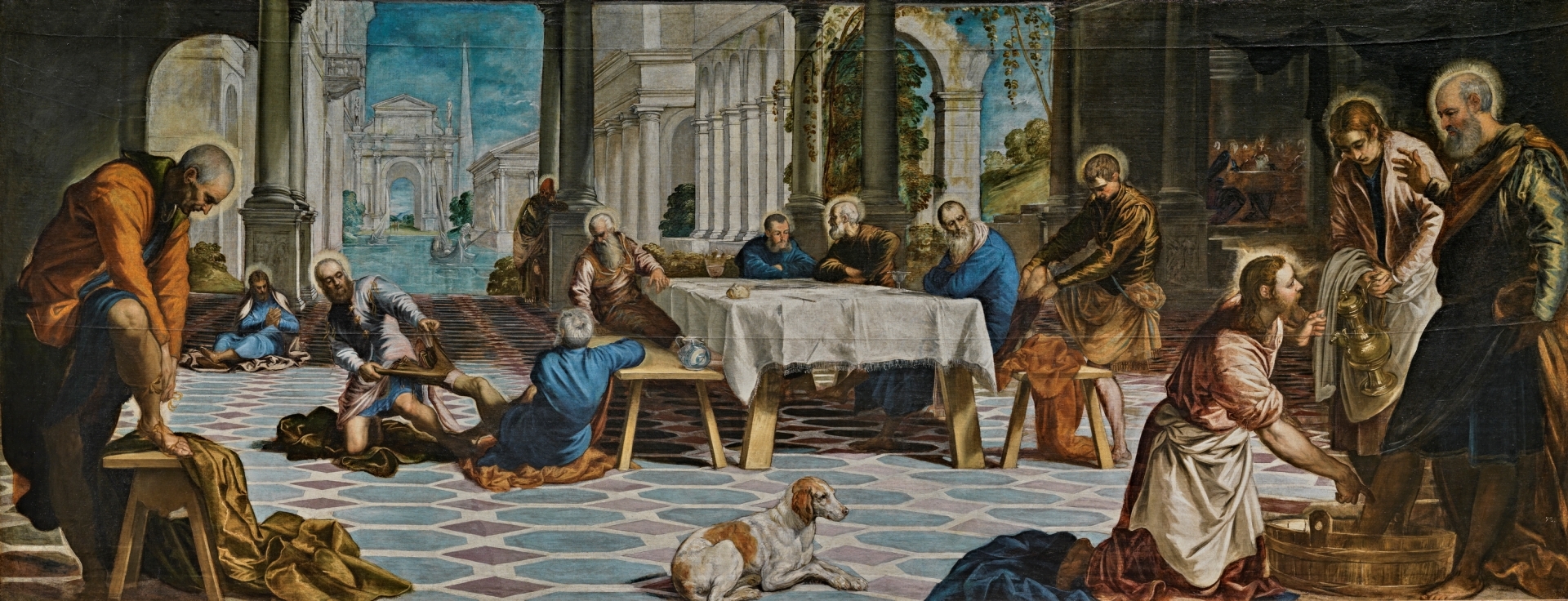
Jacopo Robusti Tintoretto, El Lavatorio (1548), óleo sobre tela, Museo Nacional del Prado (Madrid)
La noche de Jueves Santo es un umbral. Nos adentramos en el Triduo Pascual con una escena tan íntima como sobrecogedora: una mesa, pan y vino, un Maestro que lava los pies a sus discípulos. Jesús, sabiendo que ha llegado su hora, no deja discursos teológicos ni estrategias para el futuro. En lugar de ello, se inclina, sirve, parte el pan y se entrega. El gesto del lavatorio de los pies es el evangelio en acción. Jesús no predica sobre el amor; lo muestra. Se ciñe una toalla, se arrodilla y toca la suciedad de los pies de aquellos que en unas horas lo abandonarán. Pedro, confundido, intenta resistirse, pero Jesús le responde con una frase que atraviesa la historia: “Si no te lavo, no tendrás parte conmigo” (Jn 13,8). La humildad de Dios es tan desconcertante que incluso los suyos no saben cómo recibirla. La última cena no es solo un adiós, sino un inicio. Jesús toma el pan, lo bendice y lo reparte con palabras que resuenan en cada Eucaristía: “Esto es mi cuerpo, que se entrega por vosotros”. No es metáfora ni símbolo. Es una realidad que atraviesa el tiempo, el acto definitivo del amor que se hace presencia. Dios no se queda en doctrinas, se hace alimento. El Lavatorio de Tintoretto, captura magistralmente este momento. La composición dinámica y el uso dramático de la luz reflejan la tensión y la profundidad del acto de servicio de Jesús. La escena, llena de movimiento y emoción, nos invita a contemplar la humildad y el amor en acción. En la música, Ubi Caritas de Maurice Duruflé es una expresión pura de lo que significa este día. Su melodía fluye como un eco de las palabras de Jesús: “Donde hay caridad y amor, allí está Dios”. El pensamiento de Raniero Cantalamessa ilumina este momento con una clave esencial: «El amor en la Eucaristía no es solo algo que recibimos, sino algo en lo que participamos. No estamos en un teatro observando un drama, sino en una mesa compartiendo un destino”. El Jueves Santo no es solo el inicio de la Pasión, sino el día en que Dios nos enseña que amar es servir, que la gloria se encuentra en la entrega y que no hay mayor milagro que su presencia real en el pan y el vino.
Te inclinaste, Señor, sobre la vida,
dejaste el cielo y te ciñó la tierra,
con agua y luz desarmas toda guerra,
y haces del pan entrega compartida.
Bendito el día en que partiste el trigo,
cuando en la mesa fue tu amor presencia,
y el sacrificio abrió la puerta inmensa
de un Dios que quiso ser hermano y amigo.
Hoy nos ofreces pan y amor profundo,
cáliz de vida que a los hombres llama,
un Dios que sirve, entregado hasta el fin.
Déjame ser contigo don fecundo,
pan que alimenta, amor que nunca exclama,
silencio santo en el umbral sin fin.

 LA MEDITACION DE LA ESPOSA