
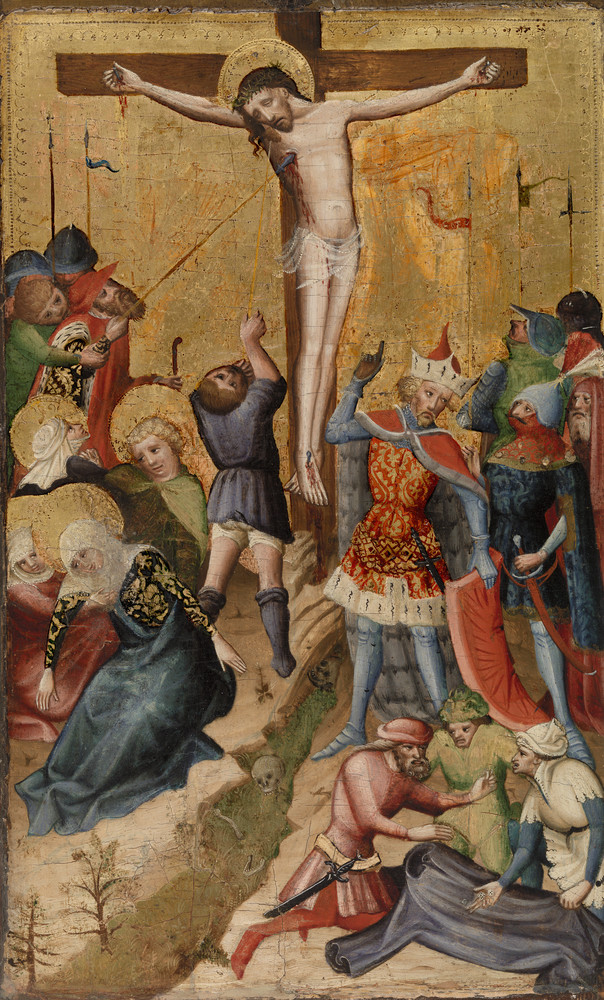
Austrian Master, Crucifixion (c. 1400–1420), tempera and gold on panel, Barnes Foundation (Philadelphia)
“This is how all will know that you are my disciples, if you have love for one another.” These words fall like a final chord—quiet, absolute, undeniable. In the shadow of betrayal, just after Judas walks out into the night, Jesus offers not a farewell speech, but a mandatum novum, a new commandment. Not a suggestion. Not a poetic flourish. A command. Not even “Love others as you love yourself.” But: “Love one another as I have loved you.” The difference is not subtle. To love as Christ loves is to embrace the Cross before the triumph, to wash the feet of those who will soon abandon you, to keep the door open even when it’s slammed in your face. Pope Francis once said: “The love of Jesus is not love in pieces; it is total, it is a love that leads to the gift of life.” (Homily, Holy Thursday, 2016) He was speaking, of course, about this very commandment—a love that does not wait to be earned, a love that chooses humility, patience, and mercy over pride, resentment, and control.
In Dostoevsky’s The Brothers Karamazov, Father Zosima warns a troubled soul: “Love in practice is a harsh and dreadful thing compared to love in dreams.” This might as well be the commentary for John 13. Jesus doesn’t call us to dream of love, but to live it. To live it when it costs, when it confuses, when it hurts. And precisely in that lived love—not in apologetics or theological treatises—is where people recognize Christ. Not admire, not debate, not suspect… but recognize. One might imagine Samuel Barber’s “Agnus Dei”—his choral arrangement of the Adagio for Strings—as the musical background to this Gospel moment. It ascends and descends, stretches and breaks, always yearning—like the heart of Christ loving the unlovable. The final notes, like the last line of today’s Gospel, do not resolve triumphantly, but in tender insistence. Not force. Not fear. But love, fragile and firm. It all returns to Him. The glory of the Son of Man is revealed not on a throne but on a cross. And His disciples are revealed not in dogmas or liturgies alone, but in how they love. To be Christian, then, is to make visible the invisible Christ—through affection, forgiveness, patience, service. It is to love as He has loved us—not theoretically, but concretely. This is not moralism. This is not sentimentality. It is revelation. As Hans Urs von Balthasar wrote: “Love alone is credible.” If Christ has loved us to the end, and if we dare to love as He did—then even today, in our wounded and weary world, someone might finally say: “There. There is a disciple of Jesus.” • AE

Welcome!
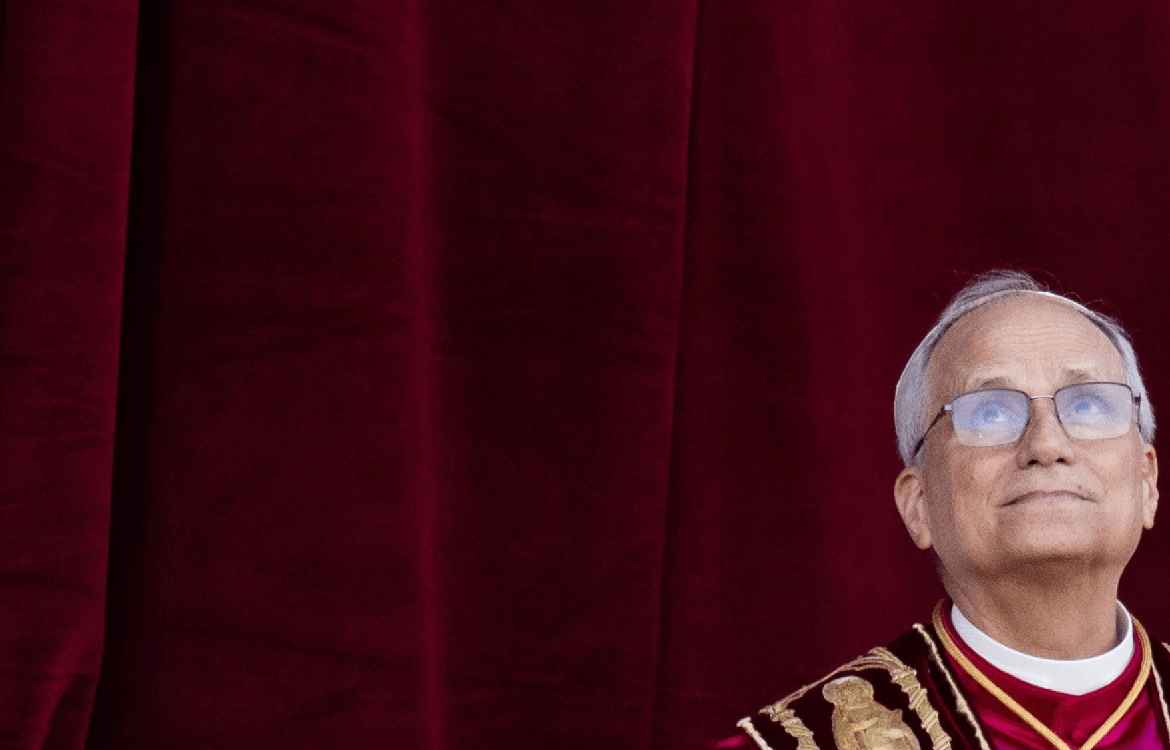
Welcome, Holy Father Leo XIV.
In your steps, may the Church walk with hope.
In your voice, may the Gospel echo with clarity.
In your heart, may the mercy of Christ find a home.
We pray for you, and we walk with you—
under the light of the Risen Lord.
St. Joseph Catholic Church (Dilley, TX) • Weekend Schedule

Fr. Agustin E. (Parish Administrator)
Saturday, May 17, 2025.
10.00 a.m. First Communions 2025
5.00 p.m. Sacramento de la Confesión
6.00 p.m. Santa Misa.
Sunday, May 18, 2025
8.00 a.m. Sacrament of Reconciliation
8.30 a.m. Holy Mass.
10.30 p.m. Sacrament of Reconciliation.
11.00 a.m. Holy Mass.
V DOMINGO DEL TIEMPO DE PASCUA (Ciclo B)

Rembrandt van Rijn, Cristo lavando los pies de los discípulos (c. 1640), pluma de caña y tinta Rijksmuseum (Amsterdam)
Hay frases que contienen el corazón entero del Evangelio. Palabras que no hacen ruido, pero que arden. Jesús dice: “Ámense los unos a los otros como yo los he amado”. Y luego añade: “En esto reconocerán todos que son mis discípulos”. No dice: “si rezan mucho”, ni “si defienden la ortodoxia bien afilada”, ni siquiera “si hacen milagros”. Dice: si se aman. Así de claro. Asi de sencillo. Y así de difícil. El amor que Jesús pide no es el de las novelas ni el de las emociones. Es el amor que se arrodilla, que lava los pies, que no se venga. Es el amor que no se escandaliza de la pobreza ni del fracaso. El amor que sabe esperar, callar, cargar con las heridas del otro sin imponer condiciones. Y eso es lo que más cuesta. Porque todos sabemos amar “a nuestra manera”. Pero Jesús no dice: “ámanse como les parezca”. Dice: como yo los he amado. Es decir: hasta la cruz. Hasta el silencio. Hasta el perdón. Este amor no nace del esfuerzo humano. Es un don. Es Cristo en nosotros. San Pablo lo dijo con fuerza: “Ya no soy yo quien vive, sino Cristo quien vive en mí”. Sin Cristo, este mandamiento es imposible. Pero con Él, comienza la verdadera libertad. Decía el Cardenal Martini: “La Iglesia no se mide por su poder ni por sus números, sino por su capacidad de amar como Cristo amó.” Ese es el examen. No lo demás. Y sí, el mundo sigue esperando testigos. No ideas, no discursos. Testigos. Gente en cuya vida pueda verse a Cristo. No perfecto, pero vivo. En medio del ruido, en medio de la noche —como cuando Judas salió del cenáculo—, esta frase resuena como una lámpara encendida: “Ámense como yo los he amado”. Ahí está todo • AE

¡Bienvenido, Santo Padre!
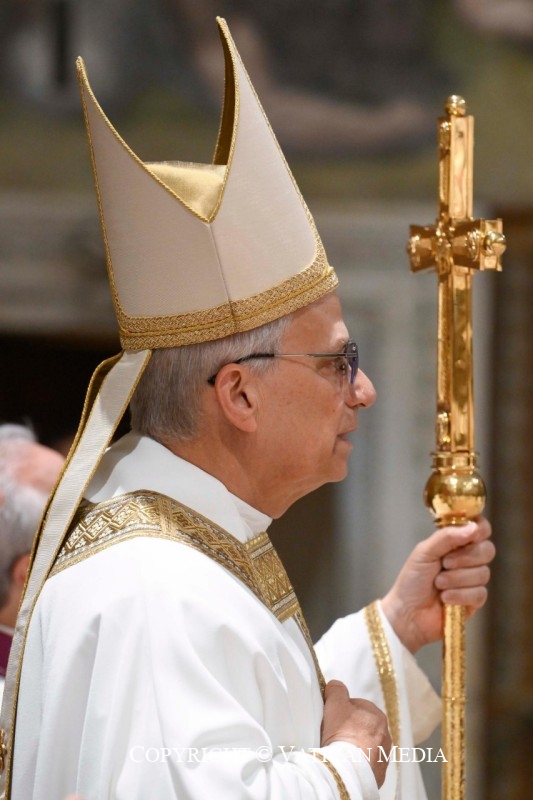
Santidad, la Iglesia te mira con esperanza,
como quien fija los ojos en el pastor que atraviesa la madrugada.
Que tu voz nos devuelva el Evangelio con sabor a primer amor.
Que tus manos custodien la herida y la gloria del Crucificado.
Que en tus silencios hable el Espíritu,
y en tu caminar, el rostro de Cristo se nos haga cercano.
Te acompaña la oración de los sencillos.
El amor de los pobres.
Y la promesa del Señor: “Yo estaré con ustedes todos los días”.
¿Qué andamos leyendo?
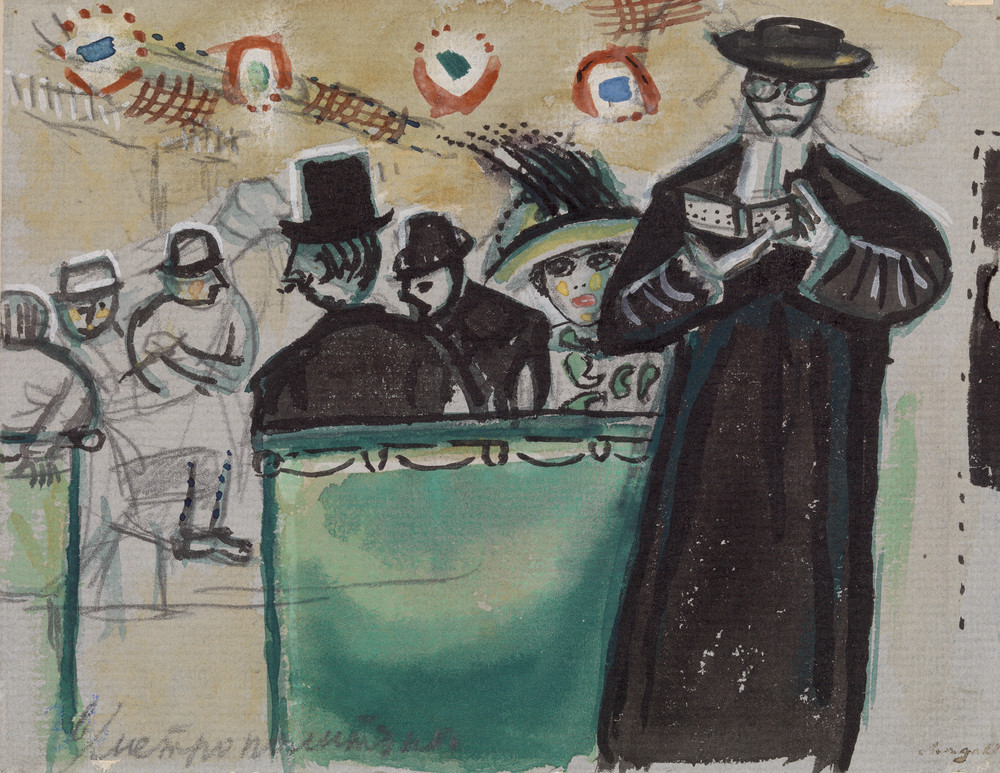

 LA MEDITACION DE LA ESPOSA