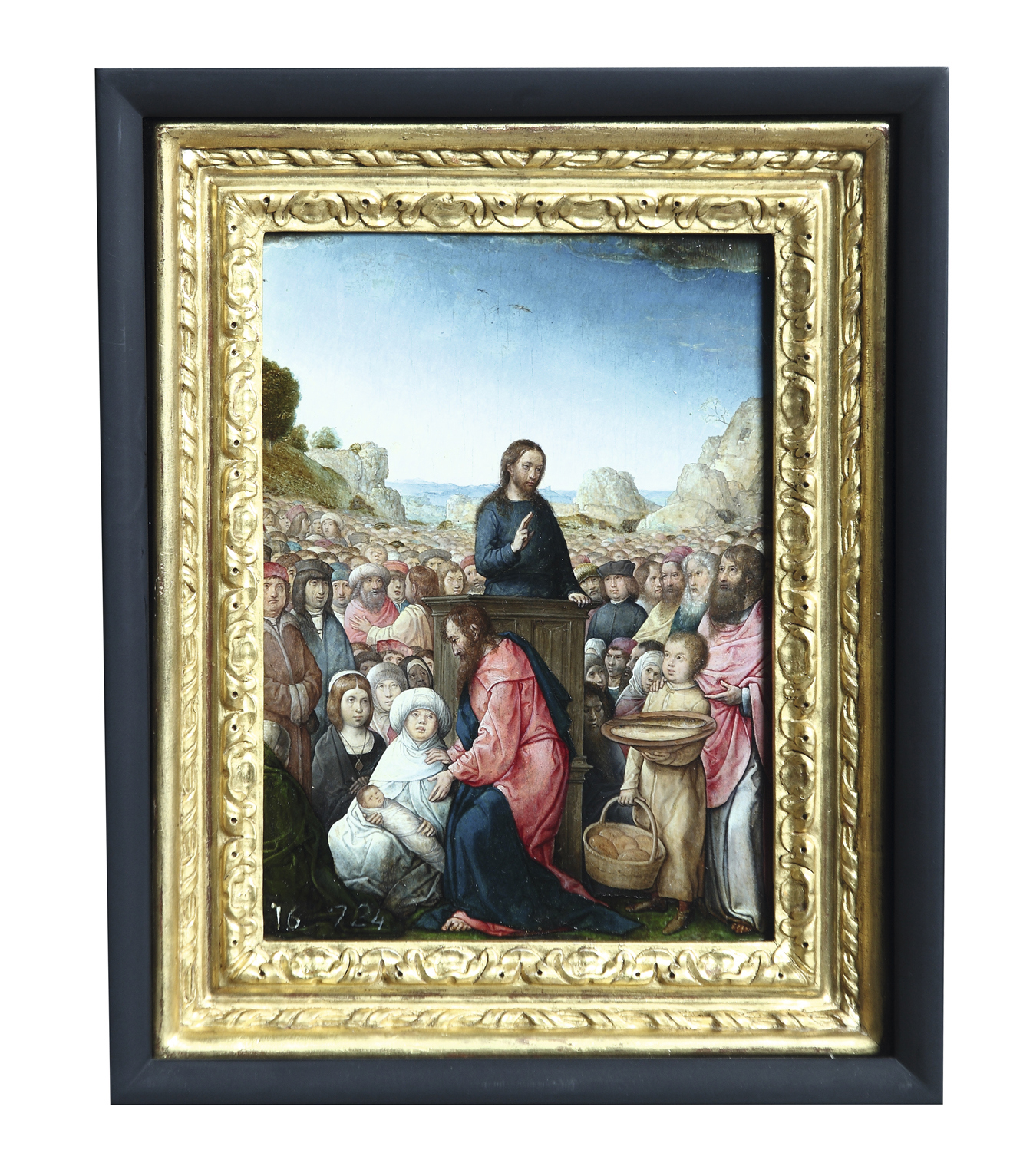
Juan de Flandes, The Multiplication of the Loaves and Fishes, ca. 1496–1504, Oil on panel, Gallery of the Royal Collections (Madrid)
There’s a quiet authority in the way Jesus speaks today. The disciples are overwhelmed: the crowd is too large, the place too remote, the food too little. Their solution is simple and reasonable: send them away. But Jesus is not in the business of sending people away. He is the Shepherd who makes them lie down in green pastures. He is the Host who won’t let them go hungry. “You give them something to eat,” He says. And then: “Make them sit down.” This is the beginning of the miracle — not the multiplication itself, but the invitation to sit. To wait. To receive. The Kingdom of God often begins not with action, but with surrender. Not with doing, but with sitting still in the presence of a Love that prepares the table. There is an echo here of George Herbert’s Love (III), where the soul hesitates at the door of the feast, ashamed and unworthy. But Love, who is Christ Himself, gently insists: “You must sit down,” says Love, “and taste my meat.” That line is not metaphor. It is Eucharist. It is today’s Gospel in verse. The miracle unfolds not through excess, but through trust. Jesus lifts the bread, blesses it, breaks it, gives it. This rhythm is familiar: it is the shape of every Mass. And what seemed too little becomes enough. More than enough. Twelve baskets of abundance. That is always the math of grace: when touched by Christ, scarcity turns to gift. If this moment had a sound, I imagine the voices of Tomás Luis de Victoria rising in polyphony. Perhaps his O Magnum Mysterium — a choral meditation on the humility of God made visible. Music that breathes reverence. That doesn’t rush, but surrounds. That helps us see, not with the eyes, but with the soul. Sacred polyphony does what words cannot: it gives structure to wonder. And so we sit. We, too, are part of the crowd. Hungry, unsure, often unworthy. But He sees us. He knows what we need. And He prepares the table. In every Eucharist, the same voice repeats: “You must sit down, and taste.” And there, in silence, we discover that the Bread is Him — and that He is enough • AE

St. Joseph Catholic Church (Dilley, TX) • Weekend Schedule

Fr. Agustin E. (Parish Administrator)
Saturday, June 21, 2025.
10.00 a.m. Sacrament of Baptism
5.00 p.m. Sacramento de la Confesión
6.00 p.m. Santa Misa con exposición y bendición del Santísimo Sacramento.
Sunday, June 22, 2025
8.00 a.m. Sacrament of Reconciliation
8.30 a.m. Holy Mass with exposition & benediction with the Most Holy Sacrament
10.30 p.m. Sacrament of Reconciliation.
11.00 a.m. Holy Mass with exposition & benediction with the Most Holy Sacrament
Solemnidad del Cuerpo y la Sangre de Cristo (2025)
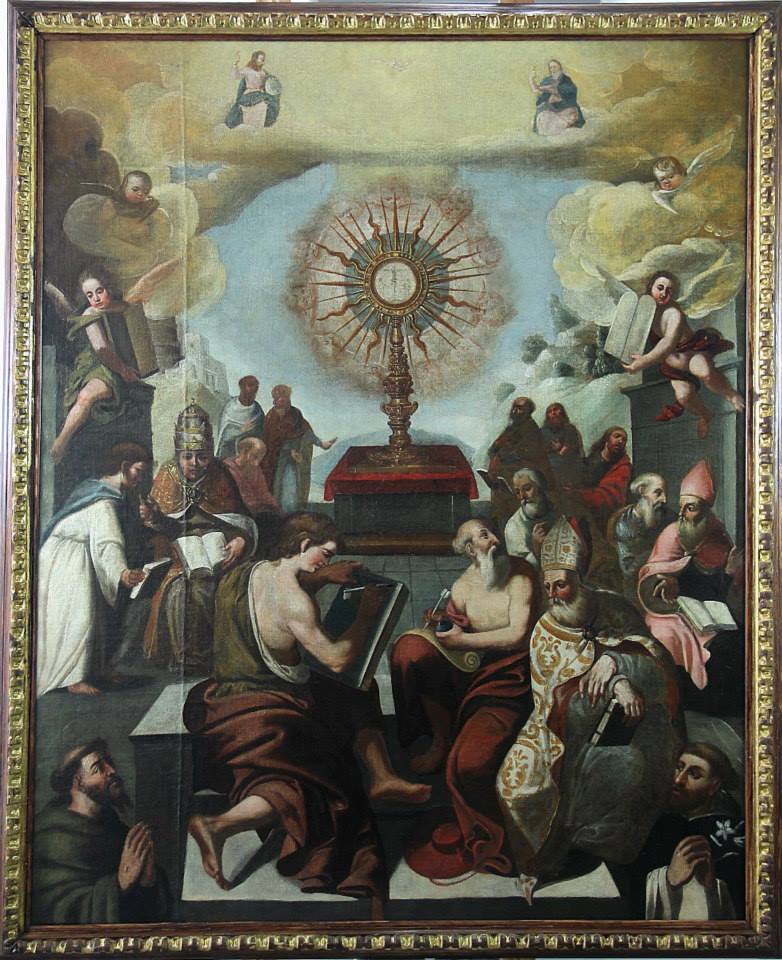
Pan de los cielos, luz del alma herida,
fuego escondido en blanca transparencia,
paz que desborda toda resistencia,
vida ofrecida por nuestra perdida.
Misterio fiel, presencia repartida,
silencio ardiente, santa permanencia,
manjar de amor, divina consistencia,
Cristo total en forma comprimida.
¿Quién comprenderá tan hondo abismo?
¿Quién no caerá de gozo ante tal don,
si el mismo Dios se queda por nosotros?
Ven, Eucaristía, dulce heroísmo:
haz de mi pecho cáliz y rincón,
y de mi vida, un pan partido a otros.
No hay urgencia en el gesto. No hay espectáculo. Jesús simplemente toma el pan, lo bendice, lo parte, lo reparte. Y todos comen. Y todos se sacian. Ningún otro signo habla tanto de Dios como este: un Dios que se parte para estar cerca. El milagro de la multiplicación es grande, sí. Pero más grande aún es el gesto oculto que lo precede: Jesús mira con compasión y confía en lo poco. No llama a los ángeles, no crea algo de la nada. Solo pide lo que hay. Y lo transforma. Así es Él. Esa misma lógica nos envuelve cada vez que celebramos la Eucaristía. Porque en el altar no solo se parte el pan: se parte el corazón de Cristo, y se nos da entero. Y si uno lo piensa, ¿cómo no temblar un poco antes de comulgar? ¿Cómo no arrodillarse por dentro? Mozart supo traducir ese temblor en música. Su Ave verum corpus —breve, casi tímido— no quiere impresionar, sino postrarse. Es música sin pretensión, sin artificio. Una plegaria hecha melodía. Parece escrita no para un público, sino para un altar. Cada nota cae como gota de luz, como si la música misma comulgara. No hay tensión, solo paz. No hay grandeza humana, solo el silencio de Dios que se deja tocar. “Ave, verdadero cuerpo, nacido de María Virgen”, canta el texto. Y uno entiende: esto no es solo música. Es adoración. Es teología que arde. Es música que acompaña al alma hasta ese umbral donde la fe deja de ser idea y se vuelve asombro. Pan que contiene al Rey. Sangre que lava. Presencia que sana. En la fiesta del Corpus Christi, el cristiano no explica. Contempla. Adora. Se deja invitar. Porque el que parte el pan sigue haciéndolo. Y sigue diciendo: “Denles ustedes de comer.” ¿Y qué podemos dar, si no es a Él mismo? ¿Qué puede saciar, si no es Su Cuerpo vivo entre nosotros? El milagro se repite. La mesa está servida. El Amor sigue siendo carne. Y basta con abrir las manos, como quien escucha en silencio el Ave verum, para descubrir que el cielo ya empezó • AE

El verano es para leer




 LA MEDITACION DE LA ESPOSA