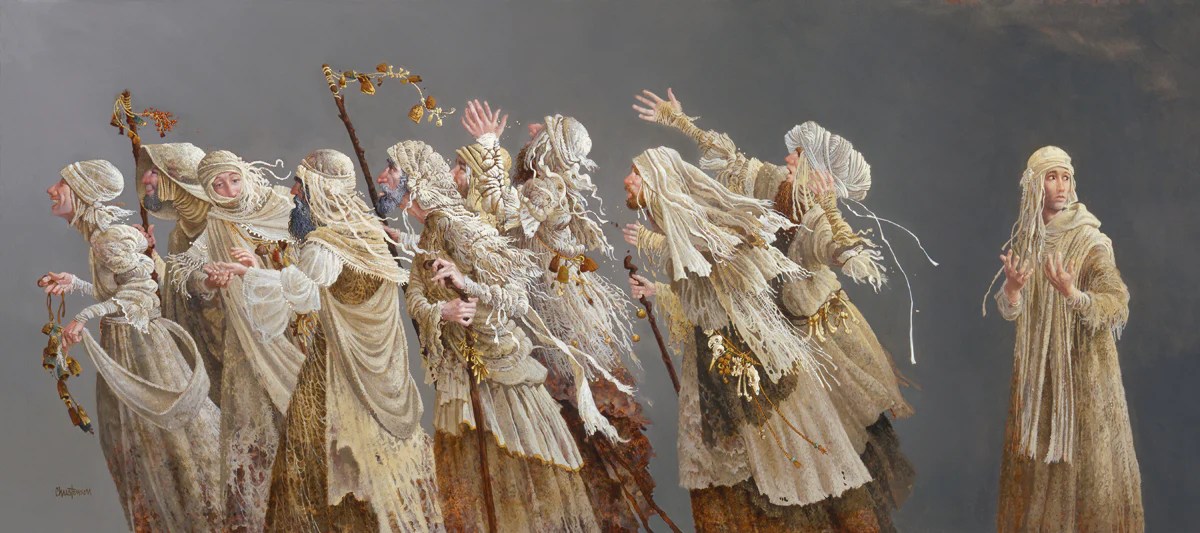
J. Christensen — Ten Lepers (2016 ), giclée on canvas, Private collection
Not every healing leads to salvation. Ten men were cleansed on the road to Jerusalem, but only one discovered the deeper miracle: he returned, gave thanks, and heard the words, “Your faith has saved you.” Gratitude is not an accessory virtue; it is the path into communion. This dynamic of suffering, recognition, and thanksgiving runs through our human story. Albert Camus, in The Plague, describes a city imprisoned by disease. Some survive, but remain unchanged. Others, touched by compassion, discover that even in the midst of affliction, the heart can learn to say yes to life. The Samaritan leper is that kind of figure: healed, but more importantly, awakened. Henryk Górecki’s Symphony of Sorrowful Songs carries the same truth in sound. Its slow movements begin in lament—like the cry of the lepers at a distance—but gradually rise into a fragile brightness. It is as if the music itself returns to give thanks, showing that gratitude can be born even out of sorrow. Pope Francis often reminded us that gratitude was the memory of the heart: the ability to recognize that everything is gift, and to let that recognition shape our lives. Without this memory, he warned, we risk being like the nine who walked away healed but unchanged. The nine received health. The one who returned received salvation. Gratitude did not just close his wounds; it opened his soul • AE

St. Joseph Catholic Church (Dilley, TX) • Weekend Schedule

Fr. Agustin E. (Parish Administrator)
Saturday, October 11, 2025
5.00 p.m. Sacramento de la Confesión
6.00 p.m. Santa Misa.
Sunday, October 12, 2025
8.00 a.m. Sacrament of Reconciliation
8.30 a.m. Holy Mass.
10.30 p.m. Sacrament of Reconciliation
11.00 a.m. Holy Mass
12.30 p.m. Sacrament of Baptism
XXVIII Domingo del Tiempo Ordinario (Ciclo C)
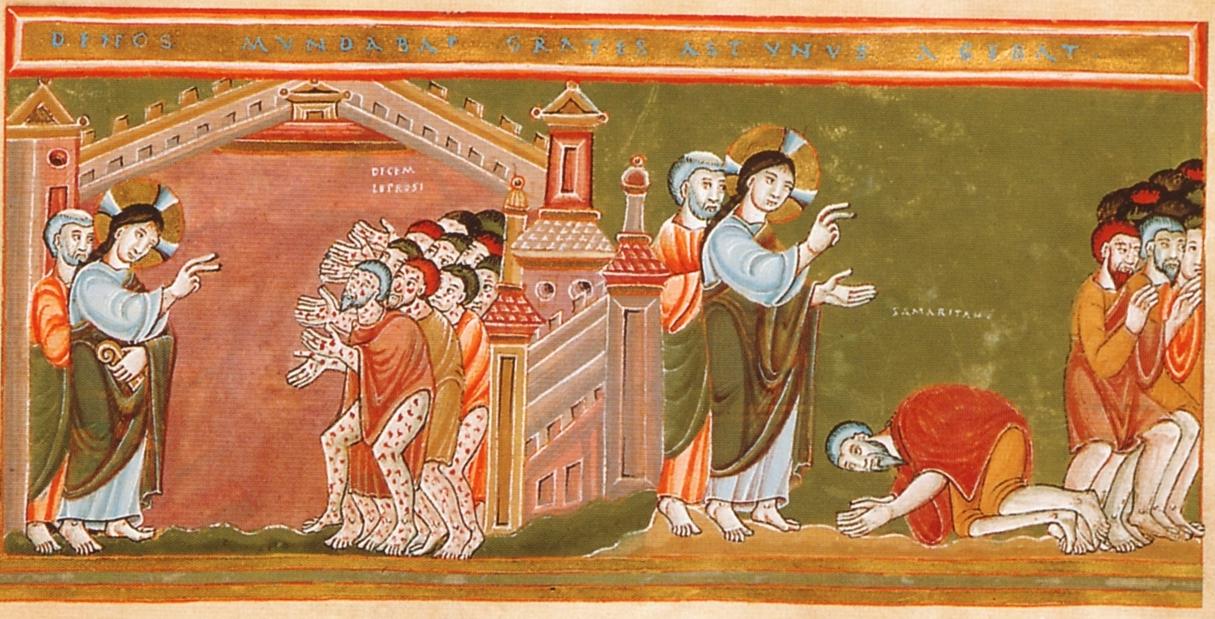
Autor anónimo, Purificación de diez leprosos, manuscrito iluminado en el Codex Aureus Epternacensis, Museo Nacional Germano (Nuremberg)
Diez fueron curados, pero solo uno volvió. Y era extranjero. No fue la lepra lo que distinguió a los diez —todos la sufrían—, sino la capacidad de reconocer el don y regresar. Jesús muestra con fuerza que la salvación no se da solo en el milagro, sino en la gratitud que despierta el milagro. Dostoyevski lo intuyó en Los hermanos Karamázov: no basta sobrevivir al sufrimiento, hay que aprender a mirar la vida con gratitud. Iván, con sus preguntas desgarradas, representa a los nueve que siguieron su camino, sanos pero vacíos. Aliósha, en cambio, encarna al extranjero agradecido: descubre que la bondad pequeña y la ternura son más fuertes que la desesperanza. Su fe no nace de la ausencia de dolor, sino de la capacidad de agradecer aún dentro de él. Esa misma voz se escucha en el Magnificat de Bach. No es una gratitud tímida, sino un estallido de júbilo: un canto que reconoce la grandeza de Dios en medio de la pequeñez humana. Es Maria, la Madre de Jesus quien lo entona. Así suena el corazón del samaritano al caer a los pies de Jesús: su fe se convierte en música. Este domingo el evangelio nos deja frente al espejo: ¿somos de los nueve que reciben sin volver, o de ese único que regresa, que canta, que agradece? La salvación no está en haber recibido un don, sino en haber descubierto al Dador • AE

¿Qué lees?

 LA MEDITACION DE LA ESPOSA