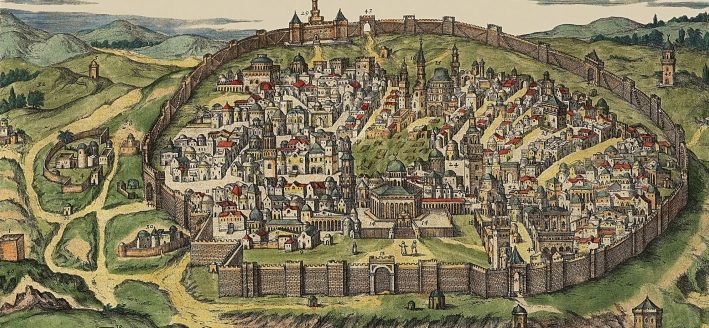
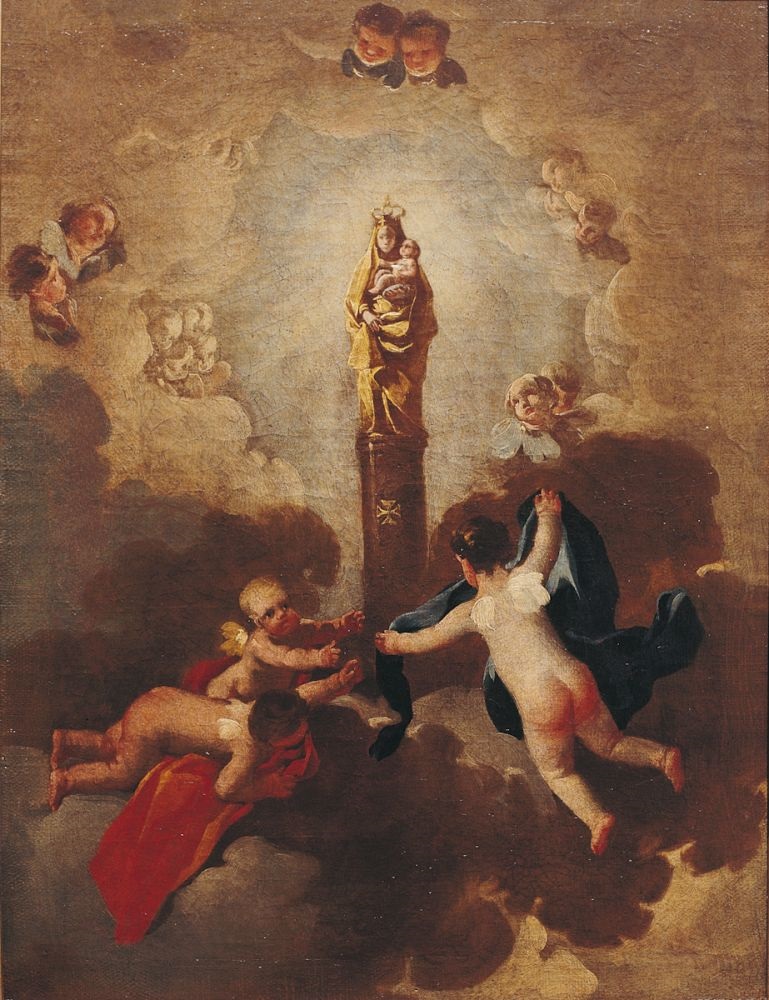
Among the many Marian titles cherished by the Church, Our Lady of the Pillar holds a special place in the history of Spain and beyond. The devotion traces its roots back to the earliest days of Christianity, to the Apostle James the Greater, who, according to tradition, was struggling in his missionary work in Zaragoza. In the year 40 A.D., the Blessed Virgin appeared to James while she was still alive in Jerusalem — a unique detail among Marian apparitions. She came to encourage the Apostle, standing upon a pillar of jasper, and asked him to build a chapel in her honor. From that pillar the devotion took its name, and from that moment Zaragoza became a place where heaven touched earth.
Through centuries, the shrine of Our Lady of the Pillar grew into one of Spain’s most beloved sanctuaries. Monarchs and saints came to pray there, and the faithful discovered in her presence both strength and consolation. She is honored not only as Patroness of Zaragoza, but also as Patroness of all Hispanic peoples. For this reason, her feast on October 12 coincides with the Día de la Hispanidad — a celebration of cultural and spiritual heritage across nations. Spiritually, the image of Mary on the pillar reminds us that faith is not something fleeting, but a firm foundation. Just as she encouraged James in his mission, she continues to sustain Christians in times of discouragement. To pause before her is to hear again the quiet words of a mother: “Do not give up; Christ is with you.”

La tradición cuenta que la Virgen María se apareció al apóstol Santiago en Zaragoza (España) cuando aún vivía en Jerusalén. Vino para sostener su misión, de pie sobre un pilar de jaspe, signo de la firmeza de la fe. Desde entonces, la basílica de El Pilar ha sido lugar de encuentro y de esperanza: los reyes, los pobres, los misioneros y los peregrinos acudieron a sus pies buscando fortaleza. No en vano, ella es patrona de España y de todos los pueblos hispanos. El Pilar nos recuerda que la fe no se sostiene en emociones pasajeras, sino en una roca firme: Cristo. Y que María, Madre de la Iglesia, nos alienta siempre a seguir caminando con confianza • AE
El ebro guarda silencio
Al pasar por el pilar
La virgen esta dormida, la virgen esta dormida
No la quiere despertar
Un carretero que viene
Cantando por el rabal
Lleva en su toldo pintada, lleva en su toldo pintada
Una virgen del pilar
Con trigo de cinco villas
Viene de sierra de luna
Y en los collerones lleva
Campanas, campanas, campanas las cinco mulas
Besos de nieve y de lumbre
Lleva el aire del moncayo
Y las mulas van haciendo
Heridas, heridas, heridas al empedrado
Cruzando el puente de piedra
Se oye una brava cancion
De las torres las campanas, de las torres las campanas
Estando canto oracion
Dos besos traigo en los labios
A mi virgen del pilar
Uno me lo dio mi madre, uno me lo dio mi madre
El otro mi soledad
El perro del carretero
Juega con la mula torda
Y es que saben que han llegado
Llegado, llegado, que han llegado a zaragoza
El ebro guarda silencio
Al pasar por el pilar
La virgen esta dormida
Dormida, dormida, no la quiere despertar
 LA MEDITACION DE LA ESPOSA