First Sunday of Advent (Cycle A)

The first Sunday of Advent always opens with a quiet shock: before the warmth of Christmas begins to glow, the Gospel speaks with the clarity of dawn—“Stay awake.” (Mt 24:37–44) The line functions almost like the spiritual alarm that T.S. Eliot hinted at when he wrote of those moments in life that press the soul beyond habit and into awareness. Advent belongs to that realm: an invitation to live alert in a world that often drifts through its days like the time of Noah—busy, efficient, untroubled, yet half-asleep to the movements of God. Even the music traditionally associated with this season carries the same gentle urgency; the opening of Handel’s Messiah, with its restrained and luminous “Comfort ye,” doesn’t rush toward triumph but prepares the heart for expectation, as though announcing that consolation itself begins with listening. Advent’s goal is not merely preparing for a feast but cultivating a readiness that can recognize the subtle ways grace breaks in—unexpected, unscheduled, unforced. To stay awake, in the Advent sense, is simply to allow the ordinary to become transparent again, to let the familiar be pierced by the possibility of God’s arrival • AE

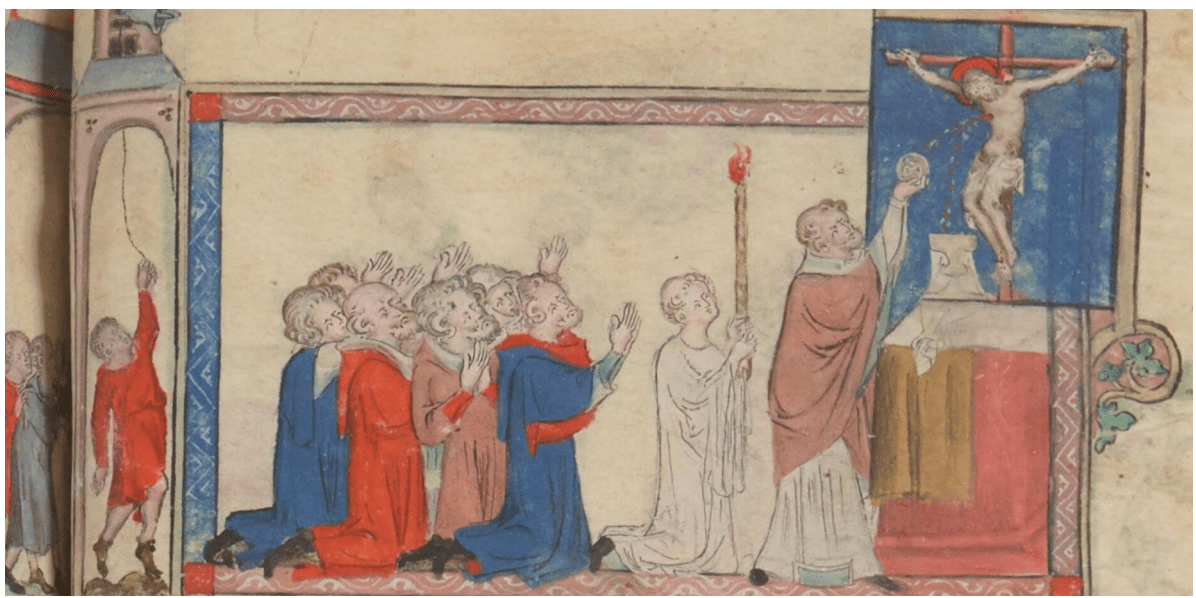
Handel’s Messiah opens not with spectacle but with consolation. Before its trumpets or majestic choruses, the oratorio begins with a voice speaking tenderness into a weary world: “Comfort ye, my people.” Drawn from Isaiah, these words set the tone for everything that follows. Messiah is not simply a musical masterpiece; it is a journey through longing, promise, incarnation, suffering, and victory—told with a clarity that has moved believers and non-believers alike for centuries. To listen to it at the beginning of Advent is to hear Scripture awaken in music: hope rising quietly before it breaks into joy •


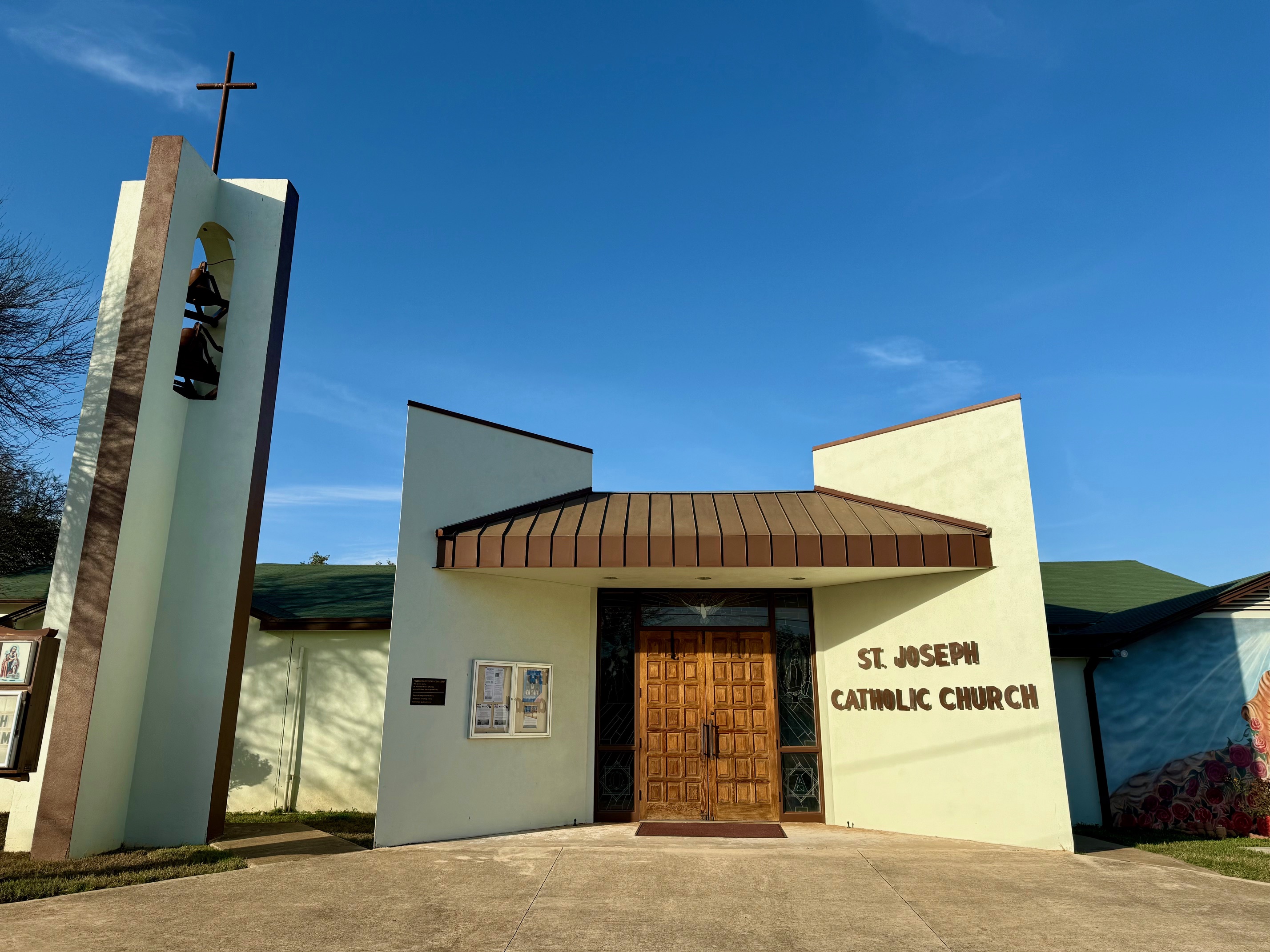
St. Joseph Catholic Church (Dilley, TX) • Weekend Schedule

Fr. Agustin E. (Parish Administrator)

Saturday, November 29, 2025

5.00 p.m. Sacramento de la Confesión

6.00 p.m. Santa Misa.

Sunday, December 30, 2025

8.00 a.m. Sacrament of Reconciliation

8.30 a.m. Holy Mass.

10.30 a.m. Sacrament of Reconciliation.

11.00 a.m. Holy Mass.


Primer Domingo de Adviento (Ciclo A)

El Evangelio de este primer domingo de Adviento sorprende porque no describe grandes señales, sino una vida que transcurre con total normalidad: comer, trabajar, planear… y de pronto, la visita de Dios. Jesús no exagera; muestra cuán fácil es dejar que la rutina apague la vigilancia interior. Esta llamada a “velar” no busca inquietar, sino despertar. Algo similar intuía Rabindranath Tagore cuando escribió que “el que está atento descubre la eternidad en un instante”. Adviento es precisamente ese arte: aprender a encontrar lo decisivo en lo aparentemente insignificante. Incluso la tradición musical de la Iglesia señala este camino interior: el Rorate caeli, ese canto antiguo que eleva el clamor del pueblo que espera—“Cielos, destilen el rocío”—es una súplica suave y luminosa, casi un suspiro, que expresa el deseo profundo de que Dios irrumpa en la sequedad humana como lluvia sobre tierra sedienta. Así llega Cristo: no interrumpiendo la vida, sino llenándola. Por eso el llamado de Jesús a estar despiertos no apunta a vivir tensos, sino disponibles; a reconocer que cada día, incluso el más común, puede convertirse en un umbral donde el Señor se acerca sin ruido y busca un corazón que no se haya dormido • AE

El canto gregoriano es la forma más antigua de música litúrgica que conservamos en la Iglesia: una melodía desnuda, sin instrumentos, sin ritmo marcado, construida para acompañar la oración más que para impresionar. Su fuerza está en la simplicidad: una sola voz que parece extender el alma hacia Dios. Dentro de este tesoro espiritual se encuentra el Rorate caeli, un canto propio del Adviento. Sus palabras, tomadas del profeta Isaías, expresan el anhelo de un pueblo que espera la llegada del Salvador: “Cielos, destilen el rocío.” Es una súplica suave, casi un suspiro, que pide a Dios que traiga luz donde hay cansancio, y esperanza donde la vida se ha vuelto árida. Escucharlo es entrar en la lógica del Adviento: una espera que no grita, sino que confía •


Lecturas de Adviento

Thanksgiving 2025

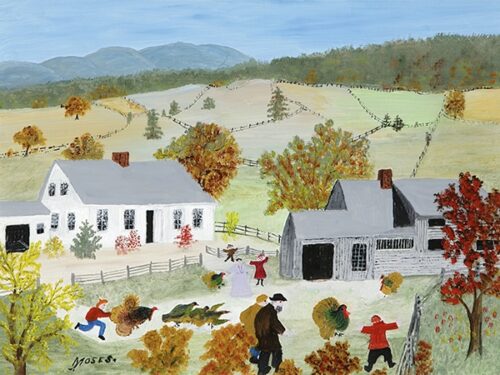
A. M. Robertson “Grandma” Moses, Catchin’ The Turkey, 1955 Oil on pressed wood, Collection of Bennington Museum.

Thanksgiving asks something deeply human and quietly spiritual of us: to slow down and truly look again. Look with the kind of attention Chesterton meant when he said the world isn’t short on wonders—only on people who still notice them. And perhaps that is why we need a day like this, a day that teaches us to recover wonder by paying attention to the small mercies God hides in plain sight: a conversation that lifts an old weight, the steady presence of friends, a table that gathers what life has scattered, the tenderness that arrives exactly when our spirit is tired. Even the music of the season seems to participate in this gentle work; Bill Evans’ soft, slightly wistful piano lines—familiar to anyone who remembers the Peanuts Thanksgiving specials—don’t announce anything grand, but they open a quiet space inside the heart. In that space, God often whispers that “enough” is not a downgrade but a grace. So wherever this Thanksgiving finds you—surrounded by family, working, traveling, or resting in a solitude you didn’t expect—may gratitude calm your breath, steady your spirit, and allow the kind light of God to enter once more. Happy Thanksgiving! • AE

The Solemnity of Our Lord Jesus Christ, King of the Universe (2025)

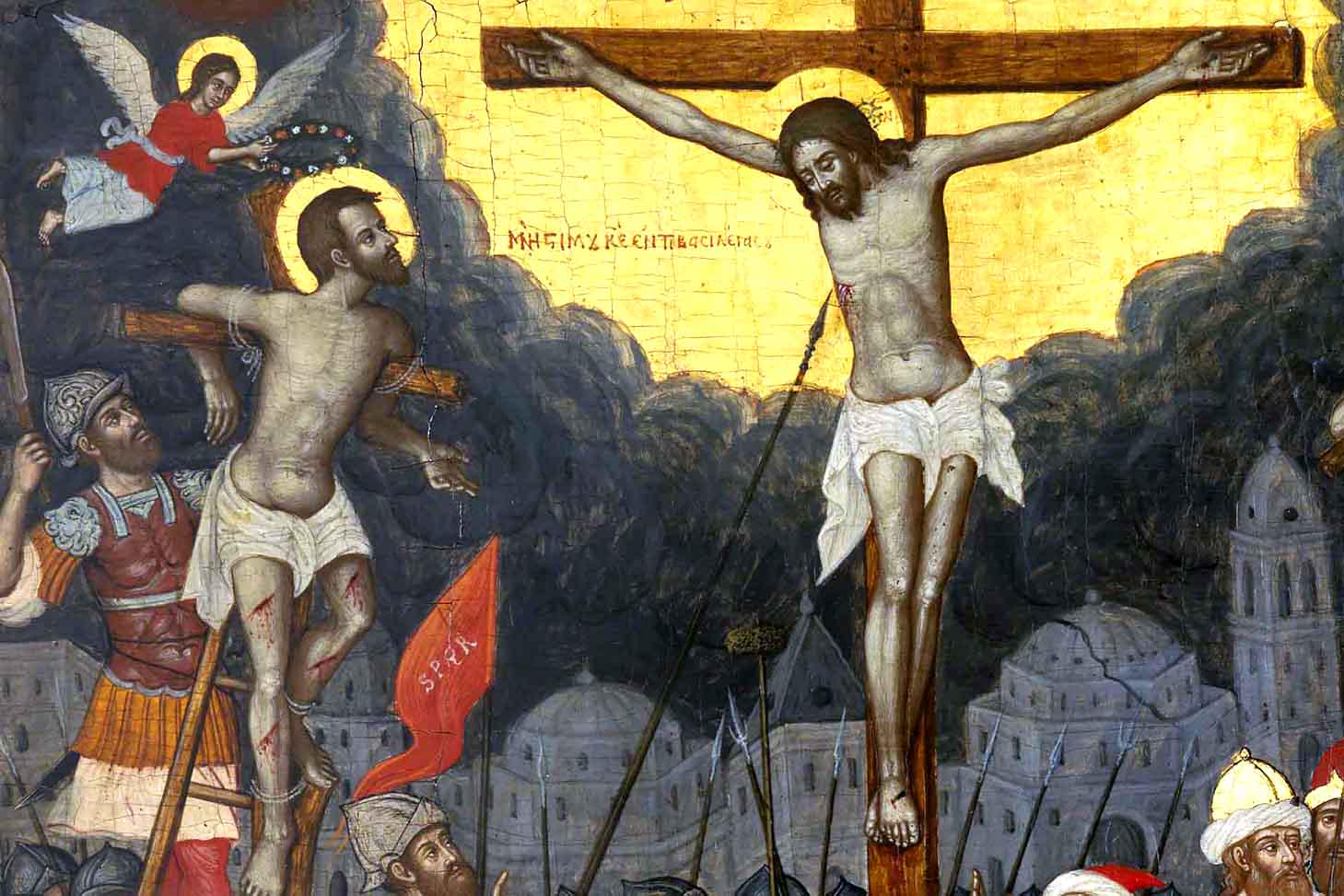
Anonymus artist, Crucifixion with the Good Thief, Cretan (Post-Byzantine) School, 16th–17th century, Tempera and gold on panel.

The Solemnity of Christ the King brings us to a throne no one expects: wood instead of marble, thorns instead of gold. In today’s Gospel (Luke 23:35–43), Jesus is mocked, pushed to “prove” His power: “If you are King of the Jews, save yourself.” One criminal demands a miracle—control, efficiency, a king who fixes things on command. But the other sees what power truly looks like. He doesn’t bargain or justify himself; he simply whispers, “Jesus, remember me when you come into your kingdom.” And Jesus answers with the promise every wounded heart longs to hear: “Today you will be with me in Paradise.” Christ reigns not by escaping suffering, but by entering ours—authority expressed as mercy. C.S. Lewis once wrote that the strongest love is not the one that shouts but the one that “stoops in order to lift.” That is Christ’s kingship: love that lowers itself to raise us. For prayer, listen to “Jesus, Remember Me” from Taizé, a small monastic community in France where simple, meditative chants repeat a single line until the heart prays more than the lips. It is the Good Thief’s prayer turned into a heartbeat. A King who remembers us—who reigns from the cross—reigns forever AE


St. Joseph Catholic Church (Dilley, TX) • Weekend Schedule

Fr. Agustin E. (Parish Administrator)

Saturday, November 22, 2025

10.00 a.m. Sacrament of Baptism for Zion Adriel Vasquez

5.00 p.m. Sacramento de la Confesión

6.00 p.m. Santa Misa.

Sunday, November 23, 2025

8.00 a.m. Sacrament of Reconciliation

8.30 a.m. Holy Mass.

10.30 p.m. Sacrament of Reconciliation.

11.00 a.m. Holy Mass.


Solemnidad de Nuestro Señor Jesucristo, Rey del Universo (2025)

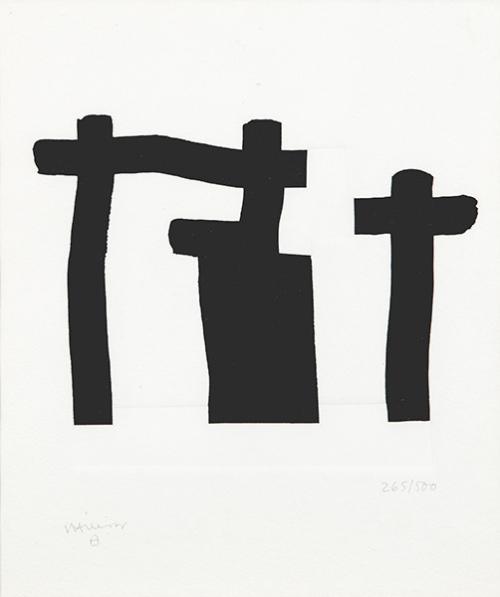
E. Chillida, El Buen Ladrón (1994), Serigrafía con relieve sobre papel, Colección Patrimonio Historico de la Universidad de Granada (España)

La solemnidad de Cristo Rey nos coloca delante de una escena que rompe todos los esquemas: un rey crucificado. En el Evangelio (Lc 23,35-43), Jesús no está en un trono ni rodeado de poder; está suspendido entre el cielo y la tierra, mientras unos lo miran con desprecio y otros lo usan para burlarse: “Si eres el Rey de los judíos, sálvate a ti mismo.” Ese es el tipo de rey que el mundo quiere: uno que demuestre fuerza inmediata, eficacia, control absoluto. Pero el Reino de Cristo es otra cosa: es un reino donde la autoridad se expresa en servicio y donde el poder se manifiesta en la entrega. El buen ladrón, sin saber teología, lo entiende mejor que todos: no le pide que baje de la cruz, le pide que no lo olvide. “Jesús, acuérdate de mí cuando llegues a tu Reino.” A veces, la fe se reduce a eso: a confiar cuando no entendemos, a permanecer cuando no sentimos. Gabriel García Márquez escribió que “la vida no es la que uno vivió, sino la que uno recuerda y cómo la recuerda para contarla”; en este monte, la memoria no es nostalgia, es salvación: el ladrón confía en ser recordado por Jesús, y Jesús transforma ese recuerdo en eternidad: “Hoy estarás conmigo en el Paraíso.” Para orar, escucha “Nada te turbe”, una adaptación musical de la oración de Santa Teresa de Jesús —breve, sencilla, teresiana— que repite una verdad perfecta para este evangelio: solo Dios basta. Ante un Rey que no impone, sino que acompaña, lo único que hace falta es dejarnos mirar por Él AE


¿Qué Lees?

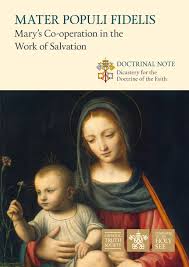
Puedes leer el texto en español de esta nota doctrinal de la Congregación para la Doctrina de la Fe aqui.


Thirty-third Sunday in Ordinary Time (Cycle C)

Signs and Wonders over Nuremberg (woodcut, 1561), Anonymous German broadsheet depicting celestial phenomena witnessed over Nuremberg on April 14, 1561.

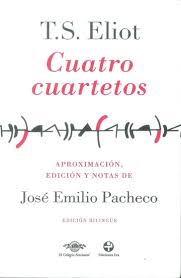
The Gospel opens with admiration—and ends with collapse. People are speaking of beauty, of marble and gold, of a temple that seems eternal. And Jesus cuts through the conversation: “All this will fall.” The sentence lands like thunder in a peaceful afternoon. It exposes how easily we confuse permanence with holiness. What they saw as indestructible, He saw as fragile. What they took for God’s glory, He knew could become an idol. Faith begins right there, in the crack between admiration and truth. The disciples ask when it will happen, but Jesus doesn’t give them a calendar—He gives them courage. “Do not be deceived… do not be terrified.” It is not prediction but pedagogy: the art of teaching hearts to endure. History will shake, friendships will fracture, certainties will crumble, yet grace will not. In Four Quartets, T. S. Eliot captures this same stillness in the storm: “The end is where we start from.” Faith is that paradox—the capacity to begin again when everything else ends. It’s the quiet strength that listens for God not in stability, but in movement. And music can sometimes preach that truth better than words. The slow movement of Beethoven’s Seventh Symphony never denies its sorrow, yet it keeps walking forward, phrase after phrase, until lament becomes light. That is perseverance: not the absence of fear, but the refusal to let fear have the final word. The stones will fall, but love will endure. Perseverance is not resistance—it is grace learning to breathe amid ruins • AE

Composed in 1812, Beethoven’s Seventh Symphony is pure movement—music that seems to breathe and march at once. Its slow movement, solemn and human, rises out of sorrow without sinking into it: a meditation on endurance turned into sound.


St. Joseph Catholic Church (Dilley, TX) • Weekend Schedule

Fr. Agustin E. (Parish Administrator)

Sunday, November 16, 2025

8.00 a.m. Sacrament of Reconciliation

8.30 a.m. Holy Mass.

10.30 p.m. Sacrament of Reconciliation.

11.00 a.m. Holy Mass.

6.00 p.m. Santa Misa.


XXXIII Domingo del Tiempo Ordinario (Ciclo C)

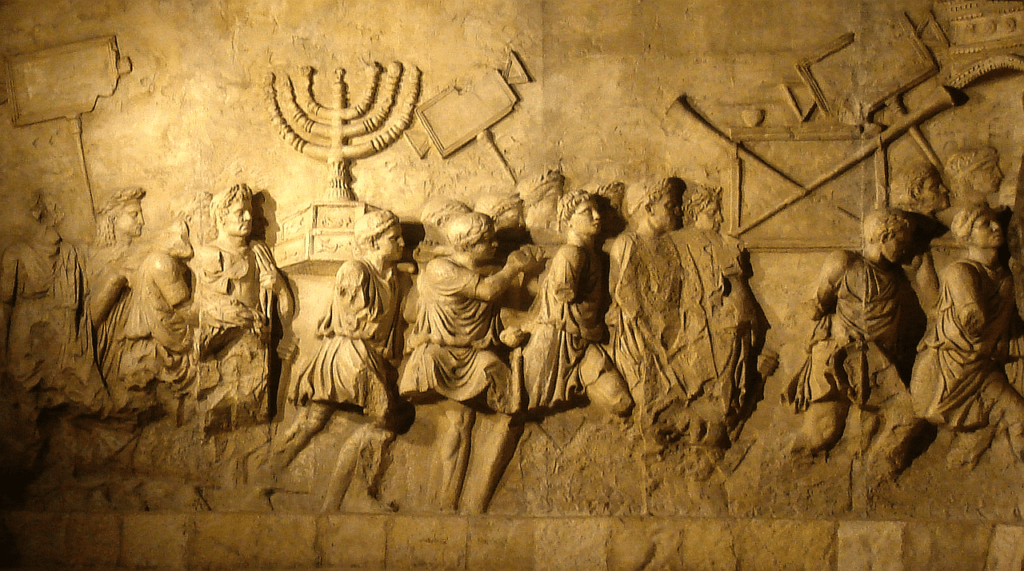
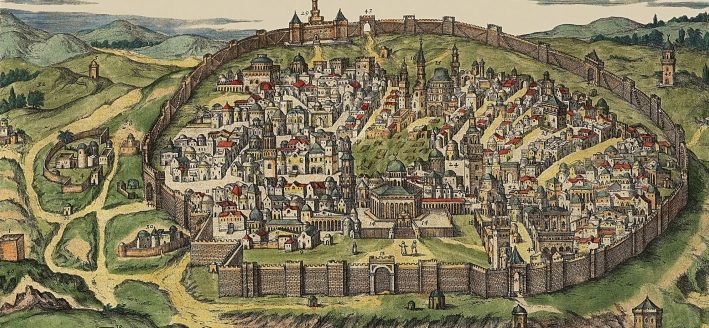
Relieve del saqueo del Templo de Jerusalén, Arco de Tito, Roma (c. 81 d.C.) Soldados romanos desfilan portando la menorá y los tesoros sagrados del Templo tras su destrucción en el año 70. Este relieve conmemora la victoria del Imperio sobre Judea y da forma visible a las palabras de Jesús: «No quedará piedra sobre piedra.»

El Evangelio de este domingo tiene algo de estremecedor. Jesús mira el esplendor del templo —el orgullo de su pueblo— y dice: “No quedará piedra sobre piedra.” No lo dice con rabia ni con desprecio, sino con lucidez. Porque lo que se derrumba no siempre es castigo: a veces es la única forma de revelar lo que permanece. Nos cuesta aceptar que también lo sagrado puede ser efímero, que Dios, de vez en cuando, permite que nuestras seguridades tiemblen para que descubramos dónde está realmente el cimiento. Mientras unos piden fechas y señales, Jesús habla de otra cosa: perseverancia. “Con su perseverancia salvarán sus almas.” No se trata de predecir el final, sino de aprender a vivir con fidelidad en medio de lo incierto. En tiempos de confusión, la tentación no es el miedo, sino el ruido: creer en voces que prometen certezas inmediatas. Pero el Evangelio no nos llama a eso; nos llama a la calma interior del que espera sin rendirse. Teresa de Ávila lo entendió mejor que nadie: “Nada te turbe, nada te espante… la paciencia todo lo alcanza.” Esa paciencia no es pasividad, sino la forma más pura de esperanza. Si uno escucha con el alma abierta, hasta la música puede volverse oración. En el Andante de la Sinfonía “Del Nuevo Mundo” de Dvořák, el oboe canta una nostalgia que no desespera, una tristeza habitada por promesa. Así es la fe cuando madura: no ignora la pérdida, pero la atraviesa con confianza. Las catedrales pueden colapsar, los tiempos cambian, los nombres se olvidan. Pero el amor que se aferra a Dios, ese no se perderá jamás • AE

Compuesta en 1893 durante su estancia en Nueva York, la Sinfonía n.º 9 “Del Nuevo Mundo” de Antonín Dvořák es una de las obras más luminosas del repertorio sinfónico. En ella, el compositor checo entrelaza la melancolía de su tierra natal con los cantos espirituales afroamericanos que escuchó en América. Su música respira distancia y esperanza al mismo tiempo: es el sonido de un corazón que añora el hogar, pero que aprende a encontrarlo en cada horizonte nuevo.


¿Qué andas leyendo?


Feast of the Dedication of the Lateran Basilica in Rome (2025)

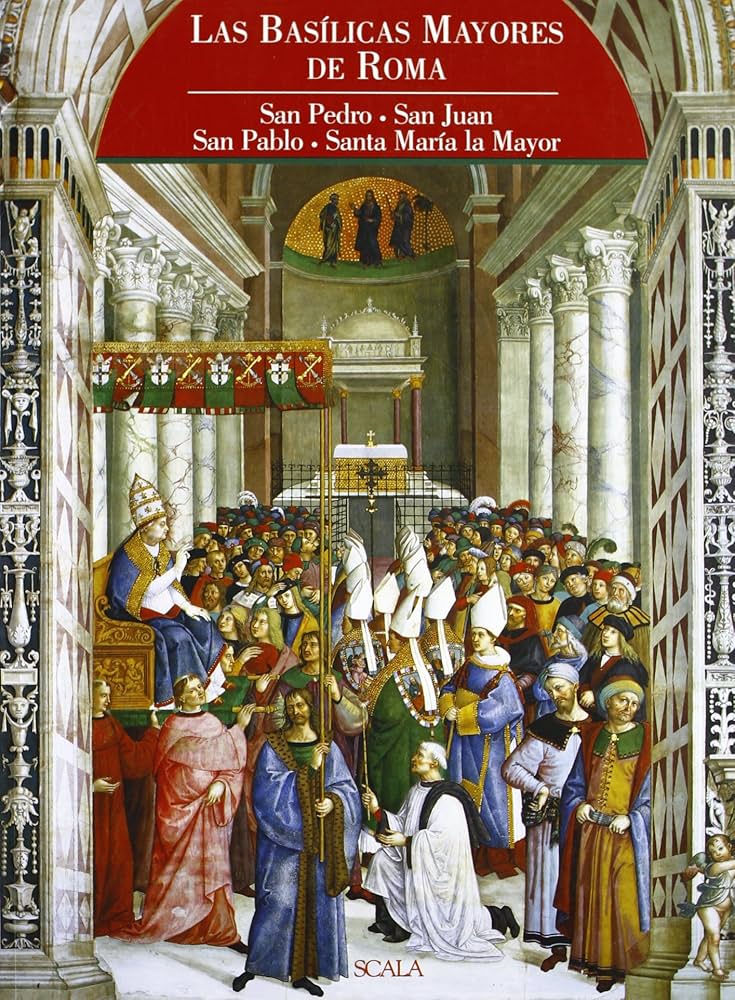
The Feast of the Dedication of the Lateran Basilica is not about marble in Rome. It is about God’s desire to dwell with his people. In today´s Gospel Jesus enters the temple, finds business where prayer should be, and drives it out with zeal. “Stop making my Father’s house a marketplace.” He was not destroying the temple but unveiling the deeper one: his own Body, raised up in three days. Reverence begins there. It is not nostalgia, nor ideology. It is awareness that the liturgy is the place where heaven leans down to earth. Some insist we can only worship rightly in one form, the Tridentine rite. That is not the teaching of the Church. Christ is present in every Mass celebrated faithfully, whether in Latin or in the vernacular, in the older or newer books. What counts is faith, humility, and awe. To stand in the liturgy is to stand on holy ground. We need silence, but also song. We need form, but even more, living hearts. It is not about taste or performance. It is about God. Rainer Maria Rilke once wrote that a true temple is “a space where words end and the unsayable begins.” That is reverence: letting God’s mystery overflow what we can manage or control. And music helps us taste that mystery. Think of Mozart’s Coronation Mass. Its radiant joy does not overwhelm the sacred, but lifts it. It teaches us that reverence is not silence alone — it is beauty that carries us beyond ourselves into God. May the Lord overturn what clutters our souls, as he once cleared the temple. May our churches shine with prayer, and our hearts become living temples where God is at home • AE

Mozart’s Coronation Mass in C major is not just a concert piece. It was written to be prayed. One of its most moving moments came when it was sung in St. Peter’s Basilica for the feast of Saints Peter and Paul, with Pope John Paul II presiding. Under Karajan’s direction, the music soared — not as performance, but as liturgy. Listening to it today, we can still sense that union of beauty and faith, where art becomes worship and music carries us into mystery.


St. Joseph Catholic Church (Dilley, TX) • Weekend Schedule

Fr. Agustin E. (Parish Administrator)

Saturday, November 8, 2025.

5.00 p.m. Sacramento de la Confesión

6.00 p.m. Santa Misa.

Sunday, November 9, 2025

8.00 a.m. Sacrament of Reconciliation

8.30 a.m. Holy Mass.

10.30 a.m. Sacrament of Reconciliation.

11.00 a.m. Holy Mass.


Fiesta de la Dedicación de la Basílica de Letrán (2025)

El Greco, Cristo expulsando a los mercaderes del templo (c. 1600), óleo sobre lienzo, National Gallery (Londres)

Hay edificios que cuentan historias, y otros que custodian misterios. El Laterano pertenece a los segundos. Este año su fiesta —la dedicación de la basílica— cae en domingo, y por eso la Iglesia nos invita a contemplar su sentido profundo. No importa tanto su fachada ni su antigüedad: lo que importa es lo que anuncia. Es un recordatorio de que Dios no se queda lejos, sino que ha querido tener casa entre nosotros. El Evangelio de hoy lo dice con la fuerza de un gesto. Jesús irrumpe en el templo, rompe la rutina del comercio y proclama: «No conviertan en un mercado la casa de mi Padre». No destruye, purifica. Y enseguida abre un horizonte mayor: el verdadero templo es su propio cuerpo, entregado y resucitado. Aquí nace la reverencia. No consiste en rigidez ni en nostalgia, sino en reconocer que la liturgia es tierra santa. Cada misa, celebrada con fidelidad a la Iglesia, nos coloca ante el misterio. No es necesario volver exclusivamente al rito tridentino para celebrar bien. La Iglesia enseña que Cristo está presente en toda eucaristía realizada según los libros aprobados. Lo esencial no es la forma única, sino la fe con que entramos en el misterio. El novelista Georges Bernanos lo expresó con una frase luminosa: «Todo es gracia». Esa certeza nos recuerda que lo sagrado no se produce con esfuerzo humano, se recibe con humildad. La liturgia es precisamente ese espacio donde la gracia se derrama sobre nosotros, si tenemos el corazón despierto. La música también puede conducirnos a esa actitud. El Gloria de Francis Poulenc, con su mezcla de gozo y asombro, nos enseña que lo santo no es pesado ni distante, sino cercano y vivo. Que Cristo limpie nuestros templos interiores, como hizo en Jerusalén. Que quite lo que estorba y nos convierta en morada viva, donde su misterio brille y atraiga • AE


¿Qué lees?