The Nativity of the Lord (Christmas) 2025

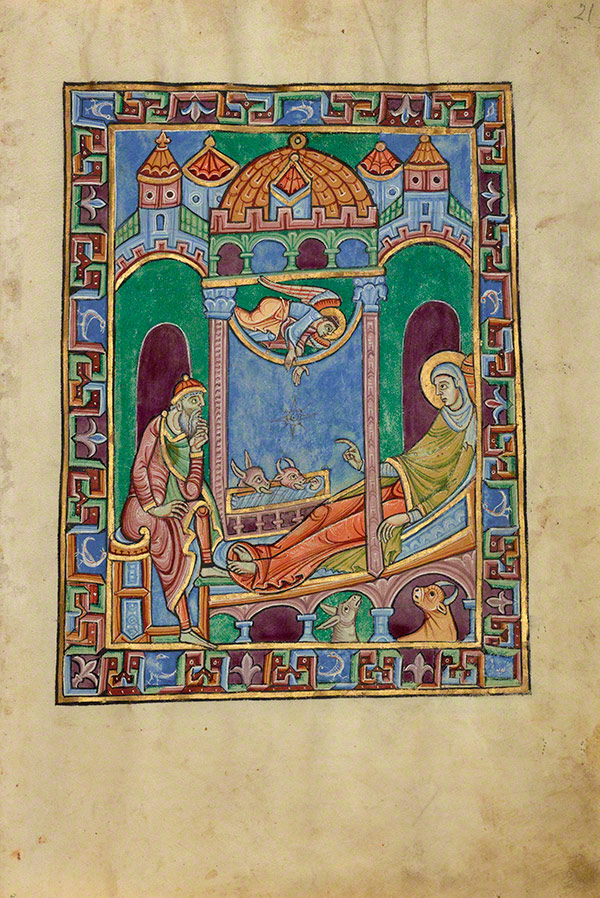
Alexis Master, The Nativity in the St. Albans Psalter (1130) Tempera and gold on parchment, Dombibliothek Hildesheim (Germany)

On Christmas Day, the Church does not begin with a manger or with shepherds, but with an abyss of light: “In the beginning was the Word”—before stars, before time, before our longing, there was already a Voice, and that Voice was God; and then comes the sentence that changes everything: “The Word became flesh and made his dwelling among us,” meaning that God did not merely visit us, He chose to live inside our history, inside our fragility, inside our night, so that no darkness would ever again be without a companion; this quiet, overwhelming descent of God into the world rises with incandescent joy in Christmas Oratorio, where heaven does not whisper from afar but sings its way into human time, and it finds an unexpected echo in the conversion of the heart in A Christmas Carol, where light breaks into a life that had learned to call darkness normal; and perhaps no one expressed this mystery more simply than Dorothy Day when she wrote, “I’m so glad Jesus was born in a stable. Because my soul is so much like a stable. It’s poor and in unsatisfactory condition—yet I believe that if Jesus can be born in a stable, maybe he can also be born in me”; “To all who accepted Him, He gave power to become children of God”—this is the true miracle of Christmas, not sentiment, not nostalgia, but a change of identity: we are no longer only creatures in the dark, we are sons and daughters in the Light, and that Light has chosen, forever, to dwell with us AE

The Christmas Oratorio by Johann Sebastian Bach is not a nostalgic museum piece—it is a living proclamation of the Incarnation in sound. Written in 1734 for the Christmas season, it does not escape into sentimentality; it announces, with clarity and strength, that God has entered real human history. It remains deeply relevant today because it speaks to the same hunger for meaning, light, and redemption that we still carry: whenever the world feels noisy, fractured, or tired, this music insists—joyfully and unapologetically—that God is with us, now as truly as on the first Christmas


St. Joseph Catholic Church (Dilley, TX) • Christmas Schedule

The Nativity of the Lord (Christmas Eve)

Wed. December 24 • 6:00 p.m. Mass

The Nativity of the Lord (Christmas Day)

Thu. December 25 • 11:00 a.m. Mass


La Natividad del Señor (2025)

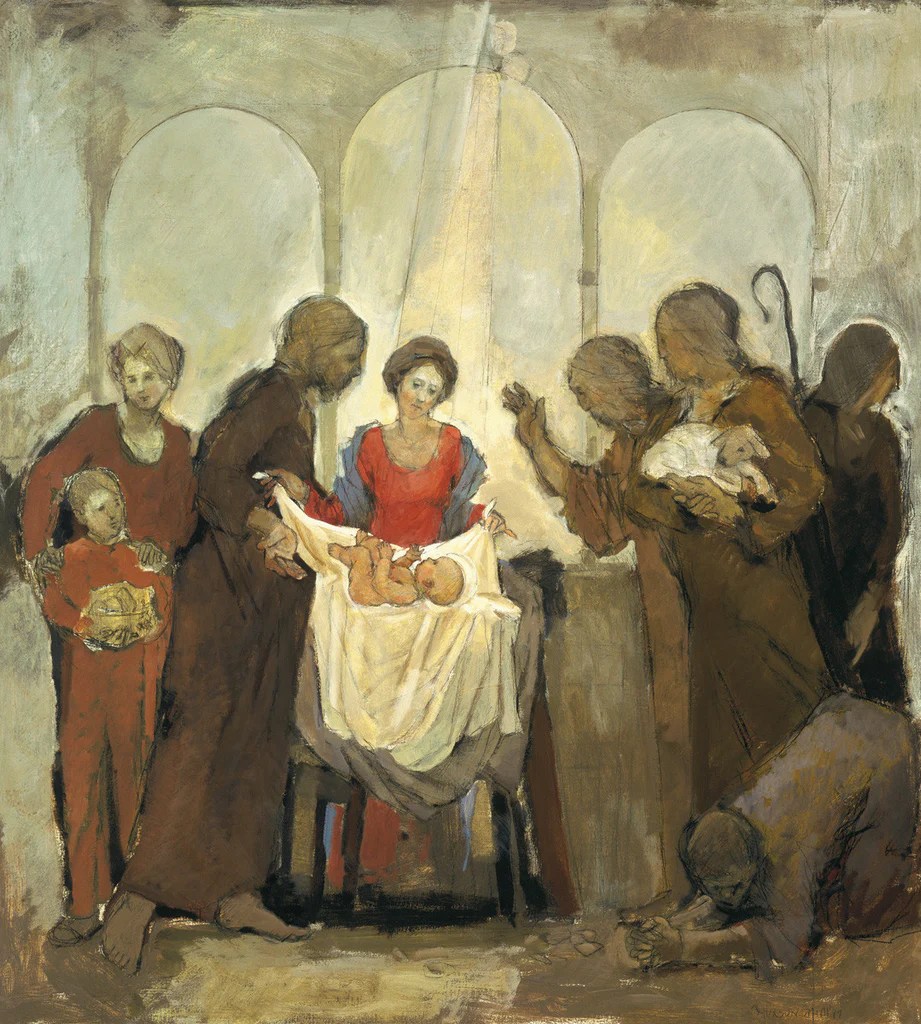
Bruce Hixson Smith, Natividad, tinta pigmentada de archivo sobre papel, colección particular.

Todos necesitamos alguna vez poder decir: “lo he visto con mis propios ojos”. Eso mismo proclama hoy la liturgia de la Iglesia en el salmo responsorial: que la salvación no es una idea, ni un consuelo interior solamente, sino algo que ha llegado a ser visible en la historia. “Toda la tierra ha visto al Salvador” no es una frase piadosa: es una afirmación audaz, casi desbordada, que dice que Dios ya no actúa en escondidas, que su victoria no pertenece a unos pocos, que ha salido a la luz y se ha dejado ver por todos; por eso el salmo se vuelve canto, instrumento, júbilo compartido, porque cuando la salvación se hace visible, el corazón ya no cabe en el silencio. Y enseguida, la carta a los Hebreos nos lleva aún más lejos: ese Salvador visto por la tierra no es solo un profeta, ni un mensajero más, sino el resplandor mismo de la gloria de Dios, la imagen fiel de su ser, el que sostiene todo con su palabra. Ya no se trata solo de que Dios haya hablado, sino de que ahora Él mismo se nos ha dado en un Hijo. El Niño que hoy contemplamos no es solo frágil: es también el que purifica el pecado, el que sostiene el universo, el ante quien incluso los ángeles se postran. Por eso hoy la Iglesia no celebra solo un nacimiento entrañable; celebra una revelación total: que Dios se ha hecho visible, cercano, reconocible; que ya no hablamos de Él “a tientas”, sino mirándolo en un rostro humano. Hoy la fe no es solo promesa: es visión. Y esa es la alegría profunda de la Navidad AE

Puer natus est en la versión polifónica de William Byrd es un canto de Navidad que convierte la proclamación del nacimiento de Cristo en pura luz sonora. Compuesto en la Inglaterra del siglo XVI, en tiempos difíciles para los católicos, este motete transforma la fe en resistencia serena y belleza interior. En la interpretación de Alexander Blachly con el conjunto Pomerium, el anuncio —“Nos ha nacido un Niño”— no se impone con fuerza, sino que se abre paso con claridad, como una alegría que nadie puede silenciar


Fourth Sunday of Advent (Cycle A)

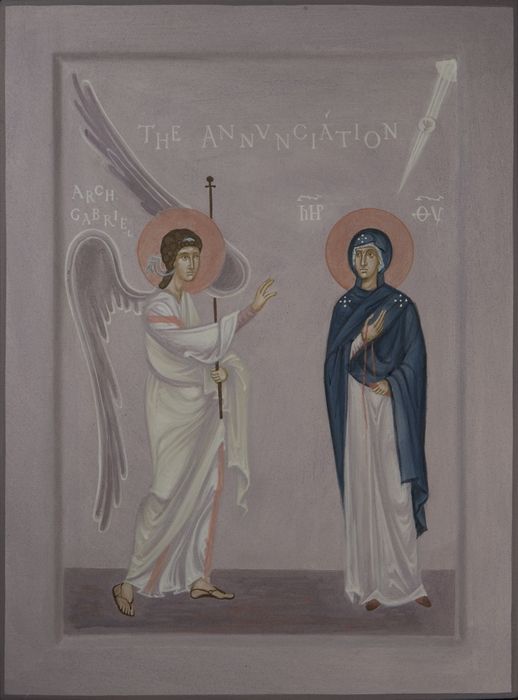
The Annunciation (2016), Contemporary sacred icon commissioned for a Christian church
Painted by Philip Davydov and Olga Shalamova as part of a series of icons of the Christian feasts.

On this final Sunday of Advent, everything quietly converges in Mary: the ancient promise given to a frightened king in Isaiah—“the virgin shall conceive and bear a son”—and the simple, trembling obedience that unfolds in the house of Joseph; what was once only a sign spoken into uncertainty now becomes flesh in her hidden life, and that is the beauty of today’s unity between the first reading and the Gospel—God speaks first through prophecy, and then He answers Himself through a woman who trusts Him without conditions, allowing Emmanuel, “God-with-us,” to truly enter our world; Joseph’s obedience protects the mystery, but Mary carries it, and in her the door of the Psalms finally opens—“Let the King of Glory enter”—not into a temple of stone, but into a human body and a human history; this is the Church’s last whispered joy before Christmas, and it sounds like the ancient Advent prayer of Alma Redemptoris Mater, where the world begs the Mother to help us receive what she alone first received, while her interior path is illuminated with rare tenderness in The Reed of God, where Mary is seen not as distant perfection but as the fragile reed through which God allows His breath to pass into the world; Isaiah announces the sign, Matthew reveals its fulfillment, but Mary is the living bridge between promise and presence—and through her quiet yes, the King of Glory finally finds His way inside AE

Alma Redemptoris Mater is one of the four great Marian antiphons of the Church, traditionally sung from the beginning of Advent until the Feast of the Presentation in February; it emerged in the early Middle Ages (around the 11th century) as part of monastic night prayer, where it served as a tender plea to Mary at the threshold of the Incarnation. Its text calls her the “loving Mother of the Redeemer” and captures the heart of Advent itself: the world leaning toward Mary, asking her help as it waits for Christ to be born


St. Joseph Catholic Church (Dilley, TX) • Weekend Schedule
Fr. Agustin E. (Parish Administrator)

Saturday, December 20, 2025.

10.00 a.m. Sacrament of Baptism

5.00 p.m. Sacramento de la Confesión

6.00 p.m. Santa Misa.

Sunday, December 21, 2025

8.00 a.m. Sacrament of Reconciliation

8.30 a.m. Holy Mass.

10.30 a.m. Sacrament of Reconciliation.

11.00 a.m. Holy Mass.


IV Domingo de Adviento (Ciclo A)

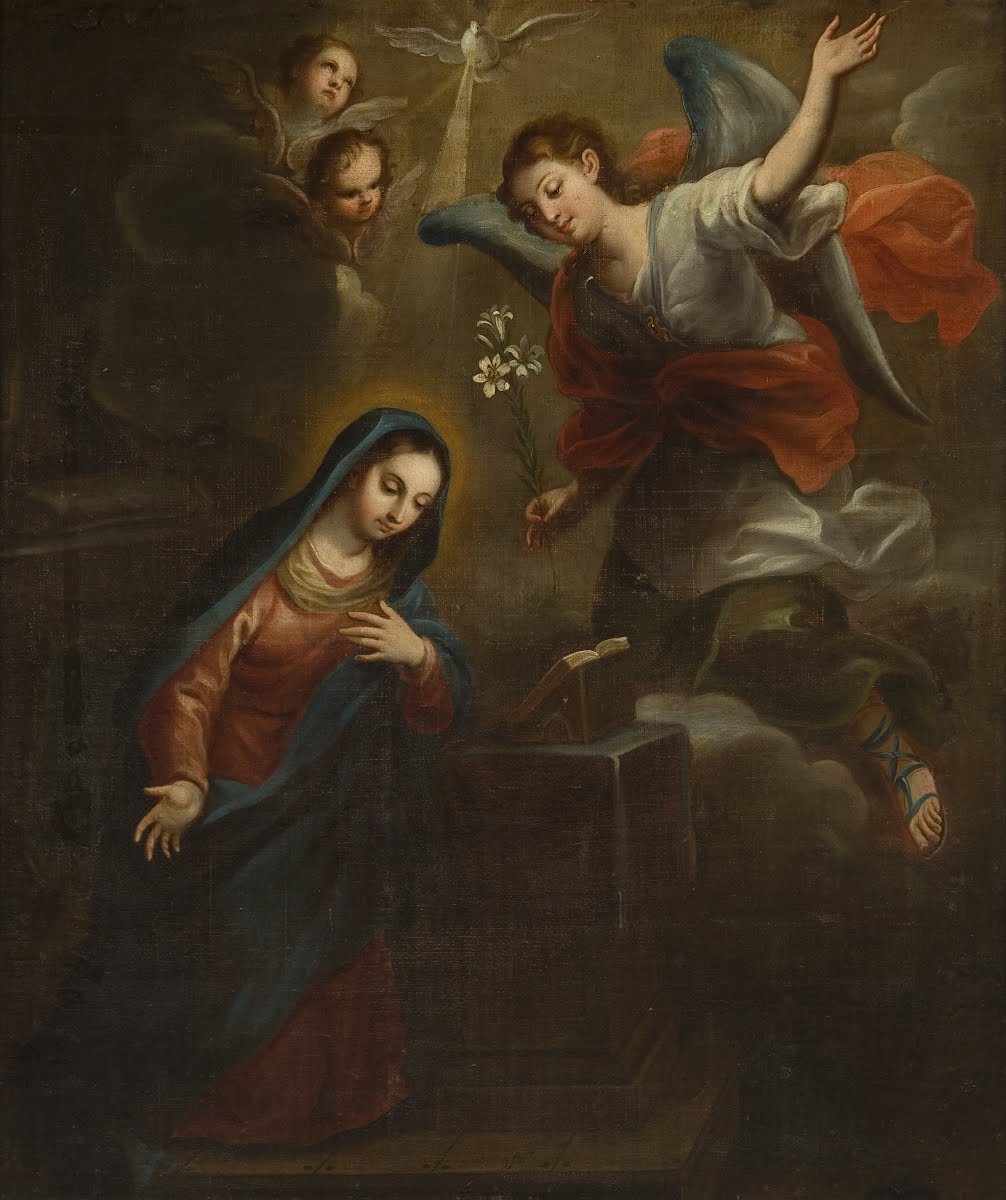
Miguel Cabrera, La Anunciación (1760), óleo sobre tela, Museo Arocena (Torreón, México)

En el umbral de la Navidad, la liturgia ya no nos habla de caminos que se enderezan ni de desiertos que florecen, sino de un hogar concreto donde Dios decide entrar sin estruendo: una casa sencilla, una mujer joven, un hombre justo; la antigua promesa hecha a la casa de David en Isaías deja de ser un eco lejano y se convierte en pulso real dentro del cuerpo de María, y el salmo —“Que entre el Rey de la gloria”— ya no suena como una consigna, sino como una confesión humilde: Dios no irrumpe, pide paso; san Pablo nos recuerda que este Jesús pertenece a nuestra historia, a nuestra sangre, a nuestra carne, y el evangelio nos enseña que ese descenso de Dios solo es posible porque alguien se fía sin entender del todo; María no controla el misterio, lo acoge, y José no lo explica, lo protege; en este último domingo de Adviento aprendemos que la fe verdadera no siempre tiene palabras claras, pero siempre tiene espacio disponible, y que Emmanuel no nace donde hay certezas perfectas, sino donde hay corazones que se atreven a abrir la puerta aun con miedo AE

Missus est Gabriel nace en pleno Renacimiento, cuando la Iglesia vivía un gran florecimiento de la polifonía: música escrita para varias voces independientes que se entrelazan en perfecta armonía. Su compositor, Giovanni Pierluigi da Palestrina, fue la gran figura de este estilo en Roma durante el siglo XVI, y su música marcó el modelo de cómo debía sonar el canto sagrado después del Concilio de Trento: bello, claro y profundamente orante. En este motete, la Anunciación no se cuenta con dramatismo, sino con una serenidad luminosa que ayuda a escuchar el misterio desde dentro


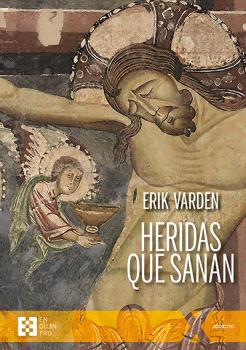
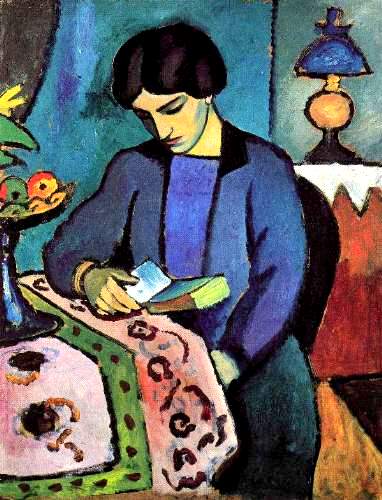
¿Qué lees?


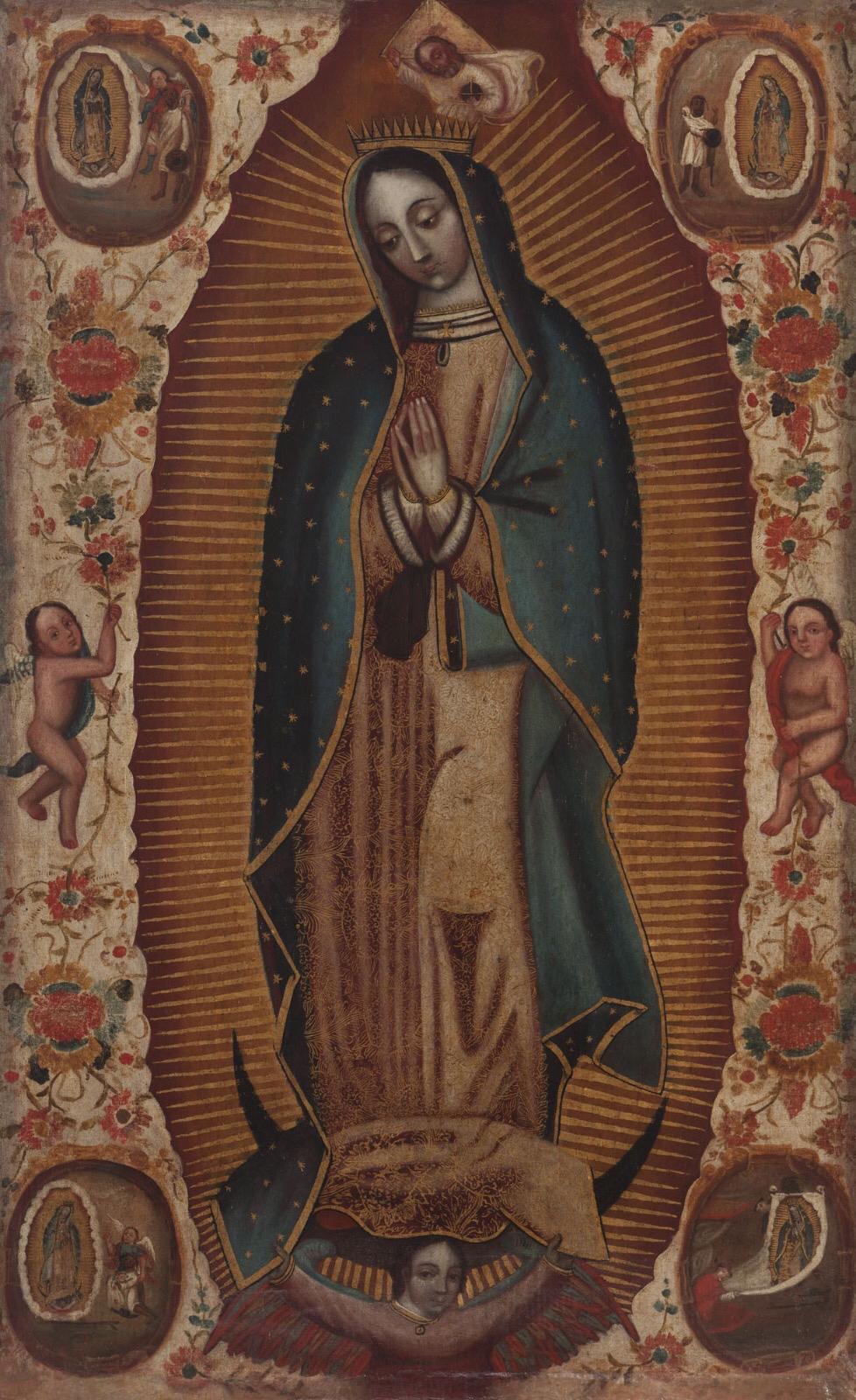
Nuestra Señora de Guadalupe (2025)

La Virgen de Guadalupe no aparece para demostrar poder, aparece para curar el miedo. No levanta la voz, no impone, no deslumbra con fuego del cielo: se acerca como madre, se presenta con palabras que todavía hoy estremecen por su suavidad —“¿No estoy yo aquí que soy tu madre?”— y en esa sola frase redefine toda una historia de dolor, derrota y humillación. Guadalupe no es primero un prodigio botánico ni una imagen impresa milagrosamente; es, antes que nada, una respuesta de Dios a un pueblo herido que había aprendido a desconfiar del futuro. Lo verdaderamente revolucionario de Guadalupe no son las rosas, sino el modo en que Dios decide hablar: no desde el centro del poder, sino desde la periferia; no a los sabios, sino a un hombre sencillo; no con amenazas, sino con consuelo. En un mundo marcado por la conquista, la violencia y el despojo, María no viene a justificar nada, viene a proteger lo frágil. Y eso sigue siendo escandalosamente actual. Guadalupe nos revela un rasgo profundo del Evangelio: Dios no irrumpe como dueño que exige, sino como Madre que acompaña. No borra la historia de sufrimientos, pero la habita. No elimina la cruz, pero la vuelve fecunda. Por eso esta fiesta no es solo mexicana, es un espejo del corazón cristiano: allí donde todo parece perdido, Dios no se retira… se acerca más. Celebrar Guadalupe no es repetir una leyenda: es reconocer que la fe verdadera siempre tiene acento de ternura, lengua de consuelo y rostro materno. Y eso, más que rosas, es el milagro que sigue floreciendo • AE

Viernes 12 de Diciembre, 2025.

6.00 a.m. Mañanitas y Santo Rosario

7.00 a.m. Santa Misa (Bilingue)

6.00 p.m. Santa Misa (Bilingue)

7.00 p.m. Recepción en St. Joseph Hall


Third Sunday of Advent (Cycle A)

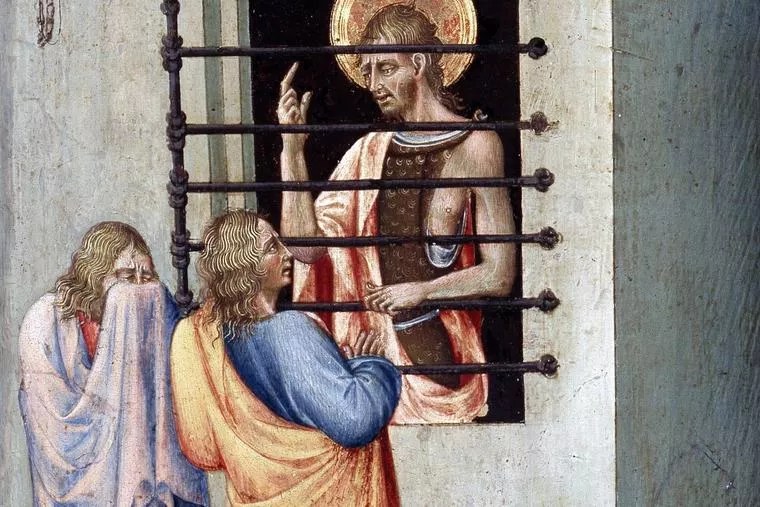
Giovanni di Paolo, St. John the Baptist in Prison Visited by Two Disciples (detail), (ca. 1455), tempera on panel, Art Institvte of Chicago.

Joy breaks through this Sunday not as noise but as deep assurance: the desert blooms, the blind see, the poor hear good news, and even John—chained in prison—dares to ask the question that lives in every waiting heart, “Are you the one, or should we look for another?”; Advent answers not with explanations but with transformed lives, and on this Gaudete Sunday that joy surfaces quietly but unmistakably, like the luminous calm that rises from O vis aeternitatis, where eternity seems to breathe through fragile human sound, while the patience Saint James asks of us mirrors the hope expressed in The Flower, where what appears buried is already stirring toward life; John is not offended by doubt but purified by it, and Jesus does not rebuke his question—he simply points to what is happening, as if to say: look closely, joy is already at work in the wounds of the world, and blessed are those who do not trip over the quiet way God chooses to arrive.

Hildegard of Bingen was a Benedictine abbess, visionary, and one of the most original musical voices of the Middle Ages, whose chants shimmer with theology, nature, and fire-bright faith. Her hymn O vis aeternitatis is a radiant meditation on God as living, burning eternity—music that feels less sung than breathed, as if light itself were given a voice AE


St. Joseph Catholic Church (Dilley, TX) • Weekend Schedule

Fr. Agustin E. (Parish Administrator)

Saturday, December 13, 2025

10.00 a.m. Sacrament of Baptism

5.00 p.m. Sacramento de la Confesión

6.00 p.m. Santa Misa.

Sunday, December 14, 2025

8.00 a.m. Sacrament of Reconciliation

8.30 a.m. Holy Mass.

10.30 a.m. Sacrament of Reconciliation.

11.00 a.m. Holy Mass


III Domingo de Adviento (Ciclo A)

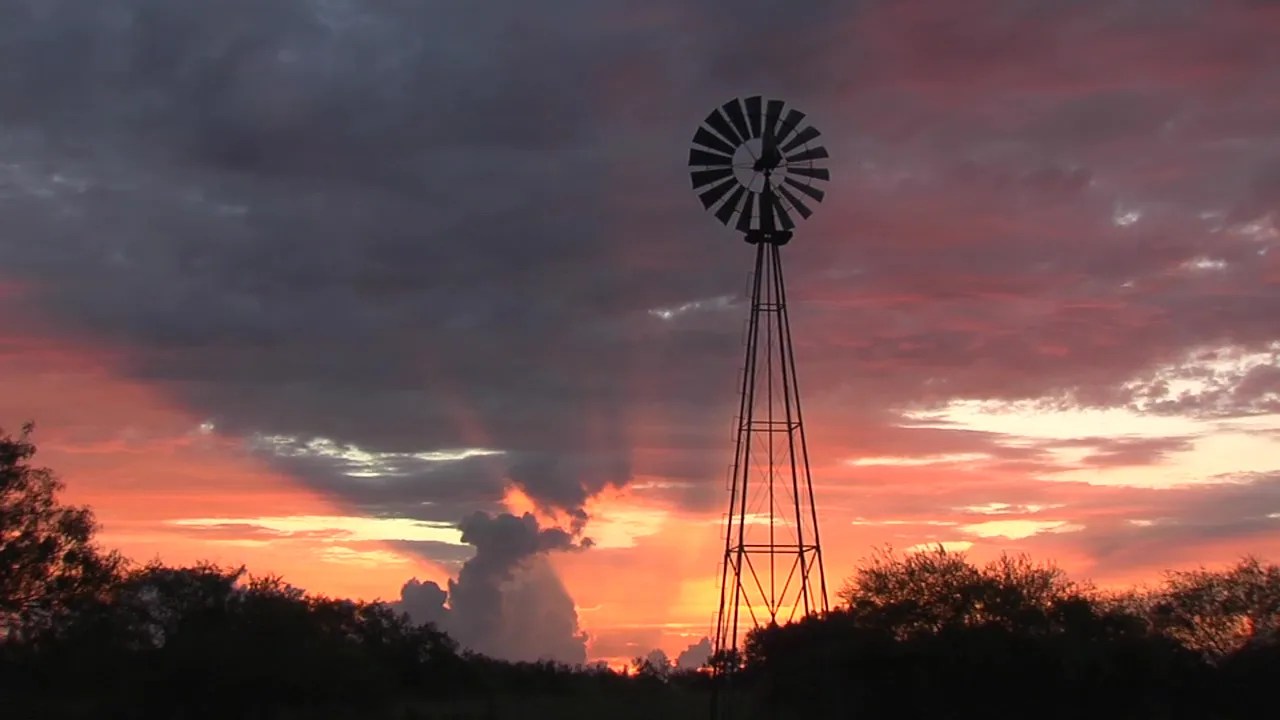
Amanecer en Dilley, en el sur de Texas.

El profeta Isaías hoy no habla de teorías, habla de un desierto que florece, de cuerpos que vuelven a moverse, de bocas que recuperan el canto, y esa imagen lo dice todo: cuando Dios se acerca, la vida vuelve a circular; por eso este domingo, en medio de un Adviento sobrio, la Iglesia se permite un respiro de alegría y hasta cambia el color al rosa, no como un lujo, sino como un anuncio discretísimo de que la espera no es amarga, de que la salvación ya está asomando en el horizonte; la alegría cristiana no nace de que todo esté resuelto, sino de saber que Dios ya viene en camino, que el desierto no tendrá la última palabra, que las manos débiles volverán a ser fuertes y los corazones asustados aprenderán otra vez a confiar; Gaudete no es una orden de sonreír, es una invitación a mirar más hondo y descubrir que, incluso antes de ver el fruto, la raíz ya está viva AE

Morning Mood nace como parte de la música incidental compuesta por Edvard Grieg en 1875 para la obra teatral Peer Gynt, del escritor noruego Henrik Ibsen; en escena, esta pieza acompaña un amanecer en tierras lejanas, y por eso su música avanza lentamente desde la penumbra hasta la luz, como una salida de sol hecha sonido. Lo que hoy escuchamos como una obra independiente fue, en su origen, música creada para enseñar al público a “ver con los oídos” cómo despierta el día.


¿Qué lees estos días?


Solemnity of the Immaculate Conception of the Blessed Virgin Mary (2025)

Before Mary ever spoke her yes, God had already spoken His over her life; before she conceived the Son of God in Nazareth, she herself had been conceived in grace, preserved from original sin from the first instant of her existence, not by her own merit but by the saving power of Christ applied in advance, and that is the quiet fire we celebrate in this beautiful and luminous Solemnity of the Immaculate Conception: not first what Mary does, but what God dares to do in a human creature when nothing resists His love; the Annunciation then becomes the revelation of that hidden miracle—a heart already free, a will already transparent—ready to receive the Word without fear or shadow, a purity that does not isolate her from us but shows us what redemption truly intends, a beauty that rises with the ancient prayer of Tota Pulchra es Maria, where grace is sung as an original splendor, and a hope as daring as the faith confessed in Revelations of Divine Love, where the soul learns that God secures our healing before we even know we are wounded; Mary’s “Let it be done to me” is only possible because grace was there first, and in her Immaculate beginning we glimpse not distance from humanity, but the destiny God still desires for us all • AE

Ola Gjeilo’s Tota Pulchra es unfolds as a prayer shaped by silence as much as by sound—music that does not overpower the quiet, but sings with it, allowing stillness itself to resonate; in this luminous setting by Ola Gjeilo, as performed by the Mogens Dahl Chamber Choir, the ancient Marian text rises like light in darkness, lifting the soul gently toward eternity, with beauty that points beyond itself rather than drawing attention to itself.


St. Joseph Catholic Church (Dilley, TX)

Fr. Agustin E. (Parish Administrator)

Sunday, December 7, 2025

6.00 p.m. Vigil Mass (bilingual)

Monday, December 8, 2025

6.00 p.m. Holy Mass (bilingual)


Solemnidad de la Inmaculada Concepción de la Santísima Virgen María (2025)

Salve, Madre, en la tierra de tus amores,
te saludan los cantos que alza el amor.
Reina de nuestras almas, flor de las flores,
muestra aquí de tu gloria los resplandores;
que en el cielo tan sólo te aman mejor.

Virgen santa, Virgen pura,
vida, esperanza y dulzura
del alma que en ti confía;
Madre de Dios, Madre mía,
mientras mi vida alentare,
todo mi amor para ti;
mas si mi amor te olvidare,
Madre mía, Madre mía,
aunque mi amor te olvidare,
tú no te olvides de mí.

La Inmaculada Concepción nos habla de un misterio escondido en el origen, de una gracia que no hace ruido y que, sin embargo, lo decide todo: Dios miró a María antes de que el mundo la viera, la pensó sin grietas, la soñó sin sombra, y en ella mostró que su proyecto para la humanidad no es el pecado sino la belleza; por eso la Iglesia no se cansa de invocarla en las Letanías Lauretanas como Arca de la alianza, Puerta del Cielo, Estrella de la Mañana, no como títulos poéticos, sino como confesiones de fe en una obra que es toda de Dios, una obra donde la gracia no corrige después, sino que previene, protege y prepara, para que cuando llegue la hora del “sí” ese corazón pueda responder sin miedo; la Inmaculada Concepción de la Santísima Virgen María no nos humilla, nos anticipa, no nos separa, nos señala el camino hacia la mejor versión de nosotros mismos que Dios siempre tuvo en su mirada • AE

Ilustración: A. José Landaeta, Inmaculada Concepción (ca. 1795), óleo sobre tela, Museo de Arte de Denver, Colorado (EEUU)


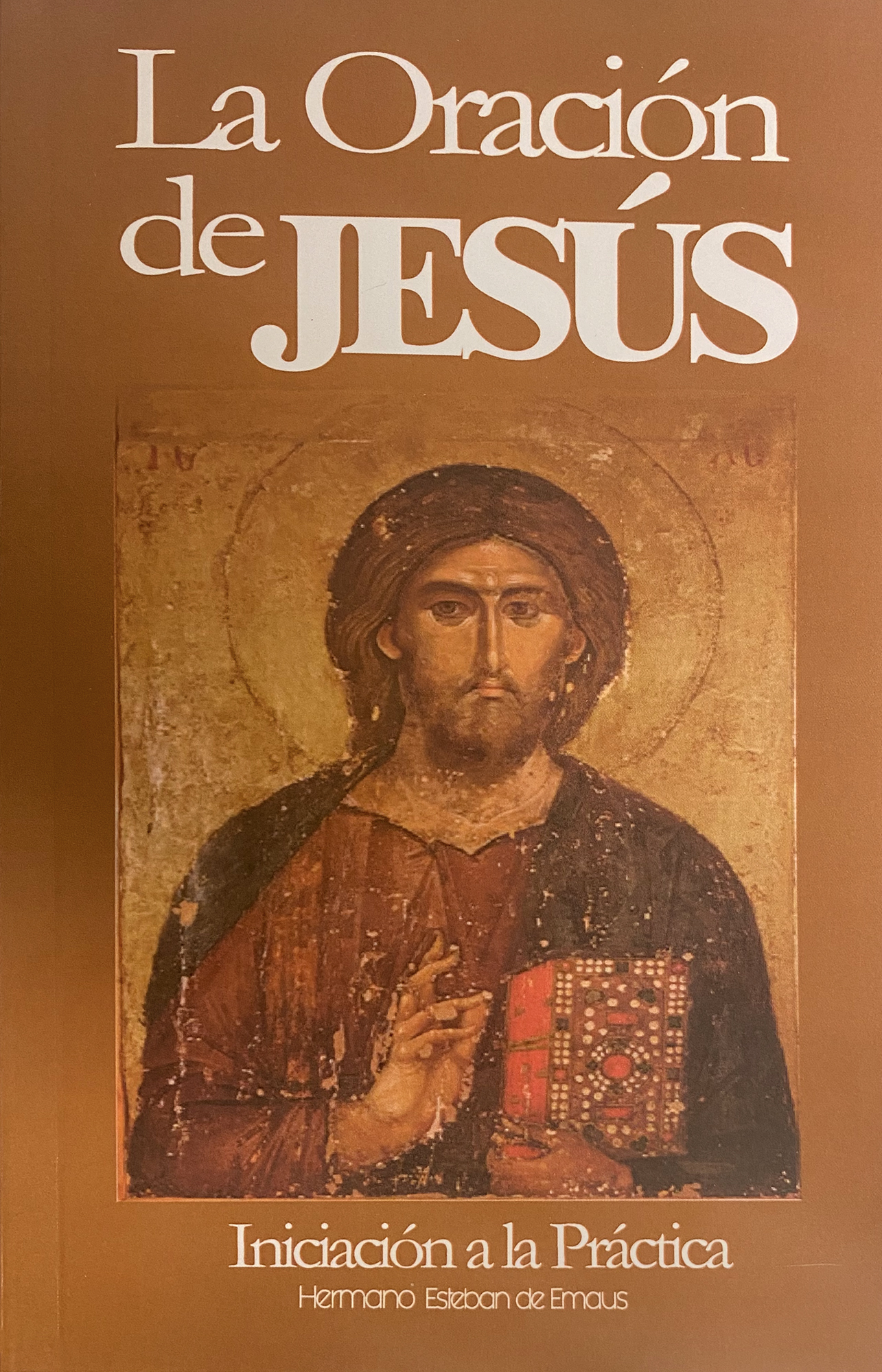
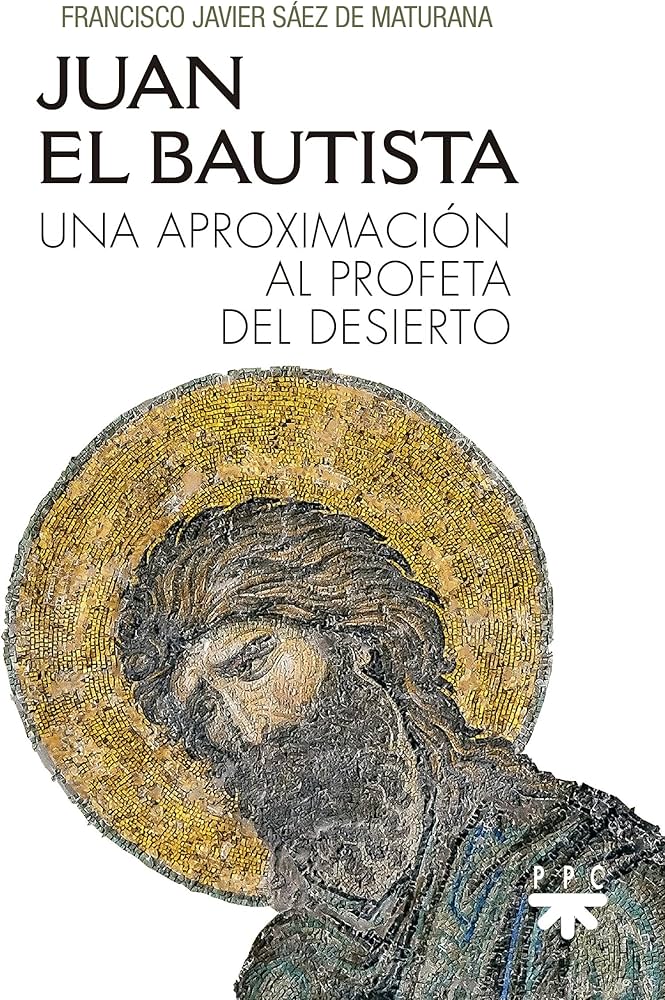
+ Lecturas + Adviento

El texto completo de esta encíclica lo puedes leer aqui en Inglés y en Español