
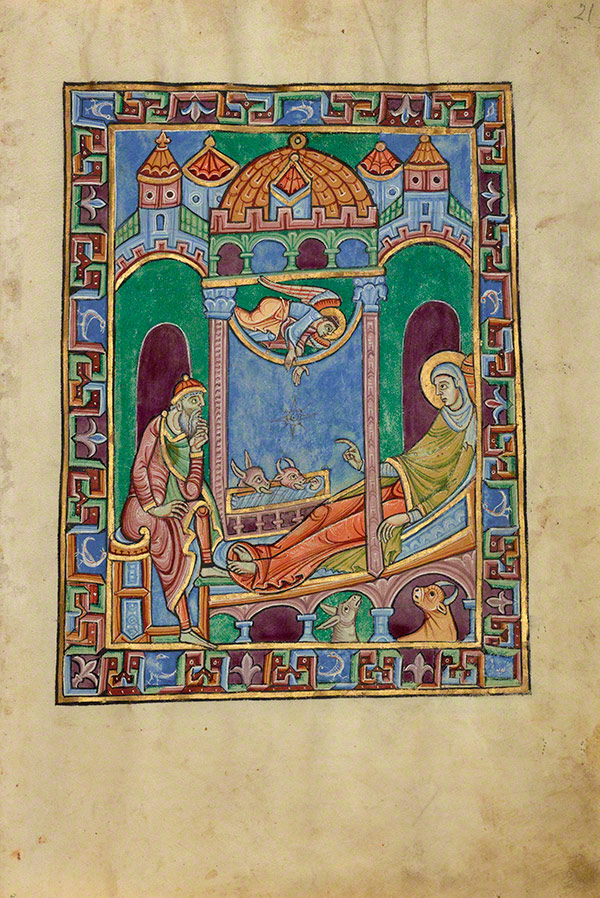
Alexis Master, The Nativity in the St. Albans Psalter (1130) Tempera and gold on parchment, Dombibliothek Hildesheim (Germany)
On Christmas Day, the Church does not begin with a manger or with shepherds, but with an abyss of light: “In the beginning was the Word”—before stars, before time, before our longing, there was already a Voice, and that Voice was God; and then comes the sentence that changes everything: “The Word became flesh and made his dwelling among us,” meaning that God did not merely visit us, He chose to live inside our history, inside our fragility, inside our night, so that no darkness would ever again be without a companion; this quiet, overwhelming descent of God into the world rises with incandescent joy in Christmas Oratorio, where heaven does not whisper from afar but sings its way into human time, and it finds an unexpected echo in the conversion of the heart in A Christmas Carol, where light breaks into a life that had learned to call darkness normal; and perhaps no one expressed this mystery more simply than Dorothy Day when she wrote, “I’m so glad Jesus was born in a stable. Because my soul is so much like a stable. It’s poor and in unsatisfactory condition—yet I believe that if Jesus can be born in a stable, maybe he can also be born in me”; “To all who accepted Him, He gave power to become children of God”—this is the true miracle of Christmas, not sentiment, not nostalgia, but a change of identity: we are no longer only creatures in the dark, we are sons and daughters in the Light, and that Light has chosen, forever, to dwell with us • AE
The Christmas Oratorio by Johann Sebastian Bach is not a nostalgic museum piece—it is a living proclamation of the Incarnation in sound. Written in 1734 for the Christmas season, it does not escape into sentimentality; it announces, with clarity and strength, that God has entered real human history. It remains deeply relevant today because it speaks to the same hunger for meaning, light, and redemption that we still carry: whenever the world feels noisy, fractured, or tired, this music insists—joyfully and unapologetically—that God is with us, now as truly as on the first Christmas •

St. Joseph Catholic Church (Dilley, TX) • Christmas Schedule

The Nativity of the Lord (Christmas Eve)
Wed. December 24 • 6:00 p.m. Mass
The Nativity of the Lord (Christmas Day)
Thu. December 25 • 11:00 a.m. Mass
La Natividad del Señor (2025)
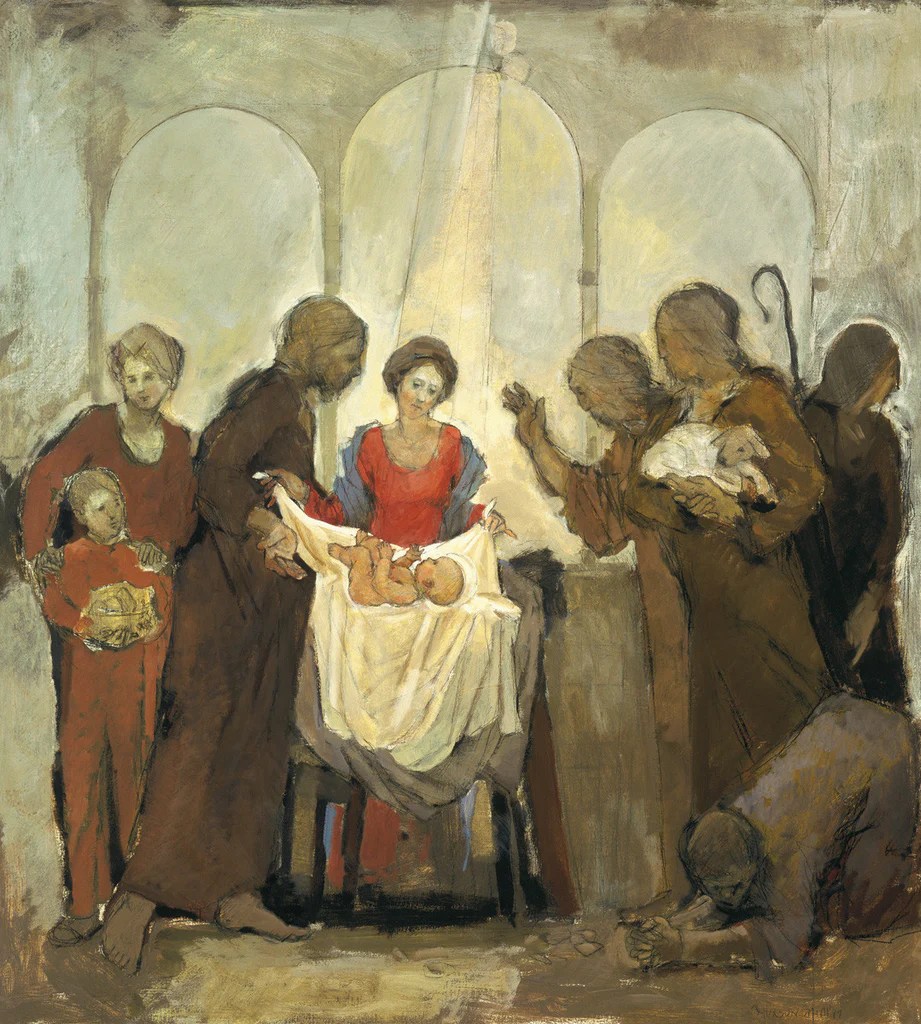
Bruce Hixson Smith, Natividad, tinta pigmentada de archivo sobre papel, colección particular.
Todos necesitamos alguna vez poder decir: “lo he visto con mis propios ojos”. Eso mismo proclama hoy la liturgia de la Iglesia en el salmo responsorial: que la salvación no es una idea, ni un consuelo interior solamente, sino algo que ha llegado a ser visible en la historia. “Toda la tierra ha visto al Salvador” no es una frase piadosa: es una afirmación audaz, casi desbordada, que dice que Dios ya no actúa en escondidas, que su victoria no pertenece a unos pocos, que ha salido a la luz y se ha dejado ver por todos; por eso el salmo se vuelve canto, instrumento, júbilo compartido, porque cuando la salvación se hace visible, el corazón ya no cabe en el silencio. Y enseguida, la carta a los Hebreos nos lleva aún más lejos: ese Salvador visto por la tierra no es solo un profeta, ni un mensajero más, sino el resplandor mismo de la gloria de Dios, la imagen fiel de su ser, el que sostiene todo con su palabra. Ya no se trata solo de que Dios haya hablado, sino de que ahora Él mismo se nos ha dado en un Hijo. El Niño que hoy contemplamos no es solo frágil: es también el que purifica el pecado, el que sostiene el universo, el ante quien incluso los ángeles se postran. Por eso hoy la Iglesia no celebra solo un nacimiento entrañable; celebra una revelación total: que Dios se ha hecho visible, cercano, reconocible; que ya no hablamos de Él “a tientas”, sino mirándolo en un rostro humano. Hoy la fe no es solo promesa: es visión. Y esa es la alegría profunda de la Navidad • AE
Puer natus est en la versión polifónica de William Byrd es un canto de Navidad que convierte la proclamación del nacimiento de Cristo en pura luz sonora. Compuesto en la Inglaterra del siglo XVI, en tiempos difíciles para los católicos, este motete transforma la fe en resistencia serena y belleza interior. En la interpretación de Alexander Blachly con el conjunto Pomerium, el anuncio —“Nos ha nacido un Niño”— no se impone con fuerza, sino que se abre paso con claridad, como una alegría que nadie puede silenciar •

 LA MEDITACION DE LA ESPOSA