
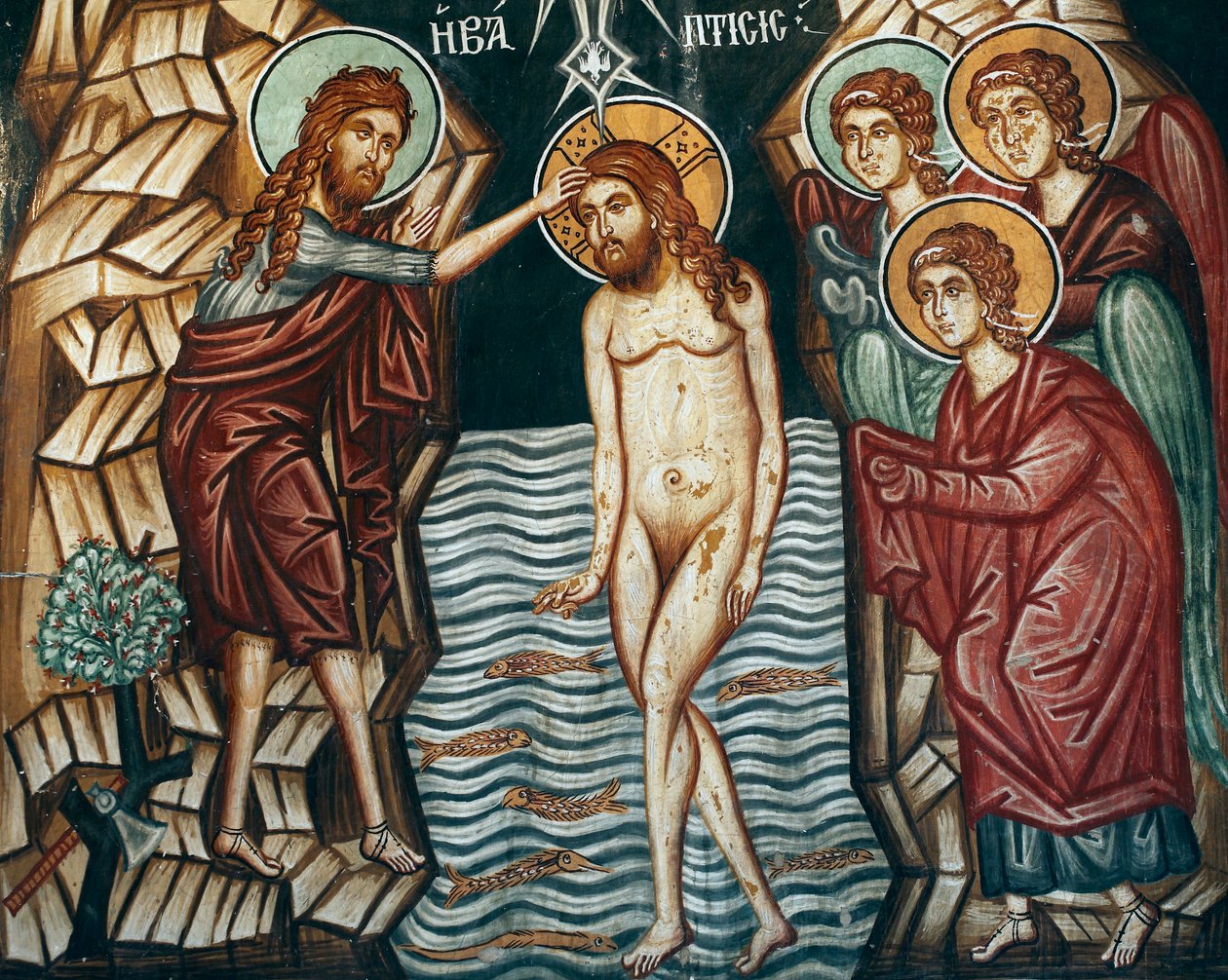
Byzantine fresco, Baptism of Christ, 15th century, wall painting, Church of the Archangel Michael, Pedoulas, Troodos Mountain (Cyprus)
At the Jordan River, God does something unsettling: He gets in line. Jesus approaches John not from above, not apart, but among those who come carrying repentance, confusion, and unfinished lives. John senses immediately that something is out of place—“I need to be baptized by you”—yet Jesus insists: “Allow it now.” There is no explanation, no defense, only obedience shaped by love. In this moment, God reveals not power, but proximity. This quiet descent into the water tells us who God truly is. He does not save from a safe distance. He enters what is heavy and human. Like the restrained solemnity of Bach’s Christ unser Herr zum Jordan kam, the scene unfolds without spectacle: grace moves downward, not upward, and redemption begins not with light from above but with feet immersed in the river. The Jordan carries the weight of human longing—and Christ wades into it fully. When Jesus rises from the water, the scene opens into mystery. The heavens are torn open, the Spirit descends like a dove, and the Father speaks. This is not a reward for achievement. It is a declaration of identity. Before any miracle, before any sermon, before the cross, Jesus is named: beloved Son. Christian life begins here—not with effort, but with being claimed. Gerard Manley Hopkins once wrote that Christ plays in a thousand places, “lovely in eyes and lovely in limbs not his.” The Baptism of the Lord shows us where that beauty begins: not in separation from human life, but in faithful presence within it. To “fulfill all righteousness” is not to appear flawless, but to stand where love is required. God steps into the water first. And in doing so, He teaches us where to stand as well • AE
Johann Sebastian Bach’s Christ unser Herr zum Jordan kam is a chorale cantata written for the Feast of the Baptism of the Lord. Rather than dazzling with drama, the music moves with calm gravity and restraint, mirroring Christ’s quiet descent into the waters of the Jordan. The chorale reflects Luther’s theology of baptism as God’s action—not human achievement—where grace flows downward, meeting humanity in its need. Bach’s music teaches us how to listen to the Gospel of this feast: not as spectacle, but as reverent immersion into a mystery where God draws near and sanctifies the waters we fear to enter •

St. Joseph Catholic Church (Dilley, TX) • Weekend Schedule

Fr. Agustin E. (Parish Administrator)
Saturday, January 10, 2026
5.00 p.m. Sacramento de la Confesión
6.00 p.m. Santa Misa.
Sunday, Junuary 11, 2026
8.00 a.m. Sacrament of Reconciliation
8.30 a.m. Holy Mass.
10.30 p.m. Sacrament of Reconciliation.
11.00 a.m. Holy Mass.
Fiesta del Bautismo del Señor (2026)
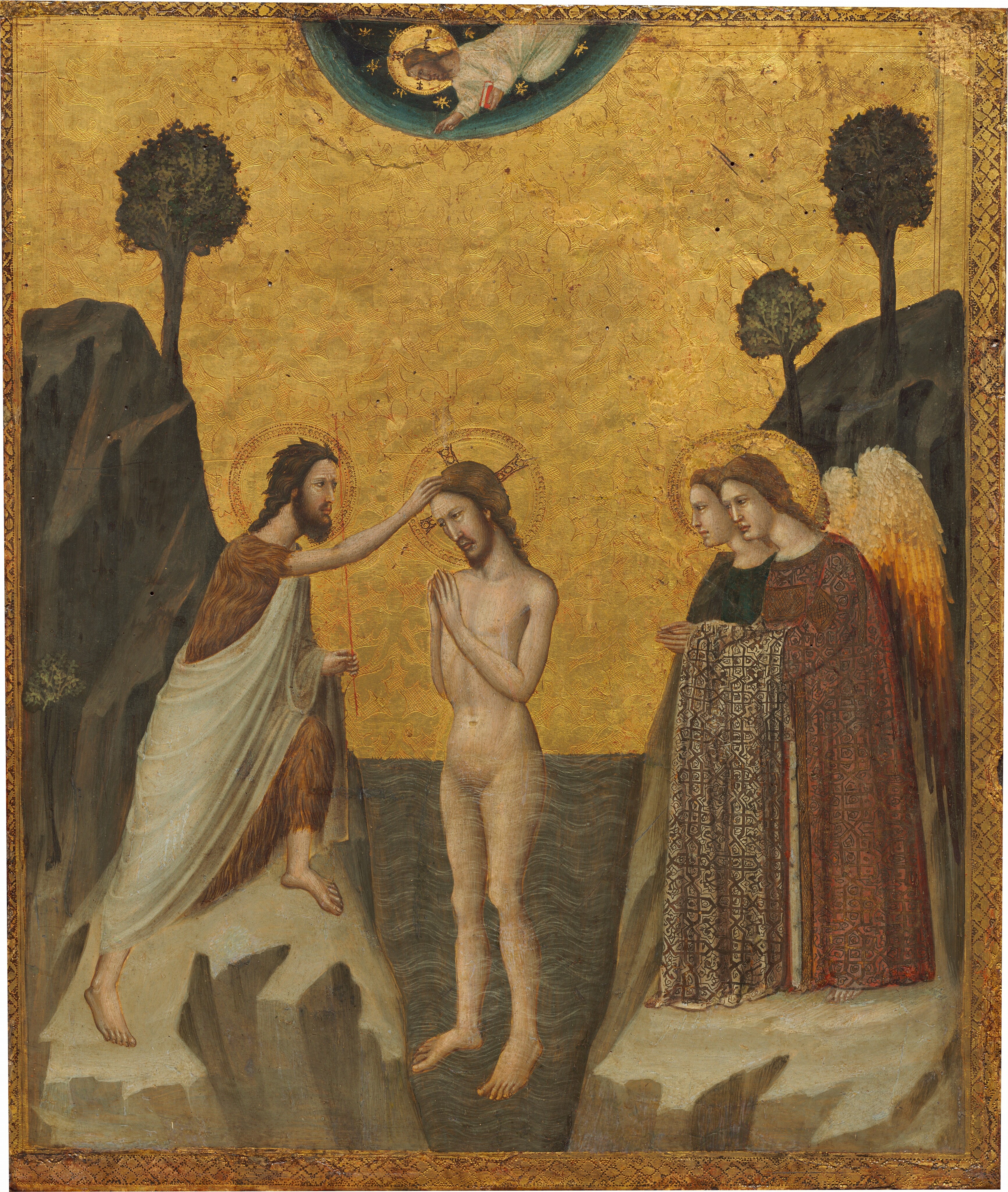
G. Baronzio, El Bautismo de Cristo (ca. 1335), National Gallery of Art, Washington, D.C.
En el Jordán ocurre algo desconcertante: Dios renuncia a la ventaja. Jesús no llega imponiéndose ni corrigiendo; llega mezclándose. Se coloca donde nadie querría ponerse si tuviera poder: en la fila de los que confiesan límites, culpas y esperas. Juan protesta, y su protesta es razonable. Jesús responde sin teoría: “Déjalo ahora”. Hay momentos en la fe en los que obedecer es más verdadero que explicar. El Evangelio no presenta un rito de purificación para Jesús, sino una opción. El Hijo decide habitar el lugar humano desde dentro. El agua del Jordán recoge temores, promesas incumplidas, hambre de sentido. Y ahí entra Cristo. No bendice desde la orilla: asume. Por eso, al salir del agua, no hay aplausos, hay revelación: el cielo se abre, el Espíritu desciende, el Padre nombra. Antes de hacer nada extraordinario, Jesús es llamado Hijo amado. La misión nace de la identidad, no al revés. San Román Melódico intuía esta inversión cuando cantaba que el río “tiembla” al tocar al Creador. No por miedo, sino por reconocimiento: lo que era frontera se vuelve camino. Y quizá por eso el Bautismo del Señor cierra la Navidad: porque nos enseña dónde empieza de verdad la vida cristiana. No en la perfección, sino en el consentimiento. No en escapar del mundo, sino en permanecer donde el amor hace falta. Quien se deja alcanzar por esta escena aprende algo decisivo: Dios no nos pide subir primero; Él baja. Y al hacerlo, santifica las aguas que atravesamos cada día. En el río Jordán no se inicia un espectáculo, sino una manera de estar. Allí comienza el estilo de Dios • AE
Ecce adest Dominator Dominus es una antífona gregoriana propia del tiempo de la Epifanía, en la que la Iglesia anuncia con solemnidad que el Señor ya está presente. El texto no describe una acción, sino una revelación: el Dominador llega, no para imponerse, sino para manifestar su identidad. Escuchada en la fiesta del Bautismo del Señor, esta antífona adquiere un matiz particular: aquel que es proclamado soberano se presenta humildemente en el Jordán. El canto prepara el corazón para reconocer que la verdadera autoridad de Cristo no se muestra en el poder, sino en su decisión de entrar en nuestras aguas y inaugurar una forma nueva de reinar.

Lecturas para terminar el tiempo de Navidad



 LA MEDITACION DE LA ESPOSA