
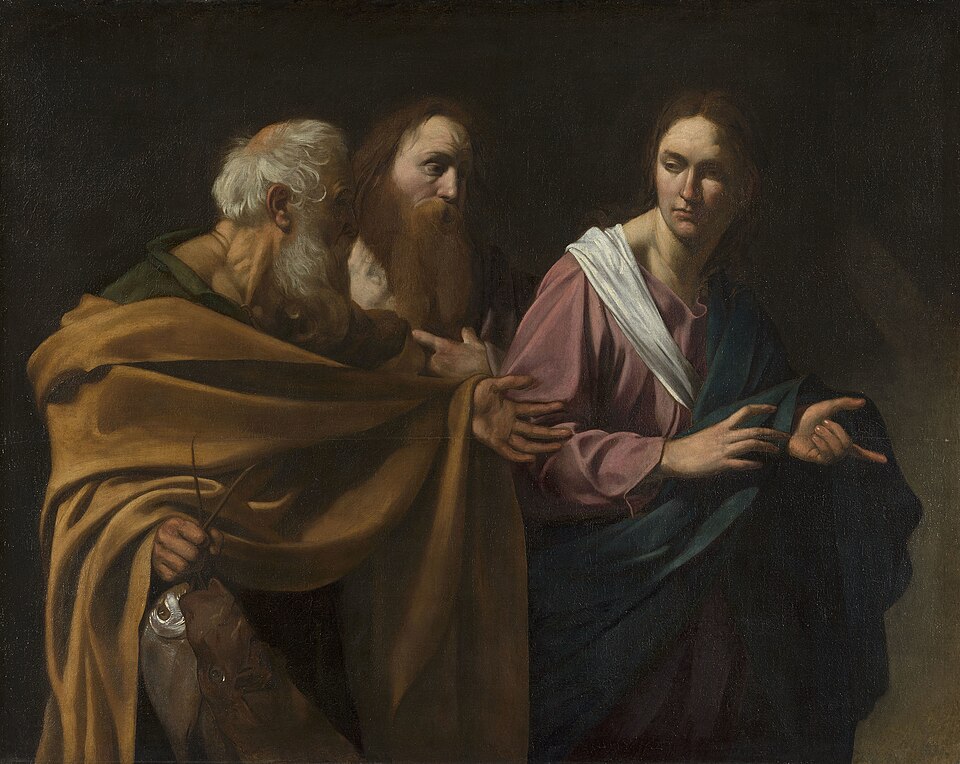
Caravaggio, The Calling of Saints Peter and Andrew, ca. 1603–1606, oil on canvas, Royal Collection, Hampton Court Palace (London)
Everything begins with a quiet withdrawal. John is arrested, and Jesus does not confront power head-on. He steps away. He leaves Nazareth and settles in Capernaum, a shoreline town, ordinary and exposed. The Gospel names the place carefully—Galilee of the Gentiles—because this is where light chooses to appear: not at the center, but at the edges. Isaiah’s words come alive not as poetry, but as geography. Darkness is not argued with. It is illuminated. From that moment, Jesus begins to speak plainly: “Repent, for the kingdom of heaven is at hand.” Repentance here is not threat, but invitation—a change of direction because something new has drawn near. The light does not wait for ideal conditions. It rises where life is already happening: work, routine, fatigue, expectation. The call follows quickly. Jesus walks along the sea and speaks to fishermen who are busy, skilled, and not looking for Him. There is no preparation, no delay. “Come after me.” And the response is as stark as it is unsettling: they leave their nets immediately. What they abandon is not sin, but security. Nets are tools, habits, identities. Following Jesus begins not with understanding everything, but with trust enough to let go. This Sunday marks the turn from revelation to movement. The Kingdom is announced, and people start walking. Ordinary Time is not a pause in the story; it is where the story takes shape. Light touches ground. Voices are heard. Decisions are made. And the Gospel reminds us that when God’s light changes address, nothing else can stay exactly where it was • AE
Tú Has Venido a la Orilla, also known as Pescador de Hombres, is one of the most widely sung hymns in the Spanish-speaking Church, cherished for its simplicity and directness. Its power lies not in musical complexity, but in its capacity to place the listener within the Gospel scene: a voice calling by the shore, ordinary lives interrupted, nets left behind. The song translates the call of the first disciples into the language of everyday faith, reminding us that vocation is not heroic at first—it begins when Christ steps into our routine and invites us, gently but decisively, to follow Him •

St. Joseph Catholic Church (Dilley, TX) • Weekend Schedule

Fr. Agustin E. (Parish Administrator)
Saturday, January 24, 2026.
5.00 p.m. Sacramento de la Confesión
6.00 p.m. Santa Misa.
Sunday, January 25, 2026
8.00 a.m. Sacrament of Reconciliation
8.30 a.m. Holy Mass.
10.30 p.m. Sacrament of Reconciliation.
11.00 a.m. Holy Mass.
III Domingo del Tiempo Ordinario (Ciclo A)

Autor anónimo, Mar de Galilea (lago de Genesaret), fotografía, otoño de 2025.
El Evangelio de hoy no comienza con un milagro ni con un discurso, sino con un desplazamiento. Jesús cambia de lugar. Sale de Nazaret y se instala en Cafarnaúm, a la orilla del lago, en una tierra atravesada por caminos, comercio y mezclas culturales. No es un dato menor: el mensaje de Dios no se queda en el ámbito de lo conocido ni de lo seguro. Se muda a un territorio donde la vida está en tránsito. Allí, en esa Galilea poco prestigiosa, Jesús pronuncia sus primeras palabras públicas: «El Reino de los cielos está cerca». No anuncia una idea abstracta, sino una cercanía. Dios no viene después; está llegando ahora, en medio de la historia real, con sus heridas y esperanzas. La llamada a la conversión no es amenaza, es ajuste de rumbo ante una presencia nueva. Los primeros que lo escuchan no son expertos ni buscadores espirituales. Están trabajando. Reparan redes, miran el agua, repiten gestos aprendidos. Y Jesús no les propone un plan a largo plazo. Les propone un movimiento inmediato: «Síganme». Nada se explica del todo. No se promete comodidad. Solo se ofrece relación. Este Evangelio nos recuerda que el inicio de la vida cristiana no está en entenderlo todo, sino en ponerse en camino. El Reino avanza cuando alguien acepta dejar que Dios reordene su mapa interior. En este tiempo ordinario, antes de que la liturgia nos conduzca a las grandes estaciones del año, la Iglesia nos recuerda algo esencial: el Evangelio no se grita desde lejos, se vive caminando. Y suele empezar cuando menos lo esperamos, justo ahí donde creemos que todo ya estaba decidido •AE
Herr, ich folge dir pertenece a la Pasión según san Juan de Johann Sebastian Bach y aparece en un momento decisivo del relato evangélico: cuando el discípulo afirma, con serenidad y convicción, su deseo de seguir a Jesús. No es una música triunfal ni emotiva; es una música de consentimiento. La he elegido para acompañar esta entrada porque expresa, sin describirlo, lo que ocurre a la orilla del mar de Galilea: una respuesta que nace en el silencio, una decisión que no necesita garantías, y un seguimiento que comienza sin mapas, confiando solo en la voz que llama •

Más Lecturas
 LA MEDITACION DE LA ESPOSA