Second Sunday of Lent (Cycle C)

The mosaic of the Transfiguration in Saint Catherine’s Monastery on Mount Sinai is the earliest surviving Eastern depiction of the event. It was created between 565 and 566, likely during the reign of Justinian the Great.

One of the most beautiful depictions of today’s gospel is the mosaic of the Transfiguration in the Monastery of Saint Catherine on Mount Sinai (6th century). In this Byzantine masterpiece, Christ appears radiant at the center, with beams of light emanating from His body, while the disciples fall to the ground in awe. The golden background does not represent a physical place but eternity—the divine realm breaking into human vision. This icon reminds us that the Transfiguration is not merely an external vision but a spiritual event: God allows Himself to be seen, but only those who have purified their hearts can truly perceive Him. Lent is precisely this time of purification, of climbing the mountain of prayer, letting go of what binds us, and opening ourselves to Christ’s light.

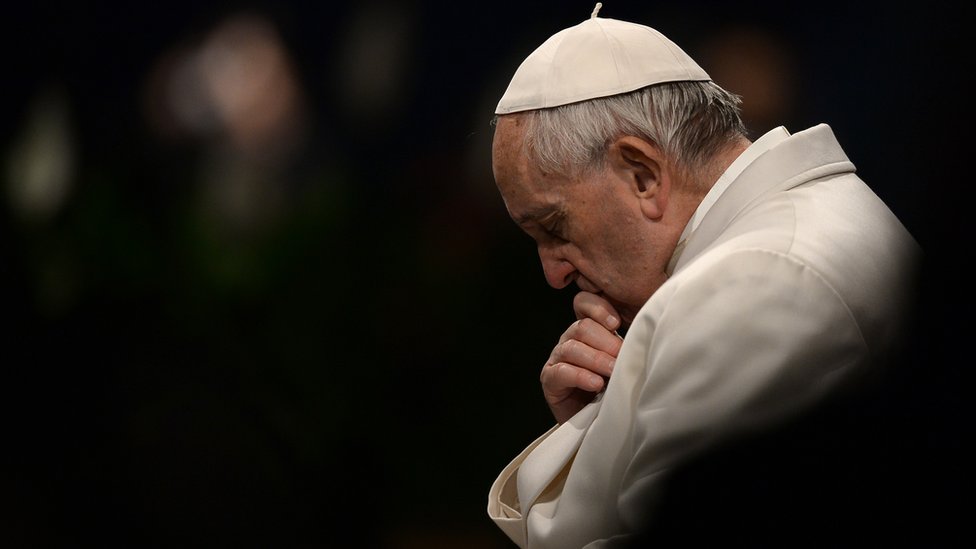
The Flemish mystic Ruysbroeck, in his work The Spiritual Espousals, speaks of the inner light that transforms the soul when it fully surrenders to God. The Transfiguration teaches us that God desires to make us partakers of His light, but this requires a path of humility and self-giving. True conversion is not a solitary effort but a trusting surrender into the hands of the Lord. Pope Francis reminds us: «Jesus shows us the goal of our Christian journey: full communion with God, in which we too, by the grace of the Holy Spirit, can reflect something of His light in this world.» It is not just about admiring Christ’s glory but allowing Him to transform our lives.

If there is a musical piece that helps us enter into the mystery of the Transfiguration, it is Palestrina’s «Sicut Cervus». This Renaissance motet, inspired by Psalm 42—«As the deer longs for streams of water, so my soul longs for You, O God»—expresses the deep yearning of the soul for divine transformation. Its pure harmonies and delicate interplay of voices echo the disciples’ awe on the mountain, inviting us to thirst for Christ’s presence.

The Gospel tells us that the disciples descended the mountain in silence. They did not fully understand, but something within them had changed. Likewise, after every encounter with Christ—in prayer, in the Eucharist, in the life of faith—we are called to reflect His light in the world. We cannot remain in contemplation alone; we must become witnesses. This Lenten season invites us to ask ourselves: Am I allowing the light of Christ to transform my life? Or am I still clinging to the shadows of my own selfishness? Where is the Lord calling me to ascend with Him, to be illuminated and renewed? May the Transfiguration inspire us to live this Lent with our eyes fixed on Christ, so that when Easter arrives, we too may shine with the light of His Resurrection • AE


St. Joseph Catholic Church (Dilley, TX) • Weekend Schedule

Fr. Agustin E. (Parish Administrator)

STATIONS OF THE CROSS & SACRAMENT OF RECONCILITATION

Every Friday of Lent at 6.00 p.m.

 (March 7, 14, 21, 28, & April 4, 11, 2025)

Saturday, March 15, 2025.

5.00 p.m. Sacramento de la Confesión

6.00 p.m. Santa Misa.

Sunday, March 16, 2025

8.00 a.m. Sacrament of Reconciliation

8.30 a.m. Holy Mass.

10.30 p.m. Sacrament of Reconciliation.

11.00 a.m. Holy Mass.


Segundo Domingo de Cuaresma (Ciclo C)

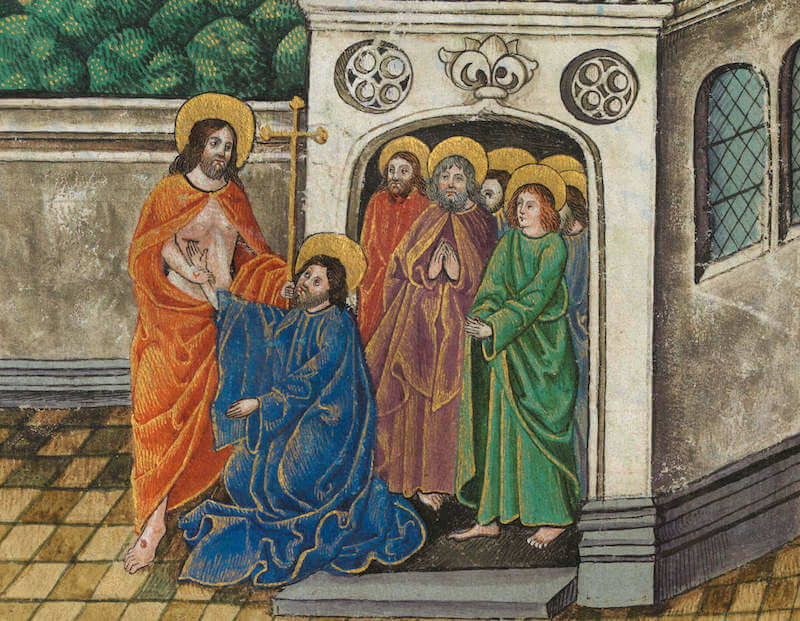
Anónimo, La Transfiguración de Cristo, miniatura del s. XV, Biblioteca del Castillo de Chantilly (Francia)

Para captar la verdadera identidad de Jesús, lo esencial no es estudiar, sino experimentarlo a Él, subir con Jesús a la montaña de la oración, levantar el espíritu, mirar la vida desde un horizonte más elevado, y sobre todo no dejarnos arrastrar siempre por la rutina y la inercia que tiran de nosotros hacia abajo. Es lo primero que nos dice el relato de la transfiguración de Jesús de este domingo. La escena que nos presenta el evangelio es preciosa. Mientras Jesús ora, el aspecto de su rostro cambia. Los discípulos que están orando con él, comienzan a verlo de otra manera. Es Jesús, su maestro querido de siempre, pero en su rostro comienzan a contemplar el destello de algo nuevo. Sin embargo, junto a él siguen viendo a dos personajes muy queridos por la tradición judía. Moisés, el hombre que ha guiado al pueblo hasta el país de la libertad y le ha dotado de leyes y normas para vivir en paz. Y Elías, el profeta de fuego, que ha luchado contra nuevos ídolos que han surgido en Israel. Los discípulos no parecen entender gran cosa. Están como aturdidos por el sueño. Pedro propone hacer tres tiendas, una para cada uno. No ha captado la novedad de Jesús. Lo pone en el mismo plano que a Moisés y Elías.

Pero la voz que sale de una nube lo aclara todo: Éste es mi Hijo, el escogido; escuchadle a él. No escuchéis a Moisés o Elías, escuchad a Jesús. Sólo él es el Hijo. Escojanlo a él porque es el escogido por Dios. Los cristianos hemos de poner en el centro de nuestra fe a Jesús, no a Moisés. Dejarnos conducir por Jesús hacia el amor, no hacia la ley. Es un error confundir a Dios con un conjunto de obligaciones interiorizadas durante años en nuestra conciencia. Dios está más allá de esas leyes. Quien escucha a Jesús lo va encontrando como fuente de Amor. Si: Hemos de poner en el centro de nuestro corazón a Jesús, no a Elías. Nadie como él puede liberarnos de los ídolos que albergamos dentro de nosotros. Ídolos construidos por nuestros miedos, fantasmas y deseos de seguridad y bienestar. Es muy difícil quitarle a uno sus «dioses», pues se queda como vacío e indefenso. Quien escucha a Jesús se va llenando de la fuerza y de la vida que regala Dios • AE


lECtUrAS rECoMenDaDAs

Puedes leer el texto aqui en español, y aqui en inglés


First Sunday of Lent (Cycle C)

H. Bosch, The temptation of St Anthony (c. 1500), oil on oak wood, Museu Nacional de Arte Antiga (Lisboa)

On this first Sunday of Lent, the passage from the gospel of Luke gently invites us to wander the silent deserts of our own hearts, much like our Lord who, led by the Spirit, embraced the profound solitude of the wilderness. In that sacred stillness, Jesus confronted not merely a list of temptations but the very human longing for ease and certainty—a reminder that our own trials need not be met with harsh self-condemnation but with a tender openness to God’s transformative presence. One is reminded of Bach’s St. Matthew Passion, whose somber yet transcendent strains mirror the delicate interplay between vulnerability and divine grace, while the evocative imagery in Hieronymus Bosch’s The Temptation of St. Anthony portrays the chaotic dance of earthly allure and heavenly hope.

This Lenten journey, resonating with the responsorial psalm’s assurance of God’s abiding voice, echoes the words of Pope Francis in urging us to walk this path with simplicity, humility, and a deep, personal encounter with the mystery of faith—a call to cherish our everyday desert as a space for quiet renewal and authentic communion with the Divine • AE


St. Joseph Catholic Church (Dilley, TX) • Weekend Schedule

Fr. Agustin E. (Parish Administrator)

STATIONS OF THE CROSS & SACRAMENT OF RECONCILITATION

Every Friday of Lent at 6.00 p.m.

 (March 7, 14, 21, 28, & April 4, 11, 2025)

Saturday, March 8, 2025.

5.00 p.m. Sacramento de la Confesión

6.00 p.m. Santa Misa.

Sunday, March 9, 2025

8.00 a.m. Sacrament of Reconciliation

8.30 a.m. Holy Mass.

10.30 p.m. Sacrament of Reconciliation.

11.00 a.m. Holy Mass.


Primer Domingo de Cuaresma 2025 (Ciclo C)

A. da Messina, San Jerónimo en su estudio (1474), óleo sobre tela, National Gallery (Londres)

En este primer domingo de Cuaresma, el Evangelio nos lleva al desierto, ese espacio donde el silencio se convierte en un lenguaje divino. Jesús, guiado por el Espíritu, se enfrenta allí no solo a las tentaciones del maligno, sino a la más profunda verdad sobre su identidad: la condición filial que lo une al Padre. El desierto, lejos de ser un lugar de abandono, es el ámbito donde la voz de Dios se escucha con mayor claridad, porque solo el silencio nos permite reconocer lo que verdaderamente importa. En La Fuerza del Silencio, el Cardenal Robert Sarah nos recuerda que “el silencio es el lenguaje de Dios, y el ruido, el de nuestro mundo moderno”, subrayando que quien no sabe recogerse y guardar sus sentidos difícilmente podrá entrar en un diálogo real con el Señor. La Cuaresma nos invita precisamente a esto: a una purificación de nuestra atención, a un desprendimiento de distracciones para redescubrir el valor de la oración, la lectura y el recogimiento interior. Sin esta guarda de los sentidos, la fe se vuelve superficial, expuesta a los vientos de la dispersión y la superficialidad.

La música y el arte han sabido captar esta necesidad del alma de sumergirse en la quietud para encontrar su centro. Méditation, de Jules Massenet, con su delicada melodía para violín y orquesta, evoca ese instante de suspensión, donde el tiempo parece detenerse y todo queda reducido a la esencialidad del encuentro con Dios. En la pintura, San Jerónimo en su estudio, de Antonello da Messina, nos presenta al santo en la serena concentración de la lectura, rodeado de luz y orden, símbolo de una mente y un corazón dispuestos a la contemplación. Su imagen nos recuerda que la disciplina del recogimiento es la clave para alcanzar la sabiduría espiritual y que el estudio de la Palabra, lejos de ser un ejercicio intelectual, es un acto de adoración y escucha. Así como Jesús vence la tentación apoyado en la Escritura, nosotros también estamos llamados a hacer de la Palabra de Dios nuestro alimento cotidiano, acogida en el silencio y transformada en vida. Cuaresma no es solo un tiempo de renuncia, sino un camino de interiorización, de aprender a escuchar con el corazón y de reencontrarnos con lo esencial • AE


lECtURaS dE cUArEsmA


ASH WEDNESDAY (2025)

V. Hammershøi, A Room in the Artist’s Home in Strandgade (1901), oil on canvas, Statens Museum for Kunst (Copenhagen)

Lent begins, and the ashes trace a cross upon our foreheads—dust that whispers both our frailty and our hope. The Church enters the great pilgrimage of conversion, and yet, in a world that thrives on spectacle, the Gospel reminds us: «When you fast, do not look gloomy like the hypocrites… But when you fast, anoint your head and wash your face» (Mt 6:16-17). It is a call not to performance, but to authenticity. Not to spiritual theatrics, but to the quiet, hidden work of grace within us.

Pope Francis, in his invitation to the Jubilee of Hope, reminds us that this is a time to rediscover God’s mercy—not as a distant theory, but as a living reality that reshapes our hearts. Lent is not a stage upon which we display our sacrifices, nor a competition of piety. It is a return to the essentials, a stripping away of what is unnecessary, so that our souls may breathe again in the light of God’s presence. Our world urges us to make everything public: our meals, our achievements, even our struggles. But the Gospel invites us into the secrecy of the heart, where the Father sees and rewards (Mt 6:6). What if this Lent, instead of announcing our penances, we simply lived them? What if, instead of declaring our resolutions, we allowed them to transform us silently, like seeds breaking open beneath the soil? The Jubilee reminds us that hope is not a vague optimism but the fruit of hearts that dare to trust. It is the hope of knowing that even the smallest step toward God is met with His infinite mercy. This Lent, let us step into the desert not with fanfare, but with trust. Let us fast from the need for recognition, pray in the silence where only God hears, and give with hands that do not count the cost. The ashes will fade, but the grace received in secret will shape eternity • AE


3.5.2025

March 5, 2024.

6.30 a.m. Liturgy of the Word & Imposition of Ashes

10.00 a.m. Liturgy of the Word & Imposition of Ashes   

12.00 p.m. Holy Mass & Imposition of Ashes @ Briscoe Unit

5.00 p.m. Liturgy of the Word & Imposition of Ashes

7.00 p.m. Holy Mass & Imposition of Ashes

STATIONS OF THE CROSS & SACRAMENT OF RECONCILITATION

Every Friday of Lent at 6.00 p.m.

 (March 7, 14, 21, 28, & April 4, 11, 2025)


MIERCOLES DE CENIZA (2025)

Iniciamos la Cuaresma, el tiempo del desierto, de la conversión, del regreso al amor primero. En este Miércoles de Ceniza, nos marcamos con la huella de nuestra fragilidad, pero también con la promesa de la misericordia. «Conviértanse y crean en el Evangelio» (Mc 1,15), nos susurra la Palabra, no como una orden severa, sino como una invitación a la libertad.

El Santo Padre Francisco nos ha convocado este año a vivir el Jubileo de la Esperanza, un tiempo de gracia en el que el Señor nos llama a renovar nuestra confianza en Su amor y a redescubrir la alegría del Evangelio. Pero, ¿cómo vivir la esperanza si la Cuaresma es un tiempo de penitencia, de ayuno, de conversión? Justamente porque el desierto nos enseña a esperar. Nos despoja de lo superficial y nos ayuda a anhelar lo eterno.

Jesús nos advierte en el Evangelio de hoy contra una espiritualidad de apariencias: «Cuida de no practicar tu justicia delante de los hombres para ser visto por ellos». En un mundo que mide el valor por los ‘likes’ y las exhibiciones de piedad, el Maestro nos enseña el camino del silencio fecundo: «Tú, cuando ayunes, perfuma tu cabeza y lava tu rostro, para que tu ayuno no sea visto por los hombres, sino por tu Padre». No hagamos de la Cuaresma un escenario para exhibir nuestros esfuerzos espirituales. No caigamos en la tentación de convertir el ayuno, la oración y la limosna en un teatro religioso. La Cuaresma no es ‘contenido’ para redes sociales ni un reto de autoayuda espiritual. Es un llamado a la autenticidad, al encuentro secreto con el Padre que ve en lo escondido. Es el tiempo de cerrar la puerta y orar, de dar sin calcular, de ayunar sin ostentar. Este Miércoles de Ceniza iniciamos cuarenta días para purificar el corazón, para aprender a esperar en Dios, para entrar en el desierto con la certeza de que el desierto florecerá. Vivamos esta Cuaresma en el secreto del amor, donde la esperanza nace y la gracia se derrama • AE


lECturAs pARa el tIemPo de la cUAResMA


Eight Sunday in Ordinary Time (Cycle C)

E. Hopper, Nighthawks (detail) (1942) oil on canvas, Art Institute of Chicago

There is a scene in Dostoevsky’s The Brothers Karamazov where Father Zosima, the elder, speaks of the power of the spoken word: «A word is a great thing, it can bring life, it can destroy, it can set the heart on fire.» The Gospel this Sunday, taken from Luke 6:39-45, brings us into a similar reflection. Jesus reminds us that the mouth speaks from the abundance of the heart. If the heart is filled with truth, love, and grace, its words will bear fruit. But if it harbors resentment, pride, or hypocrisy, its speech will betray it. The Book of Sirach (27:4-7) gives us a striking image: just as a sieve separates the husks from the grain, so too do words reveal what is truly within a person. Our speech is never accidental; it is the overflow of what lives deep inside us. This is not just a warning but an invitation. If we want our words to bring life, we must cultivate our hearts with the wisdom of God.

One of the great tragedies of modern society is how speech has become careless, divisive, and at times even destructive. We live in an age where words are thrown like stones, whether in personal conversations or in the anonymity of the digital world. And yet, the Church has always seen speech as a sacred act. St. John Paul II, in his apostolic letter Tertio Millennio Adveniente, spoke of the need for a purification of memory, a renewal of the way we speak about one another, so that history may be marked by reconciliation rather than division. If this is true on a large scale, it is even more urgent in our personal lives.

Consider the Requiem by Gabriel Fauré, one of the most serene and hopeful compositions ever written on death. Unlike other requiems, which emphasize fear and judgment, Fauré’s piece is filled with gentleness and light. The music itself speaks of trust in God’s mercy, of a soul that finds peace rather than terror in the final judgment. This is what happens when the heart is purified: even in the face of death, it can sing a song of hope. Our words should follow the same path—not words of condemnation, but of clarity, truth, and love.

Jesus warns against hypocrisy: «How can you say to your brother, ‘Let me remove the splinter from your eye,’ while you yourself do not see the beam in your own eye?» This is not simply an accusation; it is a call to humility. We are all tempted to judge others without first allowing God to heal us. The saints understood this deeply. St. Francis of Assisi, in his famous prayer, did not ask for the ability to correct others, but to be an instrument of peace, to console rather than to be consoled, to understand rather than to be understood. Words that bring life come from a heart that has been touched by grace.

In the end, the question we must ask ourselves is simple: what do our words say about our hearts? Do they reveal a spirit shaped by the Gospel? Do they build up the Body of Christ, or do they tear it down? Just as a good tree produces good fruit, so too does a heart nourished by God’s presence produce words that give life. As we enter into this Sunday’s liturgy, let us ask for the grace to let our words be purified. May they be words that heal, words that strengthen, words that reflect the mercy and truth of Christ. For in the end, our words will not just be a testimony to others—they will be the measure by which we stand before God • AE


St. Joseph Catholic Church (Dilley, TX) • Weekend Schedule

Fr. Agustin E. (Parish Administrator)

Saturday, March 1, 2025.

5.00 p.m. Sacramento de la Confesión

6.00 p.m. Santa Misa.

Sunday, March 2, 2025

8.00 a.m. Sacrament of Reconciliation

8.30 a.m. Holy Mass.

10.30 p.m. Sacrament of Reconciliation.

11.00 a.m. Holy Mass.


VIII Domingo del Tiempo Ordinario (Ciclo C)

En este cuadro de El Greco titulado La curación del ciego la luz y la sombra juegan un papel esencial. No solo se trata de la sanación física, sino de un paso de la oscuridad a la claridad, de la ceguera a la visión verdadera. Es una escena profundamente evangélica, que nos recuerda las palabras de Jesús en el Evangelio de este domingo: «¿Acaso puede un ciego guiar a otro ciego? ¿No caerán los dos en un hoyo?» (Lc 6,39).

El Evangelio de Lucas nos invita a la autoconciencia y a la humildad antes de querer corregir a los demás. Jesús nos habla de la viga en nuestro ojo antes de señalar la paja en el ojo ajeno. Es un llamado a la autenticidad y a la conversión sincera. Si no cuidamos nuestro propio corazón, si no examinamos nuestras propias fallas, terminaremos guiando mal a otros, cayendo nosotros mismos en el hoyo de la hipocresía y la soberbia. El libro del Eclesiástico lo confirma con una imagen agrícola: «El fruto revela cómo ha sido cultivado el árbol» (Sir 27,6). La boca expresa lo que hay en el corazón, del mismo modo que un árbol bueno no puede dar frutos malos. Esto nos lleva a la pregunta esencial: ¿qué estamos cultivando en nuestro interior? ¿Qué palabras salen de nuestra boca?

El Papa San Juan XXIII, en su diario espiritual, anotó una vez: «Antes de juzgar a los demás, tengo que examinarme a mí mismo y corregir mis propias faltas. Solo desde la misericordia puedo hablar con verdad». La Iglesia siempre ha entendido que la corrección fraterna no es cuestión de orgullo o de justicia personal, sino de amor y de responsabilidad comunitaria. No se trata de ser ciegos frente a los errores, sino de mirar con claridad, con un corazón sanado y dispuesto a la compasión. Este pasaje evangélico nos invita a recordar también la música sacra, que ha sido durante siglos un reflejo del corazón humano en su búsqueda de Dios. El Magnificat de Bach es un canto de humildad y de alabanza, donde la Virgen proclama la grandeza de Dios y la pequeñez de la criatura. En esta obra encontramos el espíritu de este Evangelio: solo el que reconoce su pequeñez ante Dios puede dar frutos de gracia.

En la misa de este domingo, la Palabra nos coloca frente a un espejo. ¿Soy ciego guiando a otros ciegos? ¿Soy árbol de buenos frutos? ¿Es mi corazón fuente de bondad o de juicio amargo? Que esta liturgia sea un momento para pedir la gracia de una visión renovada, de una conversión sincera y de una vida que dé frutos de verdad y de amor • AE


Some music for reading

Gabriel Fauré composed his Requiem in D minor, Op. 48, between 1887 and 1890. The choral-orchestral setting of the shortened Catholic Mass for the Dead in Latin is the best-known of his large works. Its focus is on eternal rest and consolation. Fauré’s reasons for composing the work are unclear, but do not appear to have had anything to do with the death of his parents in the mid-1880s. He composed the work in the late 1880s and revised it in the 1890s, finishing it in 1900 • AE


Seventh Sunday in Ordinary Time (Cycle C)

In the heart of South Texas, under the vast, ever-changing sky, we find a reflection of the gospel’s call to love, a message not always easy to hear, but one that resonates deeply when we think of our lives and the world around us. The call is clear: «Love your enemies,» and this is where the challenge lies. We know this teaching, but do we live it? In this part of the world, we are no strangers to hard work and sacrifice, especially in our small towns, where neighbors help each other without expecting anything in return. But the kind of love Jesus speaks about goes beyond the simple kindness we show to one another in our communities—it asks for something more radical, more transformative. It challenges us to love even when we are wronged, to bless those who curse us, and to forgive those who have hurt us.

This isn’t a call to deny our human feelings or to ignore the wrongs done to us. Instead, it’s a call to rise above our instincts, to embody a love that transcends the limits of our own desires. Just as the great writers of the world—Dante, Tolstoy, or even someone like Maya Angelou—show us the power of forgiveness and the depth of human suffering, so too does the gospel teach us that true love can heal even the deepest wounds. In modern art, too, we see this tension. Artists like the Mexican painter Rufino Tamayo, whose works are filled with bold lines and vibrant colors, capture the complexity of human emotion—sometimes chaotic, sometimes serene. His art invites us to embrace the full spectrum of human experience, just as Christ calls us to love without reservation, without counting the cost.

And the call to mercy is not just for the grand gestures; it’s for the everyday. It’s seen in the quiet sacrifice of a mother in the small, dusty streets of Laredo, who, despite her own burdens, stops to help a stranger. Or in the gesture of a child forgiving a friend after a fight at school. These everyday acts of love are what transform a community and, ultimately, the world.

Pope Francis often reminds us that mercy is not just a theological concept; it’s a way of life. He speaks of the joy found in forgiving and being forgiven, and how this shapes our relationship with God and with one another. In a world that so often calls for division, for «us vs. them,» the gospel asks us to build bridges, not walls. This, I believe, is the heart of the Christian message today. In our daily lives, in our work and in our relationships, we have the opportunity to bring this love into the world. It’s not always easy, and it doesn’t always make sense to our worldly logic, but it is this love that holds the power to heal, to bring peace, and to transform not only our hearts but the world around us. Let us then take up this call to love—love that is patient, love that is kind, love that knows no enemy, love that is shaped by mercy, and love that, in the end, is a reflection of the heart of God • AE


St. Joseph Catholic Church (Dilley, TX) • Weekend Schedule

Fr. Agustin E. (Parish Administrator)

Saturday, February 22, 2025.

5.00 p.m. Sacramento de la Confesión

6.00 p.m. Santa Misa.

Sunday, February 23, 2025

8.00 a.m. Sacrament of Reconciliation

8.30 a.m. Holy Mass.

10.30 p.m. Sacrament of Reconciliation.

11.00 a.m. Holy Mass.


VII Domingo del Tiempo Ordinario (Ciclo C)

M. Rothko, N. 14, 1960, (1960), óleo sobre tela, Museo de Arte Moderno de San Francisco (California)

En el relato de David y Saúl, encontramos una poderosa lección de misericordia, humildad y fe. La figura de David, un joven que se ve enfrentado al rey Saúl, quien lo persigue con el deseo de matarlo, se convierte en un símbolo de la tensión entre el poder terrenal y la justicia divina. David tiene la oportunidad de vengarse, de tomar el control y dar fin a la persecución, pero elige un camino diferente: el de la paciencia y la confianza en que Dios hará justicia. Esta escena no solo nos invita a reflexionar sobre el perdón, sino también sobre nuestra relación con la autoridad y el poder. En la historia universal, personajes como Mahatma Gandhi o Nelson Mandela han vivido de manera similar, resistiendo la tentación de la violencia para mostrar que la verdadera grandeza radica en la capacidad de perdonar, en el poder transformador de la misericordia. No es un acto de debilidad, sino de verdadera fuerza interior.

El arte moderno, aunque a menudo se aleja de las representaciones religiosas tradicionales, también refleja esta lucha interna. Pintores como Mark Rothko, con sus vastos campos de color, nos invitan a sumergirnos en un espacio de contemplación profunda. En sus lienzos, la simplicidad y la armonía buscan lo trascendental, un recordatorio de que, a veces, la belleza y la fuerza no necesitan de imágenes figurativas para ser entendidas.

Así, el acto de David al perdonar a Saúl puede verse como una obra de arte en sí misma, una creación espiritual que nos llama a la reflexión sobre nuestra capacidad de amar incluso a quienes nos hacen daño. En este sentido, la historia no solo es un relato antiguo, sino una invitación diaria a vivir según el Evangelio, a seguir la enseñanza del Papa Francisco, quien nos recuerda constantemente que la misericordia de Dios no tiene límites y que debemos ser portadores de esa misericordia en un mundo que, a menudo, escoge el camino fácil de la venganza y el rencor. Hoy, al leer este pasaje, nos enfrentamos a una pregunta esencial: ¿seguimos el ejemplo de David, que confía en la justicia de Dios y elige la paz, o caemos en la tentación de la violencia, la venganza o el juicio precipitado? El llamado es claro, no solo para un momento histórico o para un personaje del pasado, sino para nosotros, hoy, en nuestra vida diaria. Dios, como un gran artista, está constantemente invitándonos a participar en su obra maestra de amor y reconciliación. ¿Responderemos con generosidad a esta invitación? • AE


¿Y tú qUé eStÁs lEYeNDo?