
The Ascension of the Lord (2023)

The Solemnity of the Ascension is a wonderful call for us to tell the world that Jesus is still with us. And how do we do this? Simply by utilizing the gifts the Lord has given us. Do you make friends easily? Then, befriend those who are alone in the world. Perhaps that loner in school, that elderly man in his apartment, that cousin no one talks to, perhaps they and many others need to know that they are not alone. Your friendship can help them understand their value before the Lord. Do you multitask well? Are you one of those people who can do three things at once, while texting in the background. Then use your talent to do things for others. Fill your day in giving witness to Jesus. Be loving and caring. Tell the world that Jesus lives. Do you have a particular expertise that can help others? Are you a teacher, a lawyer, a doctor, a nurse, a paramedic, or one of the many other service professionals? Well, stop seeing people as paying customers and start seeing them as people sent to you so you can use your expertise to help them find God. That’s how you can tell them that Jesus lives. He often calls us out of our comfort zone. So, go out and do it! Tell the world that Jesus lives. People are led to the Lord by other people, people who give witness to the living presence of Jesus Christ by their actions. People are led to the Lord by people like us who stop gazing up into the sky and go out to proclaim to the world that Jesus lives • AE


Schedule of Fr. Agustin for the solemnity of the Ascension of the Lord

Saturday May 20, 20230.

Celebration of the Sacrament of Matrimony for Danny & Elizabeth @ Lafayette (Louisiana)

Sunday May 21, 2023.

Traveling


Solemnidad de la Ascencion del Señor (2023)
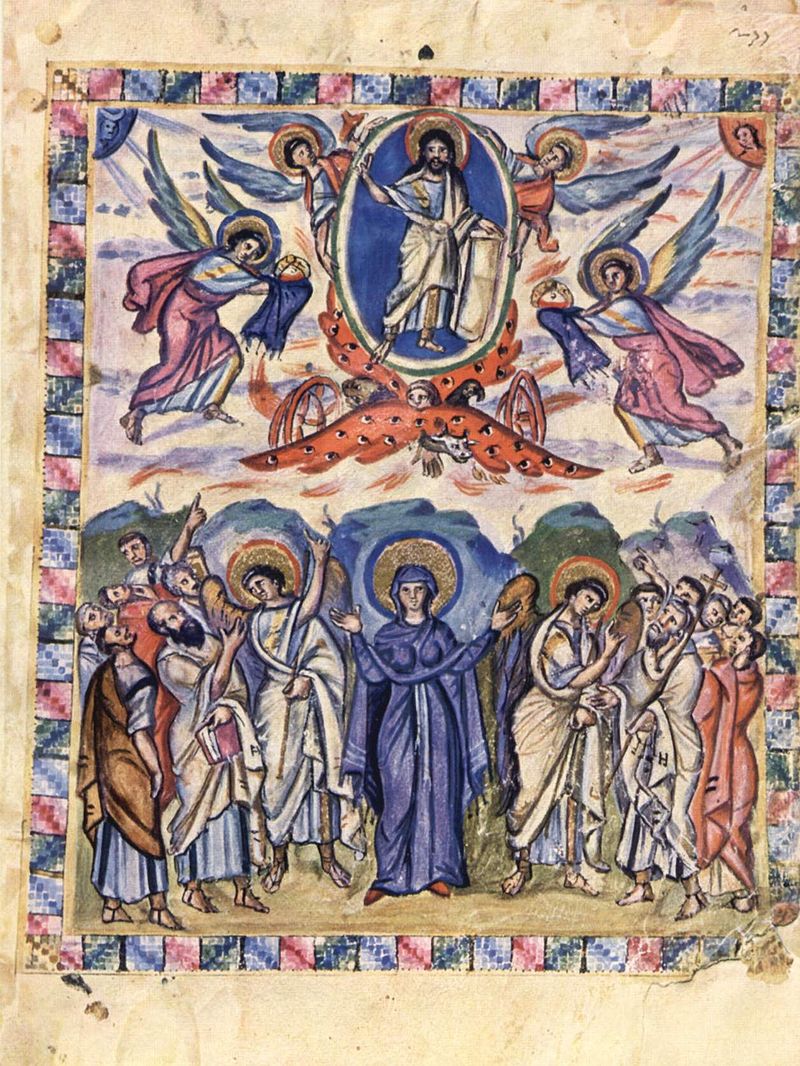
   ¿Y dejas, Pastor santo,            

tu grey en este valle hondo, escuro,        

con soledad y llanto,          

y tú, rompiendo el puro             

aire, te vas al inmortal seguro?        


Los antes bienhadados           

y los agora tristes y afligidos,            

¡a tus pechos criados,        

de Ti desposeídos,              

¿a dó convertirán ya sus sentidos?          


¿Qué mirarán los ojos             

que vieron de tu rostro la hermosura,            

que no les sea enojos?               

Quien oyó tu dulzura          

¿qué no tendrá por sordo y desventura?       


  Aqueste mar turbado              

¿quién le pondrá ya freno? ¿Quién concierto        

al viento fiero, airado?       

Estando tú encubierto,              

¿qué norte guiará la nave al puerto?               

   ¡Ay!, nube envidiosa        

aun deste breve gozo, ¿qué te aquejas?         

¿Dó vuelas presurosa?       

¡Cuán rica tú te alejas!       

¡Cuán pobres y cuán ciegos, ay, nos dejas! •

Fray Luis de Leon (1528-1591)

La Ascensión es la gran llamada a seguir esperando a pesar de las decepciones, desengaños y desalientos que amenazan de continuo nuestro caminar hacia el hogar definitivo. A lo largo de la vida podemos sentir una doble tentación: o bien desistir de la marcha porque el camino nos resulta demasiado fatigoso, o bien anticipar la llegada a la meta porque el camino se nos hace demasiado largo. La Ascensión es un buen día para escuchar la exhortación de la Carta de Santiago: « Tened paciencia hasta que llegue el día del Señor». Hoy se habla poco de la paciencia. Tenemos miedo de caer en una postura de resignación o debilidad, indigna del ser humano. Olvidamos que, según S. Pablo, la paciencia engendra esperanza (Rom 5, 4). Naturalmente, hemos de entenderla bien, pues la paciencia no consiste en adoptar una postura de dimisión ante la vida. Al contrario, el hombre paciente resiste activamente a las adversidades, manteniendo un espíritu firme y fuerte ante el desgaste de los años. Pero en nuestros días hemos de recordar, sobre todo, que la paciencia se opone a esa prisa y ansiedad que nos hacen vivir inquietos y agitados, siempre corriendo, aunque no sepamos muy bien hacia donde. Hemos de aprender a respetar el ritmo de la vida. Cada cosa tiene su tiempo. Es una insensatez estirar el tallo de una planta para acelerar su crecimiento. Lo inteligente es regar bien la vida y saber esperar. Tener paciencia con nosotros mismos y con el caminar de la historia. Es peligrosa la huida hacia adelante del impaciente que adopta siempre las posiciones que cree mas progresistas sólo para sacudirse de encima el pasado, que se casa cuanto antes sólo por alejarse del hogar paterno o que busca un nuevo amor sólo por olvidar mejor su anterior fracaso amoroso. Hemos de aprender a recorrer pacientemente nuestro propio camino. Un camino único y original. Con sus gozos y sus tristezas, sus logros sus fracasos, sus momentos buenos y sus momentos malos. Recordemos los versos llenos de fe y de verdad de León Felipe. «Nadie fue ayer ni va hoy, ni irá mañana hacia Dios, por este camino que yo voy. Para cada hombre guarda un rayo nuevo de luz el sol, y un camino virgen Dios». En ese caminar, los creyentes sabemos que no estamos solos. Nos acompaña el Resucitado. Su presencia nos sostiene, sus palabras nos llenan de nuevo aliento: «Yo estaré con vosotros todos los días hasta el fin del mundo» • AE


Sixth Sunday of Easter (Cycle A)

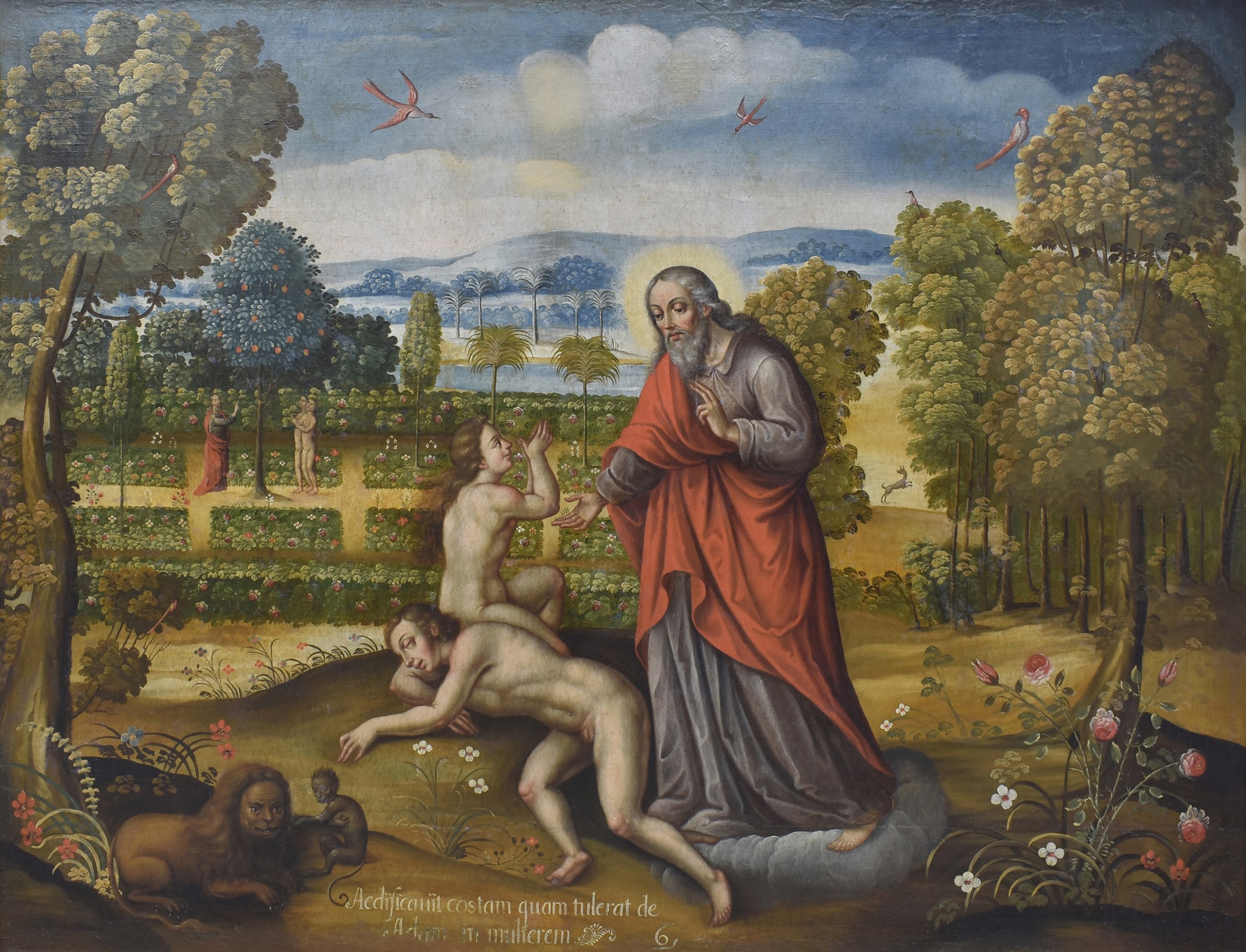
Anonymous author, The Creation of Adam & Eve (17th century), oil on canvas, Collection of the Ministry of Culture of Peru

Have you ever had feelings like those Samaritans must have had before Philip visited them with the Gospel? Have you ever felt that you were not good enough to receive the gifts of the Lord? Have you ever looked at another person in the Church and wished you could be half as good as he or she is? Perhaps we have all felt that way at various times throughout our lives. This reading tells us that in the eyes of God we are good enough. He makes us good enough. He calls us to faith, and then showers us with the gifts of faith. The joy that the Samaritans had is our joy. We are loved by God. He gave us His very life. He gave us his very spirit, the Holy Spirit. Many of us are still bogged down in the negative self images we suffered from during our adolescence or our teenage years. Some of these negative images are due to our not meeting our own unreal expectations. Sadly, some of the negative attitudes of our lives have been forced on us by people whom we should respect but who have treated us with disrespect. Perhaps it has been conveyed to us that we are a disappointment to our parents, our teachers, our employers, or even, for those who are married, to their spouses or their children. We are precious in the eyes of God. We are also precious in the eyes of all who truly proclaim God. It is a mistake for me to compare myself with other priests. It is wrong for you to compare yourselves with other people at whatever stage of life you are in. It is a mistake for parents to compare themselves with other parents, for men to compare themselves with other men, for women to compare themselves with other women. We are individuals, not clones. It is wrong for any of us to think, as the Samaritans must have thought, that we are not as good as others.

God loves each of us for whom we are, not for what we think we should be like. He loves us for whom He created us to be. We are created in the image and likeness of God; yet in the mystery of God’s creation, each of us is a unique reflection of this image and likeness. He loves us for whom we are. We are not rejects. We are not half breeds, only part Christians. We are precious, precious in the eyes of God, and precious in the eyes of all those who really love the Lord. And He gave us His Son. We possess Jesus Christ. In the Gospel reading Jesus says, «I am in the Father. You are in me, and I am in you.» We are not orphans. We are not alone in the world. We are not rejects from the society that matters. For the society that matters is the Kingdom of God. Every other society has value only to the degree that it participates in the Kingdom of God. We belong to God. He belongs to us. “I am in the Father. You are in me, and I am in you.” The Samaritans embraced the New Way, embraced Jesus because He first embraced them through the teaching of Philip. This is the way of Grace. Grace always begins with God’s gifts of love. It reaches its goal when we respond by loving God in return. We have received grace. God has showered us with His love. Now He calls us to give witness to the world that His love is real. We can do this. We can proclaim Jesus Christ with our lives. We are good enough, plenty good enough. We are sons and daughters of God • AE


Fr Agustin´s Schedule for the Sixth Sunday of Easter of 2023

Saturday May 13

11.00 a.m. First Communion

3.00 p.m. Sacrament of Reconciliation (Confessional)

5.00 p.m. Holy Mass

Sunday May 14

7.30 a.m. Holy Mass

10.00 a.m. Holy Mass


VI Domingo del Tiempo de Pascua (Ciclo A)

Hay algo que no siempre se señala al estudiar la crisis religiosa de nuestros días. Unos se alejan de la religión, otros la han reducido al mínimo, no pocos viven una fe apagada. Pero, con frecuencia, todo esto se está produciendo sin que las personas se planteen de forma consciente qué actitud quieren adoptar ante Dios y por qué. Se actúa casi siempre sin criterios de referencia. Por otra parte, es fácil observar que muchas veces se habla de Dios como de oídas, es decir, no hay experiencia personal. Olvidamos, que diria W. Schmidt, que «la religión sólo puede captarse con verdad desde dentro», por eso es que corremos el peligro de hablar de ella «como hablaría un ciego de los colores». La fe en Dios se puede debilitar o apagar de muchas maneras, pero sólo conozco un camino para reavivarla: la oración personal. Ese ponerse ante Dios en silencio y a solas. No sé de nadie que haya vuelto a Dios sin haberlo escuchado como amigo en el fondo de su ser. La fe se despierta cuando la persona invoca a Dios, lo busca, lo llama, lo interroga, lo desea. Y es que Dios no se oculta a quien lo busca así. Más aún. Está ya presente en esa búsqueda. El hermoso texto del evangelio de este domingo, el sexto dentro del tiempo de Pascua, nos recuerda que dentro de nosotros vive un Defensor que está siempre con nosotros y nos alienta y nos anima. Es el Espíritu de Dios. El mundo no lo ve ni lo conoce, pero él vive con los creyentes y está con ellos. Hay, sin duda, muchos caminos para encontrarse con Dios, pero todos ellos llevan a él sólo si escuchamos en nuestro interior a ese Espíritu de la verdad y mantenos una converesación con él. Eso: café y conversación. Es Domingo • AE


Salve Madre

Salve, Madre, en la tierra de mis amores

te saludan los cantos que alza el amor.

Reina de nuestras almas, flor de las flores,

muestra aquí de tu gloria los resplandores,

que en el cielo tan sólo te aman mejor.

Virgen Santa, Virgen pura, vida, esperanza y dulzura

del alma que en ti confía, Madre de Dios, Madre mía,

mientras mi vida alentare, todo mi amor para ti,

mas si mi amor te olvidare, Madre mía, Madre mía,

aunque mi amor te olvidare tú no te olvides de mí •


Fifth Sunday of Easter (Cycle A)

In today’s second reading St. Peter talks about rocks. He first says that Jesus is a stone, a rock, but not an inanimate mineral. He says that Jesus is a living rock. How can a rock be alive? That must have seemed absurd to the people who first heard or read this. Peter makes an even seemingly crazier assertion: not only is Jesus a living stone, but his followers are also called to be living stones. What does Peter mean by this? Or, more properly, what is the Holy Spirit saying through Peter? When Peter called Jesus the living stone, he particularly referred to the cornerstone of the building, the stone that unites all the other stones. We are called to be living stones, stones that unite all other stones together to form the Building of the Lord, the Church. We are living stones. We have Dignity. We have received dignity from the Lord. We have been chosen by God. We are the building that is the church.

Like our Lord our lives have to be intertwined with all those around us. The cornerstone connects the walls of a building. It supports the walls. We have to be people who connect others to God. We have to be people who support others. Our Christian charity is a statement of who we are. We are followers of the One who is the Living Rock. As living rocks ourselves we support and strengthen each other and all others. The Church is the building of the spirit of God. We are the Church. Jesus is the great high priest who was rejected by the status quo and thrown out of the Temple. He was crucified outside the city. We are rejected by the intellectually arrogant atheists who control so much of our media and society. We are thrown out of the City of Man and laughed at as naive remnants of an ignorant age. But we remain here in the City of God. We are a holy priesthood, people carrying on the priestly ministry by making God present to others and others present to God.  What dignity we have! We have the dignity of Jesus Christ. We need to walk through this world with our heads held up high. We need to proclaim to all the people of the world that the gifts of the Father, the special place set aside for his followers, is offered also to them. We cannot be pet rocks that really do nothing. No, we are called to be the living stones of an eternal home • AE


Fr Agustin´s Schedule for the Fifth Sunday of Easter of 2023

Saturday May 6

3.30 p.m. Sacrament of Reconciliation (Confessional)

5.00 p.m. Holy Mass

Sunday May 7

10.00 a.m. Holy Mass

12.30 p.m. Holy Mass

3.00 p.m. Santa Misa


V Domingo del Tiempo de Pascua (Ciclo A)

Los cristianos de la primera y segunda generación probablemente no llegaron a pensar que con ellos estaba naciendo una religión. De hecho, no sabían con qué nombre designar a aquel movimiento que iba creciendo de manera insospechada. Todavía vivían impactados por el recuerdo de Jesús al que sentían vivo en medio de ellos. Por eso los grupos que se reunían en ciudades como Corinto o Éfeso comenzaron a llamarse «iglesias», es decir, comunidades que iban creciendo y haciéndose fuertes en una misma fe, la fe en Jesús. En otras partes, al cristianismo lo llamaban «el camino». La (preciosa) Carta a los hebreos dice que es un «camino nuevo y vivo» para enfrentarse a la vida. El camino inaugurado por Jesús y que hay que recorrer con los ojos fijos en él. De esto no hay duda alguna. Para estos primeros creyentes, el cristianismo no era propiamente una religión sino una forma nueva de vivir. Lo primero para ellos no era vivir dentro de una institución religiosa, sino aprender juntos, a vivir como Jesús o con el estilo de vida de Jesús en medio del imperio Romano. Ahí estaba su fuerza. Esto era lo que podían ofrecer a todos. De ahí podríamos entender mejor las palabras que el evangelista pone boca del Señor: «Yo soy el camino, la verdad y la vida». Este es el punto de arranque del cristianismo. Cristiano es un hombre o una mujer que en Jesús va descubriendo el camino más acertado para vivir, la verdad más segura para orientarse, el secreto más esperanzador de la vida. Este camino es muy concreto. De poco sirve sentirse conservador o declararse progresista. La opción que hemos de hacer es otra. O nos organizamos la vida a nuestra manera, o aprendemos a vivir desde Jesús. O es blanco, o es negro, en realidad no hay gris. Es preciso elegir:  Indiferencia hacia los que sufren, o compasión bajo todas sus formas. Sólo bienestar para mí y los míos, o un mundo más humano para todos. Intolerancia y exclusión de quienes son diferentes, o actitud acogedora hacia todos. Olvido de Dios, o comunicación confiada en el Padre de todos. Fatalismo y resignación o esperanza última para la creación entera. Son muchas las preguntas y solo una es la respuesta: Jesucristo, Camino, Verdad y Vida • AE


Fourth Sunday of Easter (Cycle A)

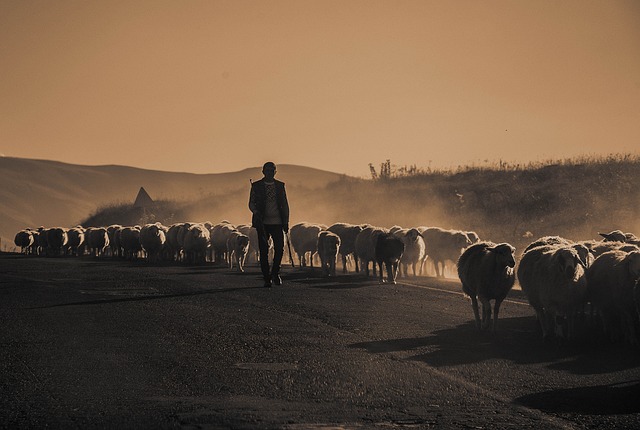
In a world where so many people are looking for a voice to lead them, there is only one voice that matters. World leaders and all politicians for that matter attract people fanatically dedicated to them, but at best their voices lead only to limited solutions to the complex problems of life. The voice that matters is the Voice of the Lord. There are many voices in the world. We have to listen carefully for the voices that are coming from the Lord and for the voices that are not the voice of our shepherd. There is the voice that says, «You can do this or that now. Everyone is doing this. Join in. What makes you think that you are different?» Or, perhaps the voice says, «Times have changed. Get with the modern way.» This voice is tempting us to destruction, self-destruction. If we follow it, we wander away from Christian morality in order to be part of the world. Soon, we realize that we have wandered away from our own happiness. That happens when we follow a voice that is not the voice of our Shepherd. People will often justify their actions by saying, “This was right for me. I was following my conscience.” Not really. We might be following our selfish desires, but not our consciences. Not all desires come from the conscience. Some come from selfishness. We can easily deceive ourselves in taking courses of action that do not exhibit the way of the Lord. “If it feels good, do it,” is not the way of the Lord. Following the voice of the Lord is often a challenge, a battle we have to put up against the world around us and against the selfishness within us.

We are his sheep. He is our shepherd. We are His. How can anything in the world surpass that? We belong to God, and He belongs to us. That is the joy of the Gospel. There are predators out there. They are trying to entice us away from our Shepherd. We need to know their voices, and we need to realize where they are trying to take us. We know the voice of God. And we know where He wants to lead us. We pray today for the courage to listen to His Voice and follow our shepherd • AE


Fr Agustin´s Schedule for the Fourth Sunday of Easter of 2023

Saturday April 29

8.30 a.m. – 10.30 a.m. Sacrament of Reconciliation for CCD Children (Main church)

3.30 p.m. Sacrament of Reconciliation (Confessional)

5.00 p.m. Holy Mass

6.30 p.m. Sacrament of Baptism

Sunday April 30

7.30 a.m. Holy Mass

10.00 a.m. Holy Mass

12.30 p.m. Holy Mass

3.00 p.m. Santa Misa


IV Domingo de Pascua (Ciclo A)

Se insiste más que nunca en la necesidad de un magisterio eclesiástico fuerte para dirigir a quienes navegan -¡navegamos!- en medio de la crisis actual. De hecho, no pocas intervenciones de los obispos provocan reacciones encontradas. Unos las alaban con fervor, otros las critican duramente y la mayoría las olvida a los pocos días. Mientras tanto, en el evangelio se nos recuerdan unas palabras de Jesús que nos interpelan a todos: «Las ovejas siguen al pastor porque conocen su voz». Lo primero y decisivo también hoy es que, en la Iglesia, los creyentes escuchemos la voz de Jesucristo en toda su originalidad y pureza, no el peso de las tradiciones ni la novedad de las modas, no las preocupaciones de los eclesiásticos ni los gustos de los teólogos, no nuestros intereses, miedos o acomodaciones. O caprichos. Esto exige no confundir sin más la voz de Jesucristo con cualquier palabra que se pronuncia en la Iglesia. No hemos de dar por supuesto que en toda intervención de los obispos, en toda predicación de los curas, en todo escrito de los teólogos o en toda exposición de los catequistas se está escuchando fielmente la voz de Jesús. Siempre existe un riesgo. Que llenemos la Iglesia de escritos y cartas pastorales, de documentos y libros de teología, de catequesis y predicaciones, sustituyendo con nuestro ruido la voz inconfundible del Señor, nuestro único maestro. Lo decía san Agustín: «Tenemos un sólo maestro. Y, bajo él, todos somos condiscípulos. No nos constituimos en maestros por el hecho de hablar desde el púlpito. El verdadero Maestro habla desde dentro». Hemos de preguntarnos si la palabra que se escucha en la Iglesia proviene de Galilea y nace del Espíritu del resucitado. Esto es lo decisivo pues el magisterio, la predicación o la teología han de ser una invitación a que cada creyente escuchemos de manera fiel y responsable la voz de Cristo. Sólo cuando uno aprende algo de Jesús y lo convierte en vida en la propia vida, solo entonces es un auténtico cristiano • AE


Ego sum pastor bonus (Collegium Vocale Bydgoszcz)


Third Sunday of Easter (Cycle A)

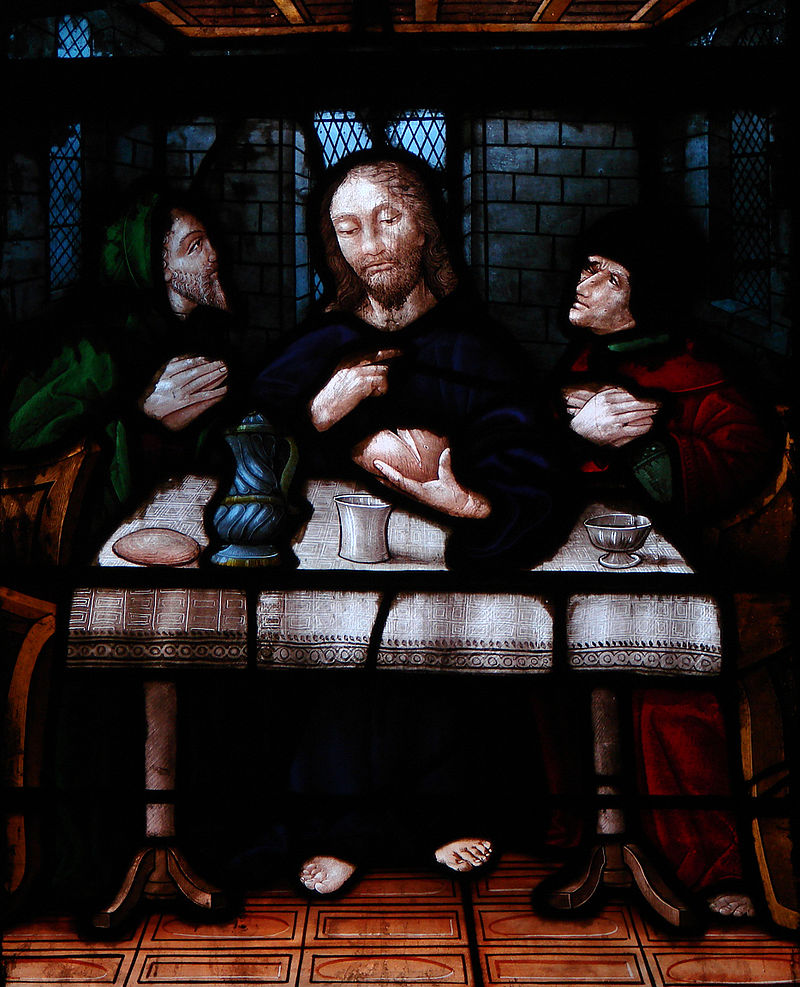
Anonymous artist, The Supper at Emmaus, stained glass window in the Auch cathedral (France)

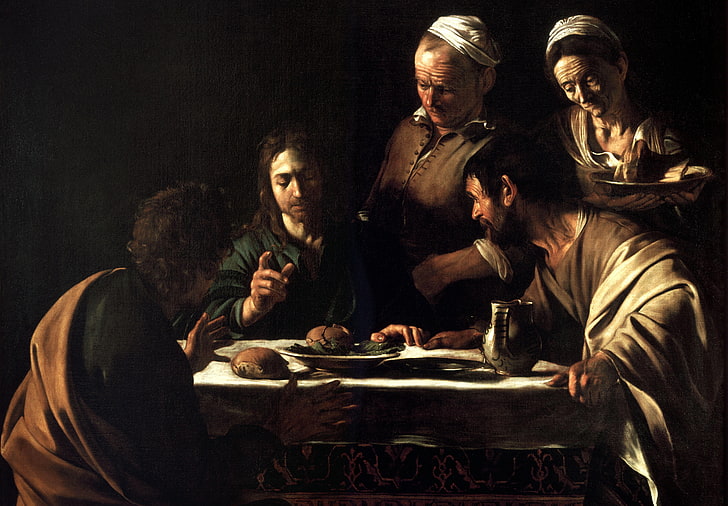
As Cleopas and his friend so often, we walk along the road of our lives confused. We have difficulty solving our problems. We doubt our own ability to come up with the answers we need. Some people tell us to look into ourselves for the answers, as though we had a secret chamber someplace within us, or as early heretics would call it, a hidden gnosis, where all the answers to our questions can be found. This early heresy of the Church still continues in those who think they have all the answers within themselves. It is true that through baptism God dwells within us. It is also true that we need the gifts He gives us to find direction in our lives and, eventually, to help us understand His Life and His Kingdom. We need the gifts of Word and Sacrament. Sometimes we act as though we have all the answers to life. We do not! In fact, we don’t even know the correct questions to ask. So many people spend their lives seeking the answers to the wrong questions. For example, most people try to answer these questions: How can I become prosperous? How can I become rich? Their whole lives are spent chasing the illusion that happiness can be bought. If they are among the few who do become rich, what do they have to show for their lives? A bank account? A lot of stuff? Does that make a life successful? There is a reason why they do not put a luggage rack on a hearse. Another question that so many people spend their lives trying to answer is: How can I become better than everyone else? Again this is not a question that our lives should revolve around. We want to be the best person we can be, and that is very good, but when we start comparing ourselves to other people we can easily become arrogant and proud. «Look at that tax collector,» said the Pharisee in the Temple. «You know, Lord, that I am a lot better than him. I do lots of good things. Let me remind you in case your forgot.» But the tax collector merely beat his breast and said, «Have mercy on me a sinner.» Only he left justified.

When we devote our lives to answering the question “How can I be better than others?” whether it is better than others before God, a better parent than my neighbors, a better teacher than the guy or girl in the next classroom, a better priest than another man, etc., we are simply asking the wrong question, one that leads to arrogance. The question we need to ask is, How can I be a better person than I am? We think we have all the answers. We do not even know the right questions. Another questions we should be asking ourselves is one that we are secretly afraid to ask: How can I be different than what contemporary society claims is the norm? The norm of society tells Teens that drinking, taking drugs and doing things that belong in a marriage is all part of high school and college. The norm of society tells adults that cheating on their jobs, and in their marriages is part of life. The norm of society tells people not to get carried away and sacrifice too much of themselves to help others. It is difficult to ask, “How can I be different?” because none of us want to be different from everyone else. We want to fit in. It is a difficult question to ask, “How can I be different?” and, yet, that is what holiness is. To be holy is to be different, set apart for the Lord. There are many other questions we all need to ask ourselves, questions about how to be a good husband, wife, father, mother, Teen, child, priest, deacon, etc. We are not given the answers to our questions today, on Confused Sunday (I love this name!) But we are told where the answers can be found. Jesus led the disciples on the road to Emmaus to the Truth through Sacred Scripture. The Bible is not just the Good Book. It is the living and effective Word of God. We go to Scripture to seek the answers to our problems. We need to quietly meditate on Scripture and let the Word of God work on us.

Peace can be found in the middle of confusion when we are open to the second great gift presented in today’s Gospel, the Eucharist. Those disciples finally recognized Jesus in the Breaking of the Bread. They said to each other, «Were not our hearts on fire?» We may not have the answers to the profound questions of life, or even to the daily concerns of life, but we do know where peace is found. We cannot understand our world or even our lives, but as long as we have the Peace of Christ, our hearts and our minds will be guarded from all that can destroy our happiness. In Him alone we find our joy. If we stay united to the Lord in Word and Sacrament, we will never go wrong. We need to trust God and let that Peace which is beyond our understanding guide our lives. Then we will no longer be confused • AE


Fr Agustin´s Schedule for the Third Sunday of Easter

Saturday April 22, 2023

8.30 a.m. – 12.00 p.m. Sacrament of Reconciliation for CCD Children (Main church)

3.30 p.m. Sacrament of Reconciliation (Confessional)

5.00 p.m. Holy Mass

Sunday April 23, 2023

10.00 a.m. Holy Mass

12.30 p.m. Holy Mass

3.00 p.m. Sana Misa


Quédate Con Nosotros

Quédate con nosotros,
la tarde está cayendo.

¿Cómo te encontraremos
al declinar el día,
si tu camino no es nuestro camino?
Detente con nosotros;
la mesa está servida,
caliente el pan y envejecido el vino.

¿Cómo sabremos que eres
un hombre entre los hombres,
si no compartes nuestra mesa humilde?
Repártenos tu cuerpo,
y el gozo irá alejando
la oscuridad que pesa sobre el hombre.

Vimos romper el día
sobre tu hermoso rostro,
y al sol abrirse paso por tu frente.
Que el viento de la noche
no apague el fuego vivo
que nos dejó tu paso en la mañana.

Arroja en nuestras manos,
tendidas en tu busca,
las ascuas encendidas del Espíritu;
y limpia, en lo más hondo
del corazón del hombre,
tu imagen empañada por la culpa •

III Domingo de Pascua (Ciclo A)

La eucaristía no es sólo el centro de la liturgia cristiana. Es además la experiencia que vivida domingo tras domingo alimenta la vida del cristiano. El que come y bebe en esa cena, alimenta su vida de discípulo fiel de Cristo. En primer lugar, la eucaristía es acción de gracias a Dios por la vida y por la salvación que nos ofrece en su Hijo Jesucristo. Las palabras de acción de gracias, la estructura de todo el conjunto y el tono de toda la celebración contribuyen a vivir una experiencia intensa de alabanza y agradecimiento a Dios que no debe reducirse a ese momento cultual. La vida cotidiana de un cristiano ha de estar marcada por la acción de gracias. La eucaristía es, además, comunión con Cristo resucitado. Jesús no es una figura del pasado, alguien cada vez más lejano en el tiempo, sino el Señor de todos los tiempos que permanece vivo entre los suyos. Los cristianos no somos seguidores de un gran líder del pasado. La eucaristía nos enseña a vivir en comunión con un Cristo actual, acogiendo realmente hoy su espíritu y fuerza renovadora. La eucaristía es también escucha de las palabras de Jesús que son «espíritu y vida». Para un discípulo de Cristo, el evangelio no es un mero testamento literario o un texto fundacional. En la eucaristía nos reunimos para escuchar la palabra viva de Jesús que ilumina nuestra experiencia humana de hoy. Esa acción dominical nos invita a no vivir como ciegos, sin evangelio ni luz alguna. El cristiano vive alimentado por la Palabra de Jesús. La eucaristía es un acto comunitario por excelencia. Todos los domingos, los cristianos dejan sus hogares, se reúnen en una iglesia y forman comunidad visible de seguidores de Jesús. Todas las oraciones de la eucaristía se dicen en plural: invocamos, pedimos perdón, ofrecemos, damos gracias… siempre juntos. Los textos dicen que somos «familia», «pueblo» «Iglesia». No se nos debería olvidar. Los cristianos no somos individuos aislados que, cada uno por su cuenta, tratan de vivir el evangelio. Formamos una comunidad que quiere ser en el mundo testimonio e invitación a vivir de manera fraterna y solidaria. La cena de Jesús resucitado con sus discípulos en la aldea de Emaús es una invitación a reavivar nuestras eucaristías dominicales • AE