The Solemnity of the Body and Blood of the Lord

Today we celebrate the Solemnity of the Body and Blood of the Lord, or as it used to be called, Corpus Christi. For us Catholics, Jesus Christ is really and truly present in the Eucharist uniting us to his Passion, Death and Resurrection, nourishing us. Unlike many other Christian Churches, we do not believe that the Eucharist just points to the Lord or signifies our union with Christ. We Catholics believe that the Eucharist is the Lord. We believe that when we receive Communion, we receive Jesus within us, sanctifying us. We speak to the Lord within us. When the bread and wine are consecrated during the Mass, the very substance or essence of the bread and wine is changed from the physical to the spiritual. We call this the Real Presence. That is why we say that the hosts and the wine are consecrated, not just blessed. That is also why the hosts which are consecrated during the Mass are reserved in our tabernacles after Mass. We can then take the Real Presence of the Lord to the sick and dying. We also can worship before the Eucharistic presence of the Lord here in Church. The Eucharist is the meal of the Catholic community, but it is far more than just a meal of fellowship. Each person who receives communion receives the Body of Christ within him or her as individuals. In this way each person is united together to the total Mystical Body of Christ. Our union is far more than fellowship. Perhaps the best example is the one St. John gives: the example of the vine and the branches. The branches of a vine or a tree do not just live in fellowship with each other, they live united to each other through their union to the life-giving trunk. We are the branches united to the vine and sustained by the life force of the Eucharist. The Solemnity of the Body and Blood of the Lord is a good time for a bit of a refresher regarding proper reverence in the church and when receiving communion. Because we believe that Jesus in present in the Blessed Sacrament within our tabernacles, we need to show reverence in Church. We need to speak to the Lord within us. We need to pray directly to Jesus inside of us in the Eucharist. It so wrong and so disrespectful to the Presence of the Lord for us to receive communion and then ignore the One within us. We have been entrusted with the Body of Christ. We must care for this gift properly. The Solemnity of the Body and Blood of the Lord leads us to reflect on the depth of this great gift. The celebration reminds us that when we receive communion, we do not just perform a symbolic action, we receive Jesus Christ. May we do so with reverence • AE


ADORO TE DEVOTE

I devoutly adore you, O hidden Deity,

Truly hidden beneath these appearances.

My whole heart submits to you,

And in contemplating you, It surrenders itself completely.

Sight, touch, taste are all deceived in their judgment of you,

But hearing suffices firmly to believe.

I believe all that the Son of God has spoken;

There is nothing truer than this word of truth.

On the cross only the divinity was hidden,

But here the humanity is also hidden.

Yet believing and confessing both,

I ask for what the repentant thief asked.

I do not see the wounds as Thomas did,

But I confess that you are my God.

Make me believe more and more in you,

Hope in you, and love you.

O memorial of our Lord’s death!

Living bread that gives life to man,

Grant my soul to live on you,

And always to savor your sweetness.

Lord Jesus, Good Pelican,

wash my filthiness and clean me with your blood,

One drop of which can free

the entire world of all its sins.

Jesus, whom now I see hidden,

I ask you to fulfill what I so desire:

That the sight of your face being unveiled

I may have the happiness of seeing your glory. Amen •


Fr. Agustin Schedule for the solemnity of The Solemnity of the Body and Blood of the Lord (2022)

Sunday June 19, 2022

12.00 p.m. Holy Mass (English Mass @ Main Church)

3.00 p.m. Misa en español (Iglesia grande)


¡ALTISIMO SEÑOR!


Solemnidad del Cuerpo y la Sangre de Cristo (2022)
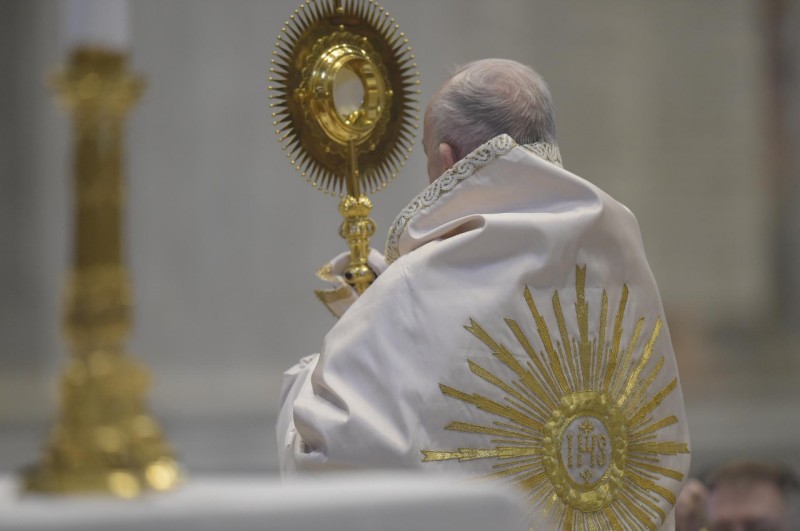
Cuál es el significado de la solemnidad del Cuerpo y la Sangre de Cristo? Nos los explica la misma celebración que estamos realizando, con el desarrollo de sus gestos fundamentales: ante todo, nos hemos reunido alrededor del Señor para estar juntos en su presencia; en segundo lugar, tendrá lugar la procesión, es decir, caminar con el Señor; por último, vendrá el arrodillarse ante el Señor, la adoración que comienza ya en la misa y acompaña toda la procesión, pero que culmina en el momento final de la bendición eucarística, cuando todos nos postraremos ante Aquél que se ha agachado hasta nosotros y ha dado la vida por nosotros. Analicemos brevemente estas tres actitudes para que sean expresión de nuestra fe y de nuestra vida.

REUNIRSE EN LA PRESENCIA DEL SEÑOR.

El primer acto es el de reunirse en la presencia del Señor. Es lo que antiguamente se llamaba statio. Imaginemos por un momento que en toda Roma sólo existiera este altar, y que se invitara a todos los cristianos de la ciudad a reunirse aquí, para celebrar al Salvador, muerto y resucitado. Esto nos permite hacernos una idea de cuáles fueron los orígenes de la celebración eucarística, en Roma y en otras muchas ciudades, a las que llegaba el mensaje evangélico: en cada Iglesia particular había un solo obispo y, a su alrededor, alrededor de la Eucaristía celebrada por él, se constituía la comunidad, única, pues uno era el Cáliz bendecido y uno era el Pan partido, como hemos escuchado en las palabras del apóstol Pablo en la segunda lectura[2]. Pasa por la mente otra famosa expresión de Pablo: ya no hay judío ni griego; ni esclavo ni libre; ni hombre ni mujer, ya que todos vosotros sois uno en Cristo Jesús[3]. ¡Todos vosotros sois uno!. En estas palabras se percibe la verdad y la fuerza de la revolución cristiana, la revolución más profunda de la historia humana, que se experimenta precisamente alrededor de la Eucaristía: aquí se reúnen en la presencia del Señor personas de diferentes edades, sexo, condición social, ideas políticas. La Eucaristía no puede ser nunca un hecho privado, reservado a personas escogidas según afinidades o amistad. La Eucaristía es un culto público, que no tiene nada de esotérico, de exclusivo. En esta tarde, no hemos decidido con quién queríamos reunirnos, hemos venido y nos encontramos unos junto a otros, reunidos por la fe y llamados a convertirnos en un único cuerpo, compartiendo el único Pan que es Cristo. Estamos unidos más allá de nuestras diferencias de nacionalidad, de profesión, de clase social, de ideas políticas: nos abrimos los unos a los otros para convertirnos en una sola cosa a partir de Él. Esta ha sido desde los inicios la característica del cristianismo, realizada visiblemente alrededor de la Eucaristía, y es necesario velar siempre para que las tentaciones del particularismo, aunque sea de buena fe, no vayan en el sentido opuesto. Por tanto, el Corpus Christi nos recuerda ante todo esto: ser cristianos quiere decir reunirse desde todas las partes para estar en la presencia del único Señor y ser uno en Él y con Él.

CAMINAR CON EL SEÑOR.

El segundo aspecto constitutivo es caminar con el Señor. Es la realidad manifestada por la procesión, que viviremos juntos tras la santa misa, como una prolongación natural de la misma, avanzando tras Aquél que es el Camino. Con el don de sí mismo en la Eucaristía, el Señor Jesús nos libera de nuestras «parálisis», nos vuelve a levantar y nos hace «proceder», nos hace dar un paso adelante, y luego otro, y de este modo nos pone en camino, con la fuerza de este Pan de la vida. Como le sucedió al profeta Elías, que se había refugiado en el desierto por miedo de sus enemigos, y había decidido dejarse morir[4]. Pero Dios le despertó y le puso a su lado una torta recién cocida: Levántate y come –le dijo- porque el camino es demasiado largo para ti[5]. La procesión del Corpus Christi nos enseña que la Eucaristía nos quiere liberar de todo abatimiento y desconsuelo, quiere volver a levantarnos para que podamos retomar el camino con la fuerza que Dios nos da a través de Jesucristo. Es la experiencia del pueblo de Israel en el éxodo de Egipto, la larga peregrinación a través del desierto, de la que nos ha hablado la primera lectura. Una experiencia que para Israel es constitutiva, pero que para toda la humanidad resulta ejemplar. De hecho, la expresión no sólo de pan vive el hombre, sino de toda palabra que sale de la boca del Señor[6] una afirmación universal, que se refiere a cada hombre en cuanto hombre. Cada uno puede encontrar su propio camino, si encuentra a Aquél que es Palabra y Pan de vida y se deja guiar por su amigable presencia. Sin el Dios-con-nosotros, el Dios cercano, ¿cómo podemos afrontar la peregrinación de la existencia, ya sea individualmente ya sea como sociedad y familia de los pueblos? La Eucaristía es el sacramento del Dios que no nos deja solos en el camino, sino que se pone a nuestro lado y nos indica la dirección. De hecho, ¡no es suficiente avanzar, es necesario ver hacia dónde se va! No basta el «progreso», sino no hay criterios de referencia. Es más, se sale del camino, se corre el riesgo de caer en un precipicio, o de alejarse de la meta. Dios nos ha creado libres, pero no nos ha dejado solos: se ha hecho él mismo «camino» y ha venido a caminar junto a nosotros para que nuestra libertad tenga el criterio para discernir el camino justo y recorrerlo.

ARRODILLARSE EN ADORACIÓN ANTE EL SEÑOR.

Al llegar a este momento no es posible de dejar de pensar en el inicio del «decálogo», los 10 mandamientos, en donde está escrito: «Yo, el Señor, soy tu Dios, que te he sacado del país de Egipto, de la casa de servidumbre. No habrá para ti otros dioses delante de mí»[7]. Encontramos aquí el tercer elemento constitutivo del Corpus Christi: arrodillarse en adoración ante el Señor. Adorar al Dios de Jesucristo, que se hizo pan partido por amor, es el remedio más válido y radical contra las idolatrías de ayer y hoy. Arrodillarse ante la Eucaristía es una profesión de libertad: quien se inclina ante Jesús no puede y no debe postrarse ante ningún poder terreno, por más fuerte que sea. Nosotros, los cristianos, sólo nos arrodillamos ante el santísimo Sacramento, porque en él sabemos y creemos que está presente el único Dios verdadero, que ha creado el mundo y lo ha amado hasta el punto de entregar a su unigénito Hijo[8]. Nos postramos ante un Dios que se ha abajado en primer lugar hacia el hombre, como el Buen Samaritano, para socorrerle y volverle a dar la vida, y se ha arrodillado ante nosotros para lavar nuestros pies sucios. Adorar el Cuerpo de Cristo quiere decir creer que allí, en ese pedazo de pan, se encuentra realmente Cristo, quien da verdaderamente sentido a la vida, al inmenso universo y a la más pequeña criatura, a toda la historia humana y a la más breve existencia. La adoración es oración que prolonga la celebración y la comunión eucarística, en la que el alma sigue alimentándose: se alimenta de amor, de verdad, de paz; se alimenta de esperanza, pues Aquél ante el que nos postramos no nos juzga, no nos aplasta, sino que nos libera y nos transforma. Por este motivo, reunirnos, caminar, adorar, nos llena de alegría. Al hacer nuestra la actitud de adoración de María, a quien recordamos particularmente en este mes de mayo, rezamos por nosotros y por todos; rezamos por cada persona que vive en esta ciudad para que pueda conocerte e ti, Padre, y a Aquél que tú has enviado, Jesucristo. Y de este modo tener la vida en abundancia. Amén • AE

[1] Homilía pronunciada por Su Santidad Benedicto XVI en la solemnidad del Corpus Christi del año 2008, al presidir la celebración eucarística en la plaza de la Basílica de San Juan de Letrán, en Roma. [2] Cf. 1 Cor 10, 16-17. [3] Ga 3, 28 [4] Cf. 1Reyes 19,1-4 [5] 1 Reyes 19, 5.7 [6] Deut 8, 3. [7] Ex 20, 2-3 [8] Cf. Jn 3, 16.

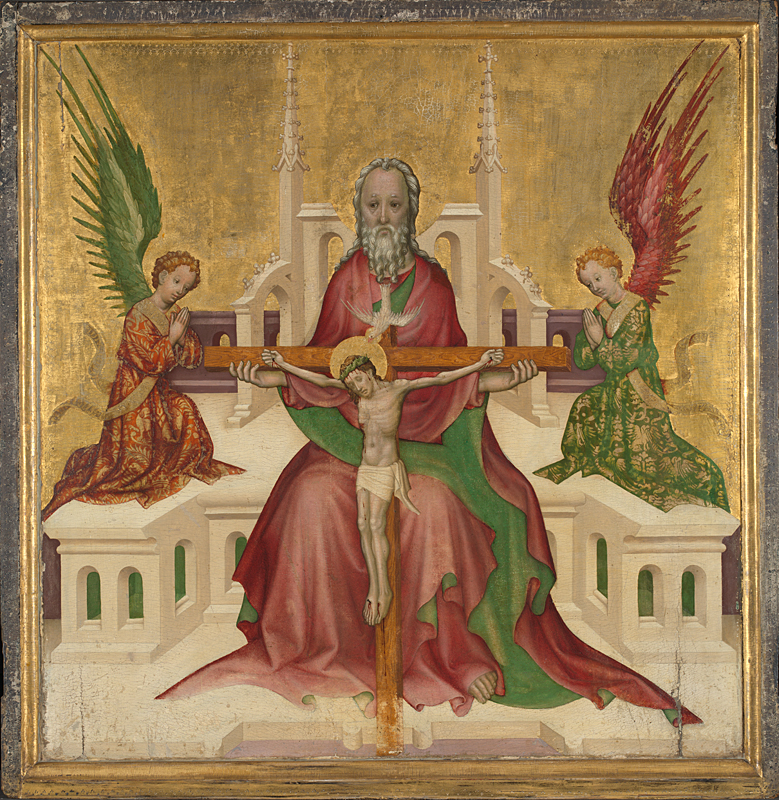

The Solemnity of the Most Holy Trinity (2022)

Anonymus master, The Trinity with Christ Crucified (about 1410), Egg on silver, National Gallery (London)

There are many practices that we Catholics have which we do so often, we can easily forget their meaning. One of these practices is the way that we begin and end our prayers. We hardly think about it, but we begin all our prayers by invoking the Trinity and signing our bodies with the sign of God’s eternal love for us, the Sign of the Cross. Whether those prayers are the Mass, the central prayers of the church, or simply grace before dinner, we always begin with, “In the name of the Father, and the Son and the Holy Spirit.” In Church, we make the sign of the cross, even before we enter our pews. The Mass concludes with the people being blessed in the name of the Trinity. So, the first reflection we make when we invoke the Trinity is that we believe in that Person of the Holy Trinity who created us and loves us, the Father. We make the sign of the cross as an affirmation that we have been saved by the Second Person of the Holy Trinity, the One who was crucified for us. Jesus Christ is our Lord and Savior. Perhaps we use that term Savior too freely. Perhaps it has lost its meaning for us. When we say, “He frees us from sin,” we mean that he frees us from the misery that makes existence intolerable. With Jesus Christ, there is no situation in life that cannot lead us to his Peace, Presence and Happiness. He became one of us, Christmas. He died for us, Good Friday. He conquered death and restored eternal life for us, Easter. He ascended to the Father, but His Spirit and the Spirit of the Father, the Holy Spirit, was given to us on Pentecost and remains the Life Principal of the Church as well as the spiritual drive within each of us. We each have the Presence and Power of God within us. We can make God Present to others. This is the Third Person of the Trinity. And so we begin our prayers in the Name of the Father, and of the Son and of the Holy Spirit. So, the sign of the cross is an affirmation of our faith. It is a declaration of whom we are: people God loves, forgives and empowers. When we recognize that God forgives us, we realize that His Love is infinitely greater than our sins. We need to stop beating ourselves up and let His forgiveness into our lives. So many people in the world, so many of us, give up on life because we have given up on ourselves. When that happens we get into a downward cycle. We continue to do things that lead to spiritual disaster because we think God will not forgive us. Jesus Christ is our Savior, He saves us from ourselves. He forgives us. He calls us to spread the Good News, the Gospel to others.  Today, he challenges us to let all know that if they are committed to God, He will forgive them also. God gives us the Power to lead others to Christ. Every one of us has a unique ability to reflect God’s love in the world. Every one of us is capable of instilling the seed of God’s love in others. We are people who are loved, forgiven and empowered. We find our meaning in life in the name of the Father, Son and Holy Spirit • AE


Fr. Agustin Schedule for the solemnity of The Most Holy Trinity Pentecost (2022)

Saturday June 11, 2022

11.00 a.m. Sacrament of Baptism for Gwendolyn Eliza Mims

1.00 p.m. Marriage preparations sessions.

4.00 p.m. Sacrament of Reconciliation (Confessional)

5.00 p.m. (English Mass @ Main Church)

Sunday June 12, 2022

7.30 a.m. Holy Mass (English Mass @ Main Church)

10.00 a.m. Holy Mass (English Mass @ Main Church)

12.00 p.m. Holy Mass (English Mass @ Main Church)


Solemnidad de la Santisima Trinidad (2022)

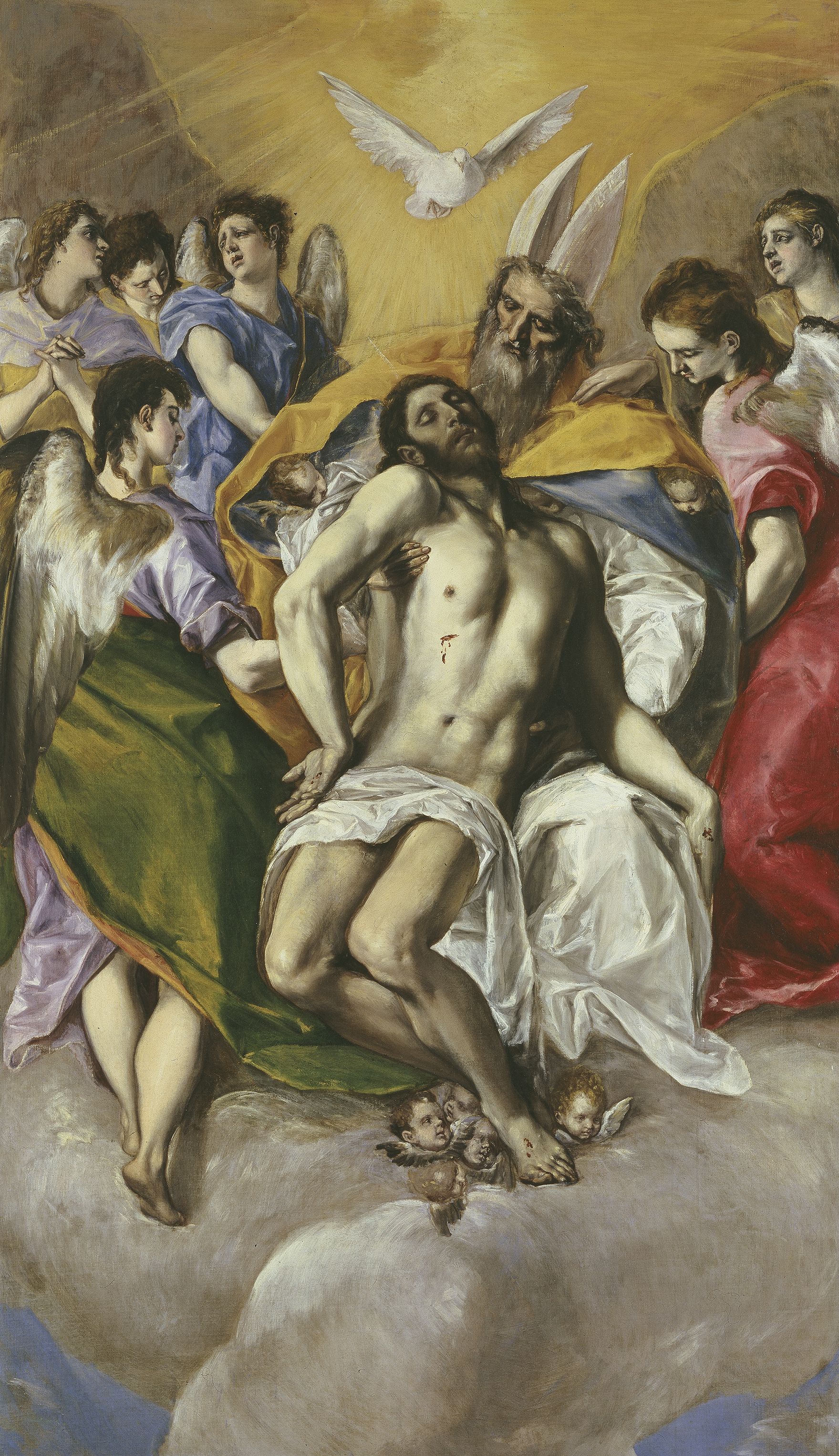
El Greco, La Santísima Trinidad (1577), óleo sobre tela, Museo del Prado (Madrid)

Vivimos tiempos de confusión religiosa. En muchos, todo está bastante mezclado: Cristo, los sacramentos, Dios, la resurrección, el Papa, la Virgen. Sin embargo, no todo es igual ni tiene la misma importancia. Debemos entender dónde está lo esencial de la fe para vivirla de manera unificada y sencilla. Y es que una religión complicada y confusa no puede despertar gozo en el creyente.  «Creo en Dios Padre, creador del cielo y de la tierra». No estoy solo ni vivo olvidado. Dios es mi Padre, Él es mi origen y mi destino. Él me creó sólo por amor; él me espera con corazón de Padre. No sólo a mí, sino a todos los hombres y mujeres que son mis hermanos. Su nombre es hoy olvidado, negado y hasta despreciado. Yo mismo lo olvido con frecuencia. Pero Él es mi única esperanza, lo mejor que tengo. Aunque dude de muchas cosas, no quiero perder mi fe en este Dios Padre, pues intuyo que habría perdido lo esencial. «Creo en Jesucristo, su único Hijo». Sé que Jesús fue un hombre extraordinario, pero en él se encierra algo más. No es sólo un modelo a imitar, o un maestro a seguir. Es el Hijo de Dios enviado por el Padre. En él descubro el rostro de Dios y también su corazón. Sé cuántas cosas se escriben y se dicen hoy de Jesús. Para mí, nunca será un hombre más. En sus palabras escucho la voz de Dios, en sus gestos intuyo su amor. En él le siento a Dios cercano, humano, amigo. Aunque olvide otras cosas, no quiero olvidar a Jesucristo. ¿Quién podría ocupar su vacío y ofrecerme la luz y la esperanza que de él recibo? «Creo en el Espíritu Santo, Señor y dador de vida». Creo en su presencia viva en mí y en todos los hombres y mujeres. Sé que es dador de vida porque pone en mí amor, luz, fortaleza y creatividad. Pero su mayor regalo es saber que ese misterio de Dios que, a veces, me parece tan lejano e insondable, está en el fondo de mi ser. Conozco mi superficialidad, pero no quiero vivir sólo desde fuera, ignorando lo mejor que hay dentro de mí. Hoy es la fiesta de la Trinidad, y a pesar de mi mediocridad y mi poca fe, quiero vivir y morir «en el nombre del Padre y del Hijo y del Espíritu Santo». Quisiera recordarlo cada vez que trazo sobre mi la señal de la cruz • AE


Pentecost Sunday 2022

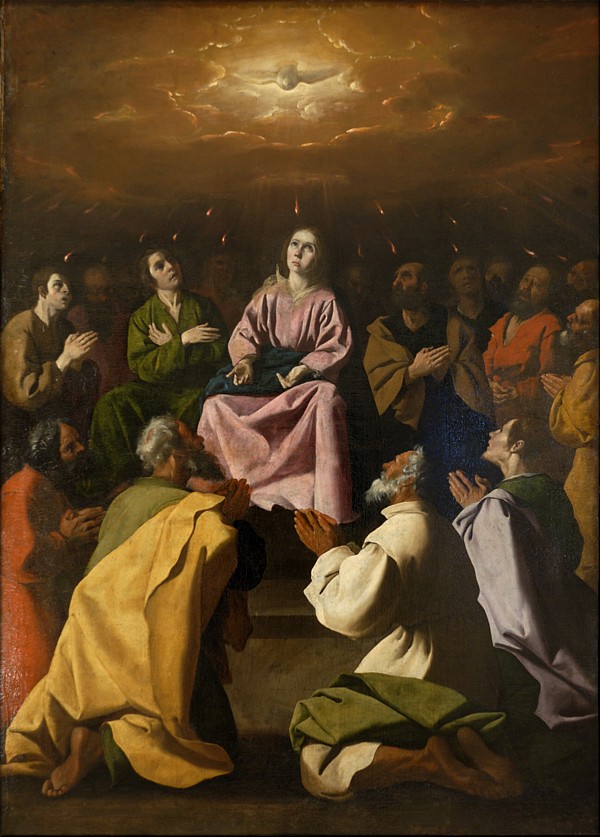
Francisco de Zurbarán, Pentecost (c. 1638), oil on canvas, Cartuja de Jerez de la Frontera (Spain)

The Holy Spirit happened. The Holy Spirit came upon the Eleven and the blessed Virgin Mary that Pentecost Sunday[1], and then, through them came upon all who would choose Jesus Christ. There was a tremendous power evidenced. People heard God speaking to them in their own languages, even though the apostles spoke, most probably, in Aramaic. The Holy Spirit was the Power. The Holy Spirit was God Himself transforming people into the Body of Christ. The apostles began the mission of evangelization, of bringing the world to the Gospel by invoking the Holy Spirit, the Power of God. We also can invoke the Holy Spirit, the Power of God. We can do this by virtue of our sacrament of Confirmation, our personal sharing in Pentecost. We can call upon God to be present. And He will be present. People long for the mysterious. People seek the mystical. The media feeds into this desire through shows that present the mysterious domain of the dead. People run to astrologers and mediums, hoping to be exposed to the mystical. And, to paraphrase St. Augustine, they run hard, but in the wrong directions. To find the mystical, people have merely to go to the disciples of the Lord. Jesus Christ has given us His Spirit, His Power. We can call upon the Lord, and through the Power of the Holy Spirit, He will be present. What as awesome gift! Literally, awesome. We can make God present. “Where two or three are gathered together in my name,” He said, “I am there with them.[2]” Wherever we are at prayer, Jesus is there. He gives us the power to call upon Him. This Power is the Holy Spirit. We need to remember this when we make our plans for our lives, or, perhaps, watch them deteriorate. Colleges and careers, financial success or disaster, growing relationships or dying relationships, all those areas of life that take up so much of our time, so much of our energy, all those things that excite us, or depress us, everything, everything is secondary to the Great Gift we received on Pentecost, the Gift of invoking the Power of God, the Gift of the Holy Spirit. For rich or poor, in a crowd or just two or three gathered in His Name, we can call upon the Spirit to send the Son to us, and Jesus will be there, leading us to the Father. We need to care for this power, and use it well. We need to nourish our ability to call upon this Power. We need to stay close to Jesus Christ. For others are depending upon us. Others need us to proclaim the Good News to them with our words and our lives. And the Good News is this: Jesus Christ has transformed the world. Life is beautiful, or as Bishop Fulton J. Sheen would say, “Life is worth living.” Life is worth living when it is lived with God. How many days do you have left? How many days do I have left? None of us know! But every day that remains must be days that we proclaim to the world that Jesus lives and is among us. And thus we conclude today the beautiful and luminous and holy of Easter Season • AE

[1] Cf Acts 2:1-11 [2] Cf Matthew 18:20


Fr. Agustin Schedule for the solemnity of Pentecost (2022)

Saturday June 4, 2022

7.00 a.m. ACTS retreat Mass (Omega Center, Boerne TX)

11.00 a.m. Marriage preparations sessions.

4.00 p.m. Sacrament of Reconciliation (Confessional)

Sunday June 5, 2022

7.30 a.m. Holy Mass (English Mass @ Main Church)

10.00 a.m. Holy Mass (English Mass @ Main Church)


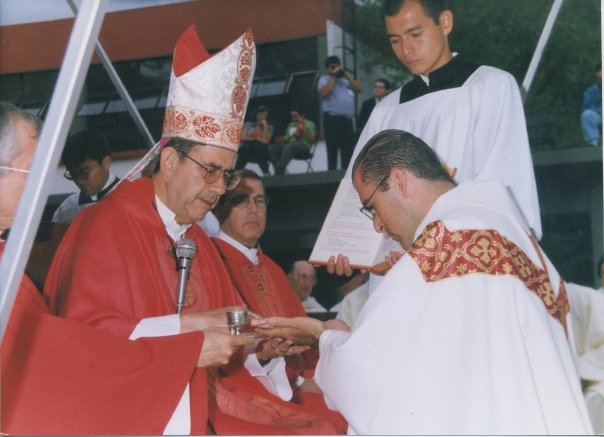
PENTECOST 2000 – PENTECOST 2022

How can I repay the LORD for all the great good done for me?

I will raise the cup of salvation and call on the name of the LORD.

I will pay my vows to the LORD in the presence of all his people (Psalm 116)

¿Cómo podré pagar al Señor todo el bien que me ha hecho?

La copa de salvación levantaré, e invocaré el nombre del Señor.

Cumpliré mis votos al Señor ¡sí, en presencia de todo su pueblo! (Salmo 116)


PENTECOSTES DEL AÑO DEL SEÑOR DEL 2022

Ven Espíritu Creador e infunde en nosotros la fuerza y el aliento de Jesús. Sin tu impulso y tu gracia, no acertaremos a creer en él; no nos atreveremos a seguir sus pasos; la Iglesia no se renovará; nuestra esperanza se apagará. ¡Ven y contágianos el aliento vital de Jesús!

Ven Espíritu Santo y recuérdanos las palabras buenas que decía Jesús. Sin tu luz y tu testimonio sobre él, iremos olvidando el rostro bueno de Dios; el Evangelio se convertirá en letra muerta; la Iglesia no podrá anunciar ninguna noticia buena. ¡Ven y enséñanos a escuchar sólo a Jesús!

Ven Espíritu de la Verdad y haznos caminar en la verdad de Jesús. Sin tu luz y tu guía, nunca nos liberaremos de nuestros errores y mentiras; nada nuevo y verdadero nacerá entre nosotros; seremos como ciegos que pretenden guiar a otros ciegos. ¡Ven y conviértenos en discípulos y testigos de Jesús!

Ven Espíritu del Padre y enséñanos a gritar a Dios «Abba» como lo hacía Jesús. Sin tu calor y tu alegría, viviremos como huérfanos que han perdido a su Padre; invocaremos a Dios con los labios, pero no con el corazón; nuestras plegarias serán palabras vacías. ¡Ven y enséñanos a orar con las palabras y el corazón de Jesús!

Ven Espíritu Bueno y conviértenos al proyecto del «reino de Dios» inaugurado por Jesús. Sin tu fuerza renovadora, nadie convertirá nuestro corazón cansado; no tendremos audacia para construir un mundo más humano, según los deseos de Dios; en tu Iglesia los últimos nunca serán los primeros; y nosotros seguiremos adormecidos en nuestra religión burguesa. ¡Ven y haznos colaboradores del proyecto de Jesús!

Ven Espíritu de Amor y enséñanos a amarnos unos a otros con el amor con que Jesús amaba. Sin tu presencia viva entre nosotros, la comunión de la Iglesia se resquebrajará; la jerarquía y el pueblo se irán distanciando siempre más; crecerán las divisiones, se apagará el diálogo y aumentará la intolerancia. ¡Ven y aviva en nuestro corazón y nuestras manos el amor fraterno que nos hace parecernos a Jesús!

Ven Espíritu Liberador y recuérdanos que para ser libres nos liberó Cristo y no para dejarnos oprimir de nuevo por la esclavitud. Sin tu fuerza y tu verdad, nuestro seguimiento gozoso a Jesús se convertirá en moral de esclavos; no conoceremos el amor que da vida, sino nuestros egoísmos que la matan; se apagará en nosotros la libertad que hace crecer a los hijos e hijas de Dios y seremos, una y otra vez, víctimas de miedos, cobardías y fanatismos. ¡Ven Espíritu Santo y contágianos la libertad de Jesús! • AE


The Ascension of the Lord (2022)

We have just heard the beautiful beginning of the book of the Acts of the Apostles, and there is a wonderful reproach: «Men of Galilee, why do you stare up into the sky. This Jesus who has been taken up into heaven will return the same way.»[1] And the angels say to us, “People, stop wasting your time pining for the Lord, and instead get to work continuing his mission.» The call of Christianity is immediate. There is a whole world of people longing for lasting peace, for meaning in life, longing for dignity, the dignity that only He can give. We can’t decide to go into action at some other time, some later on. Jesus calls us into ministry now. Many times, the call comes through people who need us to reach out to them with a word or gesture when our minds might be on other things. Like children and Teens who ask the most important questions at the least opportune time, we are often called into ministry when we are quite busy with some other situation. Parents are hurrying to get dressed to attend a catholic gala or a meeting and a thirteen-year-old decides that this is a good time to ask something about smoking marijuana. We are trying to complete a job at work, and a co-worker stops by and mentions that since the baby was born, his wife goes into periods where she can’t stop crying. He needs help with this very personal situation. The Lord’s time is often not our time. But we have to get into action. We cannot and should not waste the Lord’s time. The number of disciples would not be limited to the eleven who remained faithful to Christ. All who believe in Him would be called to proclaim the Gospel of Christ to the world. That includes us. We need to get into the action. Christians have to be people of action. We were not given the Holy Spirit for our own wellbeing. We were given the Spirit to use the Power of God to bring others to Christ. We are given the Spirit to do battle for the Kingdom. There is a war going on. It is the war against evil. We need to be engaged. We need to do battle every day. We cannot, as the kids say, zone out, looking at the sky, waiting for the Lord to come back and do something. We need to fight the darkness that terrorizes the world. We need to fight the evil that reduces people to numbers, which leads some to treat others as less than human. We need to be people of the light, the Light of Christ. We need to be People of Dignity, the Dignity of Sons and Daughters of God. «Stop looking up at the sky,» the two witnesses call out to us. Jesus has ascended into heaven so we can receive the Spirit. Now, we need to fight for the Kingdom of God. We need to fight against the darkness. We need to kick open the door that binds others in slavery. We need to proclaim Jesus Christ with our lives. So many people long to understand the reason for their existence. So many people are seeking meaning for their lives. So many people are looking for dignity! Dignity is here. It has been given to us. We are to give it to others. We are witnesses to exaltation of the Lord. We are witnesses to Dignity. We are sons and daughters of God. We are who He says we are • AE

[1] Cf. Acts 1:1-11


Fr. Agustin Schedule for the solemnity of The Ascension of the Lord (2022)

Saturday May 28, 2022

9.30 a.m. Altar Server Training

11.00 a.m. Marriage preparations sessions.

3.30 p.m. Sacrament of Reconciliation (Confessional)

5.00 p.m. Holy Mass (English Mass @ Main Church)

Sunday May 22, 2022

12.30 p.m. Holy Mass (English Mass @ Main Church)

3.00 p.m. Misa en Español (@ Main Church)


Solemnidad de la Ascensión del Señor (2022)

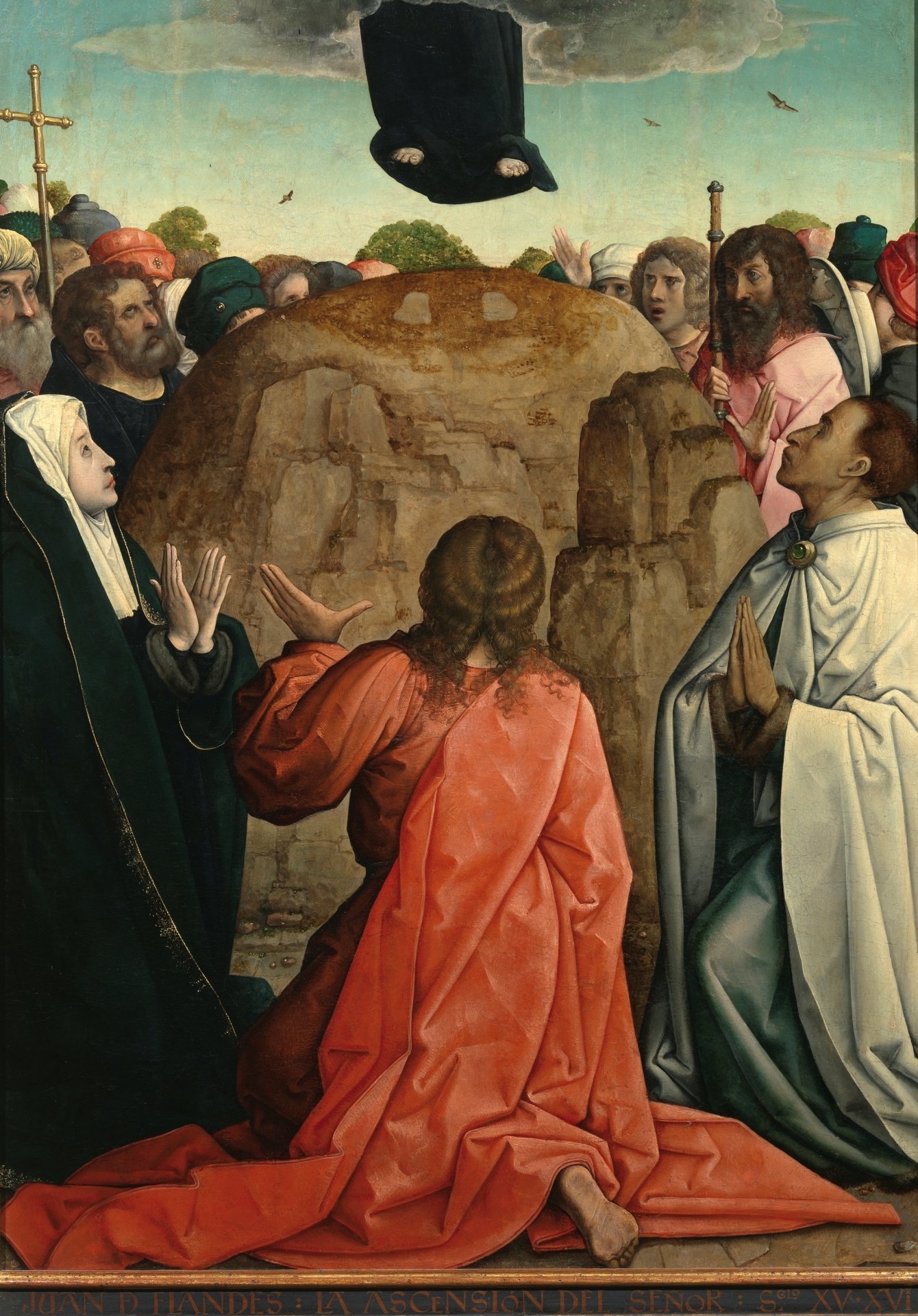
Juan de Flandes, La Ascención del Señor (1514), óleo sobre madera, Museo Nacional del Prado (Madrid)

El evangelio de este domingo nos dice que Jesús vuelve a su Padre «bendiciendo» a sus discípulos. Es su último gesto. Jesús deja tras de sí su bendición. Los discípulos responden al gesto de Jesús marchando al templo llenos de alegría. Y estaban allí «bendiciendo» a Dios. La bendición es una práctica enraizada en casi todas las culturas. El judaísmo, el islam y el cristianismo le han dado siempre una gran importancia. Bendecir es, antes que nada, desear el bien a las personas que vamos encontrando en nuestro camino. Querer el bien de manera incondicional y sin reservas. Querer la salud, el bienestar, la alegría, todo lo que podría ayudarles a vivir con dignidad. Cuanto más deseamos y afirmamos el bien para todos, más posible es su manifestación. Bendecir es aprender a vivir desde una actitud básica de amor a la vida y a las personas. El que bendice elimina de su corazón otras actitudes poco sanas como la agresividad, el miedo, la hostilidad o la indiferencia. No es posible bendecir y, al mismo tiempo, vivir condenando, rechazando, odiando. Bendecir es desearle a alguien el bien desde lo más hondo de nuestro ser, aunque no seamos la fuente de la bendición, sino solo sus testigos y portadores. El que bendice no hace sino evocar, desear y pedir la presencia bondadosa del Creador, que es la fuente de todo bien. Por eso, sólo se puede bendecir en actitud gozosa y agradecida a Dios. La bendición hace bien al que la recibe y al que la práctica. Quien bendice a otros se bendice a sí mismo. La bendición queda resonando en su interior como una plegaria silenciosa que va transformando su corazón, haciéndolo más bueno y noble. Nadie puede sentirse bien consigo mismo mientras siga maldiciendo a alguien en el fondo de su ser. Esta fiesta de la Ascensión pues es una invitación sencilla y alegre a ser portadores y testigos de la bendición de Cristo el Señor a toda la humanidad, sin distinción, imitando a ese Dios que hace salir el sol sobre buenos y malos[1] • AE

[1] Cfr. Mt 5, 45.


Sixth Sunday of Easter (Cycle C)

Today’s Gospel takes the dwelling of God on earth to a deeper level. He is not just among us. He is within us. He is within us as a worshiping Body, the Church. He is within us in the union of all believers into the Mystical Body of Christ. He is all this and much more. He is within each of us. We can speak to God all day, not addressing ourselves to some being “out there somewhere,” not even addressing ourselves to “the man upstairs.” We can speak to God within us. The founders of our country were mostly Deists. They believed in a God who is removed from the ordinary events of human life. For them God was only involved if there was something significant going on. They saw the Revolution as a significant event and called upon God to help free the colonies from the British and form a new country where people would govern themselves. That’s why they put “In God We Trust,” on our currency. But Washington, Franklin, Hamilton and Jefferson, among others, did not really believe that God would be concerned with the affairs of their personal lives. Perhaps that might explain the lack of morality displayed by many of the men who so piously made “In God we trust,” the motto of our country. Prayer for them was… only a matter of a community worship, a formal event #Sad They did not view prayer as a daily communication with God. They professed to be Christian, but they did not recognize Christ in their daily lives. Big deal. The Gospel tells us that Jesus is the Good Shepherd, the One who cares for each of us. He dwells within us. He nurtures us with the Eucharist. God is not out there. He is in here. Wherever we go, we bring God with us. Whatever we do, we do together with Him. He is not just “the man upstairs.” He is “the presence within.” There are many ways that God is present in the world. Some ways that God is present are deeper, more intense than other ways. The deepest, most intense presence of the Lord is in the Eucharist, the Blessed Sacrament. We need this presence. We take this presence within us, at least once a week. We pray before this presence when we enter into Eucharistic adoration here at St. Dominic. We offer this presence as the sacrificial victim to the Father every time we celebrate and attend Mass. We need this presence to sustain the other ways that the Lord is present in our lives. The second deepest, intense presence of God in the world is in the Word of God, Sacred Scripture. The bible is not just a book (even though the word bible means book). Deep within the words of the Bible is the Word of God. That is why we read the Bible and are changed and molded by the words on which we meditate[1]. In short: We, Christians, have been chosen by our Savior to be people of the new presence of God. This presence exists in many ways in the world and in many degrees of intensity. It’s greatest intensity is in the Eucharist and then in all the sacraments. Next is the Word of God in the Bible. There is a deep presence also in the Church, and in the Mystical Body of Christ. There is also a presence within each of us. This is the presence our Gospel for today, sixth Sunday of Easter, proclaims. This presence is the indwelling of God. May we cherish and nourish this presence ever day of our lives and may we give a real testimony of our love relationship with Jesus • AE

[1] Hebrews 4:12


Fr. Agustin Schedule for the Sixth Sunday of Easter (2022)

Saturday May 21, 2022

9.30 a.m. Sacrament of Baptism for Luca R. Corcoran

11.00 a.m. Marriage preparations sessions.

3.30 p.m. Sacrament of Reconciliation (Confessional)

5.00 p.m. Holy Mass (English Mass @ Main Church)

Sunday May 22, 2022

7.30 a.m. Holy Mass (English Mass @ Main Church)

10.00 a.m. Holy Mass (English Mass @ Main Church)


VI Domingo de Pascua (Ciclo C)

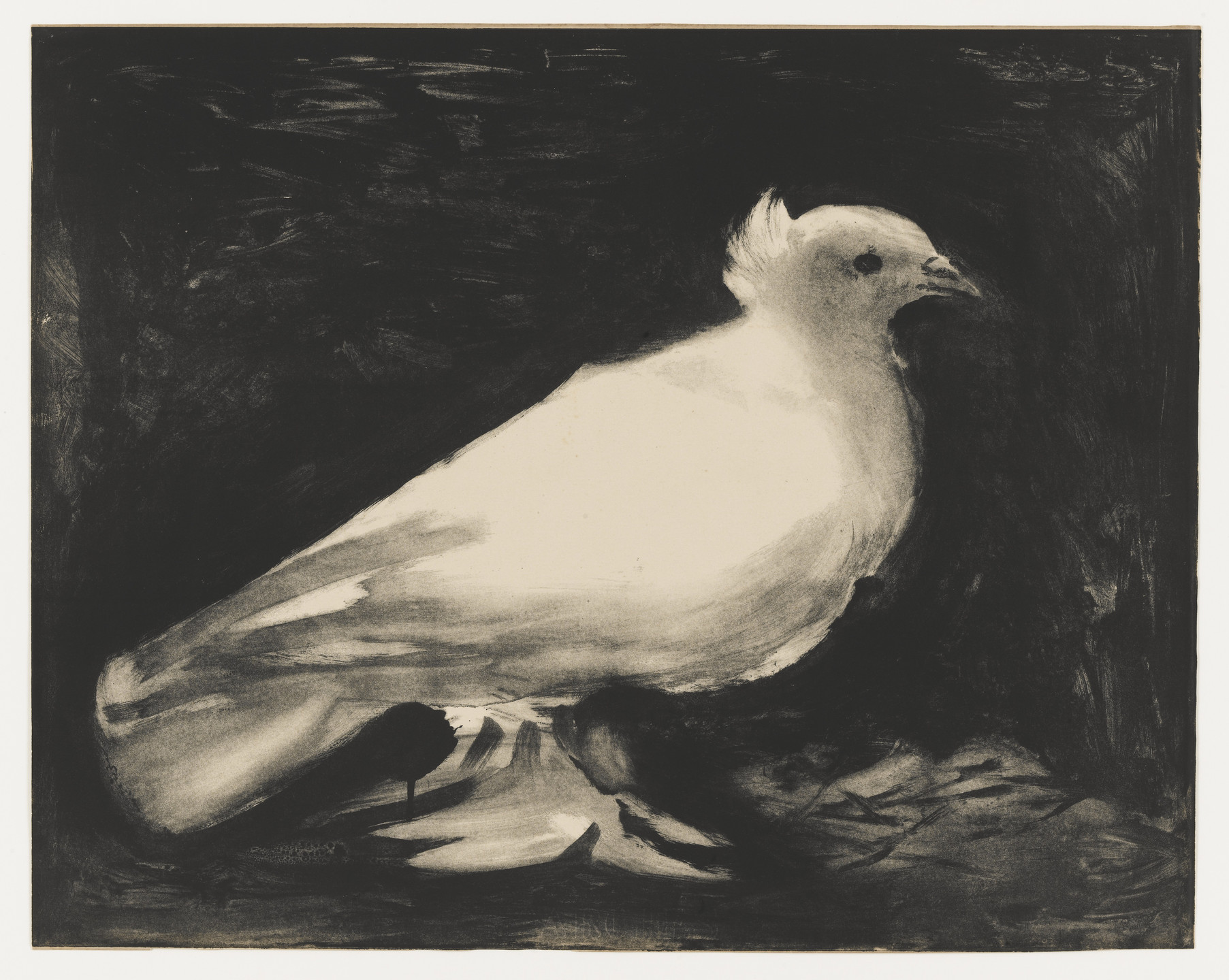
P. Picasso, La Paloma (La Colombe)1949, Museo de Arte Moderno (MOMA), New York.

Siguiendo la costumbre judía, los primeros cristianos se saludaban deseándose mutuamente la paz. Pax, era el saludo cordial. No era un saludo rutinario y convencional. Para ellos tenía un significado más profundo. En una carta que Pablo escribe hacia el año 61 a una comunidad cristiana de Asia Menor, les manifiesta su gran deseo: “Que la paz de Cristo reine en vuestros corazones”. Esta paz no hay que confundirla con cualquier cosa. No es una ausencia de conflictos y tensiones. Tampoco una sensación de bienestar o una búsqueda de tranquilidad interior. Según san Juan, es el gran regalo de Jesús, la herencia que ha querido dejar para siempre en sus seguidores. Así dice Jesús: “La paz les dejo mi paz les doy”[1]. Sin duda, recordaban lo que Jesús había pedido a sus discípulos al enviarlos a construir el reino de Dios: En la casa en que entréis, decid primero: paz a esta casa[2]. Para humanizar la vida, lo primero es sembrar paz, no violencia; promover respeto, diálogo y escucha mutua, no imposición, enfrentamiento y dogmatismo. Así, ¿Por qué es tan difícil la paz? ¿Por qué volvemos una y otra vez al enfrentamiento y la agresión mutua? Hay una respuesta primera, tan elemental y sencilla, que desafortunadamente no tomamos en serio: sólo los hombres y mujeres que poseen paz pueden ponerla en la sociedad. No cualquiera puede sembrar paz. Con el corazón lleno de resentimiento, intolerancia y dogmatismo se puede movilizar a la gente, pero no es posible aportar verdadera paz a la convivencia. Nos ayuda a acercar posturas y a crear un clima amistoso de entendimiento, mutua aceptación y diálogo. ¿Quién tiene la paz de Cristo? Aquel que busca el bien de todos, no excluye a nadie, que respeta las diferencias, no alimenta la agresión, que fomenta lo que une. Hoy, desde la Iglesia de Cristo ¿Qué estamos aportando? ¿Concordia o división? ¿Reconciliación o enfrentamiento? Si quienes nos llamamos cristianos no llevamos la paz en el corazón, ¿qué llevamos? ¿Miedos, intereses, ambiciones, irresponsabilidad? • AE

[1] Cfr Jn 14, 27 [2] Cfr Lc 10, 5.