
Every October in the Catholic Church in the United States. we consider more deeply why every human life is significant, we reflect on how to build a culture that protects life from conception to natural death. We all are familiar with this, however, to reach to this point, to create a society where life is always defended, we have to go back to the basics; [I mean], no one begins to build a house from the roof. You always start with the foundations. So, in the context of this interesting conversation between Jesus and the Pharisees in today’s gospel, we have a good chance to reflect on something important: “Is it lawful for a man to divorce his wife?” This is the question; #challenging topic. And Jesus’ response is a great lesson to understand what exactly a marriage is. But to fully realize what Jesus says, we must first see what the Jews had in mind at that time. According to the law of Moses the husband could break the marriage contract and expel his wife from home. As simple as that. And so unfair. The woman, subject in everything to the man, could not do the same. As simple as that. And so unfair. So, with his answer, Jesus is going back to the basics, He is going to God’s original project, a project above any human law: God made them male and female (…) and the two shall become one flesh (…) so, they are no longer two but one flesh. So, right here is the point where we can start to build up a real culture that always respects life: Man and woman, the two have been created equal. God has not created the male with power over the female. God has not created the woman subdued to the man. Between men and women there must be no domination. God’s original plan is that is male, and female will unite to “be one flesh,” sharing life in mutual surrender without imposition or submission. This is for Jesus the authentic expression of human love: The man has no right to control the woman as if he were the owner of her. The woman does not have to accept living subordinate to the man. That is why Jesus categorically concludes: What God has joined; man must not separate. With this Jesus is ending the foundation of domination and imposition of the man on the woman and of the woman to the man. Patriarchy may have been practical in Old Testament times, but no longer because with Jesus a New Covenant came, and with the New Covenant an authentic family model. SO, to defend life, to say “I am a pro-life person,” we should first start by building families according with God’s original plan. And what is that plan? Well, the passage from the book of Genesis that Jesus quotes is clear: God made them male and female (…) and the two shall become one flesh (…) So, they are no longer two but one flesh, This means that we must build families based on this model, and that we Catholic do not believe in divorce as a solution to a any obstacle. Of course, divorces do happen, and there are times when divorces are absolutely necessary, but we Catholics would not consider divorce as an option, because by doing so, we would be building marriages and families of the type «well, you know… let’s see if this works» avoiding a serious commitment and a solid promise of fidelity So, the important topic of defending human life has many aspects, as you may notice already, they are all important and we must reflect on all of them. This is just one of them. We Catholics are called to defend the traditional model of the family, the model that God presents through his Word, the model that the Catholic Church defends and will continue to defend tooth and nail. Of course, we will find opposition. Of course, we are going to be branded old-fashioned and rétrograde people. Of course, we are going to find different situations that will require special pastoral care, but if we start from here, from the solid conviction of what God has wanted for humanity, we could lay the solid foundations for a society where human life is untouchable because human life is sacred. And let me give you some piece of advice: take a look at your children’s school curriculums; ask your children how they understand the family; check if their understanding is based on ideologies, or if is really supported by the Christian faith that you are transmitting to them.
Hopefully, the Holy Spirit will light up our hearts and minds with his fire and his wisdom and we can take a moment this weekend to meditate on Jesus´ words in today’s Gospel: God made them male and female and the two shall become one flesh. So, they are no longer two but one flesh. This is the traditional teaching of the Magisterium of the Church. Everything else stems from this. If we can say that here at St. Joseph Catholic Church in Dilley, TX we are a community that loves and defends life, it is because we believe in these words of Jesus • AE

St. Joseph Catholic Church (Dilley, TX) • Weekend Schedule

Fr. Agustin E. (Parish Administrator)
Saturday October 5, 2024.
5.00 p.m. Sacramento de la Confesión
6.00 p.m. Santa Misa.
Sunday, October 6, 2024
8.00 a.m. Sacrament of Reconciliation
8.30 a.m. Holy Mass.
10.30 p.m. Sacrament of Reconciliation.
11.00 a.m. Holy Mass.
Monday, October 7, 2024 – Wednesday, October 9, 2024
Annual Convocation of the Archdiocese of San Antonio, Texas.
XXVII DOMINGO DEL TIEMPO ORDINARIO (CICLO B)
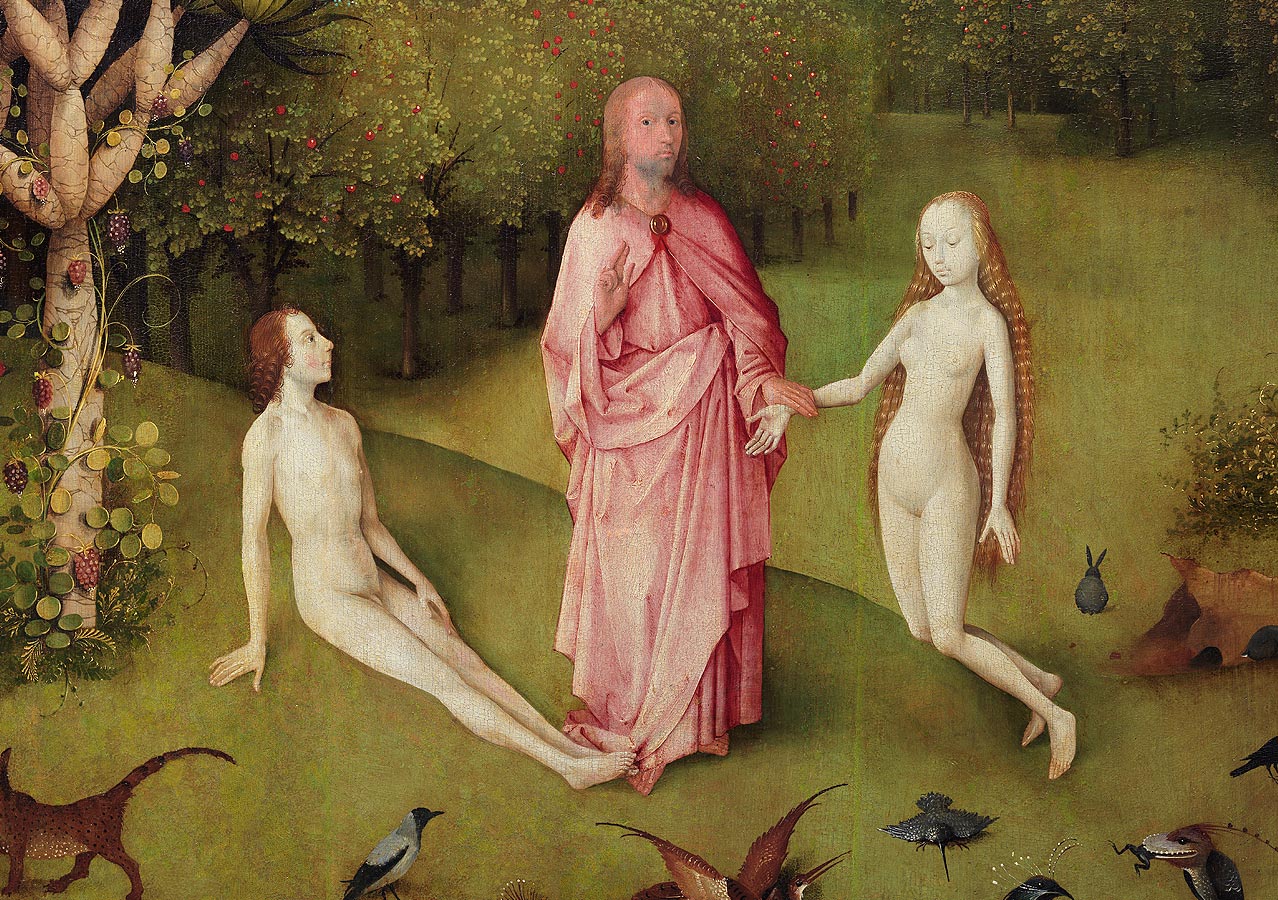
Jheronimus Bosch, El Bosco, El Jardín de las Delicias (1505), óleo sobre tabla, Museo Nacional del Prado (Madrid)
Entre las cosas más difíciles de comprender en la Galilea del tiempo del Señor está el sometimiento de la mujer en ese ambiente patriarcal. El esposo las podía incluso repudiar en cualquier momento abandonándolas a su suerte. Este derecho se basaba, según la tradición judía, nada menos que en la Ley de Dios. Los maestros discutían sobre los motivos que podían justificar la decisión del esposo. Según los seguidores de Shammai, sólo se podía repudiar a la mujer en caso de adulterio; según Hillel, bastaba que la mujer hiciera cualquier cosa desagradable a los ojos de su marido. Mientras los doctos varones discutían, las mujeres no podían alzar su voz para defender sus derechos. Y así las cosas, la pregunta llegó un día hasta Jesús: «¿Puede el hombre repudiar a su esposa?», preguntaron. Su respuesta desconcertó a todos. Las mujeres no lo podían creer. Según Jesús, si el repudio está en la Ley, es por la «dureza de corazón» de los varones y su mentalidad machista, pero el proyecto original de Dios no fue un matrimonio patriarcal dominado por el varón. Dios creó al varón y a la mujer para que fueran una sola carne. Los dos están llamados a compartir su amor, su intimidad y su vida entera, con igual dignidad y en comunión total. De ahí las palabras del Señor: «lo que ha unido Dios, que no lo separe el varón». Dios quiere una vida más digna, segura y estable para aquellas mujeres de Galilea. No puede bendecir una estructura que genere superioridad del varón y sometimiento de la mujer. Después de Jesús, ningún cristiano podrá legitimar con la Biblia o el Evangelio nada que promueva discriminación, exclusión o sumisión de la mujer. El mensaje de Jesús es una clara y fuerte invitación a superar la dureza de corazón, a promover relaciones más justas e igualitarias entre varón y mujer. ¿Dónde se escucha hoy este mensaje? ¿Qué estamos haciendo los seguidores de Jesús para revisar y cambiar comportamientos, hábitos, costumbres y leyes que van claramente en contra de la voluntad original de Dios al crear al varón y a la mujer? El Santo Padre, como siempre, tiene unas palabras acertadísimas: «No se puede conseguir un mundo mejor, más justo, más inclusivo y plenamente sostenible sin la contribución de las mujeres. Así que debemos trabajar, todos juntos, para ofrecer la igualdad de oportunidades a hombres y mujeres, en todos los contextos, para lograr una situación de igualdad en la diversidad estable y duradera, porque el camino de la afirmación de las mujeres es reciente, problemático y, por desgracia, no es definitivo. Se puede retroceder fácilmente. El pensamiento de las mujeres es diferente al de los hombres, están más atentas a la protección del medioambiente, su mirada no se dirige al pasado sino al futuro. Las mujeres saben que dan a luz con dolor para lograr una gran alegría: dar vida y abrir vastos y nuevos horizontes. Por eso las mujeres desean la paz, siempre. Las mujeres saben expresar tanto fuerza como ternura, son buenas, competentes, están preparadas, saben inspirar a las nuevas generaciones (no solo a sus hijos). Es justo que puedan aplicar estas competencias en todos los ámbitos, no solo en el familiar, y que reciban la misma remuneración que los hombres a igualdad de funciones, compromiso y responsabilidad. Las diferencias que aún existen son una grave injusticia» • AE

Para el otoño, Para leer
Las Letanías de la Santisima Virgen en el Mes del Rosario
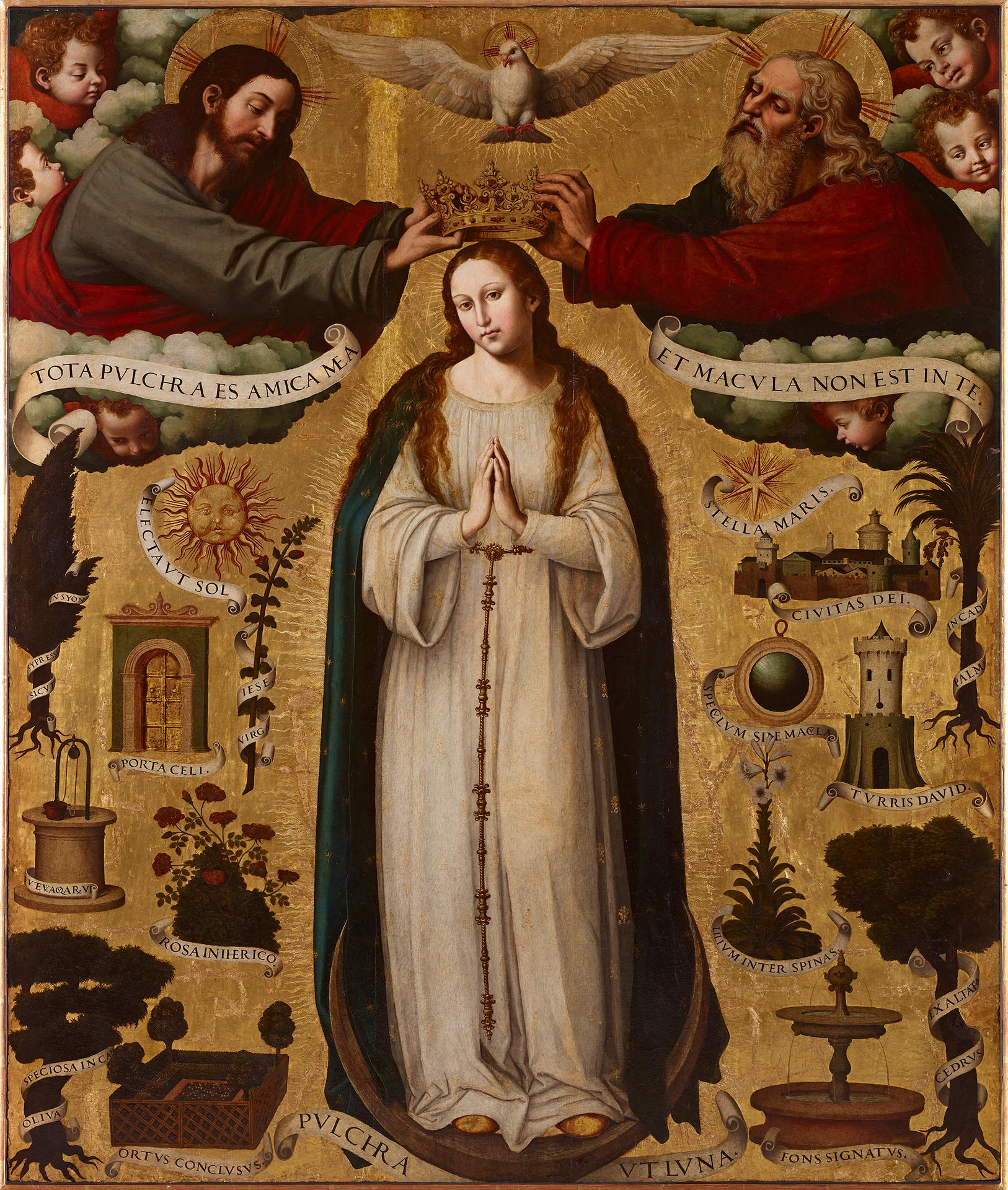
Juan de Juanes, Inmaculada Concepción (1579), óleo sobre tela, Colección del Banco de Santander
Las letanías lauretanas (o, letanía de la Virgen o de Loreto) son las letanías más difundidas como forma de alabanza y de súplica a María, madre de Jesús de Nazaret. Etimológicamente la palabra letanía proviene del vocablo griego litanéia que significa súplica, rogativa u oración de súplica. Las letanías a los santos se originaron en el siglo VII, y las relativas a María se multiplicaron progresivamente en distintas Iglesias cristianas. El decreto Quoniam multi (1601) del papa Clemente VIII aprobó específicamente las letanías lauretanas, ya testimoniadas por un manuscrito del siglo XII,1 y que deben su nombre a la advocación de la Virgen de Loreto, cuyo santuario constituyó el ámbito en que se desarrollaron.
Los orígenes de las letanías se remontan a los primeros siglos de la cristiandad. Las letanías eran súplicas dialogadas entre los sacerdotes y los fieles, y se rezaban sobre todo en las procesiones. Aunque al principio eran dirigidas sólo a Dios (en súplicas) se añadieron con el tiempo invocaciones a santos y sobre todo a la Virgen María (en intercesiones) usadas a partir del siglo VII. Las más antiguas letanías a María propiamente dichas se encuentran en un códice de Maguncia del siglo XII titulado: Letania de Domina Nostra Dei genenetrice Virgine Maria. Ora valde bona, cotidie pro quacumque tribulatione dicenda est, con alabanzas largas y en cada verso repitiendo el Sancta Maria. En 1603 el Papa Paulo V ordenó que se cantasen en la basílica romana de Santa María la Mayor en festividades de la Virgen María. Los dominicos, en 1615 ordenaron que se recitasen en todos sus conventos después de sus oraciones de los sábados, y en 1771 Wolfgang Amadeus Mozart ¡les puso música! •
 LA MEDITACION DE LA ESPOSA