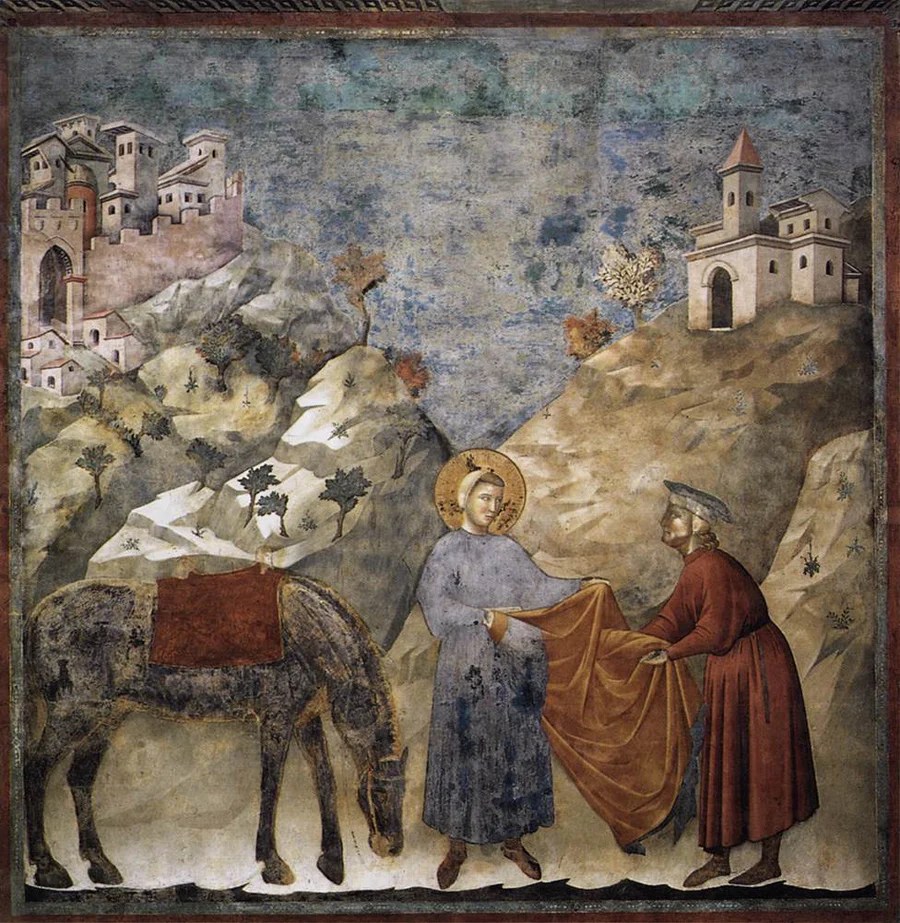
Giotto di Bondone, Saint Francis Giving His Mantle to a Poor Man (1223), fresco, Basilica of Saint Francis of Assisi (Italy)
The young man in the Gospel reading wanted to be a follower of the Lord, but he also wanted his possessions. He was called to be a disciple, perhaps one of the closest followers of the Lord. After all, Jesus looked at him and loved him. But the young man walked away from the Lord. His possessions dominated him. He did not own them. They owned him. We need the wisdom of God to protect us from the allure of materialism.
Today’s first reading comes from the Book of Wisdom. Listen again to what it says: I prayed, and prudence was given me; I pleaded, and the spirit of wisdom came to me. I preferred her to scepter and throne, and deemed riches nothing in comparison with her, nor did I liken any priceless gem to her; because all gold, in view of her, is a little sand, and before her, silver is to be accounted mire. Beyond health and comeliness I loved her, and I chose to have her rather than the light, because the splendor of her never yields to sleep. Yet all good things together came to me in her company, and countless riches at her hands.
The ancient sages who wrote this knew what mattered in the world: Wisdom. What is wisdom? There are many definitions of wisdom, mostly revolving around the use of knowledge, but for the believer, the best definition of wisdom is simply the ability to see as God sees, to choose to do what God would do.
St. Joseph was a wise man. Before he had the dream where the angel told him to take Mary into his home, Joseph had already decided that he was not going to expose Mary to the Jewish law. Mary, his beautiful young betrothed, was pregnant. Joseph knew that if he had let it be known that he was not the father of the child, Mary would be tried for adultery and most likely would be stoned to death. That is what the law said must be done to a woman caught in adultery. Joseph was certain that this could not possibly be what God would want. He saw this matter as God saw it. He would save the life of this young girl. It was only then, after he made this decision, that the angel came to him in the dream and told him that he was should not be afraid to take Mary into his home. More than this, because he was a righteous man, right with God, Joseph would be given the honor of naming the child. This form of adoption meant that all that was Joseph would descend upon the child. The child would be of the line of David because Joseph was of the line of David. All this happened because Joseph chose the wisdom of God.
St. Francis of Assisi was a wise man. He saw the world as God sees it. His joy was not in the accumulation of wealth that the new middle class, the merchant class, had defined as being successful. He cut himself off from the distractions of life and focused on the beauty of God’s creation. His stomach may have grumbled at times, but his joy continually increased as he focused on God’s wonders. St. Francis had the wisdom to find where peace could be attained, in the possession of God.
We have to keep our priorities in life straight. Yes, it is wonderful to work hard and to earn good benefits. But if that is the goal of our lives, then where do we go after that? Our lives will have value not in the money or power we have won, but in the love that we have brought to the world. This love can only come through Jesus Christ. Our union to Jesus Christ, our determination to be the Lord’s disciples, will bring a unique reflection of God’s love to the world. To the extent that this is how we live our lives, to that extent we are wise • AE

St. Joseph Catholic Church (Dilley, TX) • Weekend Schedule

Fr. Agustin E. (Parish Administrator)
Saturday October 12, 2024.
5.00 p.m. Sacramento de la Confesión
6.00 p.m. Santa Misa.
Sunday, October 13, 2024
8.00 a.m. Sacrament of Reconciliation
8.30 a.m. Holy Mass.
10.30 p.m. Sacrament of Reconciliation.
11.00 a.m. Holy Mass.
XXVIII Domingo del Tiempo Ordinario (Ciclo B)
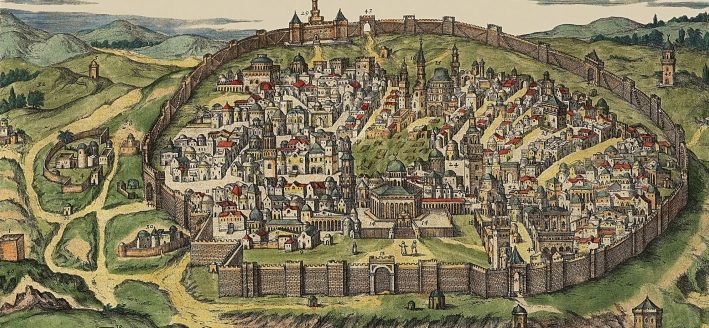
El episodio es intenso. Jesús se pone en camino hacia Jerusalén, pero antes de que se aleje de aquel lugar aparece un desconocido que cae de rodillas. Necesita urgentemente a Jesús. No es un enfermo que pide una curación. No es un leproso que desde lejos implora la compasión del maestro. La petición de este hombre es de otro tipo. Lo que él busca es luz para orientar su vida: ¿Qué haré para heredar la vida eterna?, pregunta.El problema que tiene es realmente existencial. Además, no habla en general; aquel hombre quiere saber qué ha de hacer personalmente. Antes que nada, Jesús le recuerda que no hay nadie bueno más que Dios, lo cual quiere decir queantes de plantearse qué hay que hacer, es importante recordar que vivimos delante de Dios, y que en su bondad hemos de apoyar nuestra vida. Luego Jesús le recuerda a aquel joven los mandamientosde ese Dios Bueno. Según la tradición bíblica, ése es el camino para la vida eterna. La respuesta del hombre es admirable: todo eso lo ha cumplido desde pequeño, pero siente dentro de sí una aspiración más honda. Y es que anda buscando algo más. Jesús se le queda mirando con cariño. Su mirada está ya expresando la relación personal e intensa que quiere establecer con él. Jesús entiende muy bien su insatisfacción. Si aquel muchacho sigue metido en esa lógica de hacer lo mandado para poseer la vida eterna, aunque viva de manera intachable, nunca estará plenamente satisfecho. Esto nos recuerda que dentro de nosotros siempre hay una aspiración más profunda. Por eso, Jesús le invita a orientar su vida desde una lógica nueva. Lo primero es no vivir aferrado a lo material. Vende lo que tienes, le dice con firmeza. Ayuda a los que menos tienen y luego sígueme. Los dos podrán recorrer juntos el camino hacia el reino de Dios, pero ¡ay! aquel hombre se marcha triste. Sabe que nunca podrá conocer la alegría y la libertad de quienes siguen a Jesús.
¿No es ésta nuestra experiencia de cristianos satisfechos en países llenos de privilegios? ¿No vivimos atrapados por el bienestar material y aferrados a lo que podemos atrapar entre las manos? ¿no nos ha apagado el espíritu el materialismo en el que vivimos? ¿No le hace falta a nuestra fe cristiana un amor, let us say, más práctico hacia los pobres, los rechazados, los que menos tienen? ¿No nos falta la alegría y, sobre todo, la libertad de quien sigue a Jesús sin nada en los bolsillos, asin (sic) como Francisco de Asís, y el otro Francisco? • AE

¿qUÉ vAmoS a lEEr?