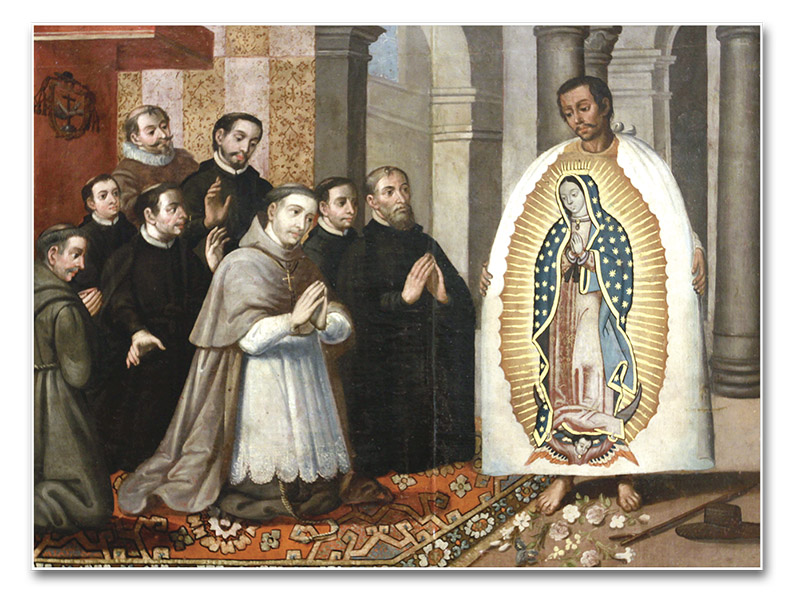
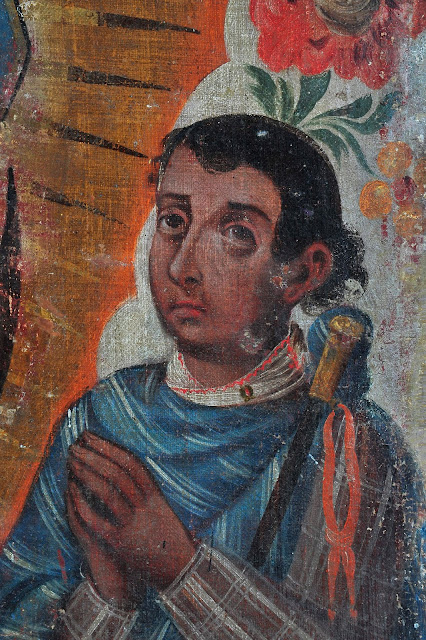
Very early one Saturday morning at the beginning of December of 1531, a poor but respected Indian called Juan Diego (born, it is said, in Cuauhtitlan and under the pastoral care of the religious community of Tlatelolco) was on his way to Tlaltelolco on a holy errand. When he reached the hill called Tepeyac dawn was breaking and he heard singing coming from above the hill. The singing stopped and was not heard again, but he heard a voice calling to him from the top of the hill. “Beloved Juan Diego”, it said. He responded at once, bravely climbing the hill towards the place where the voice was coming from. When he reached the top he saw a Lady standing there, who called him to herself. When he came close to her he was stunned with how beautiful she was: her clothes shone like the sun. Then the Virgin gave him her command: “Know, beloved son, that I am the immaculate ever-virgin Mary, Mother of the true God who is the Origin of all life, who creates all things and keeps them in being, the Lord of Heaven and Earth. “I greatly wish, I earnestly desire, that my house should be built in this very place. I will show him to you there and praise him as I show him, my Love and Compassion, my Help and Defense. For in truth I am your compassionate Mother, yours and of all who live together in this land and of any others who love me, seek me, and call on me with confidence and devotion. In that house I will listen to their weeping and their sadness, I will give them help in their troubles and a cure for their misfortunes. “So that this desire of mine may be fulfilled, go to Mexico City, to the palace of the Bishop. Tell him that I have sent you to him to tell him how much I want a house to be built here for me, a church built here at the bottom of the hill.”
When Juan Diego arrived in the city he went immediately to the house of the Bishop, Juan Zumárraga, a Franciscan. But when the bishop heard what he had to say, he did not believe him completely and said “My son, come another time and I will listen to you then. Meanwhile I will consider what should be done about your wish and your desire.” Another day he saw the Queen of Heaven coming down from where he had seen her. She came to meet him next to the hill, stopped him, and said “Listen, my beloved son, have no fear or anxiety in your heart. Do not try to do anything about your uncle’s grave illness or about any other trouble of yours. For am I not here with you, your mother? Are you not safe in the shadow of my protection? Am I not the source of your life and your happiness? Am I not holding you in my lap, wrapped in my arms? What else can you possibly need? Do not be upset or distressed. Climb again, my beloved son, to the summit of this hill, to the place where you saw me and heard me speak. You will find flowers growing there. Pick them and gather them and bring them down to me.” Juan Diego came back down with the flowers he had picked. She looked at them, took them with her blessed hands and put them in his tilma, or cape. She told him: “Most beloved son, these flowers are the sign that you are to carry to the Bishop. You yourself are my messenger and I entrust myself to your faithfulness. I strictly command you not to unfold your tilma in front of anyone except the Bishop; but to him you should show what it is you are carrying. As you do so, tell him the story of how I asked you to climb to the top of the hill and pick the flowers there. Tell him everything you saw and marvelled at, so that he will believe you and undertake to build the church I wish for.”
Obedient to the command of the Queen of Heaven, he took the road to Mexico City. He went happily, confident that all would turn out well. Coming into the palace he prostrated himself before the Bishop and recounted all that he had seen and told him the errand on which he had been sent. “My Lord,” he said, “I have done as you asked. I went to my Lady, the Queen of Heaven, holy Mary, the Mother of God, and told her that you had asked for a sign so that you might believe me and build the church that the Virgin herself desires. I told her that I had given my word to bring you back some sign of her wishes. She heard what you had asked and accepted with good grace your request for some sign so that you could fulfill her will. Today, very early, she sent me back to see you.” The whole city came running to see the holy image. They wondered at it, accepted it as the work of God and made prayers to him. And that day Juan Diego’s uncle, whom the Virgin had cured, told them in what way she should be revered and said that her image should be known as the ever-virgin Saint Mary of Guadalupe •
The account of the apparition is found in the Nican Mopohua, or Huei Tlamahuitzoltica, written in Nahuatl, the Aztec language, by the Indian scholar Antonio Valeriano around the middle of the sixteenth century. Unfortunately the original of his work has not been found. A copy was first published in Nahuatl by Luis Lasso de la Vega in 1649.

Our Lady of Guadalupe (2024)
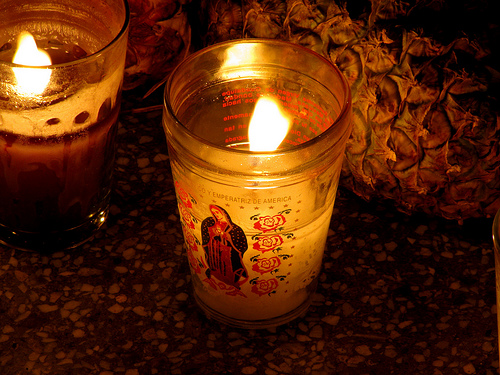
December 12, 2024
6.00 a.m. Mañanitas & Santo Rosario
7.00 a.m. Holy Mass
6.00 p.m. Holy Mass
(followed by reception with Mariachi @ St. Joseph Hall)
¿Acaso no estoy yo aquí, que soy tu Madre?
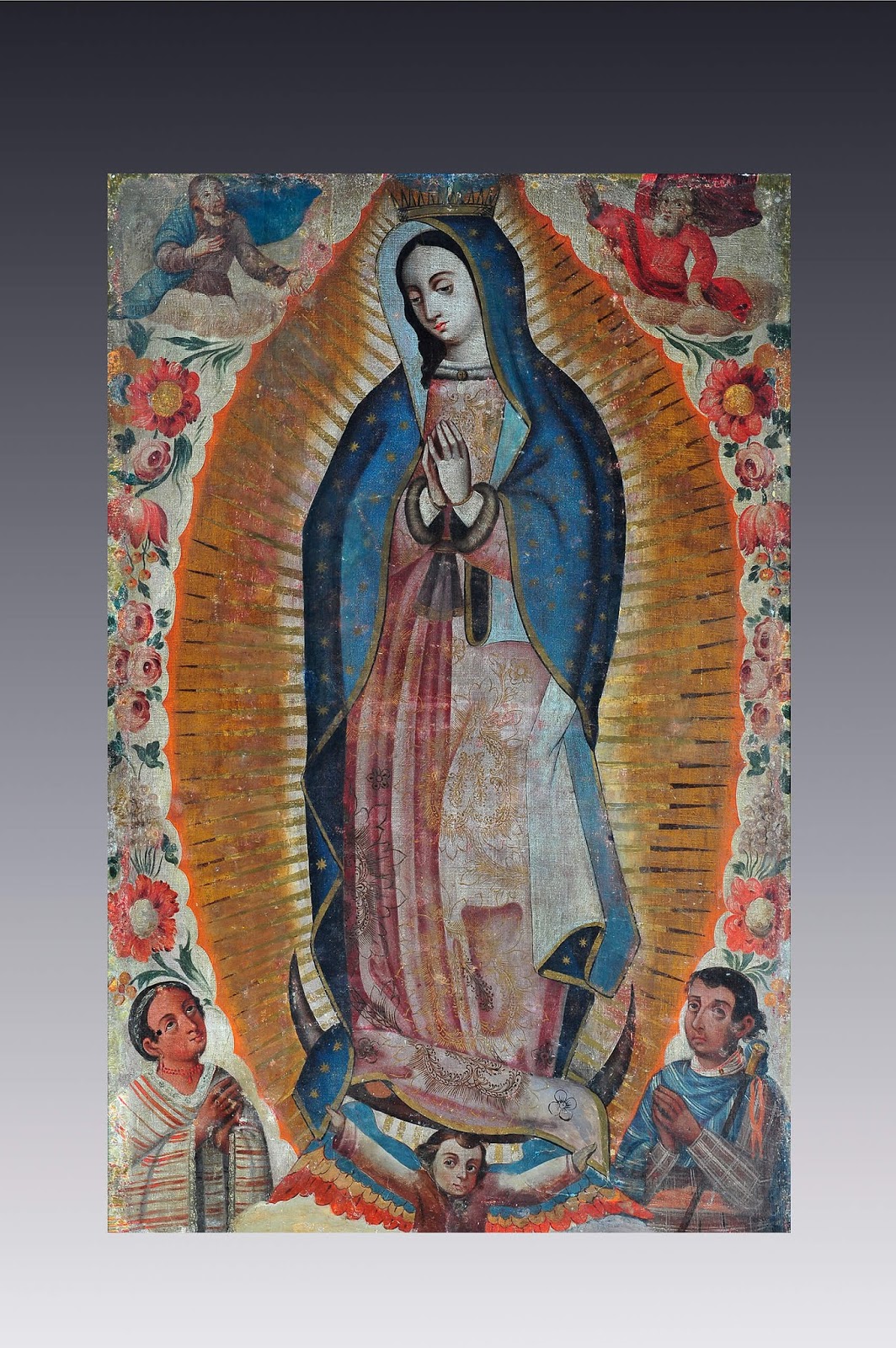
Un sábado de mil quinientos treinta y uno, a pocos días del mes de diciembre, un indio de nombre Juan Diego iba muy de madrugada del pueblo en que residía a Tlatelolco, a tomar parte en el culto divino y a escuchar los mandatos de Dios. Al llegar junto al cerrillo llamado Tepeyac, amanecía, y escuchó que le llamaban de arriba del cerrillo: «Juanito, Juan Dieguito.» Él subió a la cumbre y vio a una señora de sobrehumana grandeza, cuyo vestido era radiante como el sol, la cual, con palabra muy blanda y cortés, le dijo: «Juanito, el más pequeño de mis hijos, sabe y ten entendido que yo soy la siempre Virgen María, Madre del verdadero Dios por quien se vive. Deseo vivamente que se me erija aquí un templo, para en él mostrar y prodigar todo mi amor, compasión, auxilio y defensa a todos los moradores de esta tierra y a los demás amadores míos que me invoquen y en mí confíen. Ve al Obispo de México a manifestarle lo que mucho deseo. Anda y pon en ello todo tu esfuerzo.» Cuando llegó Juan Diego a presencia del Obispo don fray Juan de Zumárraga, religioso de san Francisco, éste pareció no darle crédito y le respondió: «Otra vez vendrás y te oiré más despacio.» Juan Diego volvió a la cumbre del cerrillo, donde la Señora del Cielo le estaba esperando, y le dijo: «Señora, la más pequeña de mis hijas, niña mía, expuse tu mensaje al Obispo, pero pareció que no lo tuvo por cierto. Por lo cual te ruego que le encargues a alguno de los principales que lleve tu mensaje para que le crean, porque yo soy sólo un hombrecillo.» Ella le respondió: «Mucho te ruego, hijo mío el más pequeño, que otra vez vayas mañana a ver al Obispo y le digas que yo en persona, la siempre Virgen santa María, Madre de Dios, soy quien te envío.» Pero al día siguiente, domingo, el Obispo tampoco le dio crédito y le dijo que era muy necesaria alguna señal para que se le pudiera creer que le enviaba la misma Señora del Cielo. Y le despidió.
El lunes, Juan Diego ya no volvió. Su tío Juan Bernardino se puso muy grave y, por la noche, le rogó que fuera a Tlatelolco muy de madrugada a llamar un sacerdote que fuera a confesarle. Salió Juan Diego el martes, pero dio vuelta al cerrillo y pasó al otro lado, hacia el oriente, para llegar pronto a México y que no lo detuviera la Señora del Cielo. Mas ella le salió al encuentro a un lado del cerro y le dijo: «Oye y ten entendido, hijo mío el más pequeño, que es nada lo que te asusta y aflige. No se turbe tu corazón ni te inquiete cosa alguna. ¿No estoy yo aquí que soy tu madre? ¿No estás bajo mi sombra? ¿No estás, por ventura, en mi regazo? No te aflija la enfermedad de tu tío. Está seguro de que ya sanó. Sube ahora, hijo mío, a la cumbre del cerrillo, donde hallarás diferentes flores; córtalas y tráelas a mi presencia.» Cuando Juan Diego llegó a la cumbre, se asombró muchísimo de que hubiesen brotado tantas exquisitas rosas de Castilla, porque a la sazón encrudecía el hielo, y las llevó en los pliegues de su tilma a la Señora del Cielo. Ella le dijo: «Hijo mío, ésta es la prueba y señal que llevarás al Obispo para que vea en ella mi voluntad. Tú eres mi embajador muy digno de confianza.» Juan Diego se puso en camino, ya contento y seguro de salir bien. Al llegar a la presencia del Obispo, le dijo: «Señor, hice lo que me ordenaste. La Señora del Cielo condescendió a tu recado y lo cumplió. Me despachó a la cumbre del cerrillo a que fuese a cortar varias rosas de Castilla, y me dijo que te las trajera y que a ti en persona te las diera. Y así lo hago, para que en ellas veas la señal que pides y cumplas su voluntad. Helas aquí, recíbelas.» Desenvolvió luego su blanca manta, y, así que se esparcieron por el suelo todas las diferentes rosas de Castilla, se dibujó en ella y apareció de repente la preciosa imagen de la siempre Virgen santa María, Madre de Dios, de la manera que está y se guarda hoy en su templo del Tepeyac.
La ciudad entera se conmovió, y venía a ver y a admirar su devota imagen y a hacerle oración, y, siguiendo el mandato que la misma Señora del Cielo diera a Juan Bernardino cuando le devolvió la salud, se le nombró como bien había de nombrarse: «la siempre Virgen santa María de Guadalupe» •
(Tomado del relato del escritor indígena del siglo XVI Antonio Valeriano, titulado «Nicán Mupohua», y publicado por la Editorial Buena Prensa (México), en 1971)
 LA MEDITACION DE LA ESPOSA