Feast of Our Lady of Guadalupe (2024)

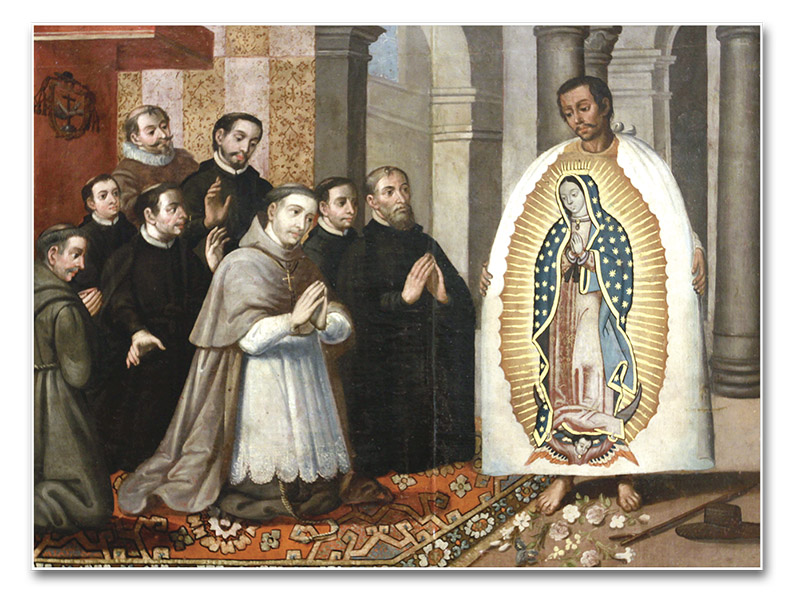
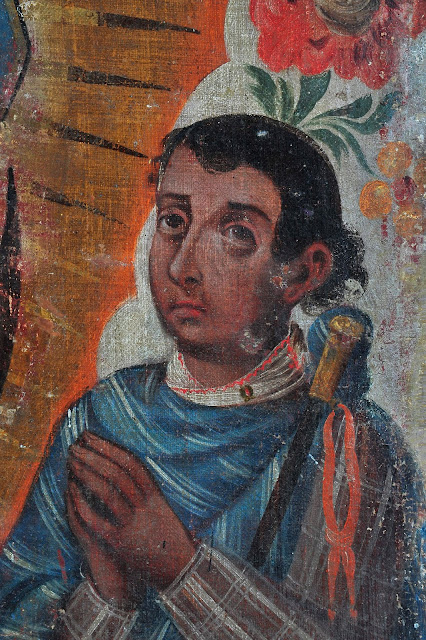
Juan Correa, Juan Diego y el Obispo Zumárraga (c. 1700), óleo sobre tela, Museo Nacional de la Escultura (Valladolid)

Very early one Saturday morning at the beginning of December of 1531, a poor but respected Indian called Juan Diego (born, it is said, in Cuauhtitlan and under the pastoral care of the religious community of Tlatelolco) was on his way to Tlaltelolco on a holy errand. When he reached the hill called Tepeyac dawn was breaking and he heard singing coming from above the hill. The singing stopped and was not heard again, but he heard a voice calling to him from the top of the hill. “Beloved Juan Diego”, it said. He responded at once, bravely climbing the hill towards the place where the voice was coming from. When he reached the top he saw a Lady standing there, who called him to herself. When he came close to her he was stunned with how beautiful she was: her clothes shone like the sun. Then the Virgin gave him her command: “Know, beloved son, that I am the immaculate ever-virgin Mary, Mother of the true God who is the Origin of all life, who creates all things and keeps them in being, the Lord of Heaven and Earth. “I greatly wish, I earnestly desire, that my house should be built in this very place. I will show him to you there and praise him as I show him, my Love and Compassion, my Help and Defense. For in truth I am your compassionate Mother, yours and of all who live together in this land and of any others who love me, seek me, and call on me with confidence and devotion. In that house I will listen to their weeping and their sadness, I will give them help in their troubles and a cure for their misfortunes. “So that this desire of mine may be fulfilled, go to Mexico City, to the palace of the Bishop. Tell him that I have sent you to him to tell him how much I want a house to be built here for me, a church built here at the bottom of the hill.”

When Juan Diego arrived in the city he went immediately to the house of the Bishop, Juan Zumárraga, a Franciscan. But when the bishop heard what he had to say, he did not believe him completely and said “My son, come another time and I will listen to you then. Meanwhile I will consider what should be done about your wish and your desire.” Another day he saw the Queen of Heaven coming down from where he had seen her. She came to meet him next to the hill, stopped him, and said “Listen, my beloved son, have no fear or anxiety in your heart. Do not try to do anything about your uncle’s grave illness or about any other trouble of yours. For am I not here with you, your mother? Are you not safe in the shadow of my protection? Am I not the source of your life and your happiness? Am I not holding you in my lap, wrapped in my arms? What else can you possibly need? Do not be upset or distressed. Climb again, my beloved son, to the summit of this hill, to the place where you saw me and heard me speak. You will find flowers growing there. Pick them and gather them and bring them down to me.” Juan Diego came back down with the flowers he had picked. She looked at them, took them with her blessed hands and put them in his tilma, or cape. She told him: “Most beloved son, these flowers are the sign that you are to carry to the Bishop. You yourself are my messenger and I entrust myself to your faithfulness. I strictly command you not to unfold your tilma in front of anyone except the Bishop; but to him you should show what it is you are carrying. As you do so, tell him the story of how I asked you to climb to the top of the hill and pick the flowers there. Tell him everything you saw and marvelled at, so that he will believe you and undertake to build the church I wish for.”

Obedient to the command of the Queen of Heaven, he took the road to Mexico City. He went happily, confident that all would turn out well. Coming into the palace he prostrated himself before the Bishop and recounted all that he had seen and told him the errand on which he had been sent. “My Lord,” he said, “I have done as you asked. I went to my Lady, the Queen of Heaven, holy Mary, the Mother of God, and told her that you had asked for a sign so that you might believe me and build the church that the Virgin herself desires. I told her that I had given my word to bring you back some sign of her wishes. She heard what you had asked and accepted with good grace your request for some sign so that you could fulfill her will. Today, very early, she sent me back to see you.” The whole city came running to see the holy image. They wondered at it, accepted it as the work of God and made prayers to him. And that day Juan Diego’s uncle, whom the Virgin had cured, told them in what way she should be revered and said that her image should be known as the ever-virgin Saint Mary of Guadalupe •  

The account of the apparition is found in the Nican Mopohua, or Huei Tlamahuitzoltica, written in Nahuatl, the Aztec language, by the Indian scholar Antonio Valeriano around the middle of the sixteenth century.  Unfortunately the original of his work has not been found. A copy was first published in Nahuatl by Luis Lasso de la Vega in 1649.


Our Lady of Guadalupe (2024)
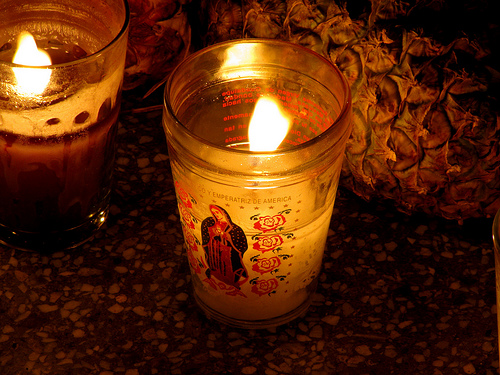
December 12, 2024  

6.00 a.m. Mañanitas & Santo Rosario

7.00 a.m. Holy Mass

6.00 p.m. Holy Mass

(followed by reception with Mariachi @ St. Joseph Hall)


¿Acaso no estoy yo aquí, que soy tu Madre?
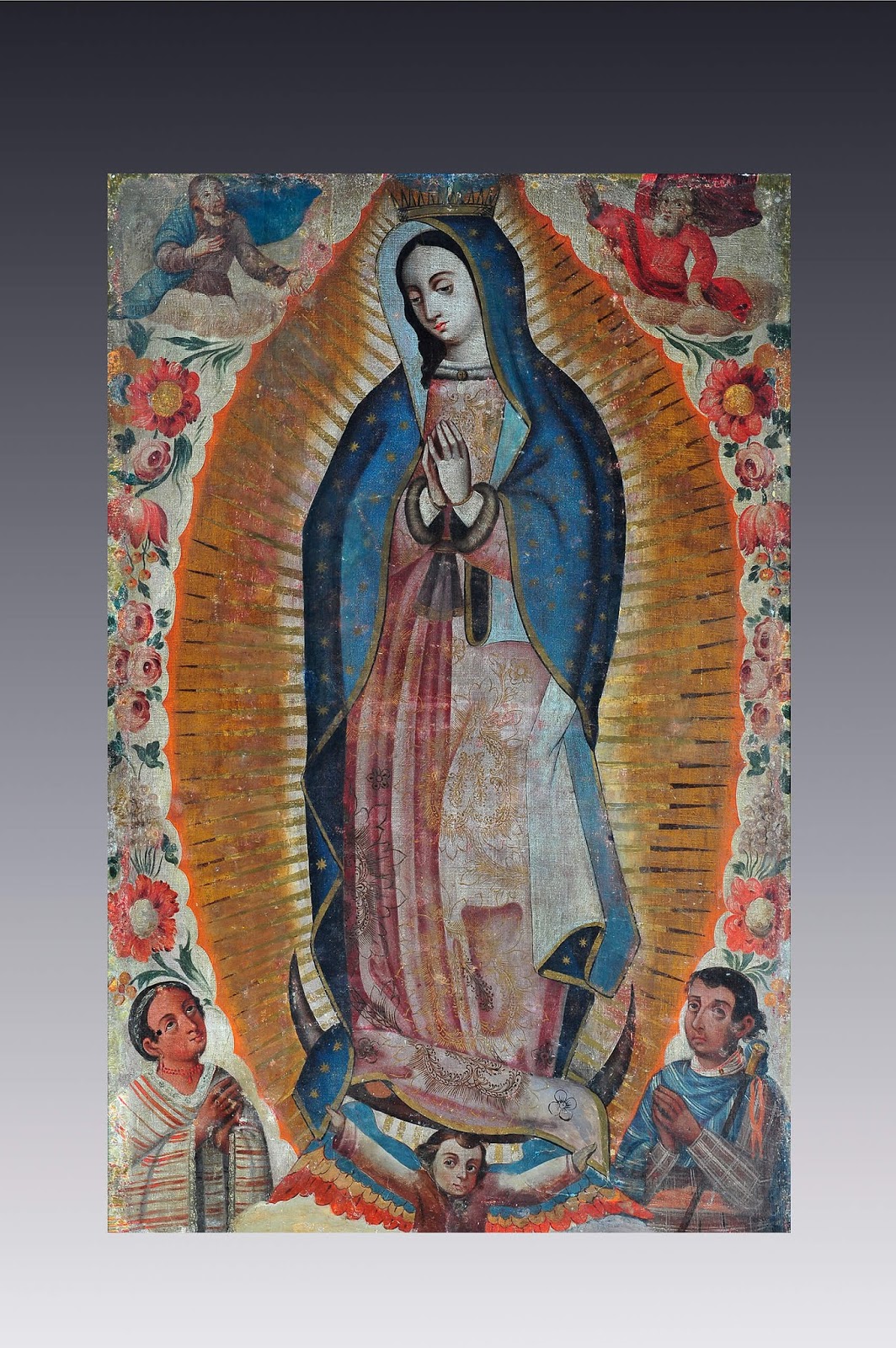
Un sábado de mil quinientos treinta y uno, a pocos días del mes de diciembre, un indio de nombre Juan Diego iba muy de madrugada del pueblo en que residía a Tlatelolco, a tomar parte en el culto divino y a escuchar los mandatos de Dios. Al llegar junto al cerrillo llamado Tepeyac, amanecía, y escuchó que le llamaban de arriba del cerrillo: «Juanito, Juan Dieguito.» Él subió a la cumbre y vio a una señora de sobrehumana grandeza, cuyo vestido era radiante como el sol, la cual, con palabra muy blanda y cortés, le dijo: «Juanito, el más pequeño de mis hijos, sabe y ten entendido que yo soy la siempre Virgen María, Madre del verdadero Dios por quien se vive. Deseo vivamente que se me erija aquí un templo, para en él mostrar y prodigar todo mi amor, compasión, auxilio y defensa a todos los moradores de esta tierra y a los demás amadores míos que me invoquen y en mí confíen. Ve al Obispo de México a manifestarle lo que mucho deseo. Anda y pon en ello todo tu esfuerzo.» Cuando llegó Juan Diego a presencia del Obispo don fray Juan de Zumárraga, religioso de san Francisco, éste pareció no darle crédito y le respondió: «Otra vez vendrás y te oiré más despacio.» Juan Diego volvió a la cumbre del cerrillo, donde la Señora del Cielo le estaba esperando, y le dijo: «Señora, la más pequeña de mis hijas, niña mía, expuse tu mensaje al Obispo, pero pareció que no lo tuvo por cierto. Por lo cual te ruego que le encargues a alguno de los principales que lleve tu mensaje para que le crean, porque yo soy sólo un hombrecillo.» Ella le respondió: «Mucho te ruego, hijo mío el más pequeño, que otra vez vayas mañana a ver al Obispo y le digas que yo en persona, la siempre Virgen santa María, Madre de Dios, soy quien te envío.» Pero al día siguiente, domingo, el Obispo tampoco le dio crédito y le dijo que era muy necesaria alguna señal para que se le pudiera creer que le enviaba la misma Señora del Cielo. Y le despidió.

El lunes, Juan Diego ya no volvió. Su tío Juan Bernardino se puso muy grave y, por la  noche, le rogó que fuera a Tlatelolco muy de madrugada a llamar un sacerdote que fuera a confesarle. Salió Juan Diego el martes, pero dio vuelta al cerrillo y pasó al otro lado, hacia el oriente, para llegar pronto a México y que no lo detuviera la Señora del Cielo. Mas ella le salió al encuentro a un lado del cerro y le dijo: «Oye y ten entendido, hijo mío el más pequeño, que es nada lo que te asusta y aflige. No se turbe tu corazón ni te inquiete cosa alguna. ¿No estoy yo aquí que soy tu madre? ¿No estás bajo mi sombra? ¿No estás, por ventura, en mi regazo? No te aflija la enfermedad de tu tío. Está seguro de que ya sanó. Sube ahora, hijo mío, a la cumbre del cerrillo, donde hallarás diferentes flores; córtalas y tráelas a mi presencia.» Cuando Juan Diego llegó a la cumbre, se asombró muchísimo de que hubiesen brotado tantas exquisitas rosas de Castilla, porque a la sazón encrudecía el hielo, y las llevó en los pliegues de su tilma a la Señora del Cielo. Ella le dijo: «Hijo mío, ésta es la prueba y señal que llevarás al Obispo para que vea en ella mi voluntad. Tú eres mi embajador muy digno de confianza.» Juan Diego se puso en camino, ya contento y seguro de salir bien. Al llegar a la presencia del Obispo, le dijo: «Señor, hice lo que me ordenaste. La Señora del Cielo condescendió a tu recado y lo cumplió. Me despachó a la cumbre del cerrillo a que fuese a cortar varias rosas de Castilla, y me dijo que te las trajera y que a ti en persona te las diera. Y así lo hago, para que en ellas veas la señal que pides y cumplas su voluntad. Helas aquí, recíbelas.» Desenvolvió luego su blanca manta, y, así que se esparcieron por el suelo todas las diferentes rosas de Castilla, se dibujó en ella y apareció de repente la preciosa imagen de la siempre Virgen santa María, Madre de Dios, de la manera que está y se guarda hoy en su templo del Tepeyac.

La ciudad entera se conmovió, y venía a ver y a admirar su devota imagen y a hacerle oración, y, siguiendo el mandato que la misma Señora del Cielo diera a Juan Bernardino cuando le devolvió la salud, se le nombró como bien había de nombrarse: «la siempre Virgen santa María de Guadalupe» • 

(Tomado del relato del escritor indígena del siglo XVI Antonio Valeriano, titulado «Nicán Mupohua», y publicado por la Editorial Buena Prensa (México), en 1971)

Solemnity of the Immaculate Conception of the Blessed Virgin Mary

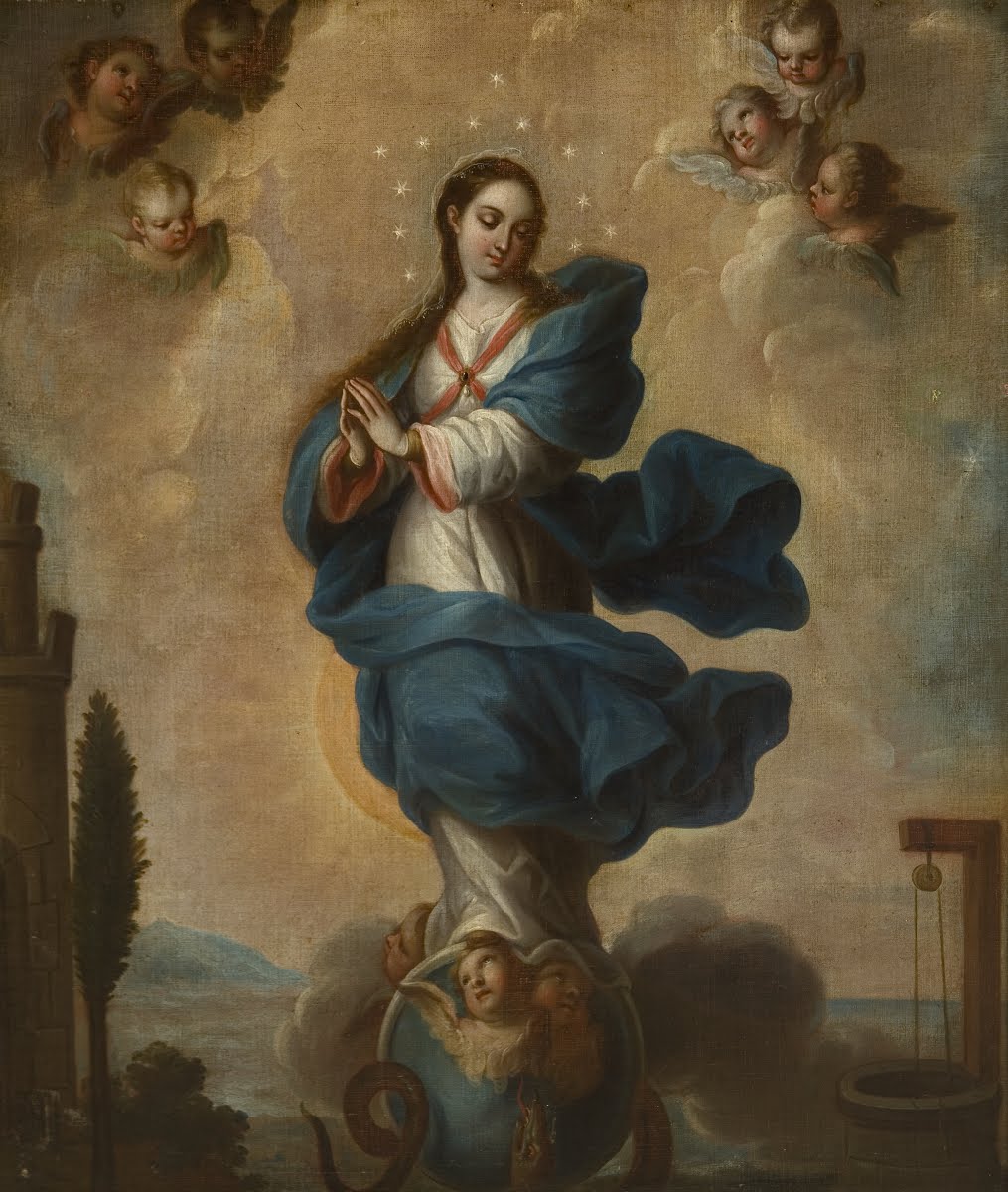
Miguel Cabrera, The Immaculate Conception (1684), oil on canvas, Museo Arocena (Torreón)

The season of Advent is a time of preparation and a time of anticipation.  We are preparing to welcome Jesus Christ and we celebrate this season in anticipation of his birth. Today, we celebrate the feast of the Immaculate Conception of the Blessed Virgin Mary, the day that Mary was conceived in the womb of St. Ann and the fact that she was conceived without original sin. From the first moment of her conception, from the moment when her life began, the Blessed Virgin Mary belonged entirely to God. The grace of the Immaculate Conception of the Blessed Virgin Mary is a grace of preparation. From the first moment of her life, when she can do nothing for herself, it is the grace of God that saves her.The work of salvation and the work of sanctification always begin with the action of God. In the Immaculate Conception, the Blessed Virgin Mary is prepared to be the mother of the Messiah. She is given the grace to be able to give herself completely to the will of the Lord. It is the grace of her Immaculate Conception the enables her to respond to the words of the Archangel Gabriel: “Let it be done unto me according to your word.” 

The Blessed Virgin Mary is prepared by her Immaculate Conception to be the first tabernacle of the Lord Jesus. The grace of the Immaculate Conception of the Blessed Virgin Mary is a grace given in anticipation. This special grace is given to Mary in anticipation of the redemptive work of her Son, in whom alone and through whom alone is the salvation of the world.  The Blessed Virgin Mary is the first to receive the grace that will be won on the cross of Calvary. Mary receives this grace in anticipation of the glory that will be revealed. We celebrate the mighty work of Almighty God in this time of preparation and this time of anticipation. We join with all creation and with every generation and name Mary as one who is blessed. As we celebrate the Eucharist today, we give praise to the God of Heaven above who claimed Blessed Mary at her conception, for He claimed us in our baptism.  We ask the Lord for the grace to prepare, with Mary, to receive the gift of the Lord Jesus, at Christmas. And we await, in joyful anticipation, for the glory that will be revealed • AE


Solemidad de La Inmaculada Concepcion de la Santísima Virgen Maria (2024)

El Señor llamó al hombre y le dijo: ¿Dónde estás? Este contestó: oí tu ruido en el jardín, me dio miedo y me escondí. Miles de años después, los hombres seguimos sin querer llegar a esa cita con Dios: rehuimos el encuentro, el diálogo, sin embargo, para nuestra fortuna existió –¡existe! una criatura que se dejó encontrar, que respondió rápidamente, que se comprometió profundamente, que dio un  que aún resuena en el aire: He aquí la esclava del Señor, hágase en mi según tu palabra. Dios encontró el  perfecto, encontró a una criatura dispuesta a recibir, antes incluso que a dar. Una criatura libre de preocupaciones egoístas, vaciada de sí misma que ha desterrado el orgullo, repudiado el amor propio y convertido en pura acogida. No es una criatura vacía. Sino una criatura que ha sabido hacer el vacío. La Virgen María es aquella que ha permitido a Dios hacer y obrar libremente en ella. Muchos nos obsesionamos por entender lo que hay en la mente de Dios y los planes que tiene con nosotros. La Virgen descubrió en silencio –sus palabras son muy pocas- que lo primero que tenía que hacer era dejar hacer a Dios; dejarse hacer por Él, ser tomada por Él, abandonarse al poder de su Espíritu. Cuando ella ha asentido a lo que se le propone, el texto dice, sin más, que el ángel se retiró. Siempre me ha impresionado este detalle en la anunciación. No es un fin alegre. En todo caso es un fatigoso y comprometido inicio. María queda sola. Ya no habrá ninguna comunicación extraordinaria. Ningún mensaje que le dé garantías y elimine las dudas. Debe hacer el camino con la ayuda de la propia fe, como nosotros; los ángeles no vuelven a aparecer en la vida de la Virgen, al menos los evangelios no nos lo dicen.

A lo largo de la vida de María saltarán los por qué, y deberá llegar a la luz a través de las tinieblas más espesas, no a través de las respuestas más aseguradoras. El ángel cumplió su misión, terminó de hablar y se marchó. A partir de ese momento la Virgen tendrá que preguntar para saber algo. Para entender mejor, como todos los mortales. Empezará a conocer el camino recorriéndolo; encontrará la verdad haciéndola. Aquí está, una vez más, la paradoja que aparece en toda la Escritura y que la Virgen María vivió hasta las últimas consecuencias.  debe ser para nosotros la más frecuente de nuestras palabras, la oración decisiva. Que la Santísima Virgen María en el misterio de su Inmaculada Concepción que celebramos esta mañana quiera interceder por nosotros para que seamos más acogedores, más abiertos ante el don Dios, ante su invitación llena de amor y de alegría •AE


¡Tú Eres Toda Hermosa!

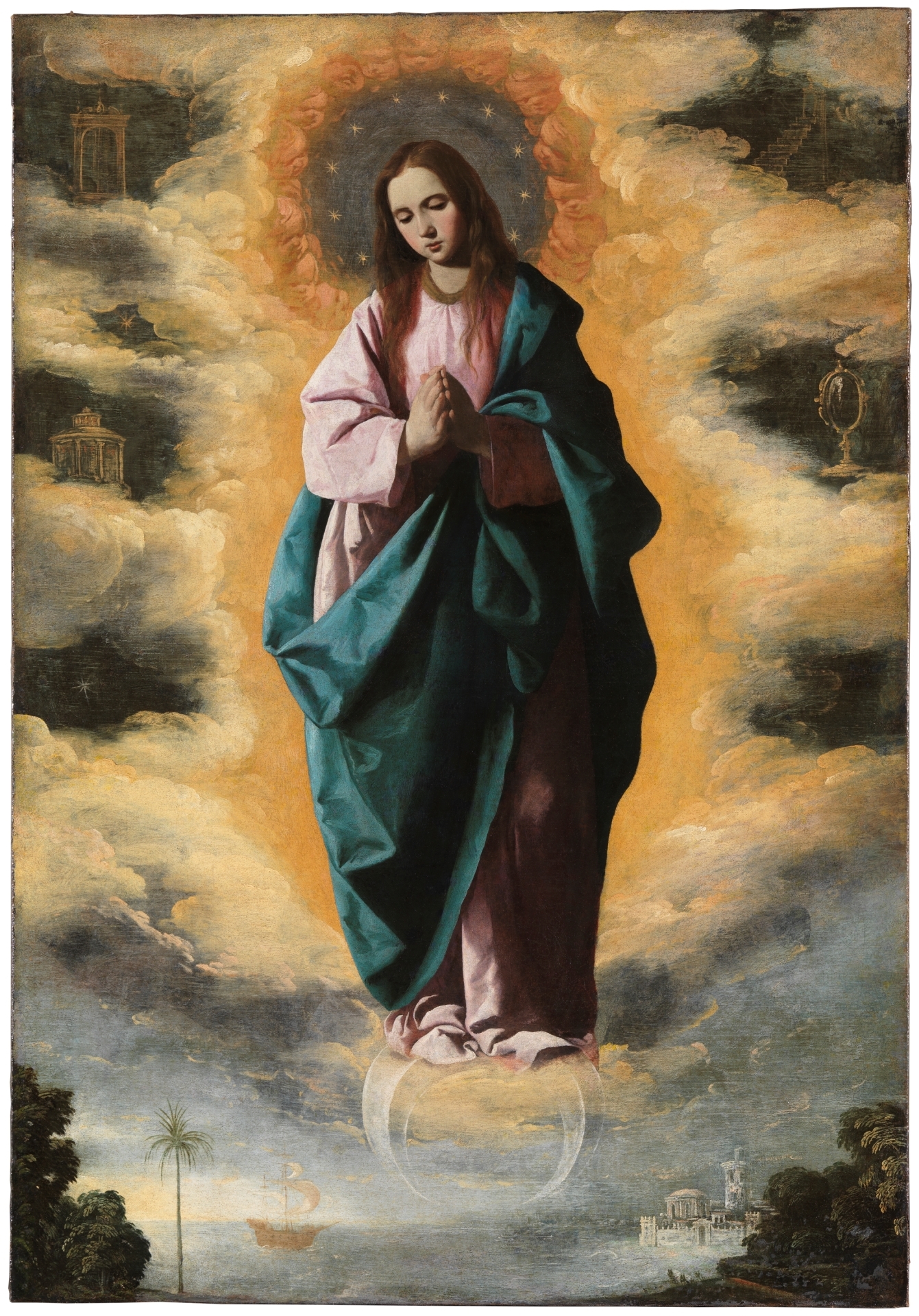
Francisco de Zurbarán, Inmaculada Concepción (1630), óleo sobre tela, Museo del Prado (Madrid)

Salve, Madre,
en la tierra de mis amores
te saludan los cantos
que alza el amor.
Reina de nuestras almas,
flor de las flores,
muestra aquí
de tu gloria los resplandores,
que en el cielo tan sólo
te aman mejor.

Virgen Santa, Virgen pura,
vida, esperanza y dulzura
del alma que en ti confía,
Madre de Dios, Madre mía,
mientras mi vida alentare,
todo mi amor para ti,
mas si mi amor te olvidare,
Madre mía, Madre mía,
aunque mi amor te olvidare
tú no te olvides de mí


Second First Sunday of Advent (2024)

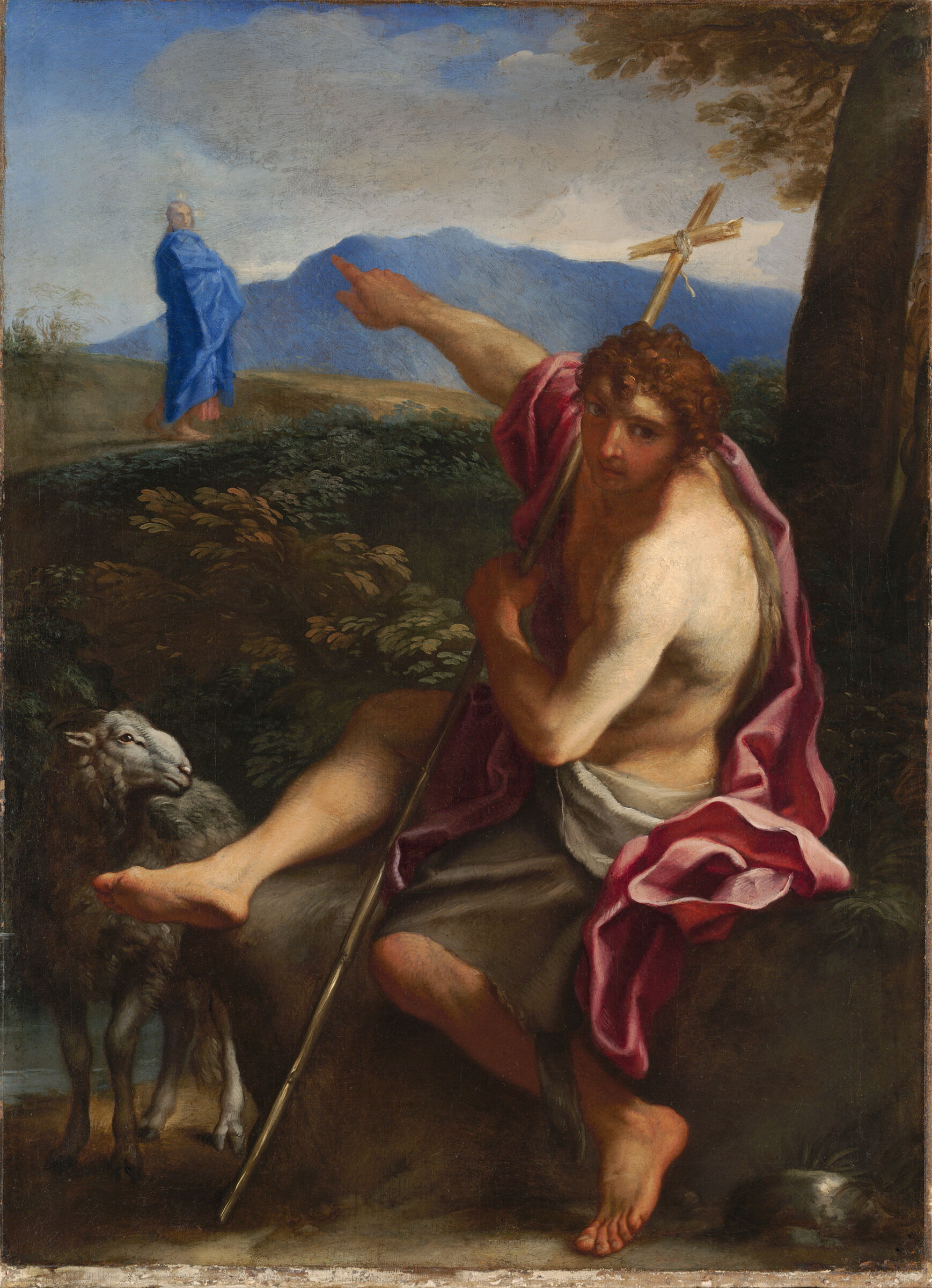
C. Maratti, Saint John the Baptist Pointing to Christ in a Landscape (1656), oil on canvas, Harvard Museum of Art

Today’s readings tell us that God is coming, but he sees that the road to our hearts is loaded with horrible ruts. John the Baptist calls upon us in the spirit of Isaiah the prophet: “Prepare the way of the Lord, make straight His paths.” Advent is the season of personal road work. We need to recognize where we have allowed ruts to occur in our lives. Now I don’t mean a few holes here and there, but long deep fissures in our souls caused by our allowing heavy equipment to destroy us. What heavy equipment? That heavy equipment could be our desire to go along with the crowd around us. It is not just that we join them in doing bad things, it is that we have made these actions part of our lifestyle. We are more concerned with being accepted by others than we are with doing what we know is right and avoiding what we know is wrong. We may have a few holes here and there that we need to fill in. And most of the time when we go to confession, we do just that. We look at those things we may have done or failed to do and seek forgiveness from God. This is good, but is it good enough? We need to be more thorough. We need to ask ourselves why do we do the things that formed those holes.

During Advent we need to do the serious road work, the work of recognizing what ruts have ingrained themselves in our lives. During Advent we need to “Prepare the way of the Lord, and make straight his paths.” During Advent we need to make a good confession, a truly good confession, and ask God to help us recognize if there are ruts in our lives and to fill them in with his way, the way of love. God is not done with any of us yet. Paul tells his beloved Philippians, and us, in the second reading: I am confident of this, that the one who began a good work in you will continue to complete it until the day of Christ Jesus. We pray today to the Lord of Road Work • AE


St. Joseph Catholic Church (Dilley, TX) • Weekend Schedule

Fr. Agustin E. (Parish Administrator)

Saturday, December 7, 2024.

10.00 a.m. Funeral Mass for + Ms. Porfiria Marquez

5.00 p.m. Sacramento de la Confesión

6.00 p.m. Santa Misa.

Sunday, December 8, 2024

8.00 a.m. Sacrament of Reconciliation

8.30 a.m. Holy Mass.

10.30 p.m. Sacrament of Reconciliation.

11.00 a.m. Holy Mass.

Monday, December 9, 2024

Solemnity of the Immaculate Conception of the Blessed Virgin Mary (Holiday of Obligation)

10.00 a.m. Holy Mass (Bilingual)

6.00 p.m. Holy Mass (Bilingual)


Segundo Domingo de Adviento (2024)

Juan grita mucho. Lo hace porque ve al pueblo dormido y quiere despertarlo, lo ve apagado y quiere encender en él la fe en un Dios Salvador. Su grito se concentra en una llamada: «Preparen el camino del Señor». ¿Cómo abrirle caminos a Dios? ¿Cómo hacerle más sitio en nuestra vida?

Búsqueda personal. Para muchos, Dios está hoy como oculto y encubierto por toda clase de prejuicios, dudas, malos recuerdos de la infancia o experiencias religiosas negativas. ¿Cómo descubrirlo? Lo importante no es pensar en la Iglesia, los obispos y sus escandalos, la misa o la moral sexual. Lo primero es abrir el corazón y buscar al Dios vivo que se nos revela en Jesucristo. Dios se deja encontrar por los que lo buscan.

Lo segundo: atención interior. Para abrirle un camino a Dios es necesario descender al fondo de nuestro corazón. Quien no busca a Dios en su interior es difícil que lo encuentre fuera. Dentro de nosotros encontraremos miedos, preguntas, deseos, vacío… No importa. Dios está ahí. Él nos ha creado con un corazón que no descansará si no es en él.

Los dos pasos anteriores han de ser con un corazón sincero. No ha de preocuparnos el pecado o la mediocridad. Lo que más nos acerca al misterio de Dios es vivir en la verdad, no engañarnos a nosotros mismos, reconocer nuestros errores. El encuentro con Dios acontece cuando a uno le nace desde dentro esta oración: «Oh Dios, ten compasión de mí, que soy pecador». Éste es el mejor camino para recuperar la paz y la alegría interior.

En actitud confiada. Es el miedo el que cierra a no pocos el camino hacia Dios. Tienen miedo a encontrarse con Él, sólo piensan en su juicio y sus posibles castigos. No terminan de creerse que Dios sólo es amor y que, incluso cuando juzga al ser humano, lo hace con amor infinito. Despertar la confianza total en este amor puede ser comenzar a vivir de una manera nueva y gozosa con Dios.

Caminos diferentes. Cada uno ha de hacer su propio recorrido. Dios nos acompaña a todos. No abandona a nadie y menos cuando se encuentra perdido. Lo importante es no perder el deseo humilde y sencillo de querer llegar a Dios. Quien sigue confiando, quien de alguna manera desea creer es ya creyente delante de ese Dios que conoce hasta el fondo el corazón de cada uno de nosotros • AE  


Musica para Adviento

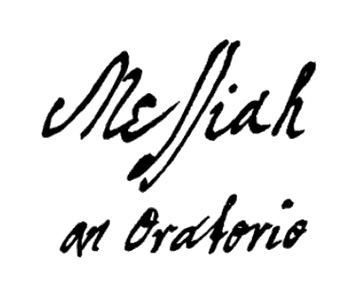
El Mesías (en inglés, Messiah) es un oratorio en inglés compuesto por Georg Friedrich Händel en 1741, con un texto bíblico recopilado por Charles Jennens de la Biblia del rey Jacobo y de la Biblia Coverdale. Su estreno fue en Dublín el 13 de abril de 1742 y se representó casi un año después en Londres. Después de una acogida de público inicial modesta, el oratorio ganó popularidad y finalmente se convirtió en una de las obras corales más conocidas e interpretadas con mayor frecuencia en la música occidental.

Händel se había ganado su reputación en Inglaterra, donde vivía desde 1712, gracias a sus composiciones de ópera italiana. Se pasó al oratorio en inglés en la década de 1730 en respuesta a los cambios de gusto del público. El Mesías fue su sexta obra en este género. Mientras que en los demás oratorios puede reconocerse una marcada influencia italiana, la música de El Mesías se arraiga en las antiguas pasiones y cantatas alemanas. Aunque su estructura se asemeja a la de la ópera, no hay forma dramática, imitaciones de personajes ni discurso directo. En cambio, el texto de Jennens es una reflexión extendida sobre Jesús de Nazaret como el Mesías llamado Cristo. El texto comienza en la Parte I con profecías de Isaías y otros, y pasa a la anunciación a los pastores, la única «escena» tomada de los Evangelios. En la Parte II, Händel se concentra en la Pasión y termina con el coro «Aleluya». En la Parte III, abarca la resurrección de los muertos y la glorificación de Cristo en el cielo.