
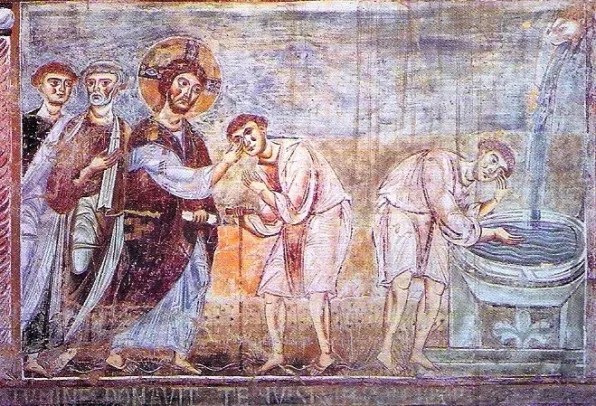
Anonymous artist, Christ and the Man Born Blind (13th century).
Light rarely arrives with thunder — more often, it unsettles quietly — and this Fourth Sunday of Lent places us inside that moment of disturbance. The man Jesus meets has never seen; his world has always been shaped by touch, sound, and memory, and Christ does not begin with a speech but with a gesture that is almost uncomfortable in its earthiness: he makes mud, places it on the man’s eyes, and sends him to wash. The light comes not as an idea but as a process — something that requires movement, trust, and time. Yet the real tension begins after he sees, because clarity unsettles those who were once comfortable in their certainty, while the man who was blind now speaks with disarming simplicity: “The one called Jesus gave me sight.” The tradition has long known that illumination is not merely about brightness but about transformation; Dante imagined the soul’s journey as a passage from shadow into a vision that changes everything, and in another register Debussy’s Clair de lune suggests how light can emerge gently, revealing what was always present rather than overwhelming it. So too does Christ act — not by forcing, but by quietly illuminating — and this Sunday invites us to ask where we may still prefer the safety of dimness, even when the light is already waiting to be received •
Debussy’s Clair de lune does not overwhelm with brilliance; it lets light appear slowly. Composed at the turn of the twentieth century, in a time that had begun to distrust dramatic certainties, the piece moves gently between shadow and illumination. Its quiet glow does not eliminate the darkness, but allows forms to emerge within it — much like the man in the Gospel, whose sight comes not as a sudden triumph but as a gradual awakening. The music helps us sense that true illumination is not about spectacle, but about learning to recognize what has been present all along •

St. Joseph Catholic Church (Dilley, TX) • Weekend Schedule

Fr. Agustin E. (Parish Administrator)
Saturday, March 14, 2026
5.00 p.m. Sacramento de la Confesión
6.00 p.m. Santa Misa.
Sunday, March 15, 2026
8.00 a.m. Sacrament of Reconciliation
8.30 a.m. Holy Mass.
10.30 a.m. Sacrament of Reconciliation.
11.00 a.m. Holy Mass.
Thursday, March 19, 2026
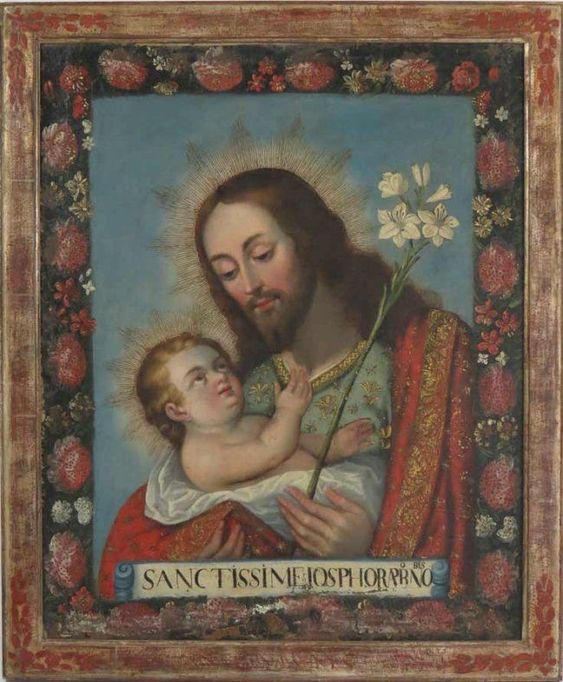
Solemnity of Saint Joseph, Spouse of the Blessed Virgin Mary
6.00 p.m. Holy Mass
IV Domingo de Cuaresma (Ciclo A)

Ante Él aparece un hombre que nunca ha visto, y el gesto que sigue no es grandioso ni espectacular: Jesús toma barro, lo coloca sobre sus ojos y lo envía a lavarse. La luz llega como camino, no como idea; como una experiencia que transforma desde dentro. Y cuando el hombre comienza a ver, el verdadero conflicto no está en sus ojos abiertos, sino en quienes no pueden reconocer la obra de Dios delante de ellos. Porque la luz de Cristo no se limita a iluminar lo exterior: toca la verdad del corazón. San Gregorio de Nisa hablaba del crecimiento espiritual como una entrada progresiva en la luz que no se agota, donde ver a Dios no es poseerlo, sino dejarse atraer más profundamente por Él; y en otro lenguaje, el Lux Aeterna de György Ligeti parece sostener esa misma sensación de claridad que no deslumbra ni domina, sino que envuelve silenciosamente. Así, este precioso pasaje del evangelio no trata simplemente de curación, sino de encuentro: Cristo abre los ojos para que podamos reconocer su presencia en nuestra propia historia. La pregunta no es si necesitamos luz —todos la necesitamos—, sino si estamos dispuestos a dejarnos mirar por Él para comenzar a ver de verdad •
Compuesta en 1966 para coro a capela, Lux Aeterna pertenece al período en que György Ligeti exploraba nuevas formas de escritura vocal tras su huida de la Hungría soviética hacia Occidente. En lugar de melodías tradicionales, utiliza una técnica llamada micropolifonía, donde muchas voces se mueven lentamente en líneas casi imperceptibles, creando una textura sonora continua, como un resplandor que no tiene borde. Esta búsqueda de una “luz sin contornos” marcó profundamente la música contemporánea de la posguerra y encontró incluso eco cultural al aparecer años después en el cine de Stanley Kubrick. Su atmósfera suspendida no describe la luz: la sugiere desde dentro, como una claridad que se descubre más que se impone •

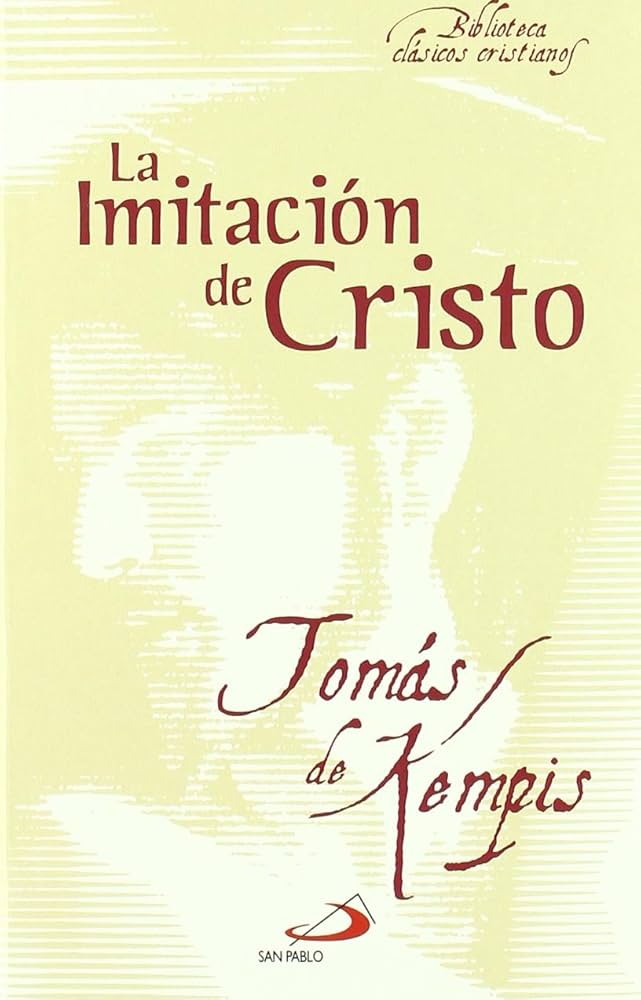
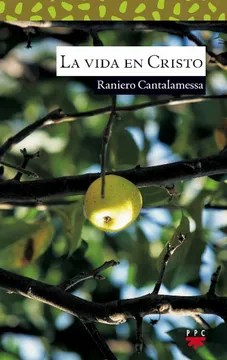
¿Qué lees estos días de Cuaresma?



 LA MEDITACION DE LA ESPOSA