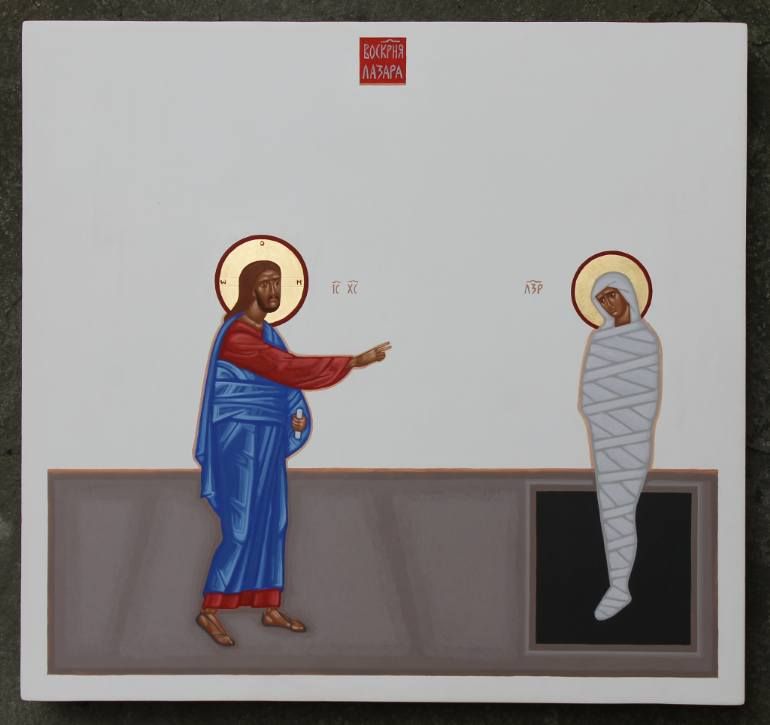
Danilo Movchan (b. 1979), The Raising of Lazarus, Contemporary icon.
Jesus does not stand before death as a stranger — He stands there weeping. Before the stone is moved, before the voice that will call Lazarus forth, there are tears. Christ does not rush past grief on the way to resurrection; He enters it. He allows Himself to feel the ache of loss, the silence of absence, the heaviness that settles when hope seems sealed behind a stone. This is where the mystery begins: not in power, but in compassion. The One who proclaims “I am the Resurrection and the Life” first shares our sorrow, showing us that there is no shame in mourning those we love. If the Son of God Himself wept, then our tears are not a failure of faith, but an expression of love. The Fathers saw in this moment the story of every heart. St. Augustine spoke of the Lord’s voice as the one that reaches us even when we feel buried beneath fear, fatigue, or disappointment — calling us by name from the places we thought were final. Resurrection is not only a future promise; it is the quiet awakening that begins when Christ’s voice meets our wounds. And in another language, the gentle lines of Palestrina’s Sicut cervus seem to breathe that same longing: a thirst that moves the soul toward the One who alone can restore life. This scene is not only about Lazarus. It is about us — and the Christ who weeps with us before He calls us into new life •
Palestrina’s Sicut cervus sets to music the ancient words of Psalm 42: “As the deer longs for streams of water, so my soul longs for you, O God.” Written in the sixteenth century at the heart of the Church’s liturgical renewal, its flowing lines do not dramatize grief or resolve it; they simply express a deep, steady yearning. This quiet longing mirrors the moment at Lazarus’ tomb, where sorrow and hope coexist — where tears are not opposed to faith, but become the place from which the desire for life rises toward Christ •

St. Joseph Catholic Church (Dilley, TX) • Weekend Schedule

Fr. Agustin E. (Parish Administrator)
Saturday, March 21, 2026.
5.00 p.m. Sacramento de la Confesión
6.00 p.m. Santa Misa.
Sunday, March 22, 2026
8.00 a.m. Sacrament of Reconciliation
8.30 a.m. Holy Mass.
10.30 a.m. Sacrament of Reconciliation.
11.00 a.m. Holy Mass.
V Domingo de Cuaresma (Ciclo A)
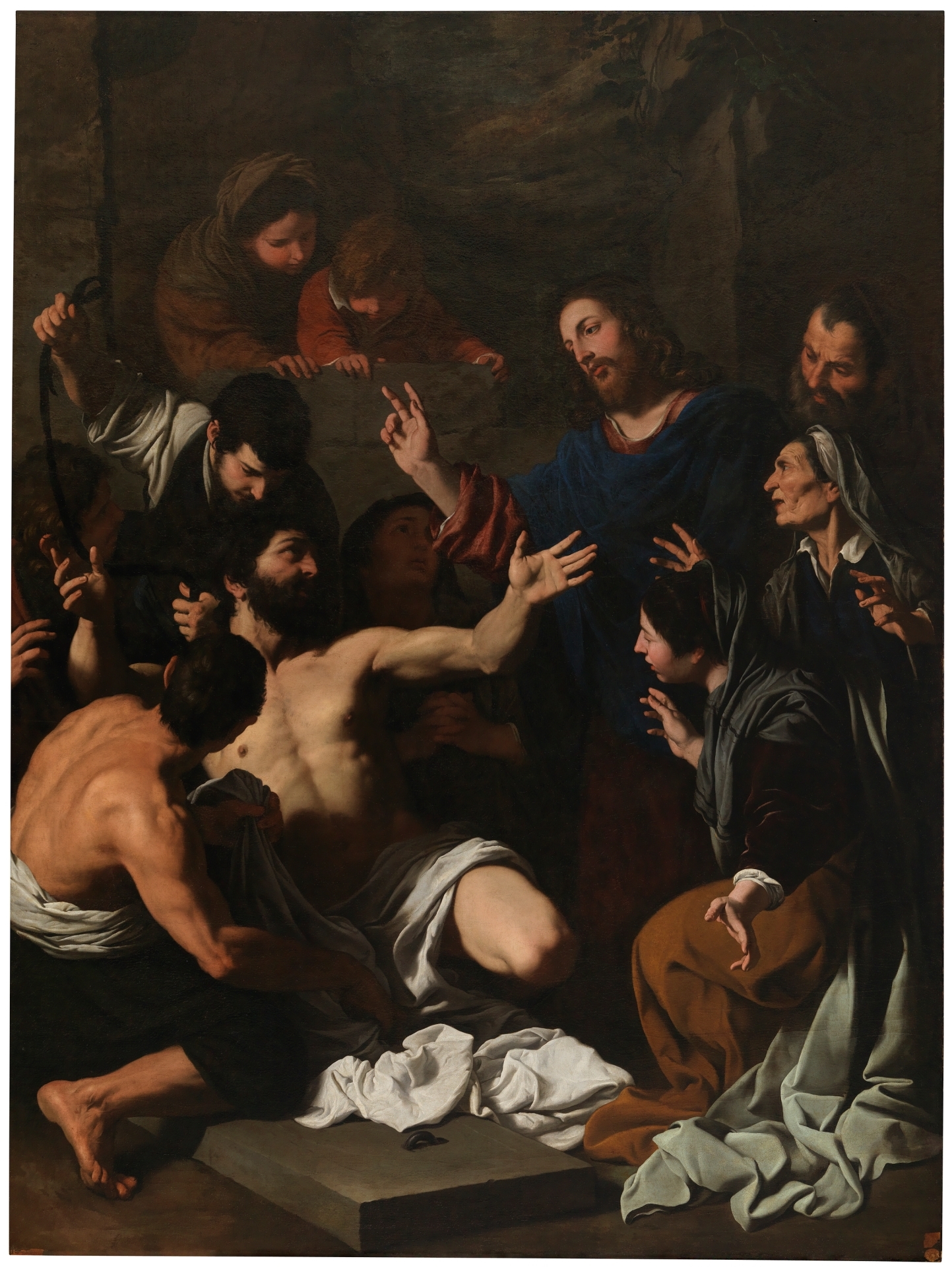
P. Novelli, La Resurrección de Lázaro (1635), óleo sobre tela, Museo Nacional del Prado (Madrid)
Ante el sepulcro, Cristo se detuvo,
y el llanto habló donde reinaba el fin;
la muerte parecía decir “así”,
y el corazón humano se contuvo.
Mas no quedó su voz en lo que hubo,
pues llamó vida donde no hay jardín;
“¡Lázaro, sal!” — y al borde del confín
la noche retrocedió sin escudo.
Salió del fondo envuelto en su prisión,
y el aire volvió a su respiración,
venciendo al miedo oscuro y su amenaza.
Así también resuena su clamor,
cuando nos llama el vivo Salvador:
ninguna tumba puede con su gracia.
Cuando todo parece terminado, Cristo todavía puede llamar. Ante la tumba de Lázaro no hay primero un gesto de poder, sino lágrimas. Jesús llora. No evita el dolor ni lo disfraza con frases rápidas de consuelo. Se detiene en él. Comparte el peso de la pérdida, el silencio que deja la ausencia. Y allí, en ese momento tan humano, aparece la frase más dura del relato: “Señor, ya huele…”. Es decir: ya es demasiado tarde. Ya no hay nada que hacer. Pero es precisamente ahí donde comienza la esperanza. No cuando todo está intacto, no cuando aún creemos que hay solución, sino cuando el final parece definitivo. Lázaro no solo estaba muerto: estaba en descomposición. Y aun así, Cristo llama. No a la muerte en abstracto, sino a un amigo por su nombre: “¡Lázaro, sal!”. Los Padres de la Iglesia veían en esto el signo de que ninguna situación está tan cerrada que Dios no pueda abrirla. San Agustín recordaba que esa voz sigue resonando en las tumbas de nuestras resignaciones, de nuestras pérdidas, de nuestras historias que creemos irrecuperables. La esperanza cristiana no nace de la evidencia, sino de la presencia de Cristo que no se retira ante lo que parece perdido. Este episodio no es solo sobre un regreso físico a la vida. Es sobre el anuncio de que incluso donde ya “huele”, donde pensamos que todo se ha descompuesto, Cristo puede hacer brotar vida. Siempre hay esperanza. Porque Él no llama antes de la muerte, sino desde dentro de ella •

¿Qué leer al final de la Cuaresma y en la Semana Santa?
 LA MEDITACION DE LA ESPOSA