
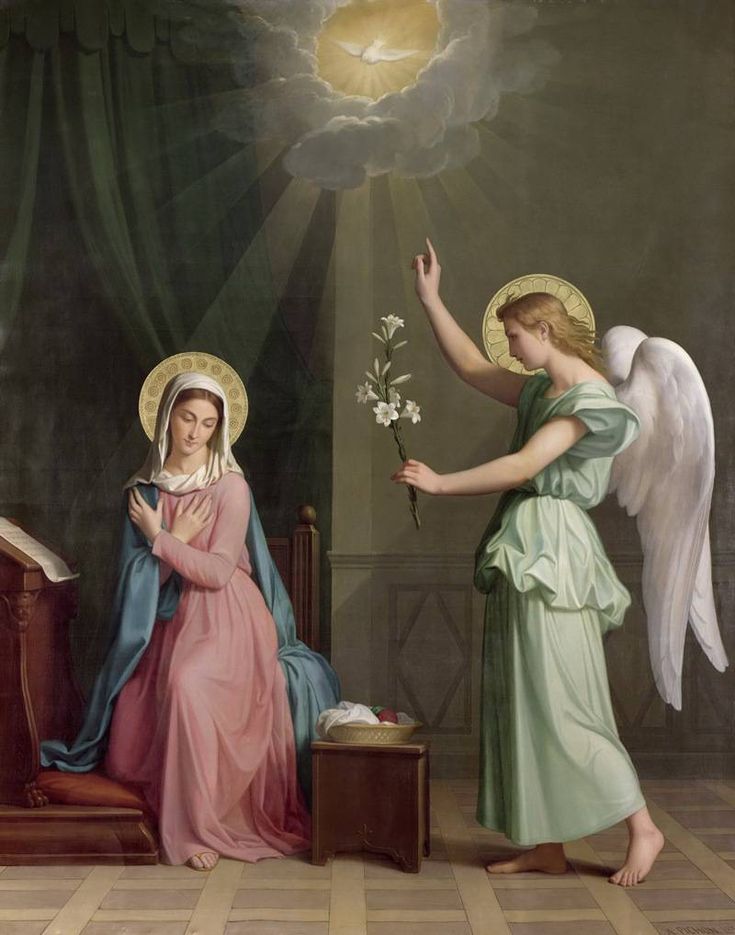
Auguste Pichon, The Annunciation, 1859. Oil on canvas. Particular collection.
God enters the world quietly. Not through spectacle, not through power, but through a question and a consent. The Annunciation is not the story of an interruption, but of an invitation. Mary is greeted not with certainty, but with a call: to receive what she does not yet understand, to allow her life to become the place where God takes flesh. What begins in Nazareth is not a grand event, but a hidden “yes.” The Incarnation does not arrive by force; it waits for freedom. Mary’s response is not the resolution of every doubt, but the offering of trust: “Let it be done to me according to your word.” The Church has long understood that this moment is not only about Mary, but about the way God continues to act — entering history through openness rather than control. The mystery unfolds in silence before it becomes visible in the world. And in another language, the Credo of the Mass — especially at the words Et incarnatus est — slows and deepens, as if time itself pauses before the wonder of God made man. Like Mary’s consent, the music does not proclaim loudly, but bows in reverence before the mystery it receives. The Annunciation reminds us that salvation begins not with achievement, but with availability. God speaks. Grace waits. And the world changes through a quiet yes •
The Credo of the Missa de Angelis, a Gregorian chant that has been sung for centuries across the Church’s liturgy, carries a simplicity that is both historical and deeply pastoral. Emerging from the medieval tradition yet remaining beloved in parishes and cathedrals alike, its gentle unfolding invites the community not just to recite belief, but to dwell within it. At the words Et incarnatus est, the melody naturally softens and lingers, as if echoing the Church’s quiet reverence before the mystery of God made flesh — a musical pause that mirrors Mary’s own attentive “yes.” •

Solemnidad de la Anunciación del Señor (2025)
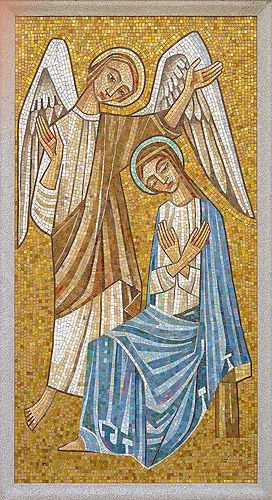
En Nazaret llegó la luz callada,
un ángel trajo voz y decisión;
no fue mandato, fue invitación
que aguardó libre ser escuchada.
María escucha, el alma inclinada,
pregunta humilde sin condición;
y en su silencio, la Encarnación
nace en su fe confiada.
“No temas”, dice el mensajero fiel,
y el mundo espera su respuesta:
un sí que no exige saber.
Con ese gesto, Dios entra en él,
y la historia se hace promesa:
lo eterno empieza a crecer.
El anuncio no sucede en un templo ni ante una multitud, sino en lo cotidiano. Una casa. Una jovencita. Una palabra que irrumpe sin imponerse. La solemnidad de la Anunciación nos sitúa ante un momento en que el futuro de la historia depende de un acto profundamente humano: la escucha. La Virgen no actúa por impulso ni por entusiasmo; pregunta, discierne, se sitúa ante lo que le es propuesto. El misterio no anula su libertad, la convoca. Aquí no se trata de una intervención que desplaza al mundo, sino de una presencia que comienza a habitarlo desde dentro. El Verbo no entra como conquista, sino como germen. Todo empieza en lo pequeño, en lo que no llama la atención. Los grandes relatos espirituales han insistido en que la transformación no suele comenzar en lo visible, sino en lo disponible. En ese sentido, el momento de la Anunciación no es solo una escena del pasado, sino un modo de comprender cómo actúa Dios: no sustituyendo la historia, sino atravesándola. La respuesta de María no resuelve el camino que vendrá, pero lo inaugura. No explica el misterio, pero le da lugar. Y con ese gesto, lo invisible empieza a tomar forma •

 LA MEDITACION DE LA ESPOSA