Twenty-fifth Sunday in Ordinary Time (Cycle A)

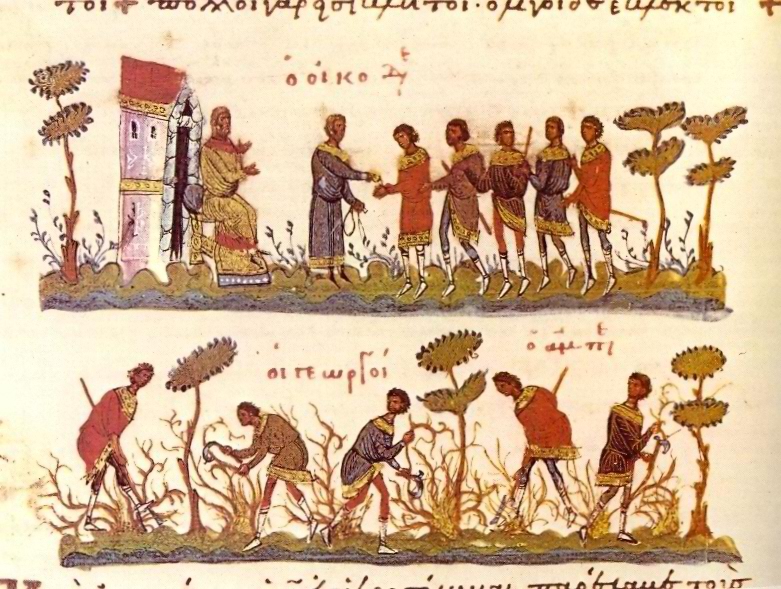
Parable of the Workers in the Vineyard, on the field (down) and pay time (up), Byzantine Gospel of 11th century, National Library of France (Paris)

After listening at today’s gospel is there anyone that feels that God had been unfair? Would any of us dare tell God that he was unjust? Or, would any of us say, “How about me, Lord? I have worked hard to serve you from the very beginning of my life. Surely, my reward will be greater than my brother or my sister or this or that guy.” No, we wouldn’t say that! We have all received Grace from God. We are not going to blame God for being so generous with all those around us, expecting Him to be even more generous to us. It is not up to us to determine how God rewards those who serve him. That is what the parable of the laborers in the vineyard is really about. God’s grace comes to different people at different times and in different ways!

Look at some of the amazing ways that God has changed people we know. So often we have all encountered a person who has done serious damage to his or her life and family through alcohol or other chemical dependency. Then we marvel how God’s Grace not only led that person to recovery, but made him or her a source of strength for others looking to recover. That is the amazing Grace of the Divine Employer!

St. John Paul II was very much aware of the working of God’s Mercy. He addressed women who had suffered through an abortion and now mourned the loss of the baby they had killed. He empowered them with the determination to work for life and protect other women from going through what they went through. This is the Amazing Grace of the Divine Employer. Sadly, many of us have given up on ourselves. But the Lord never gives up on us. Sometimes, we have the view that «it is just too late». We think that something we have done in our past is so terrible that God could never return us to a full share of His love. If this type of thought has come into your mind, let me tell you with the authority of the Gospel: You are wrong. You are judging by human standards, not by the standards of the Love and Mercy and Compassion of the Lord. God never gives up. He never gives up on us! So, we do not have the right to give up on ourselves. We can always start new, whether we have just been lukewarm Christians or whether we have been at war with God. Not only does God refuse to hold us to our pasts, He transforms us to become vehicles of conversion for others. The Lord does not want us wasting any more time. Even if we are well advanced in age, and the day is drawing to a close, He still has work for us to do. He wants us to work for Him, no matter what our pasts have been. Today we have a great chance to meditate on this, to say «What Mercy! What Grace!», because indeed its really Amazing. Amazing grace! • AE


What are you going to read when Autumn arrives?

St. Dominic Catholic Church 
Week-End Schedule

Saturday September 24, 2023

10.00 a.m. Training Session for Altar Servers

3.00 p.m. Sacrament of Reconciliation (Confessional) Fr. Agustin

5. 00 p.m. Holy Mass – Fr. Agustin

Sunday September 25, 2023

7.30 a.m. Mass Fr. Agustin

10.00 a.m. Mass Fr. Agustin

12.30 p.m. Mass Fr. Jaime

3.00 p.m. Misa en Español Fr. Jaime


XXV Domingo del Tiempo Ordinario (Ciclo A)
Probablemente era otoño y en los pueblos de Galilea se llevaba a cabo la vendimia. Jesús veía en las plazas a quienes no tenían tierras propias, esperando a ser contratados para ganarse el sustento del día. ¿Cómo ayudar a esta pobre gente a intuir la bondad misteriosa de Dios hacia todos? Fue entonces que Jesús contó una parábola sorprendente. Les habló de un señor que contrató a todos los jornaleros que pudo. Él mismo vino a la plaza del pueblo una y otra vez, a horas diferentes. Al final de la jornada, aunque el trabajo había sido absolutamente desigual, a todos les dio un denario: lo que su familia necesitaba para vivir. El primer grupo protesta. No se quejan de recibir más o menos dinero. Lo que les ofende es que el aquel señor trató a los últimos igual que a los primeros. La respuesta del señor al que hace como de líder de los inconformes es realmente admirable: « Vas a tener tú envidia porque yo soy bueno?». La parábola es tan revolucionaria que, seguramente, después de veinte siglos, no nos atrevemos todavía a tomarla en serio. ¿Será verdad que Dios es bueno incluso con aquellos y aquellas que apenas pueden presentarse ante él con méritos y obras? ¿Será verdad que en su corazón de Padre no hay privilegios basados en el trabajo más o menos meritorio de quienes han trabajado en su viña? Todos nuestros esquemas se tambalean cuando hace su aparición el amor libre e insondable de Dios. Por eso nos resulta escandaloso que Jesús parezca olvidarse de aquellos cargados de méritos, y se acerque precisamente a los que no tienen derecho a recompensa alguna por parte de Dios: pecadores que no observan la Alianza, o prostitutas que no tienen acceso al templo, porque no están limpias, porque viven de manera desordenada. Nosotros seguimos muchas veces con nuestros cálculos, sin dejarle a Dios ser bueno con todos. No toleramos su bondad infinita hacia todos. Hay personas que no se lo merecen, pensamos. Nos parece que Dios tendría que dar a cada uno su merecido, y sólo su merecido. ¡Menos mal que Dios no es como nosotros; menos mal que desde su corazón de Padre, Dios sabe acercarse para atraer a Si mismo a aquellos a quien nosotros rechazamos pero que también son Sus hijos! ¡Ay si el Señor nos regalara un corazón como el de su Padre y con ese corazón empezáramos a amar a aquellos con quienes nos relacionamos más frecuentemente! • AE


lEctURas pArA eL oTOño


Twenty-fourth Sunday in Ordinary Time (Cycle A)

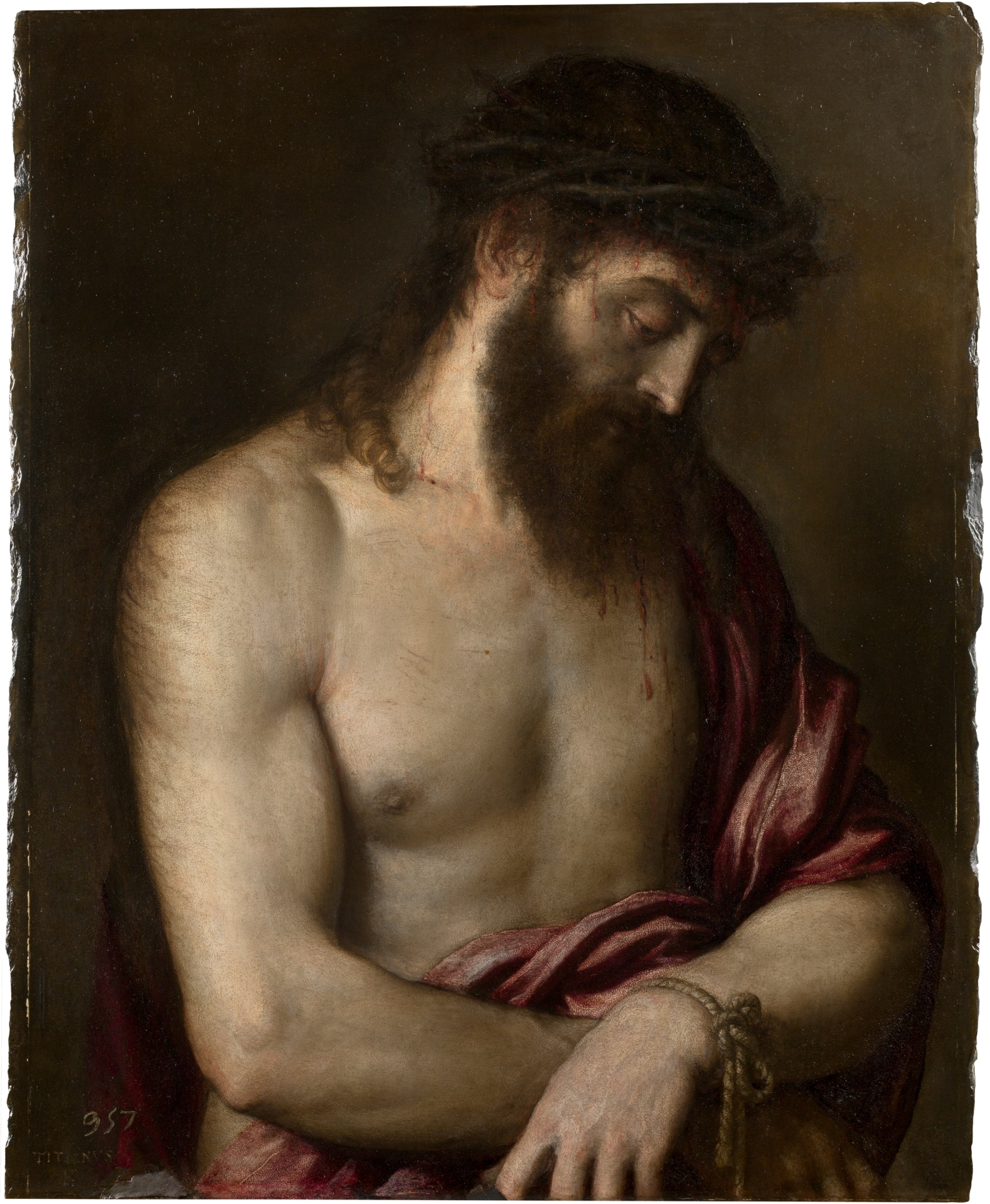
Tiziano, Ecce Homo (1546) oil on canvas, Museo Nacional del Prado (Madrid)

Here we have two rough questions from Sirach’s book this morning: Could anyone nourish anger against another and expect healing from the LORD? Could anyone refuse mercy to another like himself, can he seek pardon for his own sins? Two questions for our moment of prayer, to do our time of silence and dialogue with Jesus. Two questions and one good reason to start our path of forgiveness. That’s the invitation for today, to begin that process of inner healing. And the first step is to keep in mind that forgiveness is not a feeling, or a sensation; forgiveness is not something that comes spontaneously like compassion, or sympathy, or even friendship. Forgiveness is actually a decision. A very personal decision. To begin to forgive, we need to do an act of will; I personally need to say:  «I would like, today, to start this process». Forgiveness is a path that is better to start earlier than later, because life is short, and the path can be long, long and difficult, but not impossible: We are capable of forgiving for various reasons. The first one is that we are not alone on the road: We have the help of the Lord, His mercy and love, in addition to His forgiveness. This is what the Gospel of today is about:  we are invited, (invited, not forced!) to imitate the generosity and magnanimity of the master of the servant.  Certainly, the Lord sets the bar very high: He is not asking to forgive superficially but completely and forever: with all our hearts: a superficial forgiveness ends up getting infected again. So, is it possible to forgive well, completely and forever? Yes: it is possible. It takes effort, but it is possible. And more questions pop up:  from where do I get the strength for such an action? Well, strength comes from the Lord. The big problem with us Christians is that we do not imitate him, that we pay little attention to his life. Jesus is patient and forgiving, especially during His passion and death. When the time comes to begin the path of forgiveness, the best map we can follow is the map of the Passion of the Lord; we have that map in the four gospels. Each one tells moments that can be adjusted to our circumstances. From serious meditation we can draw strength and inspiration to begin to forgive. Observing Jesus meek and humble can be a great source of inspiration, so why not try? There is a moment in the life of the Lord that has always caught my attention. After being resurrected, he has encounters with different people: the apostles, Mary Magdalene, the disciples of Emmaus, but Jesus never appears to Pontius Pilate to settle accounts with him. Nor does He appear to the soldiers who spit on Him. And with the apostles He has no words of scolding, or anger, or revenge for having abandoned Him and boy did they deserve it. Jesus forgave immediately and forever, and He continues to do so with our sins whenever we go to Confession. So, when he makes an invitation to forgive and to love our enemies it’s because he’s done it before, and he’s going to do it to the end.

Perhaps this evening before going to sleep we can go back one more time to read the first reading of today´s liturgy and meditate a bit on those two rough questions: Could anyone nourish anger against another and expect healing from the LORD? Could anyone refuse mercy to another like himself, can he seek pardon for his own sins? And perhaps we could ask the Lord for the gift of clarity and wisdom on our minds and hearts to understand why resentment grows so fast inside us, why don’t we forgive easily, and why do we have enemies. This last point is important: if we call ourselves Christians and if we want to be like Christ …we must feel an authentic love for everyone, (and love means forgiveness) Including those who have inflicted any damage on us; those who do not think, those who do not feel like us; those who are not our friends. The starting point for an authentic and profound forgiveness is Jesus who loved us to the point of dying for all, also for those who did not believe, or do not believe, in Him • AE


St. Dominic Catholic Church

Week-End Schedule

Saturday September 16, 2023.

2.30 p.m. Sacrament of Matrimony for Jose de Jesus & Krystal

3.45 p.m. Sacrament of Reconciliation (Confessional) Fr. Agustin

5. 00 p.m. Holy Mass – Fr. Agustin

Sunday September 17, 2023

7.30 a.m. Mass Fr. Jaime

10.00 a.m. Mass Fr. Jaime

12.30 p.m. Mass Fr. Agustin

3.00 p.m. Misa en Español Fr. Agustin


Domingo XXIV del Tiempo Ordinario (Ciclo B)

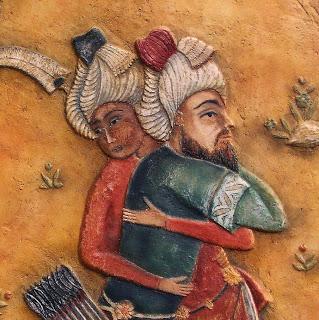
Detalle en relieve de una pintura islámica, siglo XVII.

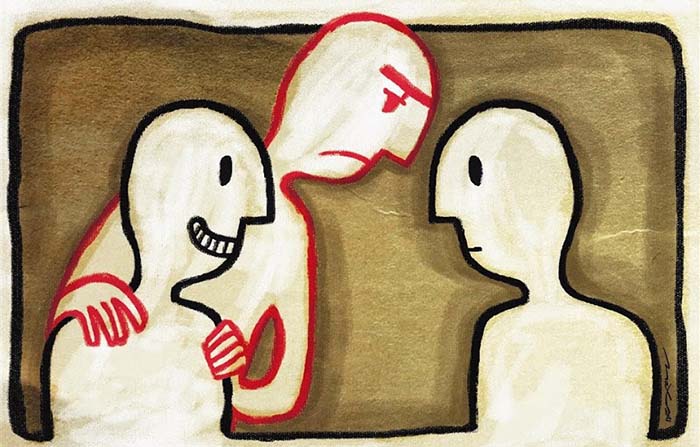
Vivimos todavía los creyentes de hoy una experiencia honda del perdón de Dios, o no necesitamos ya sentirnos perdonados por nadie? Se nos ha hablado tanto del riesgo a vivir con una conciencia morbosa de pecado que ya no nos atrevemos a insistir en nuestra propia culpabilidad para no generar en nosotros sentimientos de angustia o frustración. Preferimos vivir de manera más irresponsable, atribuyendo todos nuestros males a las deficiencias de una sociedad mal organizada o a las actuaciones injustas que, naturalmente, siempre provienen de los demás. Pero, ¿no es ésta la mejor manera de vivir engañados, separados de nuestra propia verdad, sumergidos en una secreta tristeza de la que sólo logramos escapar huyendo hacia la inconsciencia o el cinismo? ¿No necesitamos en lo más hondo de nuestro ser, confesar nuestro propio pecado, sentirnos comprendidos por Alguien, sabernos aceptados con nuestros errores y miserias, ser acogidos y restituidos de nuevo a nuestro ser más auténtico? La experiencia del perdón es una experiencia humana tan fundamental que el individuo que no conoce el gozo de ser perdonado, corre el riesgo de no crecer como hombre. La parábola de Jesús de este domingo nos recuerda esto una vez más. Quien no se ha sentido nunca comprendido por Dios, no sabe comprender a los demás. Quien no ha gustado su perdón entrañable, corre el riesgo de vivir sin entrañas, como el siervo de la parábola, endureciendo cada vez más sus exigencias y reivindicaciones y negando a todos la ternura y el perdón. Hemos creído que todo se podía lograr endureciendo las luchas, despertando la agresividad social y potenciando el resentimiento de las gentes. Hemos expulsado de entre nosotros el perdón y la mutua comprensión como algo inútil, propio de personas débiles y resignadas. Nos estamos acostumbrado a una espiral de represalias, revanchas y venganzas. Ya hemos logrado vivir estrangulándonos unos a otros y gritándonos todos mutuamente “Págame lo que me debes”. Sólo que no está claro que este camino haya de llevarnos a una convivencia más justa y a unas relaciones más cálidas y más humanas. Sin dosis constantes del perdón divino y del perdón humano, vamos caminando hacia un desfiladero • AE


Música para pensar


Twenty-third Sunday in Ordinary Time (Cycle A)

Edward Hopper, Morning Sun (1952), Columbus Museum of Art (Ohio)

Chapter 18 of the Gospel of Matthew is often called the Dissertation on the Church. In the section we have in today’s Gospel, Jesus instructs his disciples on how to care for those who turn from Him, turn from the Church. “If your brother sins against you….” These steps really have to do with Mercy. The person who approaches the brother who has sinned is basically saying, “Look, you have gone in the wrong direction. I know you. I know this is not you. You are better than that.” The person is being offered forgiveness and mercy by the one he has offended and, by extension, by the Church. If the person continues to offend or is obstinate in holding on to his sin, then two or three should approach the fellow saying, “We miss you, you belong with us. We need you to be with us. Turn from your ways and know that the mercy of God is there for you.” If the person remains obstinate, then perhaps a representative of the entire Church, a deacon, priest or bishop, might help the person understand why his actions are offensive. “This is who we are. This is who you are becoming. You are leaving us. Do not do that. Please.” If the person still refuses to receive the mercy and forgiveness of the Church, he would no longer be part of the Church. Still the mercy of God is always available for him in the Church! Every Mass, and specially at Good Friday liturgy we pray that those who have been away from the Church may come back home. We are not just praying for those who no longer attend Mass. We are mainly praying that all those who have turned away from God might come home and receive mercy. We always pray for the conversion of sinners, beginning, of course, with ourselves. “Whoever you bind on earth shall be bound in heaven. Whoever you loose on earth shall be loosed in heaven.” When the Church binds someone to itself, that person is part of the earthly Church and the heavenly Church. When the Church recognizes that someone is no longer part of the Saved Community on earth, then that person is no longer part of the Saved Community in heaven. But mercy is always there for that person. The Church is the Fountain of Mercy. So, we pray, “Please come home.” There are many models, models of understanding the one Church. The Church is an institution, people, sacraments, evangelizers, servants, and fountain of mercy. It is not just one of these. It is all of these and much more. Most importantly, the Church is the place that celebrates the presence of our Lord and Savior, for “Where two or three are gathered together in my name, there am I in the midst of them.” Today’s Gospel tells us that we are not merely members of an organization. The Church is far more than that. The Church is the Body of Christ. And we are the Church • AE


Twenty-third Sunday in Ordinary Time

St. Dominic Catholic Church

Saturday September 9, 2023.

3.00 p.m. Sacrament of Reconciliation (Confessional) Fr. Agustin

5. 00 p.m. Holy Mass – Fr. Agustin

Sunday September 10, 2023

7.30 a.m. Mass Fr. Agustin

10.00 a.m. Mass Fr. Enda McKenna

12.30 p.m. Mass Fr. Agustin

3.00 p.m. Misa en Español Fr. Agustin


Domingo XXIII Del Tiempo Ordinario (Ciclo A)

Pacino di Bonaguida, Jesus y los apóstoles (1340), National Gallery of Art (Washington)

«Donde están dos o tres reunidos en mi nombre allí estoy yo en medio de ellos». La mejor manera de hacer presente a Cristo en su Iglesia es mantenernos unidos actuando «en su nombre» y movidos por su Espíritu. La Iglesia no necesita tanto de nuestras confesiones de amor o nuestras críticas cuanto de nuestro compromiso real. No son pocas las preguntas que nos podemos hacer. ¿Qué hago yo por crear un clima de conversión en el seno de esta Iglesia siempre necesitada de renovación y transformación? ¿Cómo sería la Iglesia si todos vivieran la adhesión a Cristo más o menos como la vivo yo? ¿Sería más o menos fiel a Jesús?

¿Qué aporto yo de espíritu, verdad y autenticidad en esta Iglesia tan necesitada de radicalidad evangélica para ofrecer un testimonio creíble de Jesús en medio de una sociedad indiferente y descreída?

 ¿Cómo contribuyo con mi vida a edificar una Iglesia más cercana a los hombres y mujeres de nuestro tiempo, que sepa no sólo enseñar, predicar y exhortar, sino, sobre todo, acoger, escuchar y acompañar a quienes viven perdidos, sin conocer el amor ni la amistad?

 ¿Qué aporto yo para construir una Iglesia samaritana, de corazón grande y compasivo, capaz de olvidarse de sus propios intereses, para vivir volcada sobre los grandes problemas de la humanidad?

 ¿Qué hago yo para que la Iglesia se libere de miedos y servidumbres que la paralizan y atan al pasado, y se deje penetrar y vivificar por la frescura y la creatividad que nace del evangelio de Jesús?

 ¿Qué aporto en estos momentos para que la Iglesia aprenda a vivir en minoría, sin grandes pretensiones sociales, sino de manera humilde, como levadura» oculta, sal transformadora, pequeña semilla de mostaza dispuesta a morir para dar vida?

 ¿Qué hago yo por una Iglesia más alegre y esperanzada, más libre y comprensiva, más transparente y fraterna, más creyente y más creíble, más de Dios y menos del mundo, más de Jesús y menos de nuestros intereses y ambiciones? La Iglesia cambia cuando cambiamos nosotros, se convierte cuando nosotros nos convertimos y sobre todo cuando confiamos que Jesús es el Supremo Pastor y que es Él quien la gobierna • AE


¿Qué vas a leer en Otoño?


Feast of the Nativity of the Blessed Virgin Mary (9-8-2023)

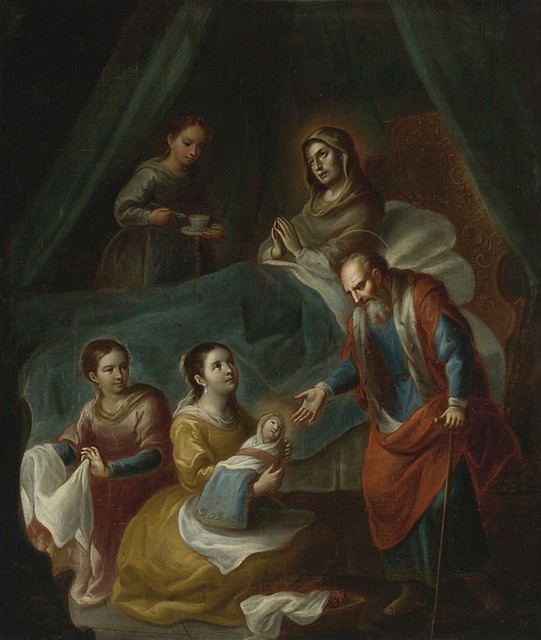
S. dei Gherarducci The Birth of the Virgin in an Initial G, Metropolitan Museum of Art (New York)

The Church celebrates Mary’s birthday on September 8. This feast is exactly nine months after the Solemnity of the Immaculate Conception on December 8. The Church makes no claims about the historical merit of any of the dates. Rather, the dating has a liturgical purpose in recalling the mysteries associated with Mary, in the same way as the nine calendar months between the Annunciation and Christmas • AE

La Iglesia celebra el cumpleaños de María el 8 de septiembre. Esta fiesta es exactamente nueve meses después de la Solemnidad de la Inmaculada Concepción el 8 de diciembre. La Iglesia no hace afirmaciones sobre el mérito histórico de ninguna de las fechas. Más bien, la datación tiene un propósito litúrgico al recordar los misterios asociados con María, de la misma manera que los nueve meses del calendario entre la Anunciación y la Navidad • AE

M. Cabrera, La Natividad de la Santísima Virgen María, Museo Nacional de Arte (México)

Desde el albor de nuestra historia,
suave, discreta y escondida,
llega María a nuestra tierra,
Virgen y Madre prometida.

La luz del Hijo la rodea,
por él es bella sin medida,
y no hay bondad entre los hombres
que pueda serle parecida.

Suba al Señor cual blanca nube
esta alabanza proferida:
a Dios bendito bendecimos
por la que fue la Bendecida. Amén.


Twenty-second Sunday in Ordinary Time (Cycle A)

In today’s second reading St. Paul warns us not to conform to this world but be transformed by the renewal of our mind so we might discern what the will of God is, what is good, pleasing and perfect.

It is easy to conform to the world. It is easy to just go along with what everyone is doing without even considering how our actions are devastating our spiritual life. Our spiritual radar should go up when we hear someone say, “It’s a new world now. Things have changed. Everyone is doing this or that.” We need to ask ourselves, “Am I willing to sacrifice my spiritual life to join what people say everyone is doing?” That is what sin is, isn’t it? Sin is pushing God aside for the sake of conforming to the world. In Jesus’ prayer to His Father, he says, «They are not of the world, even as I am not of the world.”[1] When we conform to that which is not the Christian way of life, we are going against our very being, our spiritual essence. Sin leaves us disjointed, at war with ourselves. It steals our identity from us. So, we do not have to conform. We can be transformed by the renewal of our mind, our soul. Our evangelical protestant brothers and sisters will often talk about being born again. We Catholics do not believe in a second baptism. We believe that our lives are a progression of coming to a fuller understanding of whom we are as sons and daughters of God. This understanding gives us a new determination to live the Christian life in its fullness. For us conversion is a process that begins with baptism and concludes with our final breath. C.S. Lewis wrote, “If you live for the next world, you will get this one in the deal. But if you live only for this one, you will lose them both.” Great idea!

Commitment to the Lord carries the cost of rejecting those elements of the world where He is not present. Like Jeremiah, we want God in our lives, but we will not fully understand the cost of Christianity until that cost becomes personal. Yet, like Jeremiah, we live for the fire burning within our bones, the fire of God’s love. We allow ourselves to be duped. We want God. «The problem with you is that you are thinking like the world does, not like God does,» Jesus told that disciple he had just called his rock. Peter wanted to prevent Jesus from dying. Jesus said that the devil would want to prevent God’s plan from taking place. We cannot allow this to happen. A world that is in darkness needs us to be its light. People are looking for hope. People are searching for a reason for living. As Christians, as Catholics we can give them that hope. We can give them that reason for life. We can be the Light of Christ for others. We do not have to conform to a world of darkness. We can be transformed by God. Then we will experience all that is good and pleasing and perfect • AE

[1] in John 17:16


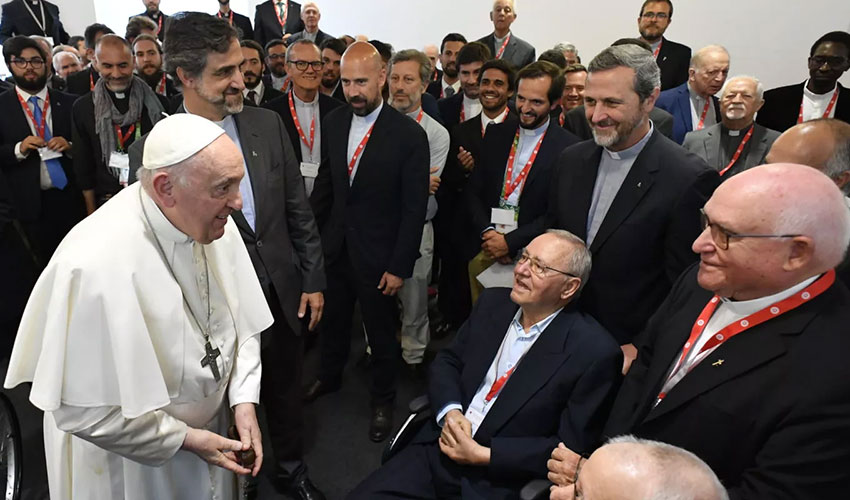
‘The Water Has Been Agitated’
Francis in conversation with Jesuits in Portugal

You can read the conversation here: https://www.laciviltacattolica.com/the-water-has-been-agitated/


Twenty-Second Sunday in Ordinary Time

St. Dominic Catholic Church

Saturday September 2, 2023.

3.00 p.m. Sacrament of Reconciliation (Confessional) Fr. Agustin

5. 00 p.m. Holy Mass – Fr. Agustin

Sunday September 3, 2023

7.30 a.m. Mass Fr. Agustin

10.00 a.m. Mass Fr. Agustin

12.30 p.m. Mass Fr. Jaime

3.00 p.m. Misa en Español Fr. Jaime


XXII Domingo del Tiempo Ordinario (Ciclo A)

El Bosco, Cristo con la Cruz a cuestas (1498), Monasterio de San Lorenzo de El Escorial (España)

Jesús pasó algún tiempo recorriendo las aldeas de Galilea. Allí vivió los mejores momentos de su vida. La gente sencilla se conmovía ante su mensaje de un Dios bueno y perdonador. Los pobres se sentían acogidos. Los enfermos y desvalidos agradecían a Dios su poder de curar y aliviar su sufrimiento. Y Jesús seguía su camino. En algún momento explicó a sus discípulos su decisión de subir  a Jerusalén; era necesario anunciar la Buena Noticia de Dios en el centro mismo de la religión judía. Era peligroso. Sabía que allí iba a padecer a manos de los dirigentes religiosos y las autoridades del templo. Y desde luego Pedro se rebela ante lo que está oyendo. Le horroriza imaginar a Jesús clavado en una cruz. Pedro piensa en un Mesías triunfante. A Jesús todo le tiene que salir bien. Por eso, lo toma aparte para tratar de convencerlo de evitar aquel mal trago. Jesús reacciona con una dureza inesperada. Este Pedro le resulta desconocido y extraño. No es el que poco antes lo ha reconocido como «Hijo del Dios vivo». Es muy peligroso lo que está insinuando. Por eso lo rechaza con toda su energía: «Apártate de mí Satanás». El texto dice literalmente: «Ponte detrás de mí». Ocupa tu lugar de discípulo y aprende a seguirme. No te pongas delante de mí desviándonos a todos de la voluntad del Padre. Jesús quiere dejar las cosas muy claras. Ya no llama a Pedro piedra sobre la que edificará su Iglesia; ahora lo llama piedra que me hace tropezar y me obstaculiza el camino. Ya no le dice que habla así porque el Padre se lo ha revelado; le hace ver que su planteamiento viene de Satanás. La gran tentación de los cristianos es siempre imitar a Pedro: confesar solemnemente a Jesús como Hijo del Dios vivo pero luego querer seguirle sin cargar con la cruz. Vivir el Evangelio sin renuncia ni coste alguno. Colaborar en el proyecto del reino de Dios y su justicia sin sentir el rechazo o la persecución. Queremos seguir a Jesús sin que nos pase lo que a él le pasó. No es posible. Seguir los pasos de Jesús siempre es peligroso. Quien se decide a ir detrás de él, termina casi siempre envuelto en tensiones y conflictos. Será difícil que conozca la tranquilidad. Sin haberlo buscado, se encontrará cargando con su cruz. Pero se encontrará también con su paz y su amor inconfundible. Los cristianos no podemos ir delante de Jesús sino detrás de él • AE


+ (más) lEcTurAS pArA el vERanO