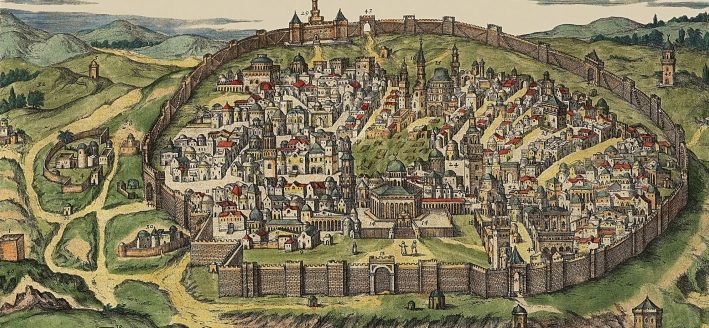
Thirty-third Sunday in Ordinary Time

Michelangelo, The Last Judgment (1536), Fresco of the Sistine Chapel Vatican City (Italy)

Today’s readings are full of gloom and doom.  The first reading from the Book of Daniel talks about the end of time being a time of unsurpassed stress where some who die shall be in everlasting horror and disgrace.  The Gospel reading from the Apocalyptical sections of Mark presents the end of time as being the day of tribulations, when the earth will shake and even the stars will fall out of the sky.  Scary stuff, these end of the world readings.  But are they?  Look again at that first reading: Daniel prophesies that many will live forever.  The wise will shine brightly like the splendor of the firmament and those who lead the many to justice will be like the stars forever.  And in Mark Jesus adds, “the elect will be gathered from the four winds, from the end of the earth to the end of the sky.” The early Christians did not look at the Second Coming and end of time with terror.  Instead they saw it as a time when the Lord would return to his people and correct the injustices of the world.  Good people, Christians,  were being put to death for the Lord in the most horrible ways.  Throughout the world, little children were starving to death while rich people ate heartily. The conquering Romans, like the Greeks and Persians before them, had no respect for any life other than their own and killed the population of whole cities, men, women and children viciously and randomly.  This is not what God created the world to be.  The world was suffering from sin.  Therefore, the Christians prayed, “Come, Lord Jesus, Maranatha. Come and recreate your world into your image.” The world has not changed all that much in its barbarity.  People are still killed for whom they are.  We are still receiving accounts of genocide throughout the world.   Here, in our country, good people are still persecuted when they refuse to join the latest mores of society.  To become a federal judge in this country, a person has to be in favor of gay marriage and abortion, among the other darling positions of the extreme liberals.  Anyone who is not is held up to scorn.  On the other side of the spectrum, anyone who says that the way of war should not be the way of the most civilized, advanced country of the world, then has to be prepared to be labeled as not being patriotic, even treasonous.  The world has not changed that much.  People who hold their convictions tightly to themselves are still persecuted, even put to death. The world has not changed all that much.  And yet, it has.  The major change in the world is that with Jesus Christ there is hope.  There is hope that war will not have the last word.  There is hope that starvation will become a bad memory.  There is hope that racism and sexism will not in the end dance a jig together.  There is hope that oppression will not have a lasting foothold over the vulnerable.  There is hope that those who do evil will not prevail. Evil is not part of God’s plan.  But we are part of that plan. The visions we heard today rely on us to take a role in the conquest of the Kingdom.  We are assured that if we take up the battle of good against evil, good will prevail and we will join in the triumph of God’s forces.  Listen to the “then” section of the Gospel.  “Then you will see the Son of Man coming on the clouds with great power and glory.”  That’s the Good New, the Gospel.  We will see triumph of goodness and be present as the Lord gathers his own to himself. Believing in the Lord and hoping in this promise, we turn our attention to the work at hand: preaching the Gospel through our words and deeds, even to those in darkness.  Even when we feel ourselves engulfed by darkness.  Still, we proclaim the Gospel, for we believe that light is coming.  We do not know when.  We do not know where.  But we do know the He, the Lord of Light is coming.  And so we continue to pray in the prayer He taught us, “Thy Kingdom Come.” • AE


Fr. Agustin Schedule for the Thirty-third Sunday in Ordinary Time

Saturday, November 13, 2021.

3.00 p.m. Sacrament of Reconciliation

5.00 p.m. English Mass @ St. Dominic Catholic Church

Sunday, November 14, 2021.

12.00 p.m. English Mass @ St. Dominic Catholic Church

3.00 p.m. Misa en Español @ St. Dominic Catholic Church


XXXIII Domingo del Tiempo Ordinario (Ciclo B)
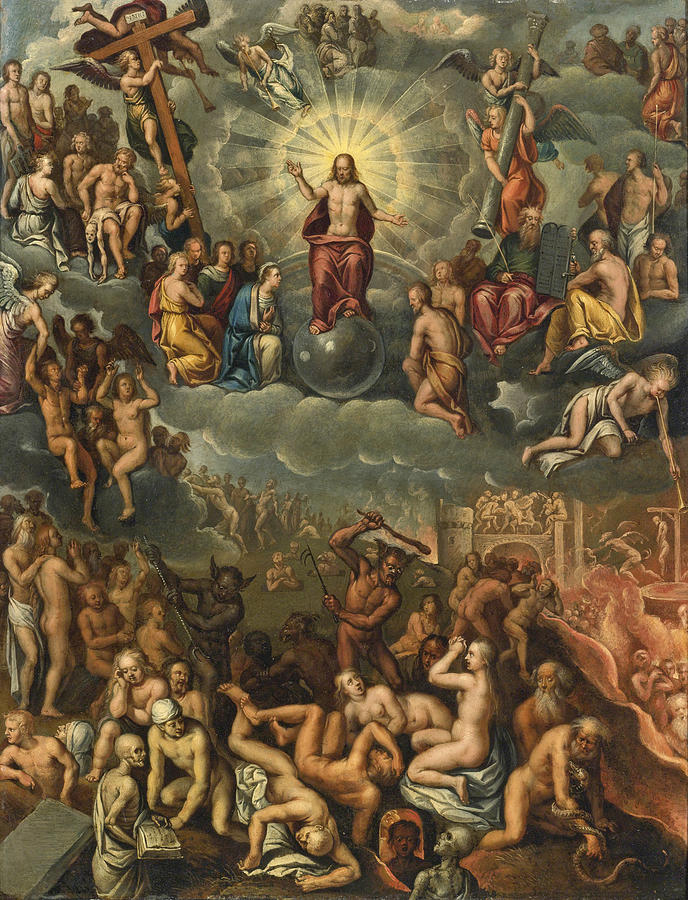
Crispin van den Broeck, El Juicio Universal (1573), óleo sobre madera, Museo de Bellas Artes de Amberes (Bélgica)

Al recitar el credo, los cristianos repetimos una y otra vez que Cristo “vendrá con gloria a juzgar vivos y muertos”. ¿Qué significa esta confesión que hacemos tantas veces de manera distraída y rutinaria? Probablemente muchos pensarán enseguida en un proceso judicial o discriminación última que decidirá la suerte final de los hombres en base a su comportamiento moral en esta vida. Pero el juicio final que esperamos los creyentes entraña algo más que la suerte última de cada individuo. Con fe humilde pero firme los cristianos proclamamos que Jesucristo es el destino último del mundo y de la humanidad. Nosotros creemos que en la raíz de la existencia no reina la soledad, la crueldad o el caos, sino el misterio de un Dios que se nos ha revelado en Cristo como destino final de la humanidad. Es cierto que la historia de los hombres está teñida de dramática ambigüedad y la existencia se nos presenta muchas veces como una maraña de contradicciones e incoherencias absurdas difícil de descifrar. Pero nosotros creemos que “las palabras de Cristo no pasarán». Un día se desvelará el sentido profundo de todo, las cosas quedarán en su sitio verdadero, se revelará el valor último del amor y se hará justicia a todos los vencidos, los humillados, los ofendidos, los pequeños, los olvidados y marginados. Ese será el verdadero juicio final que aclarará todas las ambigüedades y «justificará» todos los esfuerzos por caminar hacia una humanidad siempre mejor. El juicio que dejará en evidencia todos esos otros juicios con los que tantas veces los vencedores pretenden enjuiciar la historia anterior y condenar a los que los han precedido. Se terminarán entonces todos nuestros interrogantes y preguntas. Y descubriremos de dónde proviene esa voz que se hace oír ya en el interior de la vida y del mundo llamándonos hacia Dios. Entonces experimentaremos de alguna manera esa visión tan misteriosa y consoladora de la gran mística Juliana de Norwich: “Y todo estará bien; y todos estarán bien; toda clase de cosas estará bien» • AE


Thirty-second Sunday in Ordinary Time

Dante Gabriel Rossetti, Ecce Ancilla Domini (1850), oil on canvas, Tate Britain (London).

In the first reading today and in the Gospel reading we meet two widows who are very similar. Both are common, hardworking women. Both are poor. Both put their trust in God rather than in things. Both are rewarded for their faith. What these widows did is extremely difficult for all of us. No matter how great our faith is, it is extremely difficult to put our total trust in God. There is something within us all that looks for quick solutions to our problems outside of the realm of faith. Perhaps as rugged individualists we think that we can solve our own problems, conquer all obstacles ourselves. Certainly, we are all tempted to believe that the proper amount of cash applied in the right places can heal all life’s ills. At the same time, I know you will agree that the great fallacy of our age is that money can solve our problems. It is the job of advertisers to convince us that we can buy happiness. But this is a mirage, nothing more. The fact is that among those who have been blessed with material success the happiest are those who have no qualms about sharing their wealth. So, the message of today’s readings is that we must place our confidence in God rather than in our material possessions. As simple (and as difficult) as this! This is difficult for us to do because it demands our practicing the forgotten virtue of humility. Humility? Yes, humility. Only a humble person recognizes where he or she stands before God. Only a humble person recognizes his or her profound need for God. Only a humble person is certain that the presence of God in his or her life is fundamental to happiness. The two widows gave from their substance. They put their trust in God shouting with their actions that His presence in their lives was infinitely more important than anything they owned, even more important than everything they owned. They give us the example of ideal Christians, humbly trusting in God to care for them. Perhaps, someday, you and I will have faith so profound faith that we trust in God as these two widows trusted in God. But, then again, that is one of the reasons why we go to Church, isn’t it? We are here praying for faith… and humility. And we do it through the intercession of the humblest creature that has ever existed: Mary. She, who is the Mother of God, describes herself as the slave of the Lord, we have so much to learn from her! • AE


Fr. Agustin Schedule for the Thirty-second Sunday in Ordinary Time

Saturday, November 6, 2021.

3.30 p.m. Sacrament of Reconciliation

5.00 p.m. English Mass @ St. Dominic Catholic Church

Sunday, November 7, 2021.

7.30 a.m. English Mass @ St. Dominic Catholic Church

10.00 a.m. @ St. Dominic Catholic Church


XXXII Domingo del Tiempo Ordinario (Ciclo B)

La envidia nos resulta vergonzosa e inconfesable, pero está muy extendida en nuestra sociedad. Todos la padecemos a lo largo de nuestra vida en mayor o menor medida, en unos momentos u otros según las circunstancias. En los niños aflora con más claridad porque todavía no han aprendido a disimularla. Los adultos sabemos maquillarla mejor y la ocultamos de diversas maneras bajo forma de desprecio, descalificación, necesidad de lucir mejores que los demás. La envidia, el único pecado que no produce ningún placer, es un proceso a veces bastante complejo y soterrado, que puede hacer a la persona profundamente desgraciada, incapacitándola para disfrutar de felicidad alguna. El envidioso nunca está contento consigo mismo, con lo que es, con lo que tiene. Vive resentido. Necesita mirar de reojo a los demás, compararse, añorar el bien de los otros, estar por encima. Vivimos en una sociedad que, con frecuencia, nos empuja a articular nuestras relaciones interpersonales en torno al principio de competitividad. Ya desde niños se nos enseña a rivalizar, competir, ser más que los demás. Hay quienes viven compitiendo eternamente. Uno de los medios más utilizados para ello es demostrar que se tiene más que los demás, que uno puede comprar un modelo de auto mejor, poseer una casa más lujosa; hacer unas vacaciones más exóticas. No nos atrevemos a confesarlo, pero en la raíz de muchas vidas dedicadas a ganar siempre más y a conseguir un nivel de vida siempre mejor, solo hay un incentivo: la envidia. El evangelio de este domingo nos muestra la reacción de Jesús ante aquellos que solo viven para aparentar, sobresalir y aprovecharse de los débiles. Y también su reacción ante aquella pobre viuda que se desprende de lo poco que tiene para ayudar a otros más necesitados. La invitación de hoy es a vivir humanamente, a disfrutar lo que tenemos y lo que somos, a compartirlo, tratando de vivir de cara a Dios • AE


Halloween vs. The World (10.31.2021 & 11.1.2021)

Every year, as a priest, when Halloween approaches, I have struggled to thoroughly answer the question, “Hey Father, what do you think of Halloween?” Every year, then, I would research the traditions and history of Halloween and get closer to providing a more complete answer.

The starting point is to remembet that salvation was offered to humankind as a result of the brutal death of Jesus Christ. Many of the great Saints who have changed the world were also brutally martyred. The death of Christ and the death of the Saints are remembered all the time, in artwork, in poetry, in books, and in hymns. Death itself, today, though, is seen in a much different light than it was in the past. We fear and shun death, but at the same time celebrate it. We are an odd generation. We preserve our lives on this planet by any and all means possible, but we glorify death in movies and video games and celebrate it in abortion “rights” and the push for euthanasia against the elderly and unwanted. Death in the past, in ancient Christendom, was seen as a fact of life and not the enemy of humanity. Death was the seal of one’s life and the moment the door to eternity swung open. Death brought man to his end and to his judgment. Life was oriented toward death, for death initiated the second and final stage of life: life beyond the grave.

Catholicism and the fallen world both have a view and perspective regarding death. These two views are quite opposed to each other. A skeleton, for example, to a Catholic is a true and fitting reminder of the reality of death and the need to prepare for it properly. A skeleton, to the fallen world, is a source of entertainment for those who enjoy being scared, or it presents an uncomfortable reminder of one’s mortality.

So, let us do this easier asking some simple questions:

Is Halloween part of a Catholic feast day? Yes. Halloween is a derivative of All Hallow’s Eve, the Vigil of All Saints Day, the latter being a Solemnity and a Holy Day of Obligation. This is an ancient feast established by the Catholic Church in the eighth century. Therefore, this is truly an incredibly special Catholic feast day – quite unique and important to all souls and therefore worthy of being preserved and even defended.

Is Halloween being used by Satanists and witches? Yes. Particularly today, in the age of the rise of the occult, Satanism and witchcraft make use of this day for evil celebrations. When you research this, it is important to remember that these two groups do not have a central organization. There are a loose band of similarly minded individuals. There is some evidence that Druids looked to October 31st as a special day in which the souls of the dead, and evil spirits, roamed the earth and the living needed to respond appropriately to comfort them or avoid their mischief. Bringing these concepts back to life in our age would surely be a way to corrupt what Halloween has become in the life of the Catholic Tradition.

Has it been corrupted by the intrusion of secularism into the lives of Christians? Yes. The rise of the occult is not the only threat to the sacredness of the public celebration of Halloween, All Saints Day (November 1), and All Souls Day (November 2). The secularization of most Christians is a major contributing factor. As concern for Heaven and belief in Purgatory and Hell have practically disappeared with the emergence of what Pope Benedict called a “practical atheism” among Catholics, any sacredness to All Hallow’s Eve would be completely lost. In the face of strong cultural trends which have nothing to do with Christianity, modern Christians will simply cave to the culture.

Is Halloween clearly a Catholic tradition that has evolved over time and thus may continue to do so? Yes. The feast of All Saints and All Souls, and Halloween with them, has been an evolving Feast with evolving traditions for over a thousand years. Of course, the Feast is now solidified in the calendar, but the Catholic customs that spring up around Halloween are not. The modern custom of dressing up and going door to door for candy is the American version of former Irish and English traditions, as well as others. While it might resemble ancient Druid practices, it also, and more clearly, comes from the tradition of going door-to-door to exchange soul cakes for prayers for the faithful departed in that home. While dressing up like Saints may not be that ancient, it is a fitting and useful element to incorporate.

Is it appropriate to focus on death at Halloween? Yes. Death is the mysterious and often dreadful end of every human life. Death is what sends the Saints to their reward in Heaven. Death is what sends the faithful departed to their period of punishment and purification in Purgatory. Death is what sends the sinner to his condemnation in Hell. Death must not be forgotten. However, when we remember death at Halloween, it must be in the spirit of Christian hope in Christ´s grace and the resurrection.

It is interesting and important to remember that in 1925, Pope Pius XI established the Feast of Christ the King, placing it just before Hallowtide in the calendar. This Feast is a day in which we remember the end of the world and the judgment of humankind. Death and judgment, when depicted in art, can appear ghoulish and dreadful. The manifestation of it in art and costumes, while disturbing, helps secure in the mind the remembrance of death, essential to keeping our minds rooted in the ultimate end of our lives: death and judgment and the next life which we merit by our deeds. As this Holy Father, Pope Pius XI, said in his encyclical, regarding the date of this Feast: «The last Sunday of October seemed the most convenient of all for this purpose, because it is at the end of the liturgical year, and thus the feast of the Kingship of Christ sets the crowning glory upon the mysteries of the life of Christ already commemorated during the year, and, before celebrating the triumph of all the Saints, we proclaim and extol the glory of him who triumphs in all the Saints and in all the Elect»

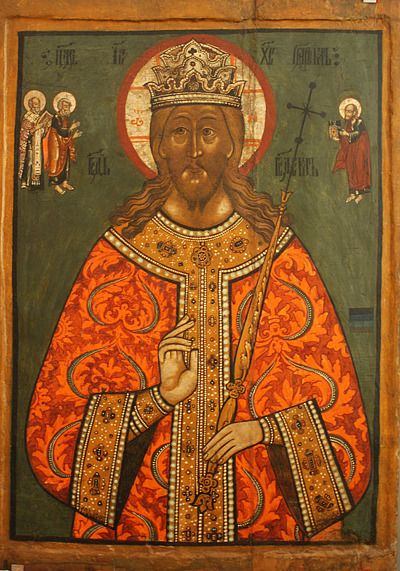
Byzantine icon that represents Jesus as King of the Universe.

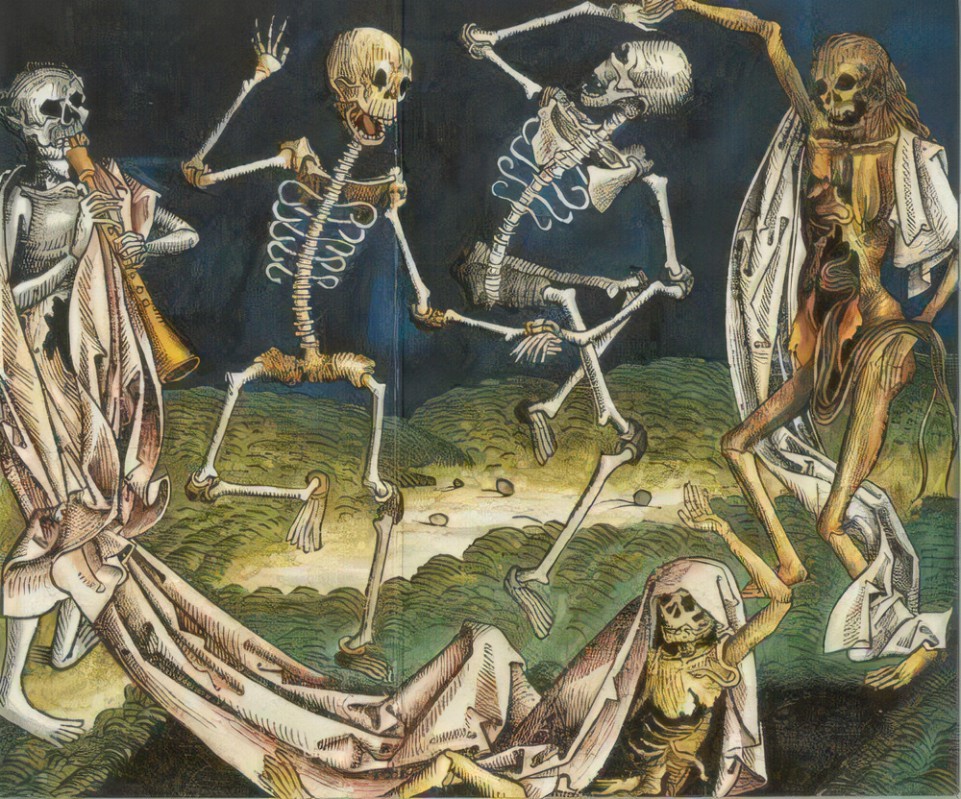
There is more. This may sound creepy to us today, but it is an ancient practice that originated in Catholic countries as a result of the constant exposure to plagues and death. This practice fits well with the Pope’s emphasis on remembering our judgment on the solemn Feast that comes immediately before Hallowtide. The Dance of Death emerged in a time (mid-14th C.) of frequent epidemics and death. In these plays death appeared not as the destroyer, but as the messenger of God summoning men to the world beyond the grave, a conception familiar both to the Holy Bible and to the ancient poets. The purpose of these plays was to teach the truth that all men must die and should therefore prepare themselves to appear before their Judge. The scene of the play was usually the cemetery or churchyard, though sometimes it may have been the church itself. The spectacle was opened by a sermon on the certainty of death delivered by a monk. At the close of the sermon there came forth from the charnel-house, usually found in the churchyard, a series of figures decked out in the traditional mask of death, a close-fitting, yellowish linen suit painted so as to resemble a skeleton. One of them addresses the intended victim, who is invited to accompany him beyond the grave. The first victim was usually the pope or the emperor. The invitation is not regarded with favor and several reasons are given for declining it, but these are found insufficient and finally death leads away his victim. A second messenger then seizes the hand of a new victim, a prince, or a cardinal, who is followed by others representing the various classes of society, the usual number being twenty-four. The play was followed by a second sermon reinforcing the lesson of the representation. Evidence for these plays has been found in Germany, Spain, Belgium, France, England, and Italy. Italy also had something known as the “Triumph of Death.” 

The Dance of Death (1493) by Michael Wolgemut, from the Nuremberg Chronicle of Hartmann Schedel

With all of the conflicting opinions on Halloween, one thing we can truly see is that the agents of Heaven and the agents of Hell are, today, clearly at war on Halloween. When the Church of Christ, the Kingdom of Heaven on earth, is celebrating the victory of Christ who triumphs in His Saints and His Elect, Hell is more and more sneaking onto the scene to undermine this sacred work. Hallowtide is not a time where Hell has more power, as many pagans believe – just the opposite – Hell faces Heaven’s fury in a particular way as more graces are made available to the faithful, such as the graces of the Holy Day and the plenary indulgences for the Poor Souls in Purgatory. Hell, then, through the fallen world which embraces Satan and the occult, would love to distract Christians away from these graces and toward fear and the fright of hopeless death.

So in a proper Catholic spirit what should we do?

Analyze your approach to Halloween. Purge what does not orient your family toward holiness.

Get creative with the “trick or treaters” who come to your door, to oppose the paganism they may manifest.

Reinvigorate the sacredness and Catholic creativity of the Feast.

Create new and sacred traditions, like this Vigil of All Saints.

Pray and go to Mass.

Do good. Avoid evil.

Invoke the Saints. Pray for Holy Souls in Purgatory • AE


Thirty-first Sunday in Ordinary Time

The central focus of the readings of today is on the Commandments. The law given on mount Sinai multiplied into hundreds due to interpretation. Jesus summarized the laws into two – love of God and love of neighbor. By doing this Jesus Christ simplified in a wonderful way the laws through love. In order that love may not be a burden to humanity, he tied love of God and neighbor to the love of self, this way love of self becomes the spring board of loving experience: love your neighbor as you love yourself. The scribe conformed this when he said; «To love him with all your heart, with all your understanding and strength, and to love your neighbor as yourself, this is far more important than any holocaust or sacrifice» Two realities appear in this message; love of God is possible through the love of fellow human being. Secondly, love of self is something that we do always, as such it is not alien to human beings to love with «all your heart, with all your soul, with all your mind and with all your strength». This is the exact disposition towards the self. the reality is that we have in our hands what it takes to keep the commandments – love of self. what we need is the inspiration of the Holy Spirit in order to lift our self love to accommodate the other. by doing this, we are not far from the kingdom of God • AE


Fr. Agustin’s Schedule for Thirty-first Sunday in Ordinary Time

Sunday, October 31, 2021.

12.30 p.m.  English Mass @ St. Dominic Catholic Church

3.00 p.m. Misa en Español @ St. Dominic Catholic Church


XXXI Domingo del Tiempo Ordinario (Ciclo B)

A Jesús le hicieron muchas preguntas, y es que la gente lo veía como un maestro que enseñaba a vivir de manera sabia. La pregunta que recoge el pasaje del evangelio de este domingo, el trigésimo primero detro del tiempo ordinario, la hace un hace uno de los escribas. Lo que él pregunta les preocupaba a muchos: ¿Qué mandamiento es el primero de todos? es decir ¿Qué es lo primero que hay que hacer en la vida para acertar? Jesús le responde con unas palabras que, tanto el escriba como él mismo, han pronunciado esa misma mañana al recitar el Shemá»: «Dios es el único Señor: amarás al Señor tu Dios con todo tu corazón, con toda tu alma, con toda tu mente, con todo tu ser». Esto es lo primero y decisivo. A continuación, Jesús añade algo que nadie le ha preguntado: «El segundo mandamiento es semejante: Amarás a tu prójimo como a ti mismo». Ésta es la síntesis de la vida. De estos dos mandatos depende todo: la religión, la moral, el acierto en la existencia. El amor no está en el mismo plano que otros deberes. No es una «norma» más, perdida entre otras normas más o menos importantes. «Amar» es la única forma sana de vivir ante Dios y ante las personas. Si en la política o en la religión, en la vida social o en el comportamiento individual, hay algo que no se deduce del amor o va contra él, no sirve para construir una vida humana. Sin amor no hay progreso. Se puede vaciar de Dios la política y decir que basta pensar en el prójimo. Se puede vaciar del prójimo la religión y decir que lo decisivo es servir a Dios. Para Jesús Dios y prójimo son inseparables. No es posible amar a Dios y desentenderse del hermano. El riesgo de distorsionar la vida desde una religión egoísta es siempre grande. Por eso es tan necesario recordar este mensaje esencial de Jesús. No hay un ámbito sagrado en el que nos podamos ver a solas con Dios, ignorando a los demás. No es posible adorar a Dios en el fondo del alma y vivir olvidado de los que sufren. El amor a Dios, Padre de todos, que excluye al prójimo se reduce a mentira. En menos palabras: lo que va contra el amor, va contra Dios • AE


Thirtieth Sunday in Ordinary Time

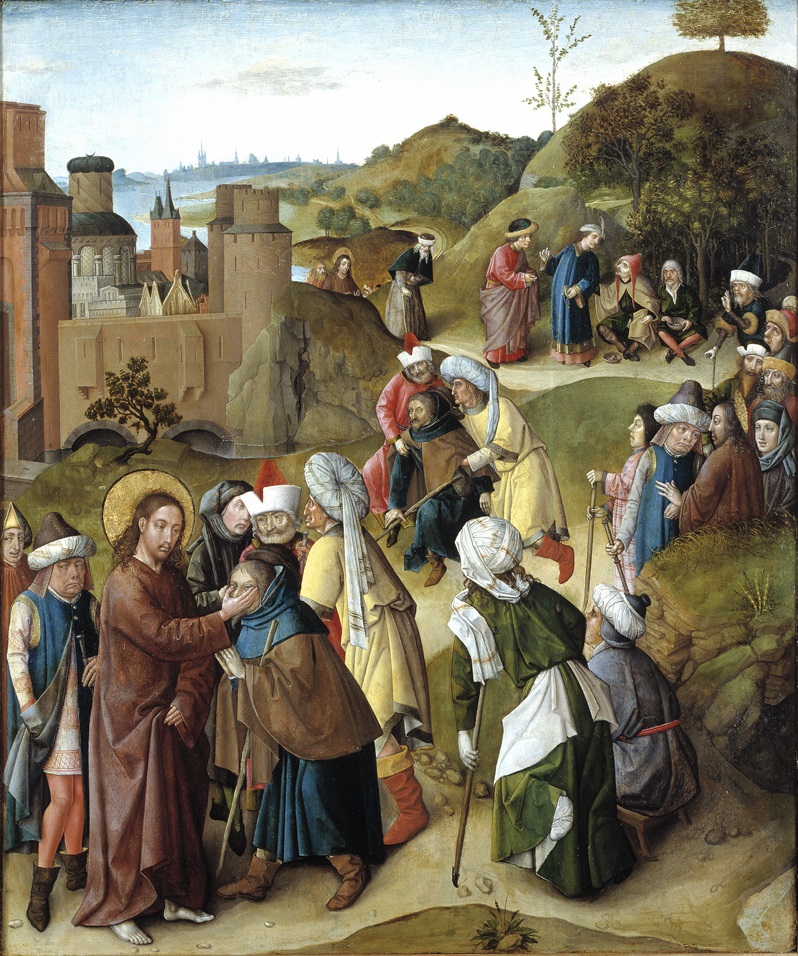
Anonymous Dutch artist, The Healing of the Blind Man from Jericho (c. 1470), oil on oak, Museum Catharijneconvent (Netherlands)

Blind Bartimaeus took a risk. He heard that Jesus was approaching, so he took the risk of calling out to him. Other’s tried to quiet Bartimaeus, but what he lacked in eyesight he made up for in lungs. He just called louder. According to the Gospel reading, Jesus heard Bartimaeus, and then told his disciples to bring him over to him. At first, Bartimaeus hesitated, but then he took a step of trust in the Lord. He threw off his cloak and went to Jesus. This throwing off his cloak might not seem significant to us, but it was an action that was full of meaning. Bartimaeus’ cloak was his mat, his bed, his warmth, his security blanket, and his one possession. It was his everything! To let it go, was to let go of everything he depended on and to trust in the Lord. Bartimaeus let go and let God. And Jesus rewarded his trust, his faith, with sight. Bartimaeus was not just given eyesight. He saw the Work of God. Jesus told him to «Go your way; your faith has saved you,» but Bartimaeus did not go. Instead, he followed the Lord. We are called out of our blindness into the light of the Lord. But to do this, we have to trust in God rather than in ourselves. Many of you took a leap of trust when you fell in love and committed yourselves to that special person who became your spouse. For your love to grow, you know that you cannot hold on to any security other than simple faith, not just in your spouse but, more importantly, in the Lord. You have to have faith that He will help you to love as He loves. That is why it is so important that husbands and wives pray for each other and with each other and pray that they might respond to their vocation to marriage by being good husbands and wives. Certainly, the raising of children demands trusting in the Lord. In this computer age, we check the Internet for the answers to all questions. The only thing is that raising children is not a scientific process. Children have souls, and personalities, and their own unique reflections of God. The closest thing to a handbook on how to raise a child properly is called the Bible. All parents find times that they are overwhelmed. It is a tremendous task to raise a child. You are called to form Christian children, capable of reflecting their unique images of God; yet you have to do this in a society that deifies materialism. You have to trust God to help you raise your children. So, continue to pray for your children every day! Do not be discouraged, continue to ask God to help you be a good Mom, a good Dad, and trust Him! We priests and religious had to take a step of blind faith in the Lord when they decided to embrace the yearning within them to serve God in these special ways. Our whole lives become a matter of just trusting in God. Sometimes that trust involves accepting new assignments. Sometimes that trust is as simple as saying our daily prayers and knowing that God will help us write the homily for next Sunday. The point this Sunday in our prayer time is to consider taking the risk of believing a little more; a Little better; take the risk of jumping, knowing that on the other side we will always find Jesus • AE


Fr. Agustin Schedule for the Thirtieth Sunday in Ordinary Time

Saturday, October 23, 2021.

3.30 p.m. Sacrament of Reconciliation

5.00 p.m. English Mass @ St. Dominic Catholic Church

Sunday, October 24, 2021.

7.30 a.m. English Mass @ St. Dominic Catholic Church

10.00 a.m. @ St. Dominic Catholic Church


XXX Domingo del Tiempo Ordinario

Es posible hacer algo cuando sentimos que la fe se va poco a poco apagando en nuestro interior? ¿Es posible reaccionar? ¿Podemos salir de la indiferencia? El evangelista narra la curación Bartimeo quizá para animar a sus lectores a vivir un proceso que pueda cambiar sus vidas. No es difícil reconocernos en la figura de Bartimeo. Vivimos a veces como ciegos, sin ojos para mirar la vida como la miraba Jesús. Sentados o, mejor dicho, apoltronados en una religión convencional, sin fuerza para seguir sus pasos. Descaminados, al borde del camino. ¿Qué hacer? A pesar de su ceguera, Bartimeo oye que Jesús está pasando y comienza a gritar. Esto es siempre lo primero: abrirse a cualquier llamada o experiencia que nos invita a curar nuestra vida. El ciego no sabe recitar oraciones hechas por otros. Sólo sabe gritar y pedir compasión porque se siente mal. Este grito humilde y sincero, repetido desde el fondo del corazón, podría ser el comienzo de una vida nueva porque Jesús nunca pasa de largo. Bartimeo da unos pasos que van a cambiar su vida. Arroja el manto porque le estorba para encontrarse con Jesús. Luego, aunque todavía se mueve entre tinieblas, da un salto decidido. De esta manera se acerca a Jesús. Es lo que necesitamos muchos de nosotros: liberarnos de ataduras que ahogan nuestra fe; tomar, por fin, una decisión sin dejarla para más tarde; y ponernos ante Jesús con confianza sencilla y nueva. Cuando Jesús le pregunta qué quiere de él, el ciego no duda. Sabe muy bien lo que necesita: «Maestro, que pueda ver». Es lo más importante. Cuando uno comienza a ver las cosas de manera nueva, su vida se transforma. Cuando una comunidad recibe luz de Jesús, se convierte. El evangelio de este domingo nos dice pues que dentro de Bartimeo había aún una fe que le hizo reaccionar. Aquel ciego percibió que el Señor no andaba lejos y por eso pidió a gritos su ayuda. A nadie se le puede convencer desde fuera para que crea. Para descubrir la verdad, cada uno tiene que experimentar que Cristo hace bien y que la fe ayuda a vivir de una manera más gozosa, más intensa y más joven. Dichosos los que creen, no porque un día fueron bautizados, sino porque han descubierto por experiencia que la fe hace vivir • AE